Jenn Lombari
Email: jennmotifri@gmail.com
Mike Ryan

Cell: 401.641.1235
Office: 401.312.3305
 Rep Scott Slater
Truck tolling got all the attention this week at the statehouse, but stalwart efforts to introduce a legislative change that would likely have 1000 times the financial impact on daily lives in RI also took a small step forward, if mostly under the radar.
Tax and Regulate legislation was proposed and will be reviewed in committee. It’s the 5th year (imagine how far ahead of the curve we might have been 5 years ago!) that this bill has been proposed, with only small improvements and details happening from year to year. It has yet to make it out of committee, but there are a few reasons hopes are higher that this could be the year it finally reaches a vote:
- Massachusetts is committed to voting on similar legislation this year.
- The “wait and see” contingent can now review 2 years of data from Colorado and Washington where impact on consumption has been negligible but impact on economies has been enormous.
- Numerous polls by different organizations all indicate that the public overwhelmingly favors this course. Although this has been true for a few years, one assumes that in an election year fewer litigators will choose to ignore the views of their constituents.
- Taxes on medical marijuana, proposed last week in the Governor’s budget, which threaten the health of many medical marijuana patients, have a lot of people reacting with thoughts along the lines of: “Maybe we shouldn’t tax medicine, maybe we should tax recreational consumption the way we do alcohol.”
New elements this year are mostly refining the packaging and labeling requirements for edibles containing marijuana, including stricter allowances for childproof packaging. There are also new allowances for taxes raised from local establishments to make their way back to those community funds.
The legislation is being proposed by House Representative and Deputy Majority Leader Scott Slater (D District 10) and Senator Josh Miller (D District 28). This time out, the bill has the support of 17 sponsors – almost half – of the senate chamber including Senator Majority Leader Dominick Ruggerio (D District 4) and Judiciary Committee Chairman Michael McCaffrey (D District 29).
This is the year to write your rep or state senator and show your support for this overdue legislation.
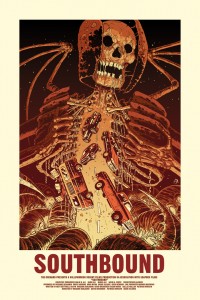 Southbound is a horror anthology that gives us five interconnected stories that focus on people traveling through an unnamed stretch of desolate desert road in the southwest. The multiple stories are linked by characters or specific locations and encompass a wide range of horrors from the nightmarish supernatural to real life tragedy and unfortunately for these travelers, these aren’t easy trips.
Ranging from desert cults to the search for a missing person or the desperate call for help after an accident to being tracked by something not quite natural, Southbound offers a great mix of different stories and styles that remain linked by a unifying theme and look. The various stories are all written and acted very well without any one story standing out as a weak spot, which is unusual for an anthology film. Plus Southbound features an impressive mix of both digital and practical special effects. There are some shocking sequences featuring some disturbing practical effects while the film also features some wonderfully realized digital creature work that defies the movie’s presumably modest budget.
Horror anthologies have made a noticeable comeback in recent years with the popularity of the V/H/S and ABC’s Of Death franchises and if Southbound and the recent Tales Of Halloween are an indication of what is to come, then I am eagerly awaiting the next wave of anthologies. I highly recommend that fans of horror films check out Southbound, which opens at the Cable Car Cinema on Tuesday, February 16.
Southbound (2015); Directors: Roxanne Benjamin, David Bruckner, Patrick Horvath, and Radio Silence; Starring: Fabianne Therese, Matt Bettinelli-Olpin, David Yow
 The Hunchback of Seville is a semi-satirical look at life in Spain in the early 16th century. It was a time of religious persecution, as anyone who was not Spanish or Catholic found themselves tortured and murdered in the name of Catholic fundamentalism overseen by the ruling classes.
Maxima (Phyllis Kay), the hunchback, is living a dreary existence in an ivory tower. Her sister, Queen Isabella (Janice Duclos) is dying and asks Maxima to serve as an advisor. Meanwhile, Maxima pines for her lover, Talib Furozh, a Moor who is on the run. Isabella’s demented and power-hungry daughter Juana (Nicole Villamil) has her own plans and poses a threat to Maxima.
Playwright Charise Castro Smith tells this story by using modern-day language and cultural references, which garner easy laughs but seem gratuitous.
The play begins with Christopher Columbus (Jessica Ko) sailing to the new world and getting whacked across the chest with a plastic palm tree. Columbus breaks the fourth wall and addresses the audience. He is arrogant and boasts of having a holiday of his own. He also sings a Queen song, “We Are the Champions.”
The performers all seem to be having a ball bringing these wacky characters to life. The always dependable Trinity vet Anne Scurria is delightful as Espanta, Maxima’s nosy maid. I also enjoyed Joe Wilson, Jr. as Talib, who laments his plight: “I can’t believe I was born in such a shitty point in history.”
And herein lies the problem I had with The Hunchback of Seville. The play discusses serious themes such as genocide and killing in the name of God, while characters utter lots of profanities and sound effects fill the air. Castro Smith’s attempt to meld the darker side of human nature with a self-referential tone just doesn’t work.
There are also character decisions which make little sense. Juana is so over the top in her lunacy it is like watching a really bad Saturday Night Live sketch; and why would Isabella want to hand her kingdom over to a spoiled brat like Juana?
The technical qualities of The Hunchback of Seville, however, are well executed. Olivera Gajic’s costumes are inventive and a lot of fun to look at. Marsha Ginsberg’s dazzling set design features a giant wall filled with blinking multi-colored lights, along with a huge map of the world.
The Hunchback of Seville has so much going for it, yet in the end, I left the theater feeling unsatisfied.
The Hunchback of Seville runs through March 6 at Trinity Repertory Company. Tickets are on sale now and by phone at 401-351-4242, online at trinityrep.com, or in person at the theater’s box office at 201 Washington Street, Providence.
 Metal is a wildly diverse style of music, but there’s also redundancy — fans are tired of the same old black metal band or stoner fuzz act playing tiring songs with no substance. There’s an explosive act from Long Island that’s been shaking things up lately that you have to check out. They go by the name Moon Tooth and their new album Chromaparagon is an absolute ripper. It’s incredibly forceful with tons of infectious energy that’ll leave you in awe.
For a metal band, Moon Tooth has a pretty unique sound in a sense that they fuse a lot of interesting dimensions together. Nick Lee’s guitar has a mathy tone while John Carbone sings with a lot of powerful soul. It’s definitely a refreshing brand of rock that blows your mind. The complexities throughout Chromaparagon makes the whole album very enjoyable to blast through your speakers. The unpredictability that each track possesses makes the album exciting and electrifying.
It’s fantastic that Moon Tooth didn’t use a metronome or any tuning software during the creating of Chromaparagon. There’s a genuine quality to the production that you have to respect. To explore the album as a whole, let’s dive into my top tracks off the Album Of The Week.
“Vesuvius” is a two-part song that features guest vocals from Providence’s own Roz Raskin. The track has a lot to offer with multiple progressions and a driving rhythmic force throughout both parts. You can really grab a hold of Lee’s mathy tones in the beginning of “Offered Blood,” but the breakdowns give the track a poetic aesthetic. A thrashing rip-roaring track, “Bats In The Attic” is a scorcher that’s extremely fast and epically amazing.
Moon Tooth are currently in the middle of a tour in support of Chromaparagon that’ll be landing them at the Tap House in Norfolk, Virginia, with Savage Kenny and The G-Bombs. Everyone in the area should go because Moon Tooth are spellbinding when they play live. While you’re there, grab a copy of Chromaparagon and get your brain melted.
Stream & Buy Chromaparagon here: http://moontoothny.bandcamp.com/album/chromaparagon
Moon Tooth’s Website: http://moontooth.org
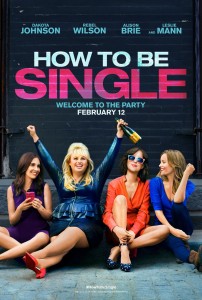 Alice is a recent college graduate who decides to take a temporary break from her longtime boyfriend Josh before moving to New York so that she can “find herself.” Once in New York, Alice is surrounded by a party girl, a playboy bartender, a girl intent on finding Mr. Right, and her own sister who sacrificed relationships in favor of her career as a doctor. After a succession of awkward and funny situations, Alice realizes that she has to learn how to love and respect herself without the validation of a relationship.
How To Be Single is a fairly funny but unfortunately uneven film with a confused message. I say it is confused because while Alice becomes empowered by having to accept that she can be perfectly happy without a boyfriend, her sister, who has forsaken relationships in favor of her medical career, literally decides to have a baby via a sperm donor and then pursue a relationship after holding a patient’s baby for five minutes. It would seem that the filmmaker is sending mixed messages here.
Other than that instance, character development and story arcs work much better. The movie does have a number of laugh-out-loud funny moments and is chock full of the most awkward character interactions I’ve seen in quite some time. Many of the film’s best moments come from its secondary characters whose subplots sometimes outshine the main plotline without overshadowing it.
If you’re looking for an awkward and somewhat raunchy comedy, then How To Be Single will work for you, although if you’re on a first date I might steer clear of this one.
How To Be Single (2016); Director: Christian Ditter; Starring: Dakota Johnson, Rebel Wilson, Leslie Mann
The Rhode Island medical marijuana law has been on the books since 2006 but still remains controversial. As part of the fiscal year ending 2017 state budget proposed by Governor Gina Raimondo on Feb. 3, although structured as a budget bill, H. 7454 Article 14 (pages 194 through 229) makes numerous substantive changes to the state’s medical marijuana program.
Michael Raia, communications director for the state Executive Office of Health and Human Services, said the proposal is “an attempt to improve the integrity and quality” of the program. Patient cardholders would be able to buy from any compassion center without having to designate it as their caregiver (as currently required), which he said would improve accessibility. Instead of a caregiver who grows for them, patients could designate an “authorized purchaser” allowed to buy for them from a compassion center. (A patient who grows for himself or herself could designate neither an authorized purchaser nor a caregiver.) Raia also pointed to other provisions that would encourage expedited consideration of patients in hospice care.
However, the main change attracting attention from patients and caregivers is the proposed chapter (21-28.6-15, p. 220) that would require “every marijuana plant, either mature or seedling” to be “accompanied by a physical medical marijuana tag” purchased from the Department of Business Regulation. The per-plant tags would cost $150 each for patients who grow for themselves and $350 each for caregivers and others, although no reason is given for the price difference.
A tag would be valid for one year and could be transferred among different plants and seedlings throughout the year, although only one at a time.
Fees from licensing cardholders would be put into a restricted fund to cover the costs of the medical marijuana program, but the revenue from tag sales would go into the state general fund (21-28.6.19(c), p, 227). At the same time, the net revenue tax paid by buyers at compassion centers will be reduced from 4% to 3%.
The distinction between mature plants and seedlings (which current law distinguishes as “usable” and “unusable” marijuana) would be eliminated, so seedlings would weigh against the plant count limits. The proposal would also reduce by half, from 12 to 6, plants allowed to a patient who grows for himself or herself. Caregivers would still be allowed to have up to 24 plants and grow for up to five patients (including themselves if they are also a patient), but there would be a new limit of 24 plants in any single location “except for licensed compassion centers, licensed cooperative cultivators, and licensed cultivators.” Each grower would be limited to a single location that would be required to be registered with the Department of Business Regulation. If two or more growers have a cooperative cultivation facility, a new provision requires that it must be separately licensed.
Raia defended the tag plan as an effort to provide “a level of accountability” and “bring some oversight and order to a marketplace that hasn’t had that” due to “ill-defined rules.” In particular, he said that a major goal was to “cut down on the overflow into the illegal recreational market” from the legal medical market. Of the anticipated $8 to $8 1/2 million in revenue, he said, $1 to $1 1/2 million would be used to improve the administration of the medical marijuana project. Another major goal, he said, was to enable the Department of Health to develop regulations for testing of safety and quality, although he was unable to say at this time how the costs of the required testing would be funded. “We’re focused on the legislative process, and promulgation of the regulations would come after the legislation is in place,” he said.
The current statutory provision that allows a patient to appoint up to two primary caregivers (21-28.6-6(d), p, 202) would be removed, which would have the apparent effect of reducing the number to only one. Patients would no longer designate a compassion center as a caregiver and could purchase from any licensed compassion center, but all compassion centers would be required (21-26.8-12(g)(3), p. 216) to record every dispensing transaction into a statewide database that they would also check before dispensing – to prevent a patient from exceeding a 15-day limit. Patients would be identified in this new database by their card number but not by name. A new class of “licensed cultivators” would be created who grow for compassion centers rather than for particular patients.
There is a wide variety of other proposed changes. Possession of marijuana products made by extraction using flammable chemicals, such as butane hash oil (BHO), would be totally banned for both patients and caregivers. Medical professionals from states other than Rhode Island, even Massachusetts and Connecticut, would no longer be allowed to certify a patient’s need. Current law mandates the Department of Health decide an application or renewal within 15 days, and this would be changed to allow the department to set its own time limit by regulation.
The patient and caregiver community has reacted extremely negatively to the proposals, especially to paid tagging and reductions in plant count. The Rhode Island Patient Advocacy Coalition in a statement on their web site said the lower plant counts, in combination with reclassifying seedlings as plants, effectively constitute a 75% reduction in production for patients who grow for themselves and for caregivers who grow for a single patient. Whether patients, many on disability, are in a position to pay this up-front per-plant fee has also been questioned.
The proposed changes, taken together, appear to be an effort by the state to discourage growing by patients and caregivers and instead to provide economic incentives for patients to obtain medical marijuana from compassion centers. The proposed changes also appear to remove the extensive statutory regime (21-26.8-12(b), pp. 207-208) that mandates the licensing of exactly three compassion centers, no more and no less, and instead leave the total up to the discretion of the Department of Health by regulation: under the new proposal, the department would appear to be free to license dozens of compassion centers or none at all.
Wednesday, February 10, 2016, with waxing Moon in Pisces and Venus rolling in the hay with Jupiter, we are not much concerned with the material world. We receive psychic impressions and sense intangible forces at work. In the night sky the Moon is a fingernail that will continue to expand until it reaches fullness on the 22nd. It may be tough getting through this hump day, especially if work and concentration is involved. This energy is good for the artist and the dreamer. Practical matters take a back seat.
Early Thursday morning, Moon enters aggressive, action-oriented Aries. Waxing Moon in Aries is a great time to start an exercise routine. Aries Moon is great for starting something new. Be sure to think it through before you begin. Folks can be impulsive under this Moon. Friday night — date night — is perfect for a stroll under the moonlight or a night of dancing. Aries Moon craves action. So get out there and act already!
Saturday morning, Moon moves into the more stable sign of Taurus. Change is not on the agenda under a Taurus Moon. It is a fertile sign and whatever is begun under a waxing Moon in Taurus is sure to grow and last. Venus ruled Moon in Taurus is great for long-lasting romance. The danger here is if things go south, it is difficult to break up and break away. An evening out under a Taurus Moon carries with it the warning: When they turn the lights out, it’s time to go home. Taurus Moon doesn’t want it to end.
After sundown, Mercury reenters Aquarius and is soon at the point where it turned retrograde back in January. Mercury then moves out of that “shadow” and activities and ideas put on hold now really begin to move forward. Mercury in Aquarius gathers the news and shares it with friends. Exchanging ideas with like-minded and not so like-minded folks is the joy of Mercury in Aquarius. Around this time, Mars makes a positive connection with Jupiter. Mars is action and energy; with Jupiter it means a lot of whatever is on the table. Don’t take on more than you can handle and keep a close eye on your energy levels. This is “sit down before you fall down” time.
Sunday, with Moon in Taurus, is a kick-back day. In the wee hours of Monday, the First Quarter Moon occurs. Quarter Moons create tension. The square between the Sun and Moon at this particular phase has Mars stirring up the action. Mars in Scorpio stirs up the muck from the bottom of the pot. In dynamic aspect to the Sun and Moon that muck is going to hit the fan. Remember to duck!
During the Monday morning commute, Moon enters Gemini. Gemini Moon rouses our curiosity and we begin to look around to see what going on outside our own little world. Tensions roused by the Quarter Moon can be discussed now. Gemini Moon loves to talk. Moon in an air sign brings a bit of detachment — more logic than emotion. Gemini Moon is great for starting the work week. Multi-tasking becomes second nature to us all and the usual Monday morning clutter gets cleared up quickly. This light and airy energy spills over into Tuesday. The energy is great for brainstorming, solving puzzles and intellectual pursuits. The mind is quick and gets bored easily. Keep busy and survive the juggling energy of Gemini Moon.
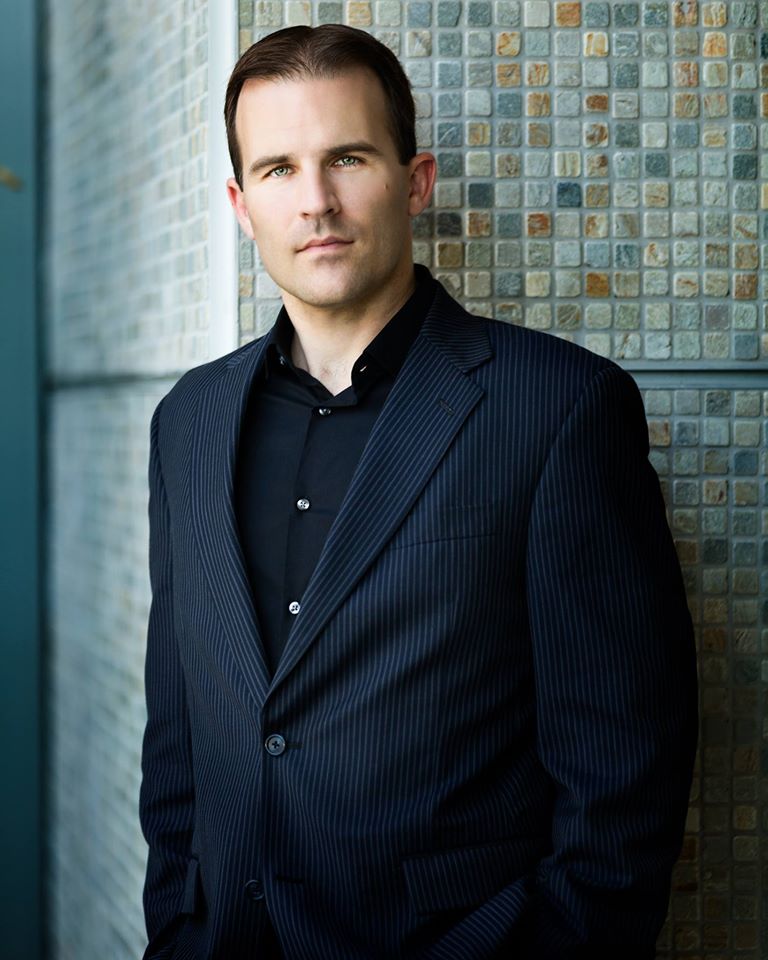 Callling “Star Trek” a successful television and film franchise is a grave understatement. People are addicted to it. They watch every episode of every incarnation, dress up as characters and flock to conventions. On Valentine’s Day at the Providence Performing Arts Center, fans will find one more thing to flock to. There’s going to be a celebration for the franchise’s 50th Anniversary called Star Trek: The Ultimate Voyage. It features a live orchestra performing music from each incarnation of the series accompanied by video footage shown on the big screen. To prepare for this uniquely spectacular event, I had a chat with acclaimed conductor and show producer Justin Freer about conducting when he was a teenager, performing film scores and what the future holds.
Rob Duguay: Which series of “Star Trek” do you like the most?
Justin Freer: The answer is different now than I think it was before I started producing this project, really getting into it and immersing myself into the environment. I was born in 1980, so I grew up with “The Next Generation;” I didn’t have a chance to grow up with the original series like generations before me did. However, while I still love “The Next Generation” very much along with “Deep Space Nine,” “Voyager” and “Enterprise,” the original series has become a favorite for me over the last year or so because of the escapism.
Admittedly, I wasn’t that familiar with the original series before I started immersing myself in this world, but the amount of escapism that the producers, the composers and the actors were all forced to try and create because of limited technology and make us believe that they’re on another planet is staggering. I think being forced into that environment allowed them to have a freedom to create some wonderfully memorable and iconic moments. So much fun was had on that series and as a result, it has become one of my favorites.
RD: To do what they did with the series in the ’60s is pretty amazing.
JF: It certainly is. And one of the most important elements that created this idea of otherworldliness, other cultures and other locations was the music. The music was done by so many different composers, including Gerald Freed or Saul Kaplan. They had so much freedom to experiment and try different things, using traditional instruments and making non-traditional sounds. I think all of these musical elements really contributed to us feeling and believing that we were someplace other than where we really were.
RD: You had your professional conducting debut when you were 16. What was the venue, and do you remember which piece of music you were conducting?
JF: I was conducting a mix of my own music that I composed at that time and some concert wind symphony music that was composed by some very well-known wind composers. There was a work by Vincent Persichetti who is well known within the classical world. We performed it at one of the performing arts centers in Orange County where I grew up, and from then on it’s been a very humbling ride filled with great joy and great musical opportunities. I’ve been very lucky to partake in this “Star Trek” journey. I would have never thought when I was 16, 25 or even 30 years old that I would have had this opportunity to study “Star Trek” lore, “Star Trek” mythology and “Star Trek” music in a way that even my time as Jerry Goldsmith’s student never really revealed. And now it’s a brand new thing.
RD: You’ve also been part of live performances of music from The Lord Of The Rings trilogy, Titanic and The Godfather, among others. Can it be difficult to master the music from movie soundtracks due to their unique progressions?
JF: I think that mastering music comes with a similar set of study tools regardless of the genre the music was written for — whether it was opera, ballet, chamber music or in this case, film and television music. Great music is great music and all great music deserves to be analyzed, studied, appreciated and respected. I think if you go into music with that mindset and that window of opportunity, then it’s a lot easier to humble yourself and immerse yourself in a positive way in these music scores. The added challenge of synchronizing the music to picture is something that you don’t experience in any other genre of music.
You come close with opera and close with ballet because there is synchronization required with the singers, the dancers and the actors on stage, but it’s not nearly as precise because it doesn’t need to be. In that way, I think that there’s an added level of challenge and perhaps an added level of stress that comes with conducting this on stage and restoring it to picture. Along with that, there’s an added level of enjoyment and an added level of restoration that I hope we all feel was worth it at the end of the day. In that way it’s a wonderful opportunity to restore these things and do them to picture, have the wonderful challenge with the musicians on stage — all 80 of us or 20 of us or 95 of us — seeking that same goal and living through that same challenge together.
RD: Have you ever considered writing your own music for a film score in the past or have you ever been offered the opportunity to do so?
JF: Sure, I’ve done a number of independent films in years past. The past few years have been much more conducting-heavy and classical composition-heavy. I still write music for the concert stage, wind symphony orchestras, chamber music, things like that. I certainly would never shy away from an opportunity to write more music for film and television should it come my way. You just never know where your career takes you in your journey. I did a little bit of that when I was younger, but the art form of putting music to picture has been one of my great passions since I was a boy around 9 or 10 years old. I think it’s an incredibly important art form in music history. I hope the universe presents more opportunities for me to immerse myself in it further. It’s a great joy.
RD: Do you plan to perform film scores in the future? If so, which ones can we expect?
JF: My answer to the first part of that question is yes, absolutely. I’m very excited to share some things coming up; we recently added It’s A Wonderful Life to our roster. We restored so much of Dimitri Tiomkin’s unused music from the original Frank Capra classic and now the version with the orchestra in the concert hall to picture is so very beautiful. We’ve done Breakfast At Tiffany’s, which is one that we recently did last year. Coming up we have some really wonderful projects, we’re doing a Dreamworks project where we’re doing a franchise celebration of all the great Dreamworks animation.
RD: That’s cool.
JF: Yeah, 22 years worth of Dreamworks animation shared over the concert evening. Clips and montages and all the great music from all the Dreamworks animation movies and there’s so much great music there. We’re just about to start doing Braveheart — the brilliant music score by James Horner who was a dear friend and colleague who we lost last year in a tragic plane crash in California. With that comes a very personal responsibility to do it right. So those are a couple of our upcoming ones this year, I’m excited about it and I really hope we continue to do more of these.
Star Trek: The Ultimate Voyage takes place at PPAC on February 14, 2016. For tickets, go to http://www.ppacri.org/events/detail/star-trek-the-ultimate-voyage
 In my last article I talked about my personal relationship with alcohol and asked the question: Do I drink too much? This week I want to talk about the broader issue: Do we ALL drink too much?
First let me say that by “ALL” I mean people like me — women in our 30s and 40s — Gen Xers who aren’t quite middle-aged, but no longer young. We’ll call ourselves “Life Experts.” Our frontal lobe is fully developed so we can appreciate the consequences of our actions. We’re smart enough to not drink and drive, go home with strangers or flash our boobs for beads, yet we still love a good buzz. We’re not alcoholics, but we definitely lie to our doctors when they ask us how many drinks we consume per week. We consider ourselves social drinkers who do A LOT of socializing. Sound familiar?
After my last article was published, I learned there’s no right answer to the question: Do I drink too much? The responses I received ran the gamut from, “Wow, you might have a drinking problem … and so might I!” to “Who cares? If we lived in Europe we wouldn’t give this issue a second thought.” I did, however, find one common thread: Those of us who think a lot about our drinking typically have a family history of substance abuse.
My father died at the age of 41 of cirrhosis of the liver. He was a drinker — the type of guy who went to his favorite bar every day after work — often having to be cajoled out by my mom. Every affair, whether it be a holiday, a family party, a vacation or simply a random Saturday afternoon pool party, was celebrated with lots of drinks. Food was an afterthought. It might not surprise you to learn that my dad was Irish.
Watching alcohol slowly kill my father obviously made an impression on me. I’ve always monitored what I drink and take particular notice when I’m stressed or have a case of the blues. Do I turn to alcohol in times of stress? Can I live without it? Did I inherit the addiction gene? My answers: sometimes, fuck no, who knows?
I do know, however, that alcohol plays a major role in my life – and the lives of most people in my social circle, much more so than it ever played in my mom’s life I don’t recall her ever hanging out with her girlfriends drinking to excess. Nor did my friends’ parents. No one’s mom had a nightly glass of wine. Of course the options were limited back then: Riunite and Franzia dominated the shelves and they weren’t very tantalizing. Nonetheless, I can barely recall seeing my mom drink at all. It didn’t seem culturally acceptable for older women/Life Experts to be big drinkers. Those who were either had a drinking problem or belonged to the key party set. So what happened?
Perhaps the prevalence of drinking among modern-day women can be blamed on two factors. First, we’re stressed more than ever. All that multi-tasking and the quest to have it all, be the perfect parent, answer every text message, read every tweet and post daily photos of our stellar lifestyle is exhausting. When we’re not shuttling our kids to their various activities, we’re stuck at home with them. They fight, they whine, they’re boring and nothing alleviates the doldrums of parenting like a nightly glass of wine. It’s a small treat, and just the thought of it often makes the day more bearable. While I’m trying to write this article, my boys are fighting about who stinks more and all I can hear is them both shouting “YOU! YOU! YOU!” This makes me want a glass of wine because I know, after a sip or two, I won’t care about their yelling. I might even get playful enough to take a whiff and end their fight. “Oh 9-year-old, of course you stink more.”
To clarify, I’m not denying that women historically haven’t turned to alcohol or drugs to get through the day. After all, Valium was nicknamed “Mommy’s little helper” in the ’50s and ’60s … and not because it assisted mom in her household duties. My grandmother, who never drank other than the occasional Grasshopper or Pink Lady, always had smelling salts and a small bottle of brandy in her purse to get her through a muscle spasm. Yeah, right. Today, however, the stress is different, and popping Valium is no longer a socially acceptable solution to the stress. A glass of wine on the other hand…
Second, from a cultural perspective, female drinking is the norm. It’s no longer just about the boys and their beer. As I mentioned in my last article, modern female TV characters are often featured sipping enormous glasses of wine or cosmos. Like never before, marketing experts target us by creating girlie-flavored vodkas, pre-made calorie-conscious cocktails, and wine called “Mommy’s Time Out.”
Then there’s the infamous Mom’s Night Out. Just like my parents never had a “date night (they just went out),” my mom never had an official MNO. Today, however, they’re a critical component of our self-care. The options are usually dinner and drinks, or bowling and a beer, or paint and vino, or … screw everything else – let’s just have some cocktails! It’s all we really want anyway, right? Book club has become a thinly veiled disguise for wine and cheese club. Even yoga is starting to be paired with beer and wine. It’s our little joke — the thing that binds us together as women and friends.
So here we are, drinking more than our moms did and loving it. If we’re healthy, not driving and fully functional, why care? Perhaps we should have a more European attitude toward alcohol where having a glass of wine at lunch is the norm and getting drunk doesn’t make for an interesting story. For we Americans, however, having a drink at lunch feels scandalous, or at the very least, indulgent. And I still love telling that story about buying bagels on a Sunday morning still wearing my Saturday night shoes. But I digress …
I don’t know the solution, or if there is even a need for one. Personally, the level of self and societal examination I’ve conducted has led me to conclude that I’m happy with the status quo. I don’t drink daily, I generally don’t have more than a glass or two during the week, and I don’t drink and drive. Yes I lie to my doctor about the number of drinks I consume per week, but I’ve learned she assumes I’m lying and scales down accordingly. I don’t have a drinking problem and neither do you.
The takeaway? Don’t obsess, but pay attention. While genealogy doesn’t necessarily equal destiny, it’s a good idea to keep our vices in check. At the risk of sounding cliché, balance and moderation truly are the key. After all, life’s too short to say no to those things that bring us joy. And this summer I’m putting those little fuckers in camp so I won’t be self-medicating by the pool with weak drinks. Live and learn my friends, live and learn.