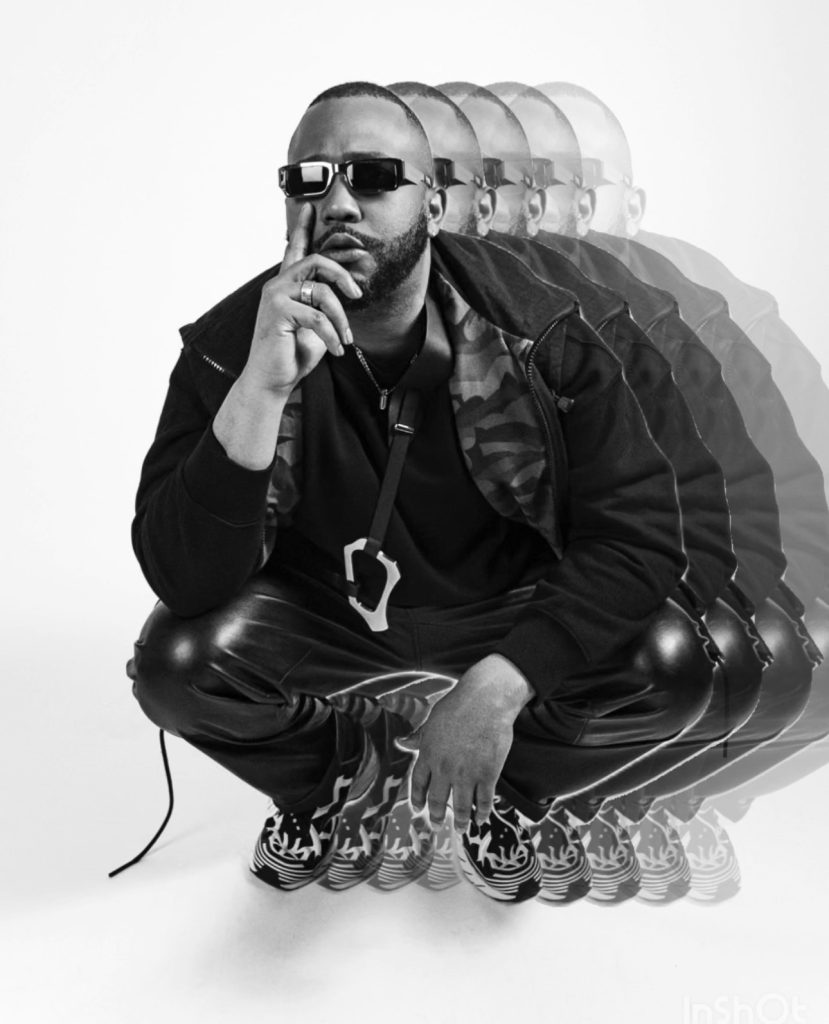
I had the pleasure of sitting down to meet with Leandro “Kufa” Castro at El Eden restaurant on Broad Street in PVD’s West End, where the aromas of hearty Dominican dishes and the sound of Spanish being spoken created the perfect backdrop for our conversation. As someone who has made it a personal mission to try chicken and rice dishes from around the world (whether it’s Dominican pollo guisado, biryani, Jamaican jerk chicken with rice and peas, or Senegalese chicken yassa from my own culture, you can sign me up), I highly recommend giving this spot a try. Sorry for the tangent, but if you’ve never tried Dominican food, do yourself a favor and fix that ASAP.
The real message I’d like to relay here is the mark Kufa’s words left on me in just a short while; I walked out of the restaurant feeling inspired after receiving a fresh perspective about the power of vulnerability in art. Kufa is an Afro-Dominican rapper, poet, and playwright who speaks with the kind of deliberation and wisdom of someone who has spent years reflecting, noticing things about themselves and the world around them, and intentionally growing with themselves. From taking a look at some of his lyrics, one can see how he has been able to turn pain and isolation into purpose and mantras of self-love and acceptance.
Kufa’s latest release, “Camino a Saturno” (Road to Saturn), is the culmination of a 15-year journey of growing with an idea, beginning with a melody hummed while navigating uncertainty and life’s darkest moments. “It was at a time when I was in some deep depression, dark times of not knowing what I wanted to do with myself,” Kufa reflects. “Am I going back to school or is this music thing going to be something?”
The song emerged from writing freely and following the flow without a predetermined narrative. Kufa finds driving to be a particularly liberating moment during his day, where ideas come to him. “After writing it, I looked back and said, ‘Oh my God, I just wrote this very personal story of how I was feeling at the time.”
That original composition carried themes of wanting to flee and start fresh, even containing elements of suicidal ideation that Kufa didn’t initially intend to explore. “It was a letter about going away. What would I take from the life I had at the time and what would I leave behind?” Kufa shares. Even if you don’t speak Spanish, you’ll want to sing along to this hook when you hear it:
voy camino a saturno
la tierra ya me canso
hoy dejo atra’ este mundo
y nada del traigo
I’m on my way to Saturn
I’m already tired of the earth
Today I leave this world behind
and I’ll bring nothing with me
But over the years, as he added new verses and worked with different producers, the track evolved into something more hopeful. “I held more power in that second verse,” he explains. “I see the stages of change in myself, how I’ve grown as a person, and how I’ve become stronger.”
Kufa’s knack for language and storytelling began much earlier than his musical career. When he immigrated from the Dominican Republic with his father and siblings, he was separated from his mother for a few years, communicating through letters that would foreshadow his future as a wordsmith. “I was writing letters as a five-year-old to my mom,” he recalls. “My mom would show me those letters years later, and I’m like, ‘Damn, I was telling stories.’” His updates on what he and cousins had been up to at church that week, or drawings of an airplane with his mother in it and two children on the ground crying, had a way of bringing her to tears.
Those early experiences with big emotions like separation and longing would become themes in Kufa’s work, but so would the tapestry of musical influences that shaped his artistic identity. Growing up in Sabana Perdida, Santo Domingo, Kufa recalls how every weekend he, along with his parents and cousins, would clean the floors and lie on the cold floor listening to music. He was exposed to everything from a classic salsa song about a trans woman named Simón and her strained relationship with her father, to American hip-hop artists like Nas, Busta Rhymes, and Lauryn Hill that his family discovered through Columbia House catalogs of CDs. The fusion of hip-hop and merengue in artists like Fulanito particularly influenced him, showing him early on that genres were meant to be blended and cultural boundaries crossed.
This cross-disciplinary mentality eventually led Kufa to explore theater, where he discovered another outlet for creative expression. His first theatrical experience came through La Pocha Nostra, an abstract production by Guillermo Gómez-Peña that invited local artists to collaborate in workshops. “Theater allows you to play as an adult. There’s not too many spaces for adults where you’re given license to play, to discover yourself, to challenge yourself,” Kufa explains.
There’s even interplay going on between the artistic disciplines of theater and hip-hop. His natural ear for melodies, syllables, and rhythms made learning Shakespearean patterns easier, while his musical skills led to opportunities in composing for theater productions. “I’m bridging two worlds of mine, and I’m not leaving one behind,” says Kufa.
This integration of his artistic worlds extends to Kufa’s community work, where he applies the organizational skills and storytelling skills developed through performing at music clubs and on theatre stages. “Music and organizing shows for myself, working on a play, directing a play, getting people together, that was my education,” he says.
When we’re trying to build community, it takes moving beyond digital spaces and establishing real-world connections with people. While he appreciates the growth of podcasts and social media outlets that showcase PVD’s Latin urban music scene, he notes the importance of face-to-face interactions and showing up for each other. His recent collaboration with artist Edward Sofoke exemplifies this more grassroots approach: Beyond the hard work of digital promotional campaigns and label work, they made time to create hand-made flyers together at PVD’s very own AS220, building a genuine connection apart from the more business-y side of musical collaborations.
This idea of authentic connection and community ties into themes explored on his 2023 album “10,000 Horas En El Espejo” (10,000 Hours in the Mirror), where Kufa navigates through finding balance in mental health, understanding his role in the relationships in his life, and finally being able to claim PVD as home, rather than always feeling like he’s just here as a traveler and might be relocating again. “As an immigrant that’s been living here for so long and calling this your second home, when do you put a nail down and tell yourself that you belong here?” he inquires. “You’ve given a lot to this community. You’ve poured into this community, and this community has also raised you.”
Kufa taught me that the answer lies in the claiming itself, the willingness to be vulnerable, to build bridges with the people you meet, and most importantly, to be a gracious host to yourself. “Sometimes you just gotta claim it,” he says, “and welcome yourself.”
In celebrating Hispanic Heritage Month, the vital contributions Latino artists make to their adopted communities are evident, and Kufa’s journey from those childhood letters to becoming a voice for PVD’s Latino hip-hop scene illustrates how sometimes it’s not about finding your place, or even wanting to leave to Saturn, but about creating it and inviting others there.
Follow Kufa on Instagram (@kufa_castro) and follow him wherever you stream your music to check out his discography!