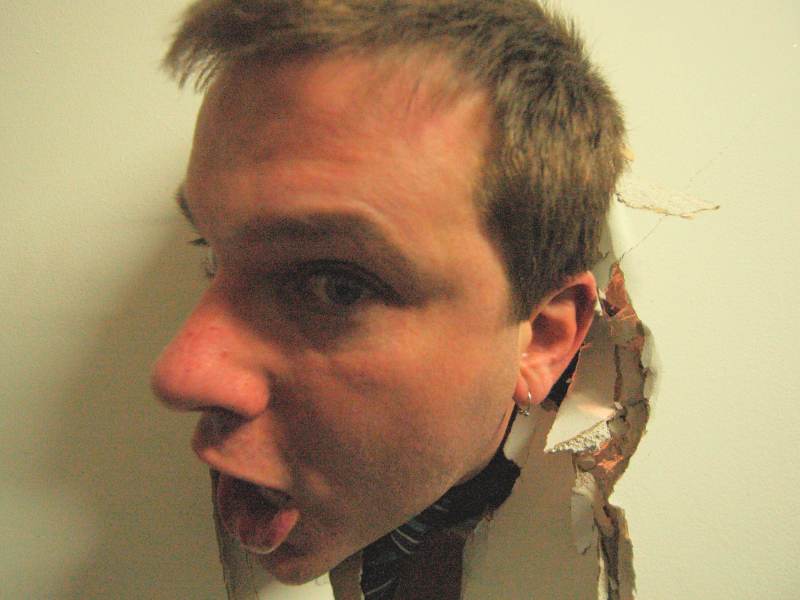
There are more than seven-hundred members in my town’s pickleball club. It’s mostly seniors, with some regulars who show up daily. The rest are faces in the crowd. Jeff Lawrence was a rare exception. Though he only played about two-dozen times, he left a crater-sized impression, and even inspired some new rules of conduct. From smoking cigarettes mid-game, to passing beers around the sidelines and being an awful influence on old people, it was like front row seats to Rodney Dangerfield.
I wasn’t thrilled that Jeff crashed my afternoon pickleball peace time. It didn’t matter how I felt though, because being mad at him was futile. The more you yelled, the more he laughed. The harder you punched, the harder he hugged. I would do anything to feel that sloppy hoppy warmth just one more time, even at the risk of him swiping a twenty from my pocket during the embrace.
I met Jeff through Boston’s Weekly Dig, which he co-founded as Shovel in the late-’90s and grew into a local alternative media powerhouse (that at one point included Beer Advocate magazine) before letting it slide and selling the getaway car to me and my partners in 2017. He knocked the paper up and rode it lavishly in high times; my team married it and suffered through the latter years until we had to pull the plug. Toward the end and after we stopped publishing, spending pandemic time with Jeff burning herb in the ’burbs felt like septuagenarian widows of the same wrinkled devil girl.
There’s an oral history by Barry Thompson that details the glory and the gory Dig days, plus many savage memories from those eras shared this week by a generation of brilliant Mass writers who manifested under Jeff’s circus tent masthead. Sorting through my own sickness and grief over his passing, though, I’ve mostly been thinking about the relatively recent past.
For more than a year in the thick of the COVID muck, Jeff was one of the few friends who I frequently spent time with indoors. Mostly we sifted through his relics like napkin dispensers from dearly missed dive bars, and autographs from Jeff’s reggae heroes who drummed the soundtrack to his stampede. We also sold most of our record collections to pay rent. Shit was real. From fighting housing instability to the relentless grip of alcohol, he scrapped with the warrior spirit of his ridiculous tribal tattoos. I am trying to remember us in those moments like Newman and Kramer, clowning and scheming around town. In reality it was much sadder, one of us still clinging on to hope in free-spirited independent media against insurmountable odds, the other simply clinging on.
Not that he ever pitied himself or thought he was above having jobs other than publisher, even when it meant sobering up and taking the train to work nightmarish doubles behind the bar. A true man of the people, from the penthouse to the doghouse, Jeff was neither a hipster exclusionist nor elitist in any way — that was as much a part of the Dig’s winning marrow as his sales charm and Baldwin charisma. The paper in the aughts was certainly a wild place that any normal person with corporate aspirations would have run away from at full speed, but back then those people hadn’t yet occupied every corner of Boston. There were still curmudgeonly creative masses in all of the neighborhoods and even living downtown, and those who wanted to rebel and smoke pot and write the word “dickhead” in a column on occasion could contribute to the Dig in some way, whether in an Oh, Cruel World! complaint or as the latest clueless section editor who started as an intern just a month ago. We were outsiders who nonetheless wanted to belong to something cool and meaningful and funny, and Jeff was sufficiently crazy to captain the ship of fools.
He trusted and believed in oddballs in ways that nobody else in our lives had ever believed in us. Jeff’s legacy is summed up in the answer to a question many of us who were once in his employ have pondered since hearing the news: What kind of lunatic would give me editorial control of their newspaper at that age or troubled period in my life?
While the loss of Jeff may trigger complex feelings from those who knew and wrestled with him personally or professionally, literally or figuratively, it’s less so for the people he encountered on a daily basis, from the packie clerks and bartenders he knew by name, to pickleball partners and those who he rode with on the bus at times when he wasn’t permitted to drive. In a world where many people have trouble connecting, Jeff could make new friends in line for coffee.
As for his pickleball game, Jeff was actually a decent player, tall and athletic, though he was insanely out of shape and wobbly. Nobody will be surprised to hear that he was popular among club members; over time, some of the people who I was concerned he would offend wound up liking him more than they ever liked me. A few of them also remember the last time he showed up, back in 2023, and took a tumble for the ages, landing Jeff in one of the various casts he sported in his less glamorous later days.
Always cartoonishly resilient, it was one of the only times that he didn’t land on his feet. Another one was this week, and I’m sorry none of us were there to catch him.
Reprinted with permission from the Boston Institute for Nonprofit Journalism, binj.org