In the living room of his childhood home, a young Rich Lupo would sit as if under a spell, transistor radio pressed to his ear while the television played in the background. Especially at a young age, humans can soak up whatever they’re exposed to like sponges, albeit sometimes subconsciously.
His father, a singing bartender, would practice for hours while his mother provided accompaniment on the piano. “My afternoons, I’d be hearing Rodgers and Hammerstein for two or three hours,” Lupo recalls. “I found myself drifting towards listening to the radio and the transistor radio and very early rhythm, blues, and rock and roll.”
That early musical education would provide the foundation for what became a fifty-year career for Rich in RI’s live music scene. From opening the original Lupo’s Heartbreak Hotel in 1975 to reopening The Met in Pawtucket 15 years ago, Lupo has consistently been a torchbearer when it comes to live music in RI, withstanding the tests of venue closures, pandemic shutdowns, and the constantly evolving dynamics of the music industry.
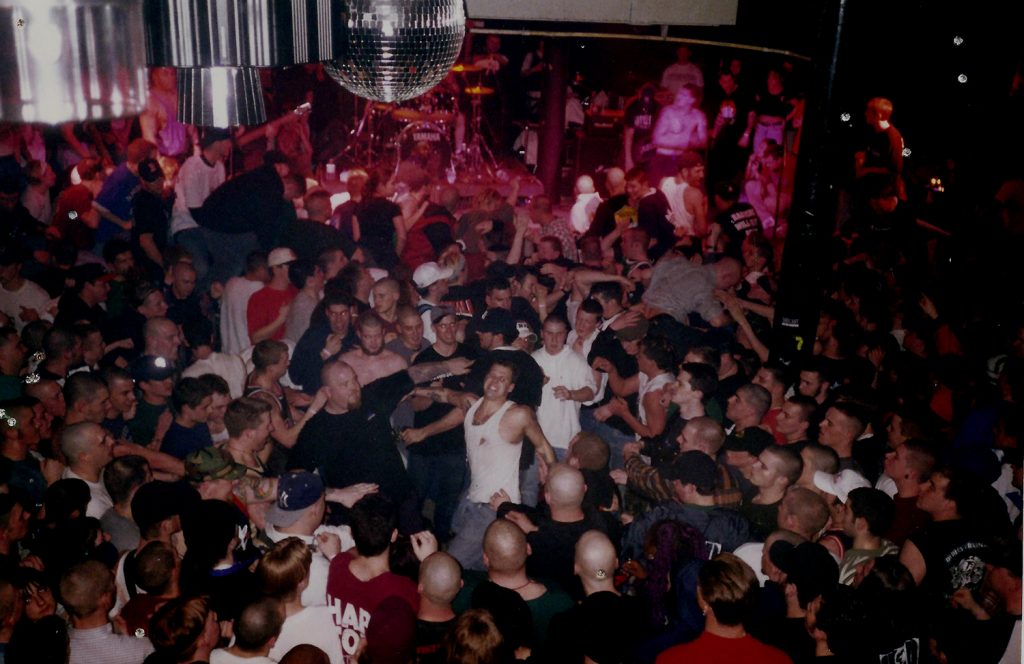
Although most people’s teary-eyed recollections of great music, cheap drinks, and good memories are in reference to the Heartbreak Hotel club, Lupo’s story is really that of three distinct venues, each with its own personality and reflective of different eras in Lupo’s career. The original Lupo’s, which operated for 13 years, embodied what he describes as a “roadhouse” atmosphere. “When the club opened, there was really nothing else going on,” he explains. “And we were fortunate enough to get great bands from Rhode Island that were starving for places to play.”
Those early years would bring legendary performers to PVD: the Ramones, Roy Orbison, James Brown, Jerry Lee Lewis, and perhaps most memorably for Lupo, Big Joe Turner, the Kansas City Blues singer most famously known for “Shake, Rattle, and Roll.” “He was my absolute first hero,” Lupo says of Turner, whose song is “often considered the stepping off point of transition from rhythm and blues to rock and roll.”
“And then, as usual, we were evicted from that space,” Lupo shares. “It seemed like that happened about every ten years to us.” Lupo would spend five years working to open the second location in the historic Peerless Building on Westminster Street in 1993. This iteration of Lupo’s represented a sweet spot in his vision. “It was a bar, but it had a 1,500 capacity. But it felt like a bar. And to me, that’s what it was all about. So people would hang out and walk around and interact.”
The second club’s adjacent space, The Met, operated under the same liquor license and became a proving ground for emerging acts. “We did bands like The White Stripes and Dave Matthews Band,” Lupo shares. “We’d have artists play the Met that would start getting bigger, then play Lupo’s, and then eventually move on to even larger venues.”
But success couldn’t prevent another forced closure, this time due to developer pressure on City Hall. The third iteration at the Strand location operated for about 15 years as “Lupo’s at the Strand,” though Lupo remained sort of ambivalent about the space. “The Strand was purely a concert hall. There’s an old theater concert auditorium. And to me, that wasn’t the nature of what I wanted to do.” The venue was missing that intimate, bar atmosphere that had defined his early clubs, becoming a place to ‘basically sit down and watch the show.’”
Throughout the various incarnations and challenges, Lupo has maintained a consistent operational philosophy that might sound simple but is important when compared to the experiences you get in venue management nowadays, especially when attending festivals or huge stadium shows. “Every decision I make as far as the operation, I try to do it from the perspective of the customer,” he explains. When you give rules that are all about what you want, regardless of the customers’ wants, you’re getting in trouble.”
This customer-centric approach extends to practical design elements, like ensuring sight lines work properly. “That’s why this mezzanine is raised a foot,” Lupo told me as we sat inside The Met. “I see clubs where the people in the front stand and 200 people can’t see.”
This approach has served him well through various municipal administrations. “All in all, I’d say the cities of Providence and Pawtucket have been very good to the club, especially earlier,” he reflects. “We were a pretty wild place and they put up with a lot.”
The music industry Lupo entered in 1975 is strikingly different from today’s landscape. His early musical education at home was supplemented by the carefully curated radio stations of the time and the economics of 45 RPM singles, where, “You didn’t want to make a mistake because you’re a little kid. And if you make a mistake, you just blew a quarter.”
He learned to identify music by label; Atlantic Records meant R&B and soul, King Records signified blues and R&B, and later Motown became synonymous with household names like Michael Jackson, Stevie Wonder, and Marvin Gaye. “I would just start buying records, just recognizing the label,” he recalls.
Although today’s streaming-dominated landscape presents a slew of challenges for musicians, venue operators have also taken a hit. The COVID-19 pandemic closed The Met for nearly two years, and recovery is ongoing. “Since the pandemic, there’s less touring acts and less bands. A lot of people in bands went on to their regular jobs. It became more difficult to give your heart to being a musician.”
For aspiring musicians navigating this challenging landscape, Lupo’s advice is frank: “Really love it. I mean, it’s like anything else. You’ve got to really love it because a lot of the time there’s hardly any money in it. And please don’t be too hard on the club owners because we’re in the same boat.”
This October, The Met will celebrate Lupo’s 50-year anniversary with a four-night celebration featuring what he considers “the bands that formed the music scene in RI over the last 50 years.”
The celebration will kick off Thursday, October 16 with Lightning Bolt, pioneers of what’s called “noise music.” Friday night features The Agents, a ska-esque group, alongside Hope Anchor, The Teledynes, and DJ Jason “King” Kendall.
Saturday’s lineup includes The Schemers, Wild Turkey Band & Tom Keegan, and Steve Smith and the Nakeds. “These are the bands that formed the local music scene, in my opinion, over the last 50 years,” Lupo shares.
Sunday’s show features what Lupo calls “the godfather of modern music in Rhode Island:” the original members of Room Full of Blues and friends, alongside Rizzz, who “brought Americana music” to the local scene. “Room Full of Blues brought RI from a thriving blues and jazz community to a more rocking sound,” Lupo explains. “They brought the young people into the scene.”
If you’re an RI music fan old enough to remember the heydays of the original Heartbreak Hotel venue, then The Met’s 50th anniversary celebration will offer an opportunity to experience some of that nostalgic joy while honoring some of the local acts who helped shape the state’s musical identity. Despite all the venue challenges and setbacks over the years, Lupo’s enthusiasm for live music has remained unchanged. His final words in our conversation capture what has driven him through five decades in the business: “There’s nothing like the joy of a great show. Nothing like it.”
To be part of the celebration, visit themetri.com for the full calendar of events and tickets, and follow @the_met on Instagram for more updates!