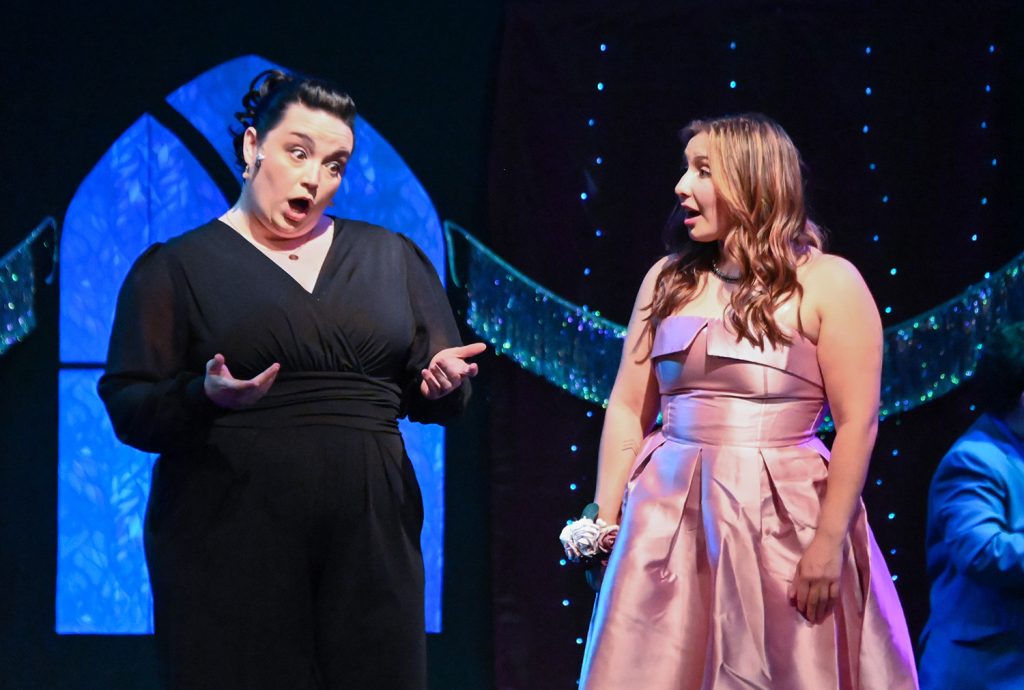
The Community Players’ new production of Carrie: The Musical, directed by Morgan Salpietro, with book by Lawrence D. Cohen based on the novel by Stephen King, captures both the unsettling undercurrent of King’s story and the brave heart of community theatre. The music by Michael Gore, with lyrics by Dean Pitchford, certainly adds to the tragic and, at this point, iconic visceral poignancy. Some themes never die. This story addresses cruelty, isolation, and the terrible beauty of transformation which, in this staging, feels urgent all over again with current updates. The students openly curse, disrespect teachers, and of course carry cell phones. OK, maybe just the cell phones are new.
Salpietro says, “When I first thought of directing Carrie: The Musical, one quote stuck out to me, ‘Hell is a teenage girl.’ The intensity of emotion and insecurities one feels at 17 are so strong. Add in religious trauma and telekinesis, and you have a perfect storm for total destruction. And that destruction is what is remembered. Ultimately, it’s Carrie’s anger and response that defines the show, and not the mistreatment leading up to it.”
You sense the cast’s belief in what they’re doing. That shared heartbeat is what this production does best. At the center is Maddy Cardona as Carrie White, a performance as fragile as it is ferocious. Cardona’s stillness in early scenes says everything about a young woman who has spent her life apologizing for existing. When her powers begin to surface, that same stillness trembles and cracks. By the time the prom stage has her bathed in crimson, she’s incandescent, allowing Carrie’s hurt to simmer into fury — an emotional payoff that feels as earned as it is tragic. She does this with a dynamically powerful voice as vulnerable as it is vengeful.
Opposite her, Rebecca Kilcline as Margaret White — Carrie’s mother — is mesmerizing. Kilcline’s beautifully operatic energy fills the small space, finding moments of heartbreak in Margaret’s misguided faith. Their scenes together — particularly the haunting “When There’s No One” — are the emotional spine of the production.
The supporting cast shines with refreshing conviction. Bryce Gray brings warmth and a welcome sincerity to a role that can easily feel like a plot device, while Aurora Dube as Sue Snell balances guilt and hope with deft control. Kate Landino’s Chris Hargensen nails the mean-girl venom, leaving room for the insecurity beneath the malevolence. Her chemistry with Matthew O’Brien’s swaggering Billy Nolan fizzes with malice. The role of Carrie’s Chorus is typically cast with three actors, but Addison Eaton auditioned as such a force, she was granted the role all her own.
Visually, the show succeeds with understatement. Set designer Dillon Bates opts for an elevated T-shaped staging that seamlessly serves for school rooms, kitchen and prom. Lighting designer Maddie Laxo creates a simple, stark atmosphere, especially for the climactic blood scene.
The ensemble maintains tight harmonies under music director Joseph A. Carvalho, who keeps the score energetic. Choreographer Sara McCormick uses the small stage smartly, allowing the gym and locker-room scenes, where tension and rhythm merge, to become a more personal space.
“I love this musical for all its campiness woven in with heightened feelings and honesty that come with being a teenager,” says Salpietro. “It’s been exciting to work on this show with a cast ranging in ages and exploring how each of us relate to the feelings of rage, not being enough, and attempting to fit in and belong. This show has been a joy to direct and I’m thrilled to share our production of Carrie with you!”
The Community Players’ Carrie may not have Broadway polish, but it does offer emotional truth and creative nerve. Come see for yourself!
Jenks Community Players presents Carrie through November 16. For more information, visit thecommunityplayers.org.