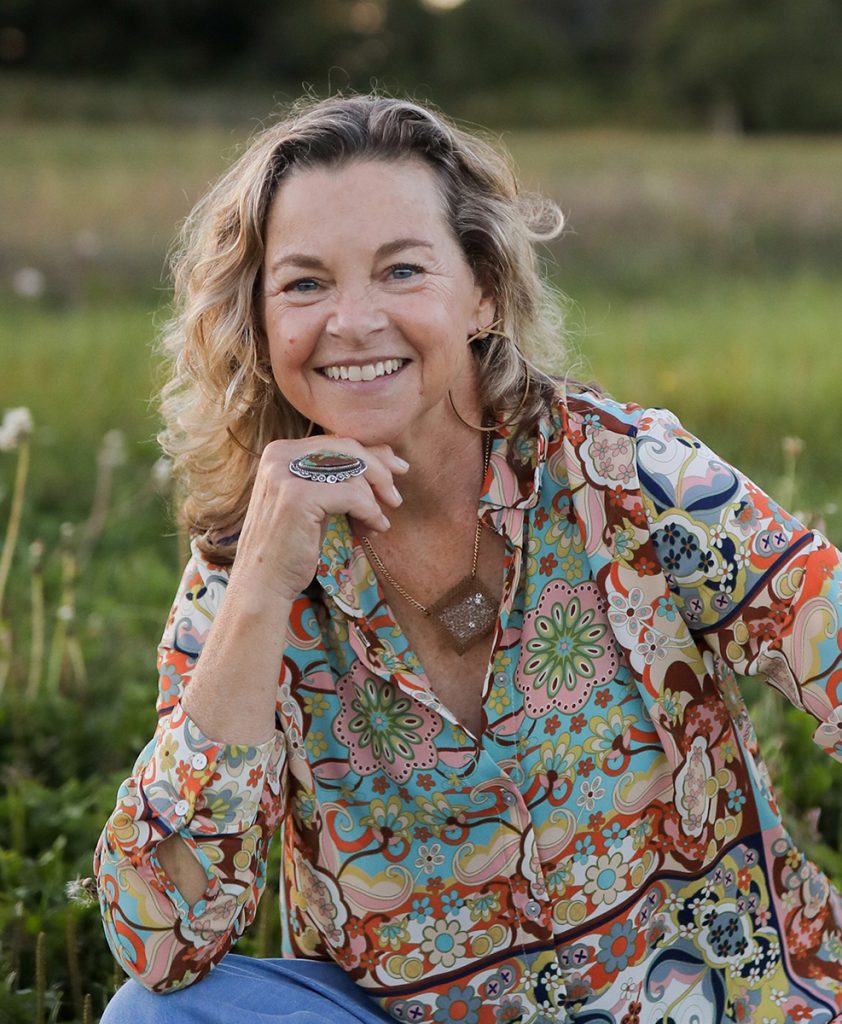
Rhode Island is bursting with creative energy. Providence calls itself the Creative Capital but that concept doesn’t stick to the confines of the city’s boundaries. The creatives that help make the Ocean State one helluva place to live can be found in every jurisdiction and that includes on Aquidneck Island. Case in point: Kim Fuller of Born to Rise is empowering women around the state to share their stories and she does so by creating an encouraging event each month in Middletown, as well as Bristol and Pawtucket.
Fuller is a mindful photographer, spiritual and story coach, two-time, award-winning author of Finding, a memoir, and Born to Rise, a collection of women’s stories. She is a TEDx speaker, storyteller, and founder of Born to Rise, a community and membership space for women to share their transformational stories and awaken to the greatest possibility for themselves. Her passion is to help women shine in their power, their stories.
DMK: Your personal journey has been deeply rooted in story and spirituality. What first drew you to the power of storytelling as a tool for transformation?
Kim Fuller: It’s funny you’re asking and mentioning storytelling and spirituality in the same vein, because that’s actually where it all began. I’ve always been curious about what spirituality even means, and exploring that a little bit. When I was on a photoshoot at Salve Regina, I had the opportunity to shake the hand of the Dalai Lama, who was presenting a talk that day.
Before he arrived, I was telling myself a story — an internal story. I thought I was going to get to walk around, get full access to him, and end up in the front row during his lecture. But none of that happened because of security and logistics. Instead, I was placed in the third row, which allowed me to shake his hand as he walked by.
I was very much stuck in what I call an ego story — the story of what I expected to happen versus the reality of what actually happened. If all of that other access had happened, I might not have had that moment, and that moment profoundly changed my life. I knew right then that something was shifting within me. Listening to his lecture afterward made it clear that I needed to study Buddhism and look more deeply at mindfulness. That was the very beginning of understanding how story is part of our internal narrative.
DMK: In your memoir, Finding, you share your journey of how your late son, Keydell, came into your life and its interconnection with the Dalai Lama’s visit. How did those experiences shape your understanding of love, resilience, and spiritual growth?
KF: In the Buddhist tradition and in mindfulness practices, the directive is to really watch what arises when you’re quiet or meditating, so you can meet yourself where you are and understand your tendencies in thought.
Most of the time, we are not telling ourselves the kindest stories. We criticize ourselves constantly. When we recognize those thoughts and understand that everything is impermanent — including thoughts — we can catch them more quickly. They don’t last as long, and we don’t get lost in the spiral. That creates space for more beautiful things, like kind thoughts, which then develops self-compassion.
With self-compassion and self-understanding, we can work with what arises. We are all suffering. When you see suffering so clearly, like with my son, who experienced extreme trauma early in his life, it wasn’t hard to see that he needed more than he got as a child — more love, more support, more compassion. Even when he behaved violently, I still had compassion underneath because I could see the suffering. People don’t usually act badly unless something really painful is going on.
DMK: Through writing your memoir and sharing those deeply personal experiences, how did that inform your passion for storytelling?
KF: One day I realized that I wanted to tell the story about Keydell and our relationship because I learned so much from it. I wanted to help other adoptive parents, or anyone struggling in a relationship — to see how trauma could be worked with and maybe transformed into something meaningful. The “mess to the message,” as they say.
I very clearly heard a message that said, “It’s time.” I knew in my body that I needed to write a book. The next day, I sat down and started writing. It was healing and very hard. Eventually, I shared the story at a local TEDx Talk. Keydell joined me on stage at the end, and we received a standing ovation together.
That moment was eye-opening. It showed me how powerful it is to tell stories by simply showing up — speaking them, writing them, sharing them visually. Watching Keydell stand there authentically was incredibly moving. That experience made me want to create opportunities for more women to share their stories as part of a healing process. I felt like I healed another part of me by writing, then another by speaking. That’s when Born to Rise slowly began to form.
DMK: What kind of impact do you hope your storytelling series will have on future generations of women?
KF: Women of my generation grew up in a very different time around self-expression. We make a lot of assumptions about people — how they dress, where they come from, what they look like, whether they’re smiling or not. But we really don’t know what’s going on inside someone.
When women speak their stories — sometimes for the first time ever being shared — it creates safety. Born to Rise has become a container that gives space to speak truthfully and vulnerably and still know you are loved in that moment, if not more than ever.
We haven’t lived as authentically as women because of societal conditioning. We were taught to play small. I hope to empower women, especially of our generation, to know that we’re not meant to fade away in our ’60s, ’70s, or ’80s. We still have voices, wisdom, and stories — not only to connect with one another but to empower younger women and show them they don’t have to follow the same rules we felt bound by.
DMK: You talk about shining in your power — your story, your beauty, your essence. What does that look like in everyday life for women who feel unseen or unheard?
KF: I can only speak from my own experience. I’m pretty vulnerable. I recently came back from a silent meditation retreat. I hadn’t cried much about recently losing my son until I spoke out loud during a group sharing. I said, “I came here carrying a lot of grief.” Just saying that made me very choked up.
Later, someone told me that hearing me speak vulnerably gave them permission to do the same. This was someone who didn’t see themselves as that kind of person. That showed me how powerful vulnerability is.
When we trust that we are lovable — even when we are a hot mess — we can be more authentic. We trust our intuition more. We trust other women more. We know we can handle difficult conversations. Sharing openly gives others permission to do the same. If my story touches one person, that’s enough.
DMK: Why is slowing down and creating intentional space so essential for authentic storytelling?
KF: Because we all want to be seen and to matter. We are deeply interconnected, but technology makes it feel otherwise. When women come together and share honestly, we see commonality. We see that quiet women, loud women, reserved women — all belong.
Storytelling gives us a chance to be seen as we are and to recognize that we are enough. Women’s stories haven’t historically been heard. When women share their stories, we create a new collective narrative. That’s one way we impact younger generations.
DMK: You’re also a mindful photographer. How do you see the connection between capturing an image and capturing a story?
KF: A camera is an objective observer. The lens is perception. Am I zoomed in or pulled back? What am I choosing to include or exclude? That’s the story.
Mindful photography is about paying attention — even to something as simple as a speck on the road. When you slow down and really look, you build gratitude, compassion, and respect. You begin to see beauty in unexpected places. It’s the same with stories — noticing what we focus on and what we overlook.
DMK: What types of workshops do you offer where storytelling plays a role?
KF: I run the Empowered Voices Collective, an online membership where we meet twice a month to explore our inner narratives through writing, meditation, and deep questions. I also host retreats, like the Born to Rise retreat in Maine, focused on using our voices more intentionally.
I offer mindfulness workshops, intention-setting workshops, and one-on-one work — helping people shape talks, organize memoirs, or explore the spiritual meaning of their stories. It’s all about understanding self-talk and creating new, more empowering narratives.
DMK: What do you hope people feel when they attend a Born to Rise storytelling event?
KF: I hope they feel like they belong. That’s the biggest thing. The community that’s grown from this has been incredible. I want women to feel seen and empowered — not brought down by their story, but strengthened by it. Wherever you are is exactly where you can begin. Your story can empower you.To learn more about the monthly storytelling events, see BornToRise.Live and click on Events. Follow Dennise on IG @TheAdventureBroad.