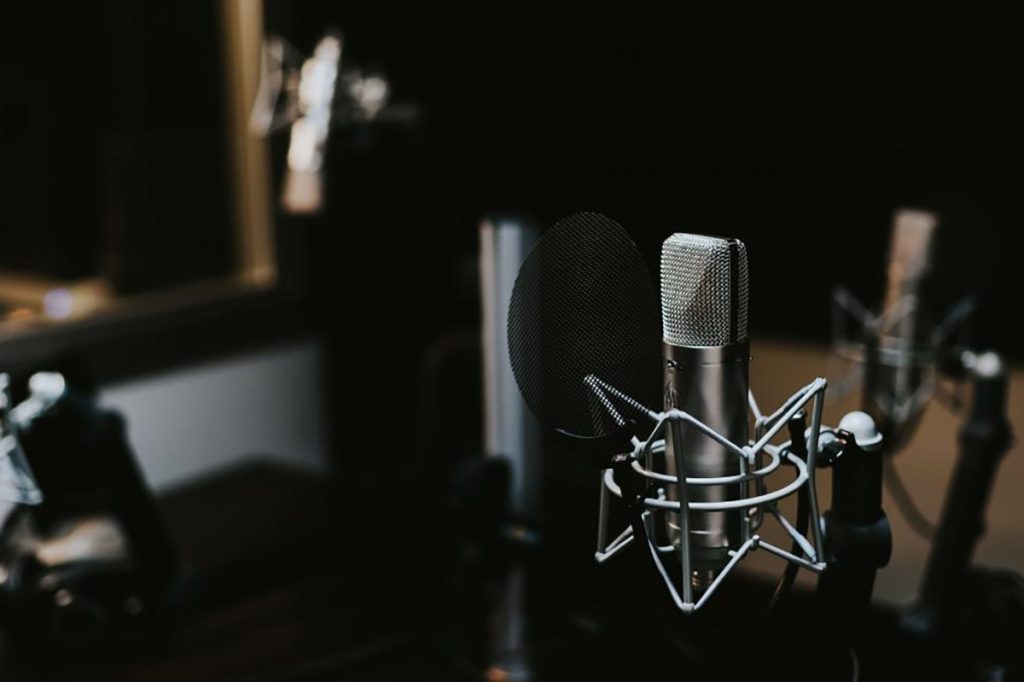
A conversation with two local artists proves that the modern-day poet is not only found at poetry settings; you can also find them at the studio.
When we think of poetry, do we think of the stanzas and lines we memorized by heart? Or, do we think of the lyrics that had us googling the meaning to make sense of the little nuances? We could waste our time arguing about what makes a poem a poem. We could go over the rules that place art into a box of norms and regulations, but what is the point? Poetry does not belong to rules; if it did, we would be erasing the creativity of half the population. Ask any poet, and they will tell you poetry is how we turn emotion into something that speaks back. Now, ask any songwriter, and they will tell you the same when it comes to writing music. It is about the soul behind the sound and the lyrics. When we think of these two art forms as separate entities, we overlook the bond that holds them together. While the literary world debates what counts as a poem, spoken word has already challenged the page, and hip-hop has challenged the podium.
Poets are never just one thing. They are the narrator who molds the story, the translator who interprets what others struggle to say, and the vessel that allows the words to flow through them. The same can be said about songwriters. “I think I am all three,” explains 21-year-old R&B singer, songwriter, and entertainer Prince Nemo, when asked if he sees himself as a narrator, translator of emotion, or vessel of both in his music. “I say this because when I’m writing a song, I am narrating my story. Then I become a translator, when I am expressing what other people cannot in a song.”” Twenty-two-year-old R&B singer and songwriter Tai Lee sees herself as all three as well. “Being a translator… that’s the most I have struggled with. It is a very uncomfortable and difficult part of my process.” But as a vessel and narrator, Lee says, “A vessel, because there are parts that come up that I did not intend. It would be as if I were a vessel of something that I am unconsciously aware of. As a narrator, I have a story to tell. We’re humans, we all go through hardships. We all have stories to tell.”
When you remove the melody from a song, are the lyrics still strong? Do they still hold the same meaning? Are they still personal?
For both artists, the answer is yes. Lee says, “If we look at the blueprint, it was very much poetic. There was a grounding foundation in the words and melody. The past is rooted in poetry, and there is a rise in going back to that foundation.” “Poets and songwriters connect,” Nemo agrees. “A songwriter can make a song based on a poem.” When we take away the beats and the performance of a song, we are left with the writing. That is where the real test lies. Not every song is built to stand on its own. If you take away the production, can the words still evoke that raw feeling? The ones that do feel like poetry in its realest form. These are the songs you want to consume until there is nothing left. Similar to poets, these individuals reveal how they write from an emotional place, allowing their past experiences to guide the pen. Nemo uses beats and melodies as a guide to the type of song he intends to write. “If I get a beat that is very emotional, I know I am going to end up having to pour my heart out.” His lyrics are not just reactive, but they are honest translations of his own experience.
Lee, whose roots began in poetry, believes that songwriting became an extension of writing on paper without melodies. However, as she progressed in her career, freestyling became her new outlet to let loose. “As far as freestyling, I think it is more raw. It is more like an open mic. In that moment, you are present.” The literary world may separate poetry from music, but these artists stray away from that mentality. “I remember going to my first slam,” Lee recalls. “And it sounded like music to me. The silence and the background when someone is speaking poetry… there is an impact there, and it feels stronger and deeper. It feels projected. With music, you have a background and something that builds with the voice.” Poetry runs deeper than rhyming words and iambic pentameters, and music is more than just trending lyrics and a hype-beat.
At their core, both are forms of emotional translation. They have a way of turning intangible feelings into something physical, something that can be felt through your senses. A poet uses silence to build tension, and a songwriter uses melodies to echo a feeling. This requires a level of vulnerability; the craft asks them to sit with their truth long enough to shape it into something outside of itself. Whether the words are on paper or not, whether they are read or sung, the intent is still the same: to evoke an emotion that can only be released in the form of art. This is where poetry and songwriting meet, always have, and always will. •
Check out their music on Spotify, Apple Music, YouTube, and Soundcloud. Follow them on social media: @bytailee, @princenemoo_