My great, great grandmother was a Ramapough Lenape Indian and one of the only ancestors we have a picture of from that long ago, around the late 1800s. While we may only have an image to look back on, we do have this person, a woman, a piece of our history that reminds us of who we are and where we came from. Those who once roamed all over the US once had roots and those roots were transplanted and re-rooted again and again. Deeply woven into local Indigenous art are cultural values of spiritual connection to the land, community, and ancestors. Through storytelling and cultural preservation, Indigenous art is a masterpiece of its own. We want to celebrate Indigenous art by sharing with you some of the local artists we discovered in Rhode Island.
Robin S Spears Jr.
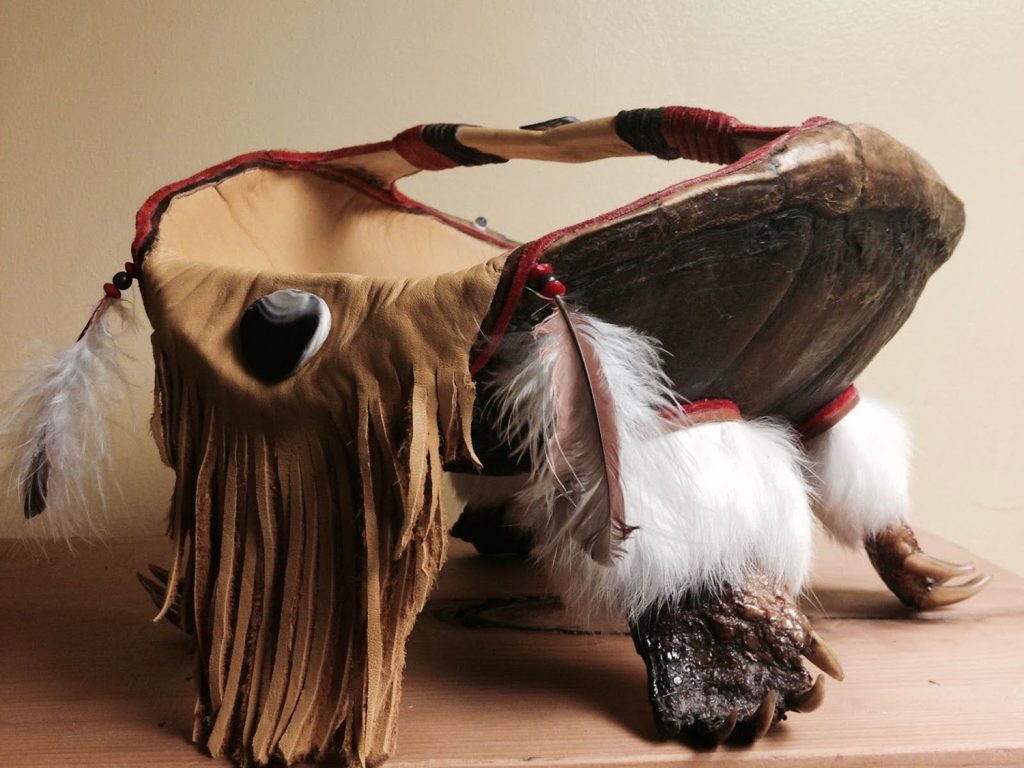
Spears, Jr., Narragansett Indian Tribe, is an award-winning traditional artist using items from the natural world to express his culture and identity. With various resources from the eastern woodland landscape, including bark, roots, shells, antler, bone, furs, and other harvested materials, he creates a variety of traditional art including stone, bone, and antler tools, bows & arrows, axes, war clubs, dance staffs, rattles, fans, and traditional clothing. He creates earrings, necklaces, bracelets, hair ties, hair sticks, barrettes, arm bands, leg garters, and other adornments. He also makes baskets, bags, and made a cradleboard for his grandson.
He passes down his knowledge to his children and other tribal youth, including River Spears and Robin Spears III, through RISCA’s Folk and Traditional Arts Apprenticeship program. He has shown his work at the Atrium Gallery, Hera Gallery, Tomaquag Museum, Smith’s Castle, Charlestown Town Hall, USFW Kettle Pond Visitor’s Center, and Mystic Seaport Museum. He’s won prizes in juried shows at the Westerly Arts Cooperative, Mashantucket Pequot Museum, and took first prize twice at the Warwick Center for the Arts.
Robin has been a mason for over 30 years in his family’s business showcasing the Narragansett art of stone masonry. He recently retired as a Lieutenant of the Narragansett Indian Tribe’s Environmental Police Department. The care of the natural world is important to him culturally, artistically, and professionally. He served in the US Army as a Sergeant and served on the Native American Board on Veteran Affairs for USET (United South & Eastern Tribes). He also served on the Charlestown Parks and Rec and ran the teen and men’s basketball leagues. He was a volunteer fire fighter for the Cross’ Mills Fire Department.
“I gather my elements with care and transform them into useful and artistic items such as baskets, knives, and adornments, each piece serving as both a practical object and a cultural expression. In my process, I think about the daily lives of my ancestors and reimagine their traditions through a blend of natural and contemporary materials. My work is guided by the goal of reminding people that Indigenous communities are still here, thriving in the 21st century. Most importantly, my late mother inspires me ,— art became a means of healing, a way to honor her life and connect with her creative spirit as I pursue my own.
“As someone who served in the U.S Armed Forces, I carry the weight of representing a country that speaks of freedom and justice. Yet, as an Indigenous person, I also understand that those promises have not always been extended equally. My art lives in this space of duality — honoring my culture, remembering resilience, and asserting the ongoing presence and freedom of Indigenous identity.”
Mishki Mars
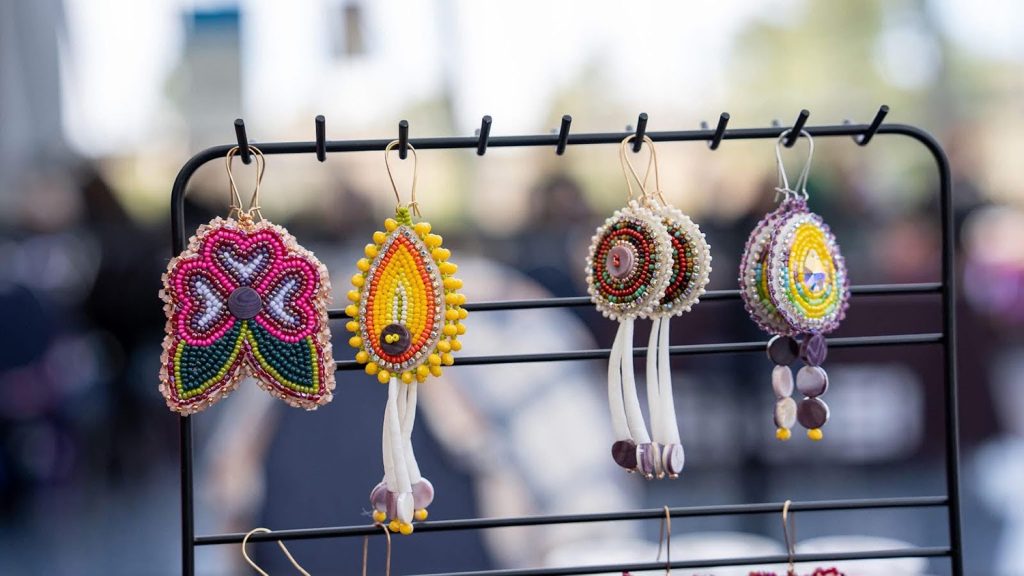
Mishki Thompson is the artist behind Red Fern’s BOWtique and a member of the Narragansett Tribe. With her creative and youthful flair, she merges the contemporary with the traditional, specializing in hair bows, beaded earrings, and ornaments. She also loom-beads and cross-stitches accessories, sews leather regalia and ribbon skirts, and makes moccasins. She enjoys making bows and headbands for children to inspire them to feel confident and beautiful. Mishki is proud to teach beadwork and her other practices to her family members and the broader community.
You can find Mishki’s work at the Tomaquag Museum gift shop and on Facebook at Red Ferns BOWtique.
Weeko Thompson
Weeko Thompson is a beading artist and member of the Narragansett Tribe. She is a 16-year-old high school junior and began her craft at the age of 11. Her style blends traditional Native American beading with contemporary pop-culture imagery. She beads earrings, medallions, and pop sockets. Weeko’s beadwork has been exhibited in several art venues in RI, including the RI State House and the Warwick Art Museum. Weeko is currently working on an independent study project to create an art exhibit showcasing her work.
You can find Weeko’s work on Instagram @weekobeading
Quaiapen Perry
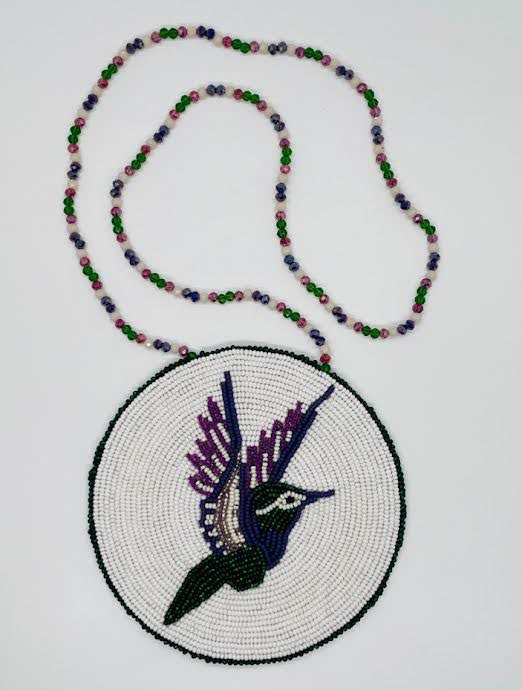
Quaiapen Perry is a Narragansett artist based in her ancestral homelands of Charlestown, RI. For over fifteen years, she has honed her craft in beading and is celebrated for her masterful command of color and her original designs. The work is a vibrant connection to tradition, including pieces that are worn with pride across Indian Country. Recently, her practice has expanded to include sewing.
Mikala Jackson
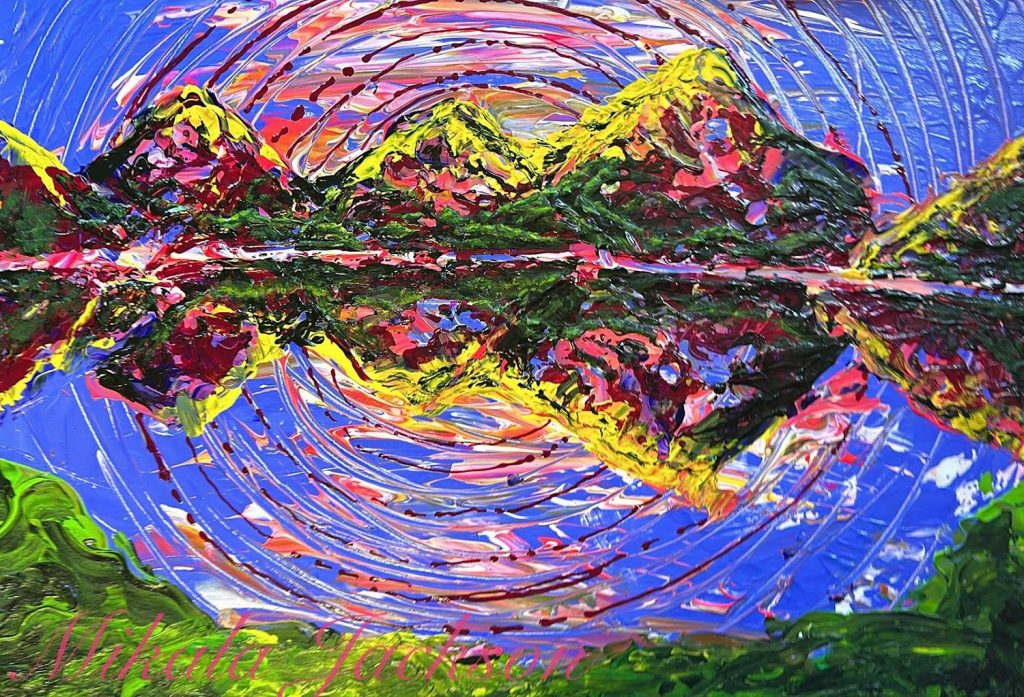
Mikala Jackson is an Indigenous woman, mother, and self-taught artist. She is a descendent of the Kutzidika’a Paiute from Mono Lake, California, as well as Paiute Shoshone from Fort McDermitt, Nevada. Her most significant inspirations come from her family, her culture, and the surroundings she grew up in. She has delved into many artistic mediums with acrylic and watercolor being the most significant aspects of her art work.
“Being an indigenous woman during the present time has encouraged me to explore my own identity and I aim to encourage others to do the same. We should be striving to reclaim our stories, languages, songs, and cultural heritage.”
In 2022 Mikala participated in the side-by-side art exhibition of Warwick Center for the arts and was awarded third place. She was also featured in Robin Spears Indigenous Innovations exhibition 2024 at the Atrium Gallery in PVD. In 2025, Mikala worked with the Indigenous Empowerment Center, as a Garden Fellow as well as an artist in residence, where she leveraged her traditional ecological knowledge to grow and harvest plants for dye making. Mixing her traditional knowledge and artistic style, she created a dye booklet that is currently being shared with IEC community.
Elizabeth James-Perry
Erin Genia
Robert Peters
Duane Slick
The Sun Has Its Own Drum (through December 14, 2025)
This exhibit at The Bell Gallery/Brown Arts Institute in PVD represents Indigenous artists of the Northeast, their worldviews and values through sound.. The power of sound and material innovations is rooted in seeking rhythm alignment with the natural world.
Elizabeth James-Perry merges Aquinnah Wampanoag cultural expressions with marine science to highlight the influence of echolocation on ecological regeneration.
Erin Genia creates sound vessels that blur the distinction between art and science, human and more-than-human, to promote interconnectedness through material resonance.
Robert Peters expresses the centrality of music to his sense of Mashpee Wampanoag and African American identity and community, uniting storytelling, poetry, and music with rhythmic mixed-media compositions.
Duane Slick’s paintings explore the sonic spatialization of a place at night, translating aurally-perceived environments into visual environments, then into visual abstraction.
The sun has its own drum, referencing Warm Springs/Yakama Navajo Nation poet and educator Elizabeth Woody’s sonic geographies, pulses with resonant visions of interdependence.
Curated by Christina Young (MA ‘26 Public Humanities) and Thea Quiray Tagle, PhD, with input from students at RISD, and the exhibition team at the Brown Arts Institute. It’s free and open to the public.
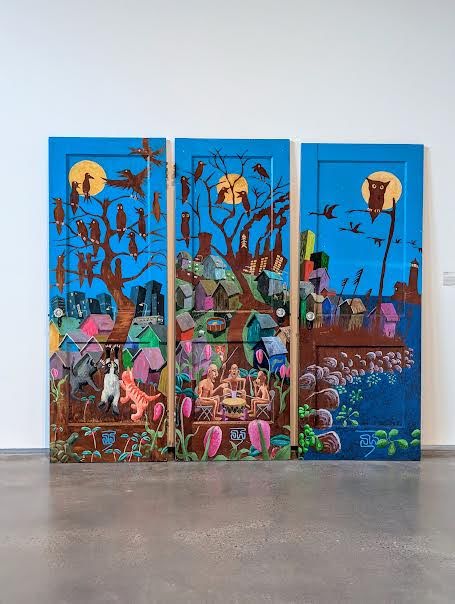
Photos from The Sun has its own drum curation: Kelly Marino