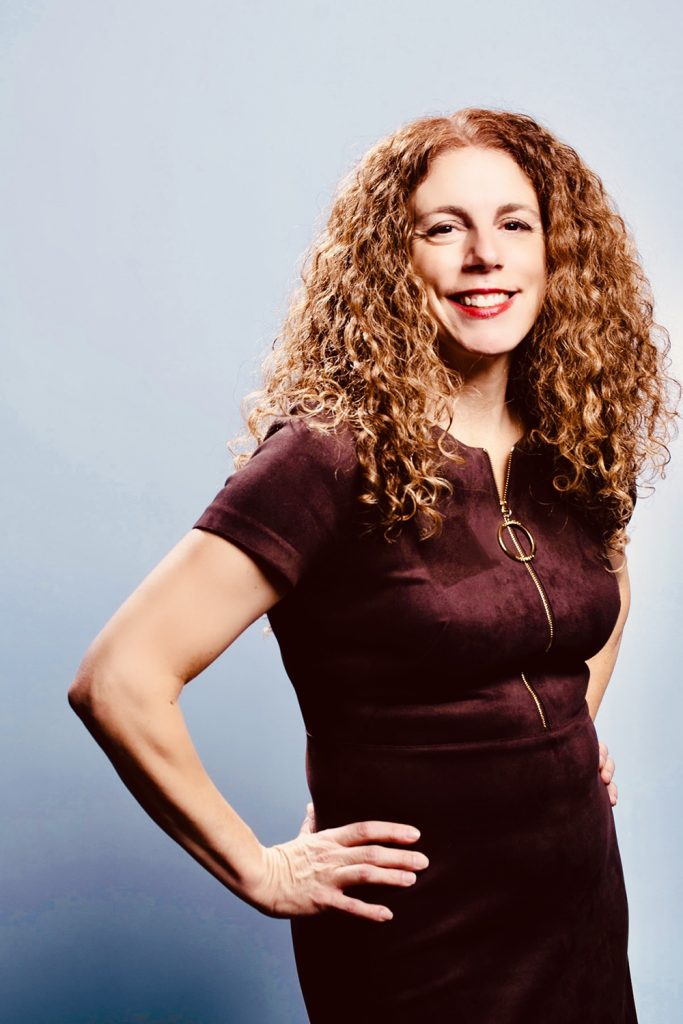
If you haven’t noticed yet, Rhode Island is bursting with endless creative energy. Providence has named itself the Creative Capital and is the home of the Rhode Island School of Design, WaterFire, and PVDFest — just to name a few extraordinary arts events. It is also hard to miss all the movies and television shows being filmed in the Ocean State recently. Well, there is also a bursting community of local talent painting, writing books, and making films. One of those talented folks is Kristen Falso-Capaldi, a modern day Renaissance Woman if there ever was one.
Kristen began her career at television stations in Providence and Boston, where she was a writer/producer for promotion, advertising and short-form programs, one of which earned her a Boston/New England Emmy nomination. After pursuing her masters degree and spending nearly two decades as a public school writing teacher, she decided to step out of the classroom and into a life of making art, full-time. I met Kristen in 2019 when we both sat on a nonprofit board. We kept in touch and for the past few years, have leaned into loads of conversations about showbiz since I entered it as an actor. Recently, we yakked it up on a video call about her journey to live her big life one small artistic adventure at a time.
DMK: You were a full-time school teacher before this and then you decided to pursue a life as a full-time creative, as an artist. I would love to hear more about that decision and how your journey led you to filmmaking.
KFC: So one of the ways that I looked at myself was sort of as a shadow artist, you know, someone who sort of gets involved on the edges of being creative when I really want to be a practicing artist. As a high school English teacher, I think I was always absorbing the literature that I really wanted to actually write. Part of me really wanted to be able to kind of juggle both lives and I did that for quite a while. When the pandemic happened, I just was like, I need to figure out what I want to do with my life. That was about the time when I decided to take a break from teaching. I moved away from being a shadow artist into being an actual artist.
DMK: A pandemic pivot. I love it. You are a writer and a visual artist. There are two very different ways to be creative, written word and visually creating something. What would you say you like about each way of sharing your artistic expressions?
KFC: Well, honestly, they’re both versions of storytelling. And I think as a young person, I used to make up stories all the time. I don’t think the other kids really wanted to play with me because I’d be like, all right, we’re going to act out a play in the backyard. I would also write short stories and enter little contests when I was a kid. I was always writing. I would also draw for fun. Then in 2017, I decided to take an art class just kind of on a whim. I had a really wonderful teacher. She got me painting and drawing. A big shout out to Claudia at Blue Door Studio. These days, sometimes it might be a song I really like and turning that into a painting or a picture of an old typewriter in an antique store — things that I find so interesting. There are stories behind those things, and then those two mediums put together, the writing and the art, is really what led me into filmmaking.
DMK: You’ve written three novels, as well.
KFC: Yes. Well, technically four. The first one was kind of like when you are making pancakes and the first one you throw away because it isn’t quite right. It was the ‘’practice’ one. That’s how I look at my first novel.
DMK: Would you say the types of novels you have written have a similar storyline to your filmmaking, or are they totally two different approaches to your storytelling?
KFC: I think they are two different kinds of ways to tell my stories. One thing I love about being an independent filmmaker is you’re not really tied down to any particular genre, whereas if you were hired to do something a certain way, you would have to; you’d be kind of pigeonholed. But with me, my novels are generally realistic fiction that kind of blend a little into literary fiction. My most recent one has some fantasy elements to it, but it still uses pieces of reality. With my films, one’s very surreal and dreamlike and another one’s a straight-up screwball comedy.
DMK: Would you ever take any of your novels and make it into a film?
KFC: I would love to do that. I would love to be the person who writes that screenplay. I have done that with someone else’s novel. I have a writing friend, and she wrote this book about a singer who goes on tour with her son’s band. I thought it was the coolest story and it had some depth to it, some serious stuff. I asked her if she would be open to me adapting her story for film as a writing exercise for myself. She was game, and it was such a great experience. It was accepted into a few film festivals.
DMK: A big thing about being an artist is you really do have to push through the ‘scaries’ the nervousness and the anxiety of creating things. So you’re a very brave person, what I know of you, to really venture out into this world by just throwing open this door to being an artist. I love it. I want to hear a little bit more about some of your other visual work. You did a utility box at Roger Williams National Memorial.
KFC: When I left the public school system, I had two years to kind of just do as much creative stuff as I wanted to do. I was taking on all kinds of jobs and really just having a blast, feeling like I was in my twenties again, that I could just do anything, and I did a utility box project on the north end of Providence. I used students’ artwork who had won a competition to put it on utility boxes. A friend of mine heard that Roger Williams Memorial needed someone to paint a box and he recommended me because he knew I had done another project. The design ended up being a visual story about religious and political freedom, something that is part of RI’s history.
DMK: Let’s talk about your filmmaking. You’ve written and directed two films: You Weren’t Afraid at All and So You Want to Steal a Kidney. Can you share a little bit of an overview of each film and what inspired you, because they’re very different from one another.
KFC: Yeah, they are vastly different. So the first one was based on a dream I had during the pandemic when everything was shut down. I was still working remotely, and I guess I was sleeping better at that time because I was just having such crazy dreams. This one dream that I had was about my dad who actually had passed away many years ago. I dreamt that I was outside of a local bar, and that he lived upstairs. In the dream, I kept trying to talk with him. It stayed with me. At some point, I sat down and wrote for four hours straight and created a screenplay using that dream as inspiration. I asked a few friends to help me make the movie. My second film, So You Want to Steal a Kidney, came to mind as I was driving one day and I had this thought in my head about – I don’t know if it’s an urban legend or if it’s a real thing – where someone lures somebody into a bed, knocks them out, and steals their kidney. I just came up with this whole idea of this woman who has no idea about human anatomy, but she’s desperate because she owes a bookie some money.
DMK: Folks can watch the first film on the streaming platform Reveel and So You Want to Steal a Kidney is being submitted to festivals, correct?
KFC: Yes, it premiered at the Block Island Film Festival in May of 2025 and won Best Short Film – Comedy.
DMK: Congratulations! Rhode Island is known for many things, one of which is, you gotta know a guy. I’m curious to know how that showed up while you were making your films.
KFC: I appreciate having a good network. And I think one of the things that I love to do is just connect with new people. I like working with local people and there’s so much passion for the creative work that is being made here.
DMK: You are a writer, artist, filmmaker, educator – those are four very different creative lives to live. What does a typical creative day look like for you so you can really lean into being an artist on a regular basis?
KFC: I used to be much more strict about writing every day, or I have to paint every day. I used to get up at 5am, and I would write for about 45 minutes, then I would go to my day job. It was done. Now, because I’ve done a lot of work in the past, I’m not as strict. I’m more just project by project. I think you do need to take some breaks. It is also important to finish things.
DMK: What is one of the biggest lessons you’ve learned, or a resource that you can share with folks who aspire to be a filmmaker?
KFC: It is not impossible to make a film. It’s dependent upon creating a network of people who can help you out and seeking out mentors. Thanking those who volunteer with really good homemade food also helps! Helping others out on their projects does as well. Those kinds of efforts go a long way when you are just starting out.
DMK: What kind of experience would you like people to have when they watch your films?
KFC: I would love for people to just walk away with something. Maybe they’re still laughing about something or what they just watched makes them think about relationships. I love it when I walk away from something, whether it’s art or writing or music or film, and I can’t stop thinking about it. If just one moment in my films stays with them, that makes me happy.
DMK: My final question for you is, what’s next?
KFC: I am back on campus at Bryant University teaching five classes, so I’m really focused on that right now. My next creative project will be editing my current novel a bit more and then I really would like to make another short film. I am also planning to get So You Want to Buy a Kidney into some more festivals because I’m really excited for other people to see it. You can learn more about Kristen’s work by visiting kristenfalsocapaldi.com.