According to The Inclusion List, of the 486 nominees for Best Director, only 10 have been women and only 3 women have won the title in the almost 100-year-old awards show. As an aspiring filmmaker, I don’t like those odds, although my end game in making a film is not to earn an Oscar. However, I know there are many talented women in the industry who have bigger ambitions, and there is a powerful community challenging that status quo every chance it can.
Here in RI, we have a very vibrant film community. We hear a lot about those big, fancy productions coming to town — Remain, Ella McKay, Hocus Pocus 2, Moonrise Kingdom, just to name a few. But there is also a whole cadre of talented folks who are not often mentioned in the press: our independent filmmakers.
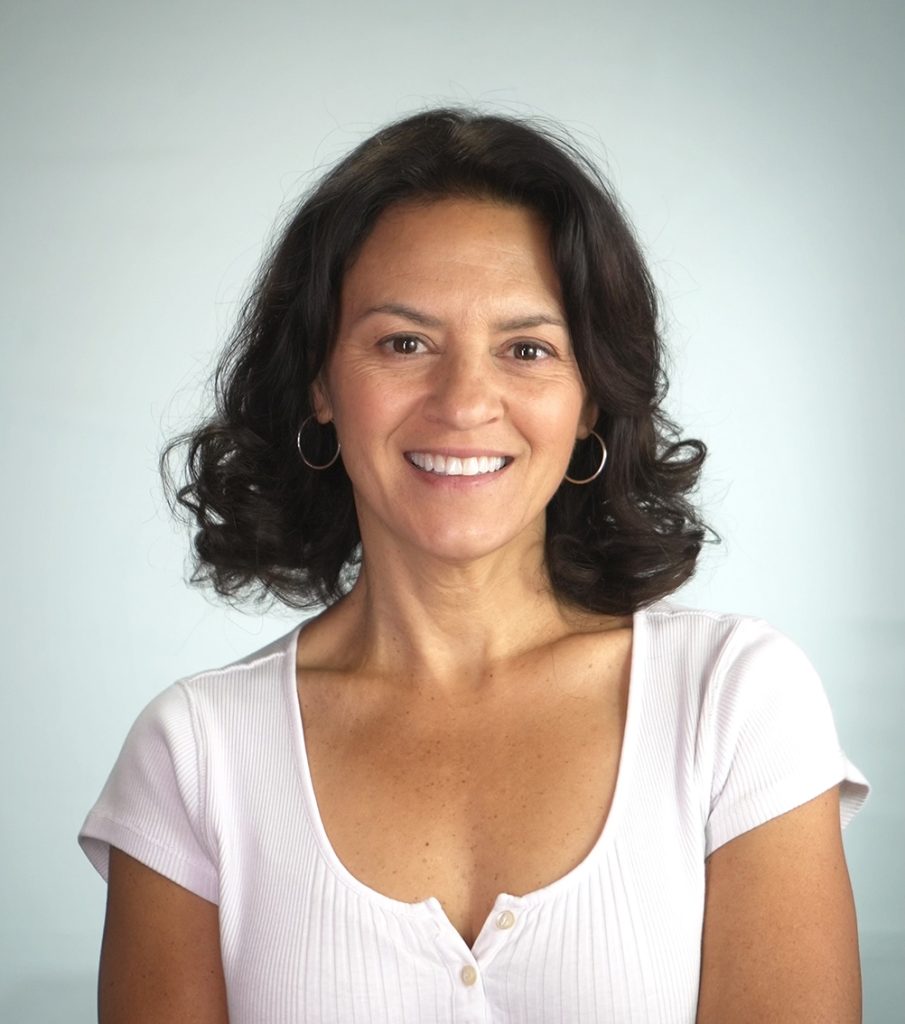
One of whom is Sharon Contillo. She is a RI–based producer, author, and advocate who is dedicated to bringing compelling female-driven stories to the screen. Through her company, Middle Center Productions, she develops projects that balance artistic integrity with commercial viability across feature films, short films, and children’s content. As President of SC Women in Film & Video New England), she leads a robust community of filmmakers and media professionals, fostering connection, education, and collaboration across New England. I met Sharon when I became a member of the SC community about three years ago. She is an inspiring leader and well, won’t take no for an answer. It is one of my favorite things about her.
DMK: You’re connected to both Women in Film & Video New England and your own company, Middle Center Productions. Let’s start there. When did Middle Center Productions begin, and why did you start it?
SC: Middle Center Productions started in 2014. I created it because I wanted to legitimize the work I was already doing. I was writing, directing, producing, acting — and at a certain point, you need a structure and a title. I became president, created the logo, built the brand, and put a mission behind it. It exists to tell women-led stories and elevate voices that are often underrepresented. That’s the heart of everything we do.
DMK: And did that strategy work?
SC: Absolutely. I tell our WIFVNE members all the time: Get your house in order before you invite anyone in. That means a website, a company name, social media that reflects your work — not just personal content.
I wanted the world to see me as a legitimate production company, because I am one. I had business cards, branding, and when I went to networking events, I showed up as who I said I was. You have to act like a business if you want to be treated like one.
DMK: Right — being a creative who wants to earn a living means you are a business.
SC: Exactly. If you say you’re a film producer, you need to present yourself like one. That’s why I started Middle Center Productions.
DMK: What are your thoughts on self-marketing and promotion in the film industry?
SC: It depends. For example, if a film wins an award — yes, that matters. But I’m intentional about how I share it. When I won Best Director in 2019, I didn’t frame it as “I won.” I framed it as “we won.” Film is not a solo sport. So I thanked the cast and crew, shared the laurels, and celebrated the collective effort. I might list the award on IMDb or my website, but on social media, the focus is the team.
DMK: Collective celebration matters.
SC: It really does.
DMK: I’m working on my first short film, Two Ladies and Their Parts, and highlighting cast and crew on social media as a way of saying thank you. That idea actually came from watching how others do it well.
SC: That’s exactly right. When I made Curls in 2019, I had 16 children under 11 plus adult actors — a large cast. Every week, I featured someone on social media. With parental permission, of course. Parents shared those posts, networks expanded, and suddenly the film had a life beyond just me. It wasn’t just exposure for the project — it honored the people involved and showed them they mattered.
DMK: Let’s talk about fundraising. What are your thoughts on the best ways of raising money for projects?
SC: It depends on your budget. If you’re working with volunteers and offering IMDb credit and meals, you may not need to fundraise. If you want to level up and pay people fairly, start with in-kind donations. Grocery stores like Stop & Shop or BJ’s will often donate gift cards — $25, $50, even $75 — just by asking. That can fully stock a green room for a shoot day.
DMK: I’m a professional fundraiser and that never even occurred to me!
SC: Most people don’t know that’s an option. Then, when budgets grow, crowdfunding makes sense — but it’s a lot of work. Beyond that, when real investors are involved, you absolutely need legal representation.
DMK: Do you have projects coming up?
SC: I do — a very major project that I’m not announcing yet. It’s a multi-million dollar historical film. The script is copyrighted, it has historian and real-life endorsements, and while I was in Paris I met with a César-winning sound engineer. For those unfamiliar, a César is the French equivalent of an Oscar. Things are moving forward — meetings with a line producer and an entertainment attorney are already underway.
DMK: Let’s shift to Women in Film & Video New England. How did your involvement begin?
SC: When I started my production company, I didn’t know anyone. I came from the corporate world. I joined a workshop hosted in 2018, met people, and was encouraged to attend the annual meeting in Boston. I joined shortly after. In 2019, it helped me crew a $20,000 short film — I reached 60% women crew. They connected me to nearly my entire team. Later that year, I ran for the board and was voted in. At my very first meeting, I was asked to become vice president. Then, during the pandemic, I became acting president — and officially president in 2022.
DMK: WIFVNE is fully volunteer-run, correct?
SC: Yes. No paid staff. Everyone volunteers.
DMK: And membership is open to anyone?
SC: Anyone can join. We host virtual and in-person events across all six New England states: Connecticut, Rhode Island, Massachusetts, Vermont, New Hampshire, and Maine. We’re one of the larger Women in Film organizations in the country.
DMK: What’s been the most meaningful part of your time with WIFVNE?
SC: Being both an independent filmmaker and the president gives me access to rooms I wouldn’t otherwise enter — meetings with government officials, industry leaders, global connections. For a long time, I still identified as someone who worked at IBM. I had to practice saying, “I’m an independent filmmaker and president of Women in Film.” When I retired, that identity finally clicked.
DMK: Mic drop.
SC: Exactly.
DMK: Middle Center focuses on women-led stories. What made that a non-negotiable for you?
SC: In 2014, at a New York Women in Film event, I shared my mission with a man who told me, “Good luck with that — you’ll never get anything made.” Not long after, Bridesmaids became a massive success. That moment stayed with me. Statistically, he wasn’t wrong at the time — but that didn’t make it acceptable. I write women-centered stories because I’m a woman. Those stories deserve space.
DMK: How do you push through the noise — the comments, the mansplaining?
SC: I’m 62. That noise means nothing to me anymore. Everything before 50 was an education. After that, I graduated. Confidence comes from experience. People make mistakes. If I make one, I acknowledge it and move forward. When you do that confidently, people follow you.
DMK: For someone just starting out, what’s the value of being part of a community like Women in Film & Video?
SC: We’re welcoming, generous, and we listen. We’ve all been where you are — new, unsure, building credits. You tell us where you’re at, and we help point you in the right direction. That’s our community. We help each other.
Learn more at WIFVNE.org. Follow Dennise on IG @TheAdventurebroad.