Searching for anything can be exciting and become a passion, like combing the beach for treasure. My friend invited me to go on a mushroom foray with a group of around 20 people, at Frenchtown Park in East Greenwich, and I found this group of people to be passionate about finding wild mushrooms. Three organizations and two journalists were at the sunny Thursday morning foray, including Rhode Island Mycological Society, The Mushroom Hunting Foundation, and 15 Minute Field Trips. The large group split up into smaller groups and each group had a knowledgeable mushroom leader. My group accompanied Emily and Ryan Bouchard from The Mushroom Hunting Foundation. We took off with determination and excitement on and off trails. Several people in my group were finding mushrooms left and right. Ryan and Emily teach about edible mushrooms in particular. While some mushrooms can be edible, there are also mushrooms that are poisonous. It is very important to be sure the mushroom is safe to eat, and there are techniques to find out which ones are. It is wise to reach out to experts like The Mushroom Hunting Foundation. They are a couple who are keeping the ancient skill of mushroom foraging and promote community awareness. The science of mycology — identifying mushrooms scientifically — is the way you can be trained to tell safe ones from poisonous ones. Right in the parking lot Emily and Ryan shared the first find of mushrooms in a woodchip pile from an old dead tree. They had us smell and feel the deer mushroom (Pluteus cervinus), a good one to eat. Mycelium is the root-like structure of fungi that acts as a decomposer, breaking down dead organic matter like wood in the soil, and also lives in association with plant roots. Safeguarding fungi habitats is important for ecosystem health. Fungi play a critical role in nutrient and carbon cycling, supporting plant growth through symbiotic relationships that also help regulate the climate. Dead limbs of trees are a substrate and food source for fungi. Emily mentioned that it is important to look at the tree system and identify trees.
Kelly Marino (Motif): What kind of trees do you find, which kind of mushrooms?
Ryan Bouchard: “There are about a dozen tree species that are important for a mushroom hunter to learn. Trees you’ve heard of–like oak, beech, ash, spruce–but might not necessarily recognize. Any of these are associated with large numbers of species. As an example, with a living beech you might find Black Trumpets or Corrugated Milk Mushrooms growing in a symbiotic relationship with that tree; meanwhile you could find Fall Oysters or Lion’s Mane growing on a beech tree that’s dead and decomposing.”
KM: How many categories of wild mushrooms are there?
Emily Bouchard: “In a family tree diagram of Kingdom Fungi, there are some major branches, as well as many minor categories. There are too many to list, but beginners start by learning that there are mushrooms with gills under their caps, that’s surely the most familiar category; and other mushrooms that have teeth–thousands of tiny soft spines under the cap; and others that have pores–thousands of little holes, like a miniature honeycomb. But there are tons of others, some of them very bizarre: the puffballs, the truffles, the stinkhorns, the jelly fungi, the corals…”
KM: How do you identify mushrooms?
EB: That question would take a whole mushroom class to answer. And you should definitely take our class, so look on our website! (mushroomhunting.org). But, it comes down to making observations about the features of the mushroom. Sometimes it’s obvious things like shape and color; other times, less obvious, like the aroma, or the texture inside when it’s broken, or the color it bruises when you scratch it. Sometimes we have to lay the cap on a piece of paper overnight to get a spore print, to see what color the spores are. Either way, it takes several observations in combination, to be certain you’ve got the right species. And you NEVER eat a mushroom unless you’re 100% certain it’s edible. Being pretty sure is not good enough.
KM: How do you field dress a mushroom?
RB: Well, don’t do it unless you are certain of the species–don’t slice it up and then try to identify it afterwards! But we use our mushroom knife and brush to remove the majority of the dirt on it, so it doesn’t spread around as we carry it back. Sometimes we’ll remove a section that’s being damaged by bugs, so the bugs won’t continue chewing into the good parts. But field dressing is the rough version; the finer points of preparing it for cooking–brushing it fully clean, and slicing it into slabs of even thickness–that comes later on, in the kitchen.
KM: What is Dead Man’s Fingers?
EB: That’s a weird species, vaguely finger-shaped, which appears in the spring. It’s one of the Pyrenomycetes, whose spores appear in little bumps on its surface, called flasks. Dead Man’s Fingers ends up covered with a blue-gray powder. And sometimes, if there’s five of them growing together, it really does look like a zombie hand reaching out of the ground!
KM: Can you describe what are the parts of a mushroom?
EB: I could, but it would take hours. There are so many categories, so many shapes. But know that all mushrooms release microscopic spores, some way or another. This is nothing to fear, though, even if it’s a poisonous mushroom.
KM: What animals and insects eat mushrooms?
RB: Lots of bugs, snails, slugs, turtles, and plenty of mammals too, like deer, rabbits, squirrels and chipmunks. But it’s important to know that just because another mammal is seen eating a mushroom, that doesn’t mean it’s edible for humans. It’s irrelevant, that’s a totally different metabolism.
KM: What deformities do you look for when foraging mushrooms?
EB: If you’re going to eat wild mushrooms, they have to be fresh. A spoiled edible mushroom won’t cause mushroom poisoning, but it will cause regular old food poisoning! There are molds that attack fresh mushrooms and can cause them to have strange swollen lumps, or white or yellow fuzzy mold. It takes some experience to assess exactly how fresh a mushroom is.
KM: When is the best time to start foraging mushrooms?
RB: Any time. Except winter, although we do collect the famous Chaga in winter. But spring, summer, fall, and even late fall, each season has its own amazing set of wild mushrooms to discover. Right now is not a bad time to start.
KM: What tools do you use when foraging?
EB: Mushroom hunting gear is pretty simplistic actually–a backpack, some paper bags, and a mushroom knife. That’s a special knife that also has a brush sticking out the end…we sell those actually, it’s a great and inexpensive one. The brush is important–we don’t want our students washing wild mushrooms clean–that removes flavor. It’s the thorough cooking that sterilizes them; water just makes them soggy. Use a dry brush. But your most important resource might be your phone, which you can use to send us a photo, so you can discuss what you’ve found with The Mushroom Hunting Foundation.
I was excited to learn so much about mushrooms in this 2-hour window into nature at its finest. I even found an artist’s conk, or artist bracket (ganoderma applanatum), which Ryan used a tool to write on. He informed me that the artist’s conk grows in perennial, yearly layers on wood. The tree I found this on was dead standing. Each year a new layer of pores grows on top of the previous one. This allows you to tell the fungus’s age by counting the layers, similar to tree rings. The white underside of a fresh layer can be drawn or etched on, which is why it is called Artist’s Conk.
The Mushroom Hunting Foundation connects the natural world with community. It is a nonprofit that teaches the best methods for foraging. Ryan T. Bouchard is the author of the groundbreaking calendar-book Gourmet Mushrooms of the Northeast 2019, and the previous Gourmet Mushrooms of Rhode Island 2013. Emily Bouchard, in addition to studying our region’s edible wild mushrooms, studies wild plants, and the many incredible ways they can be prepared in original and creative dishes. She is the creator of the educational wild plant foraging YouTube series “In the Weeds – with Emily Schmidt!” (her maiden name). The Mushroom Hunting Foundation has different types of events and educational programs, both indoor and outdoor, for audiences large or small, public or private, and they cook too – using amazing flavors you’ve never tried before! https://photos.app.goo.gl/QzBS6qFrv3eqo7Pj9
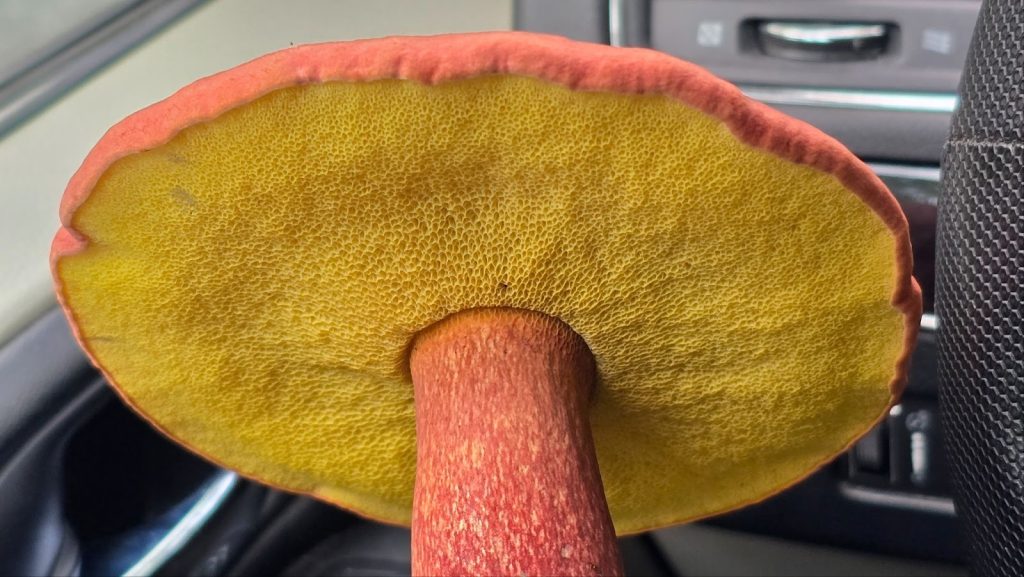
Bicolor Bolete (Baorangia bicolor)
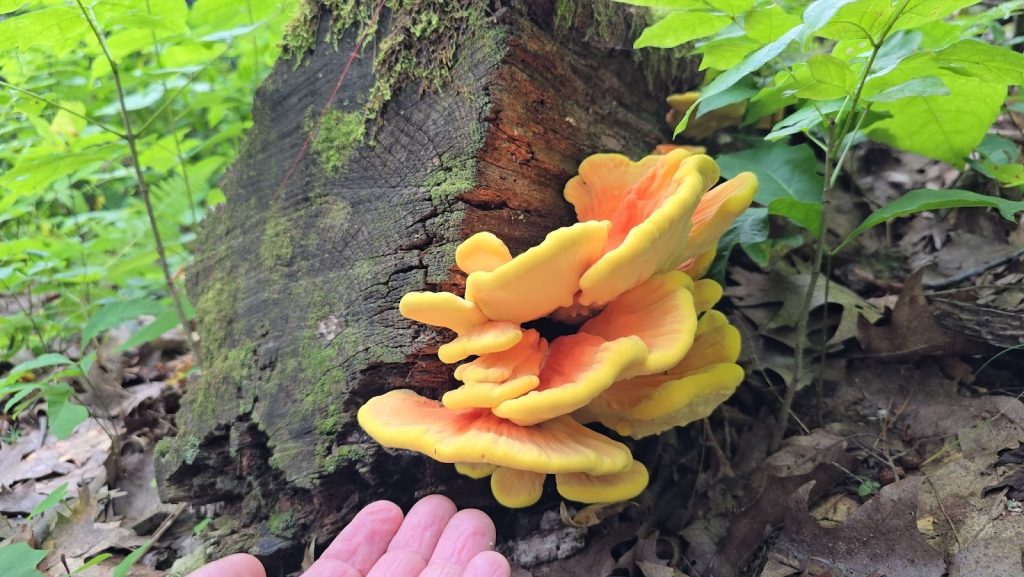
Chicken of the Woods (Laetiporus sulphureus)
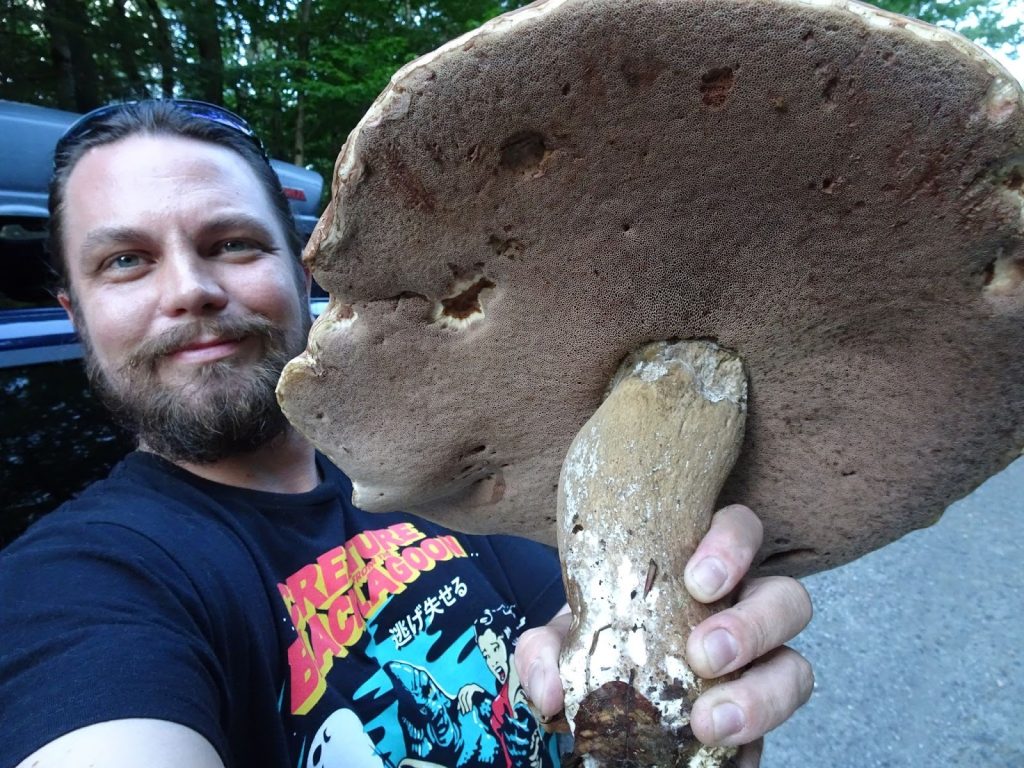
A bolete mushroom; specifically this is Tylopilus rubrobrunneus.
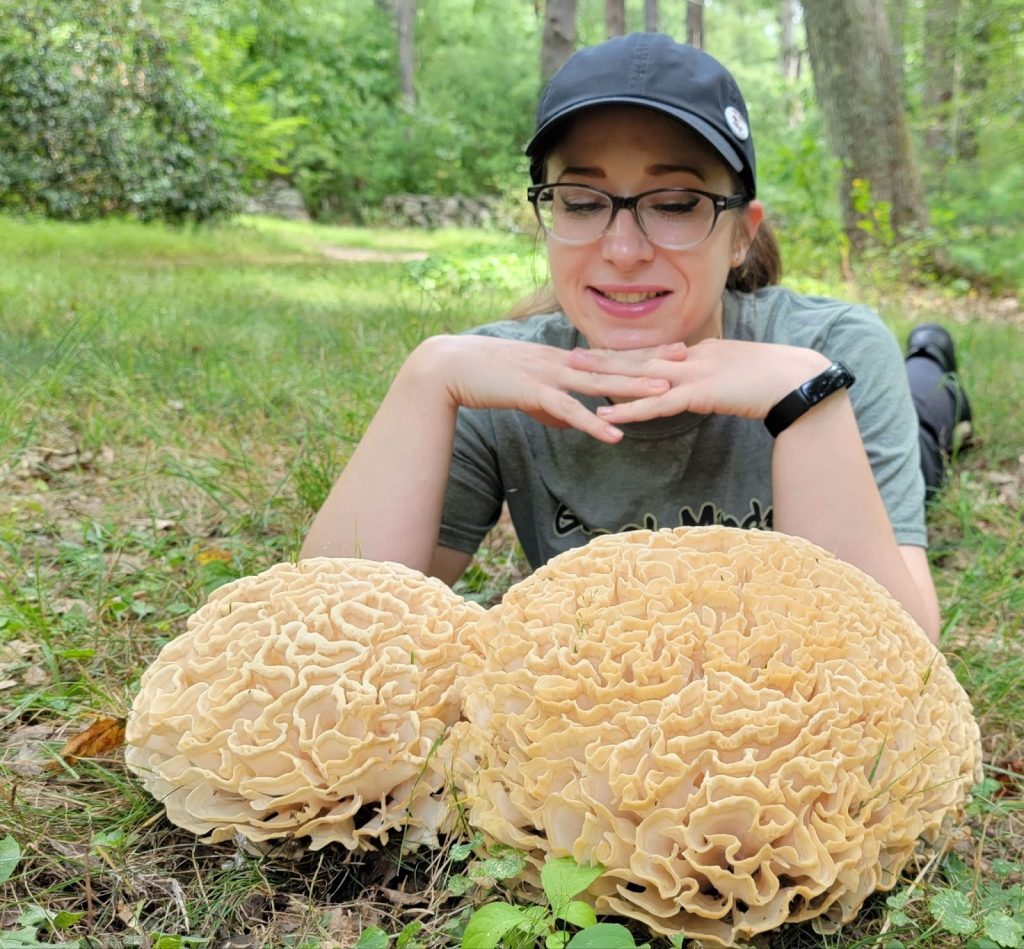
Cauliflower Mushroom (Sparassis spathulata)
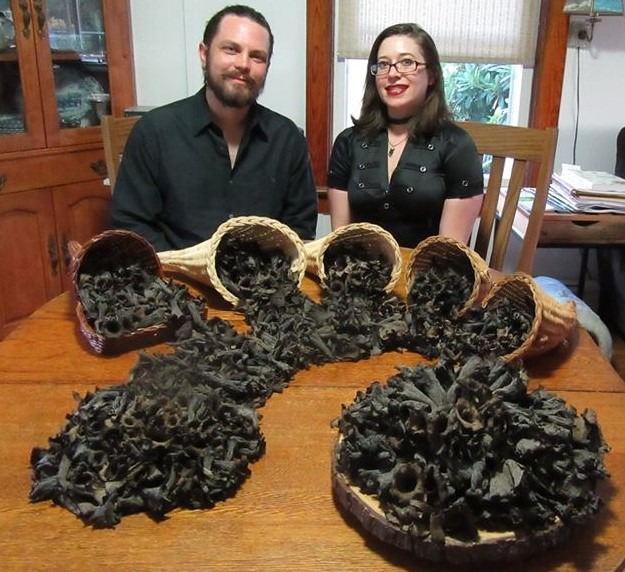
Black Trumpets, also known as Horn of Plenty (Craterellus fallax)