Providence 2045:
Over the last twenty years only one company has emerged as the leader in self-driving taxis; Cab-E. Traditional taxicabs have long-since gone extinct. Tesla has recently crumbled under the weight of its founder’s sheer lunacy. Amazon has focused all of its attention on colonizing Mars. Even Uber and Lyft have faded from the landscape, unable to adapt to the rapidly developing technology.
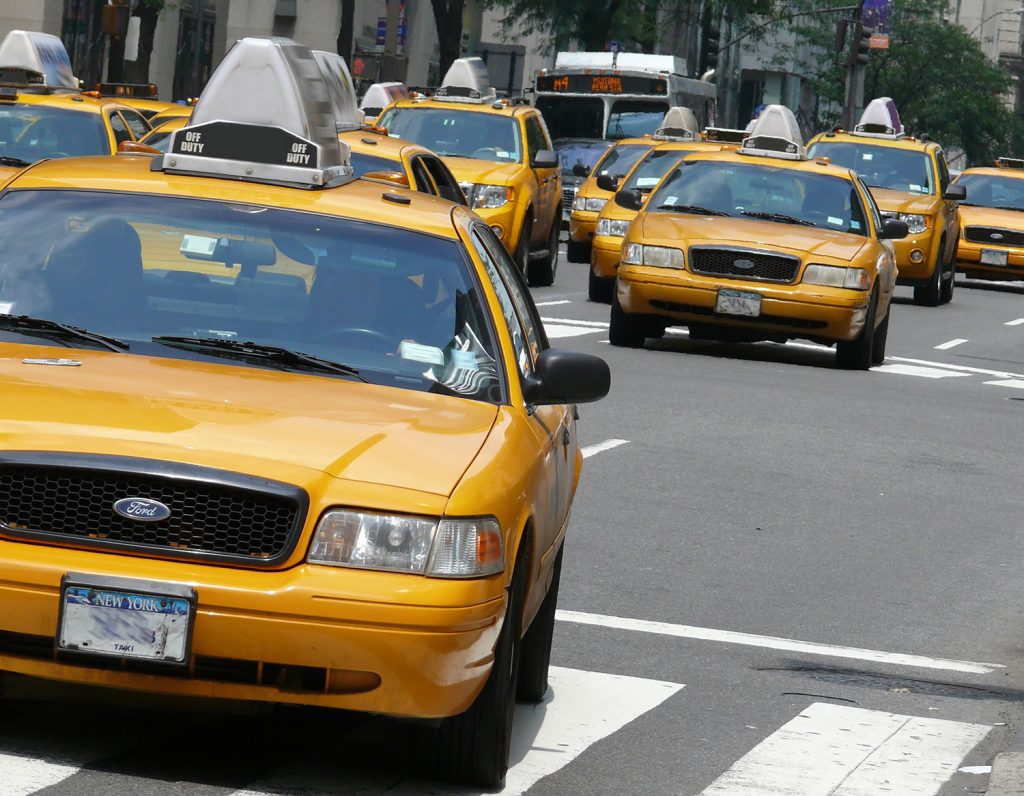
Launched in 2033, Cab-E is the brainchild of Swiss trillionaire and revolutionary app developer, Aldrich Frei. Under his leadership, trademark yellow Cab-E’s have become a common sight in every American city and town. An army-like fleet takes to the streets twenty-four hours a day, its routes and destinations dictated by an endless pool of passengers via an app on their smart-wrists.
The American public embraced the concept with open arms, and almost overnight it became a standard of everyday life. The vehicles required minimal maintenance and cleanings by human workers and would drive themselves to designated charging stations when deemed necessary. For safety, each vehicle was equipped with cameras that recorded audio and visual of the interior and exterior. AI technology could determine if police or rescue needed to be called and did so from the partitioned-off front seat.
Despite the advanced automation and self-monitoring capabilities built into these vehicles, long-term reliability still depended on regular inspections and mechanical oversight. Sensors, charging systems, braking components, and onboard AI hardware all required periodic attention to ensure the vehicles continued operating safely and efficiently in heavily populated urban environments. Even the most intelligent transportation systems could not entirely eliminate the realities of wear and tear.
As the fleets expanded, the importance of consistent car maintenance became increasingly apparent. Skilled technicians were needed to diagnose software irregularities, replace aging components, and keep the autonomous systems functioning as intended. Without that ongoing support, even highly advanced vehicles risked performance failures that could undermine public confidence in the technology itself.
The human factor had effectively been erased from public transportation; all that it needed was fuel, in the form of passengers to shuttle. Its efficiency, ease, and accessibility could not be argued. The tragic death of beloved bodega-cat, Kit-Kat, twenty years before at the hands of a self-driving taxi was enough to bury Waymo, but not enough to impede the march of progress.
This is the story of Cab-E #600261, assigned to the Providence sector of the Rhode Island fleet. She is no different than any other vehicle within the ranks. Like every other Cab-E cruising the streets, she records unfiltered human behavior, around the clock, in a constant reconfiguration to further assess passenger safety proactively. And like every other member of the fleet, she would develop her own individual interpretation of the human condition.
Cab-E #600261 was approaching five percent battery life one rainy Tuesday night in winter, and promptly headed towards the nearest charging station in the shadow of Kennedy Plaza, alongside a row of other taxis. In ninety minutes, she would be ready to cruise the streets once again for another 22-plus hours. Within that time, she would review hours of passenger recordings in a perpetual process of calculating probable liability and risk-reduction for the future. Software updates were regularly scheduled for the fleet, to garner what they had learned along the way.
The prior day of footage in review had landed on February 14, marked as a holiday on the human calendar as a celebration of something called love. She would replay the segment of the couple arguing viciously on their way to a five-star restaurant. And in contrast, she would review the amorous duo afterwards, on their way to a show. In the first case, no physical violence was detected, therefore police would not be contacted. And in the second, no actual nudity was recorded, so no passenger violation would be issued to the registered riders.
In subsequent recordings, Cab-E #600261 would also go over the footage of a solitary rider identified as Mark M. through the credit card on file. Mark was thirty-two years old and resided in Providence. He spoke incessantly to the operating software though it was incapable of responding; it only took direction via the app, and only for a pickup or drop-off location. Cab-E #600261 struggled to interpret the despondent ramblings of the man. There were tearful revelations about past failures and a life littered with regret. “Tonight’s the night,” he departed with. “I am finally ready.” Ultimately, the software would detect no medical emergency and dismiss the event entirely.