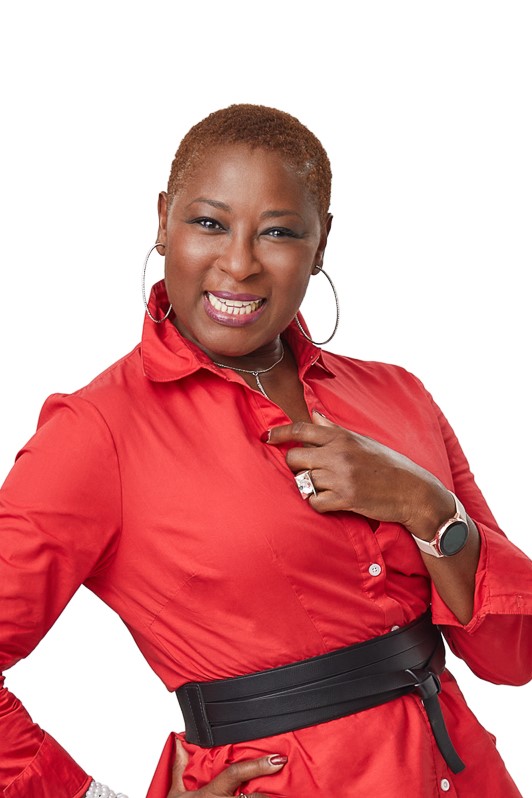
Conversations around inclusivity in the fashion and modeling industries have perpetually focused on understanding standards of beauty and defining what it means to be beautiful. While inclusivity is a topic that is sometimes approached with caution or scorn, there are some who approach it with courage and a spirit of innovation. On a bright and chilly March afternoon, I sat down with Yemi Sekoni, the agency director of Donahue Models & Talent, as well as the founder & executive producer of Rhode Island Fashion Week, to discuss inclusivity and representation of models with disabilities in the fashion industry. Rather than framing inclusivity as taboo or something that goes against the concept of beauty, Yemi argues that beauty is more than superficial uniformity; it’s something rooted in our shared humanity. “If you peeled our skin away, we’ve got the same set of bones” she said. “So why don’t we celebrate that and accept that?”
Yemi began her journey in the fashion industry as a model whose lifelong love of performance, and fashion led to the launch of her modeling career. Herself a model of Nigerian and Jamaican descent, Yemi understands what it takes to navigate the sometimes exclusionary fashion scene and has witnessed firsthand the steady shift away from restrictive beauty norms in casting. When I asked about her experiences and how she’s seen the industry change throughout her career, she thought reflectively for a moment and smiled. “As a Black model back then, there were fewer opportunities for me than there were for a white model with blonde hair and blue eyes who had the same specs as I did,” she said. “That’s one of the things I appreciated about Annette Donahue… she grew up in a time of segregation, yet she saw me — a little Black girl — and thought I could carry on her legacy.”
Now in her positions as agency director and founder of RI Fashion Week, she takes it as part of her responsibility to carry on this innovative and supportive spirit, celebrating beauty in all of its manifestations at her agency and on the runway. “As a Black model again, I knew that I wasn’t always the default in most spaces, so as I then stepped into my role as an agent or show producer, I wanted to just kind of bang that wall down.” In her shows and at Donahue, she takes aspiring models under her wing, fostering their growth, and emphasizes that beauty is not one-size-fits-all; that diversity makes fashion more exciting and authentic. “Tall, short, plus-size, petite, old, young — we include them all in the shows.”
As she walked me through the evolution of inclusivity in the industry, she told me how she has steadily seen fashion and modeling trends change. “I think the shift has only happened within the last, maybe, 10, 15… I don’t even know if I’d even see these trends as many as 20 years ago, so it’s very recent” she said. “Previously, the industry just thought, you know, if you included a model with a disability, it was almost like a token, like, hey, look here… but now… it’s just part of the human race, they’re just part of the audience, the market that you want to reach. So, why not just make it normal?”
Yemi explained to me what it means for people to see models that reflect themselves and why visibility is so important. Unsurprisingly, it isn’t just a matter of dismantling systems of aesthetic hierarchy, but visibility is a matter both practical and materialistic in nature. We all need clothing, and inclusive casting practices appeal to this need while supporting our sense of belonging and dignity. Modeling is an artform that isn’t just about the clothes; it champions self-expression and self-fashioning as essential aspects of beauty.
She stresses the importance of representation, as it ensures all audiences see themselves reflected in media and fashion, in commerce, and on the runway itself. “When you’re sitting at home, or when you’re doing a commercial, you’re not just appealing to the regular everyday — you’re trying to appeal to everybody” she said. “What’s the purpose of the show if you’re coming to enjoy the fashion, but you don’t see yourself wearing it? I used to hear women come to a show and say, ‘I love that dress, but I could never wear it.’ And I hated that. What’s the purpose of the show if you don’t see yourself in it?”
Inclusive fashion works to break down more than just standards of beauty; it also points to a practical evolution of our ethical values in regard to how we treat others. When we recognize beauty as more than looks, and view fashion instead as something that nurtures both our ability to feel beautiful and to recognize beauty as something we each define for ourselves, then we all become a little more playful, a little more accepting of ourselves and others. “People with disabilities shouldn’t be treated differently… clothing needs to be the same as well.” Fashion isn’t just about defining beauty within some rigid, definitive framework, rather fashion is something that allows each of us to show up in the world in a way that communicates how we wish to be seen and helps us to embrace our own identity on our own terms.
Fashion is for everyone, and the graceful acceptance of beauty in its many manifestations and variations is what fashion helps to foster and enhance. What I found most exciting to reflect on after our discussion was a story Yemi brought up towards the end of our meeting. Thinking back to the early moments of her career, when she was still working in stage theater, she told me of a leading actress who was left with a broken leg after being hit by a taxi en route to opening night. Rather than canceling the show, the stage director modified the show last minute so the actress could perform lying down, and they included a new opening monologue to accommodate this change. The artistic worth of the actress was not limited by her physical ability, and her injury and willingness to perform may have even enhanced the performance. “The applause at the end of that performance was thunderous, because even the audience was like, ‘Holy cow!’” This moment shows the transitory nature of the human body and highlights that creativity and beauty are found somewhere in our shared humanity, enhanced by our depth of character, and not merely located in our external appearance. The essence of human creativity, and indeed the essence of beauty, is something that transcends conventional physical norms. Real beauty emerges when creativity and passion lead, and when authenticity and courage become the driving force behind the creation of art and design.
Rhode Island Fashion Week Season XVIII is just on the horizon, taking place April 30-May 2, at the Paul T. Warner Photography Studio.