“We are all interested in the future, for that is where you and I are going to spend the rest of our lives!” –Plan 9 from Outer Space, 1957
What does the future hold for Little Rhody in the next few years? We broke down our guesses to mirror the sections in a normal Motif issue. If you have expertise in any of these areas, let us know! Meanwhile, here are some thoughts from a closet futurist.
Music
Mike Ryan: Live music will never go away, but unfortunately it’s going to suffer under the ease and preponderance of streamed options. The “K-shaped economy” of shows – big shows getting more dollars, small shows getting less so, will likely continue and get more pronounced. Nevertheless, the magic of live, local performances will still attract enough attention to keep our treasured local venues hopping.
Alcohol
MR: Craft brew is getting better and better, but the trend that launched a thousand brewmasters is now in its consolidation and weeding-out phase. The next few years will see fewer local brewers, but many have become community mainstays and will remain so. And the product, for those of us who appreciate it, is leaving childhood and entering a tasty adulthood. Trend-wise, expect more lagers and pilsners in the next couple of years, and fewer sours.
Distillers, on the other hand, are still on the upswing, with more bare-knuckle craft distillers opening in the area this year and next. If you’re going to take out a mortgage to get over-the-bar alcohol anyway, might as well go for the hard stuff. And mixed drinks certainly can appeal to a wider variety of taste buds. In this realm, sweet drinks are on the upswing. Trending are more drinkers seeking an “experience,” and fewer pursuing blackouts.
Wineries will stay pretty much the same. Most of them are just now discovering this thing called the internet; they’re not ripe for any seismic disruptions, except perhaps much more advanced display cases.
Food
MR: Food innovation, with credit to Johnson & Wales University and food incubator Hope & Main, will continue to be a distinguishing factor for RI. Our innovative, independent restaurants will continue to play a big role in how we define our community.
Unfortunately, running a restaurant or bar is a particularly brutal passion project lifestyle nowadays, and the current trend is toward conglomeration. That is the modern American Way. Expect food groups to keep gobbling up independent spots, but I’m hopeful they’ll be doing it with more sensitivity to original character than Ray Kroc could ever have imagined. Case in point: NY System Weiners in Olneyville, which was recently acquired by the fast-growing Audrain Food Group. Audrain has taken an “If it ain’t broke, don’t fix it” approach to the esteemed locale. It’s basically the dive bar of food places, and it’s going to triumphantly remain so. Is that conglomeration, or culinary gentrification, or more of a historical preservation? It’s certainly more respectful to the neighborhood than dropping in a regional or national chain, and it gives me some hope.
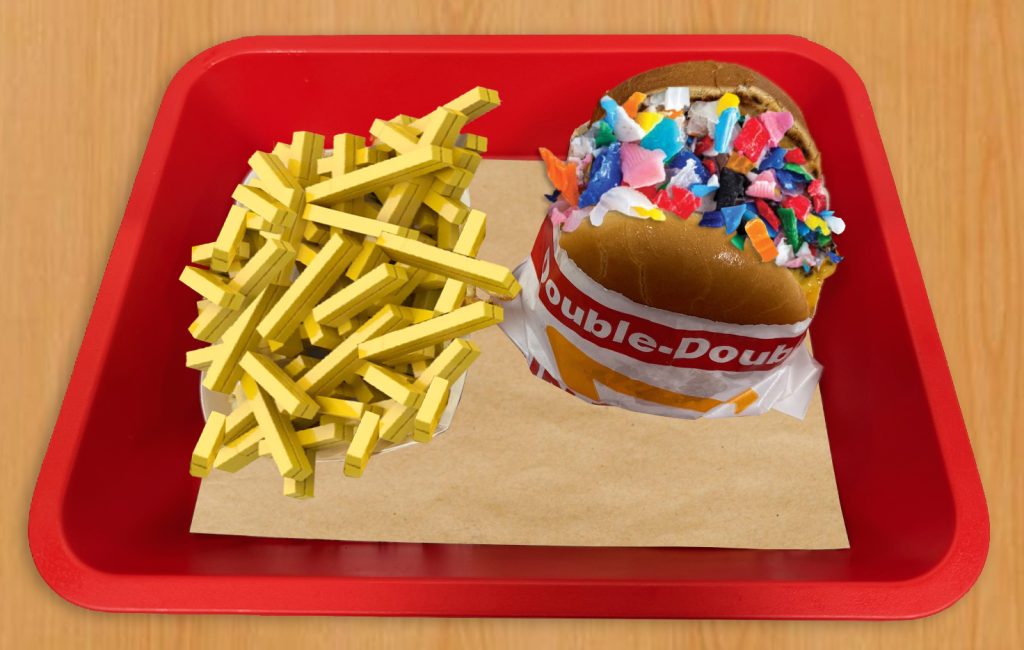
Newspaper Cowboy: We will also see some culinary innovators skip the middleman – or fish – and offer consumers microplastics directly. They’ll be flavored, kids will love them, and while toxic, they will be filling and low/no calorie. And by putting more of the microplastics in us directly, we may cut down on the amount in our waterways, soil, etc. Served in bowls, these MicroplasticDonalds will feature express drive-thrus for non-electric vehicles.
Cannabis
MR: The recreational cannabis market blossomed almost immediately, and while some steady growth is still ahead, the green-gold rush in RI has probably settled into a steady state. There are additional dispensary licenses to distribute, and because of the expense involved, they will likely be cultivated by out-of-town Big Cannabis, but don’t expect any seismic shifts. Do expect growth in cannadjacent businesses, like cafes that serve infused products, infused catering, perhaps even canna-friendly lounges and the like.
Society
NC: Should old acquaintance be forgot, there will soon be interactive glasses to tell you who those people are. RI-based plug-ins will chart out the inevitable one-degree of separation, so you can also immediately know what exes you have in common with that person you just met, and where they are on Google Maps, so you can try to avoid them. The tech has been around for a while, but like the early iWatches, it’s been just a tad too unusual to become mainstream. But soon, we’ll look around and realize they’ve quietly started showing up everywhere (and they’ll definitely interact with that smart watch you once said you’d never get).
The other big tech change is the self-driving cars. If your profession is Ubering, start planning ahead. The tech is mostly there, the public trust isn’t yet. Special code is being developed for RI to navigate around car-swallowing potholes, and a special hybrid car-boat will be released to get around the Washington Bridge, which will still be under construction long after these innovations have reached fruition. We’ll be launching flying cars across the red bridge before the Washington Bridge is finished.
Home entertainment centers will soon be empty rooms with Oculus visors in them. But true to the current class division, few people will be able to afford the square footage needed to make these work.
MR: On a more serious note, RI is doing better than most on healthcare management, but is still facing imminent disaster, with hospitals closing and physicians fleeing to more lucrative states.
Housing availability and affordability will also continue to get worse before it gets better. Compassion for the unhoused has become an instant political differentiator. As national policies trickle down, no matter how Blue-State RI is feeling, the housing crunch will get worse in the next couple of years. Those self-driving cars will make it worse, as more people will choose to live in RI and commute to Boston (or CT/New York. Hi Westerly!). Housing is leading to more and more roommate situations, stretching later into life, be they with family or found family.
Both of these social challenges may reach unsustainable points in the next few years, and are our two biggest sociological stressors.
The Arts
MR: It’s all about the AI in the next couple of years – replacing some artistic efforts, especially in mid-sized business marketing, and social media, but also being integrated with other creative endeavors, enhancing them. Getting AI art to look like what you want is becoming an art unto itself, and the emerging profession of AI-whisperer will be growing. Right now, there is a profound anti-AI cultural movement in the arts. Motif, for example, does not use AI unless it’s to a specific purpose and explicitly stated (for example, in our “AI Issue” a few years ago). But this separation of digital church and human state will be short-lived and quickly lost to the grey zone in between. Convenience tends to win out, in the history of humans interacting with technology, and in 10 years the idea of doing anything artistic without at least an AI assist will be considered “artisanal.”
NC: Yes, I anticipate “artisanal” computer graphics and websites will be a thing.
Theater
MR: RI has more theaters than audience, which speaks to our communal artistic bent, and the number of creative powerhouses who are not inclined to work together. Expect curtain calls for a few, but the community will continue to rally around the big treasured, historic venues; and that creative spirit also insures there will always be a few optimistic young companies popping up, transitioning from upstarts to respected fonts of creativity, as Wakefield’s CTC and PVD’s Wilbury Group have done in recent years.
Events
MR: It is getting harder and harder to get people to leave their refuges (I’d say houses, but too many can’t afford those right now). Events need to rise to the challenge and bring something special. But there is a primal human need for gathering that will continue to fuel events. Sports fans will keep going to games (soccer now, instead of baseball), even though you can see everything better on the TV. But events may become more rarified. Droves will visit WaterFire, but because everything about eventing has become more expensive, and corporate support for many events has moved away from community building (and toward higher executive bonuses), those WaterFires may be fewer and further between. But events large and small won’t go away if we rally around them.
NC: At least until they perfect the sexbots. Then no one will be leaving home any more, and we’ll all go extinct. We still have a few decades, though.
Magazines
Print is not dead. Motif has trouble making enough copies, because people take them all. But we do have a cohort of readers now who pick us up because they think print is so retro, it’s cool again. So print is basically the vinyl of media. Hey, as long as y’all are reading!
Communications:
MR: Email is going to go the way of snail mail – used only for special occasions, or within specific white-listed groups, like work teams. It has been subsumed by spam, and the phrase “I think that must have gotten stuck in my spam filter,” is already more common than, “Thanks for the email.” Threaded apps will be the next phase.
Journalism
MR: We’re fucked. You can’t trust unjuried social media, and you can’t trust massively compromised corporate media. The guys in between are badly squeezed for resources (including yours truly). RI’s intensely independent societal tendencies mean we’ll be better on this front than most of the rest of the nation. We are prosperous with independent blogs, mostly run by people who wanted to, “Do it my own way,” instead of collaborating with anybody. But the news deserts across much of the country promise to keep growing, especially for the next couple of years. Despite the zombification of the ProJo (by national monstrosity GateHouse Media), this is a score for RI. We may hide it well, but we’re more literate than most states. Also, look for the ProJo to continue its descent into content-free despair, and perhaps become a weekly, while the Globe steps in as our paper of record.
I am thoroughly unqualified to make any of these predictions, so if you disagree, dig in and let us know what we’re missing!
love this! seems close to accurate to me!