It doesn’t take long for a person new to Rhode Island to find a local booster willing to tout our little but lovable state and its amazing history. First colony that gave religious freedom to all; first synagogue in the colonies; the Gaspee affair as America’s “First blow for Freedom” of the Revolution in 1772; first phone call by a US president in 1877 at Rocky Point; first water-powered mill, created by Samuel Slater, starting our industrial age. And, of course, among the brightest stars in our field of firsts is the fact that Rhode Island declared independence May 4th 1776 — a full 2 months before lazy Thomas Jefferson and his bros got around to writing that everyone had the right to “life, liberty, and the pursuit of happiness.”
History can be a lot like a used car, beautiful and shiny on the outside but just a little messy under the hood.
Touro Synagogue is the oldest standing synagogue in the United States, but it wasn’t the first, as there was a congregation in New York (then called New Amsterdam) in the 1650s. Samuel Slater was an Englishman who, in an act of industrial espionage, memorized the plans that were commonly used in mills in England, allowing him to build the first water-powered cotton mill on this side of the Atlantic, in Pawtucket. The burning of the ship Gaspee in 1772 certainly predates the battle of Lexington and Concord, but the people in North Carolina commemorate their 1771 Battle of Alamance, where the Backcountry farmers, called Regulators, fought with crown troops as one of the many skirmishes that happened between British authorities and upset locals during the decade before 1776. Sometimes a first really is a first – I’m looking at you Roger “What Cheer, Netop” Williams, and you Rutherford B. Hayes flexing your presidential dial tone.
Hoping to get more information on our first-in-the-nation declaration of independence and our time as the only state in the nation for two full months, I spoke with the RI Historical Society. Much to my chagrin, RI’s status as the first to declare independence is “complicated,” according to Richard J. Ring, senior director for Library and Museum Collections.
South Carolina adopted a new constitution on March 26, 1776, removing royal officers and replacing them with a new government. North Carolina, on April 12, 1776, authorized its delegation at the Second Continental Congress to vote in favor of independence. Massachusetts, on May 1, 1776, replaced the boilerplate “in the name of George III” with “the government and people of Massachusetts.”
May 4, 1776, was the day that the Colony of Rhode Island passed an “Act of Renunciation.” The vote was to remove the king’s name from oaths taken by officers in RI, as well as from any legal documents created. Saying that George III was “entirely departing from the duties and Character of a good king – instead of Protecting [he] is endeavoring to destroy.”
While renouncing allegiance to the king, the document still referred to the “Colony” of Rhode Island and neither declared RI independent nor established a new government. The theme of the document was to carry on as before with the change that the king’s name and authority was replaced with “The Governor and Company of the English Colony of Rhode Island and Providence Plantations.” Two and a half months later, on July 19, Rhode Island adopted the Declaration of Independence from the Continental Congress. This was when RI stopped being a colony and became a state.
So how did we go from little Rhody being one of a bunch of colonies renouncing the king’s name on boring paperwork, to being the OG Declaration of Independence? Another Rhode Island first – James S. Slater, the first person known to celebrate May 4, 1776. In 1884, Slater hung a flag outside his house and declared it to be “Rhode Island Independence Day.” Thus, the first commemoration was only 108 years after the Act of Renunciation passed. (And you thought the bridge project was delayed.)
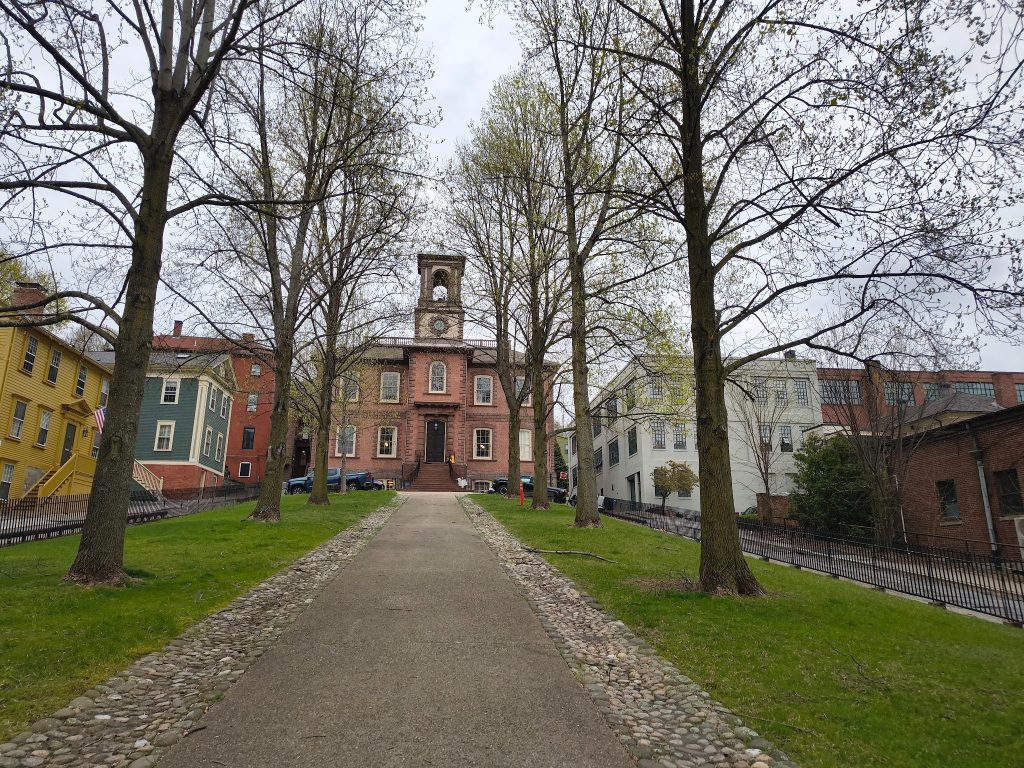
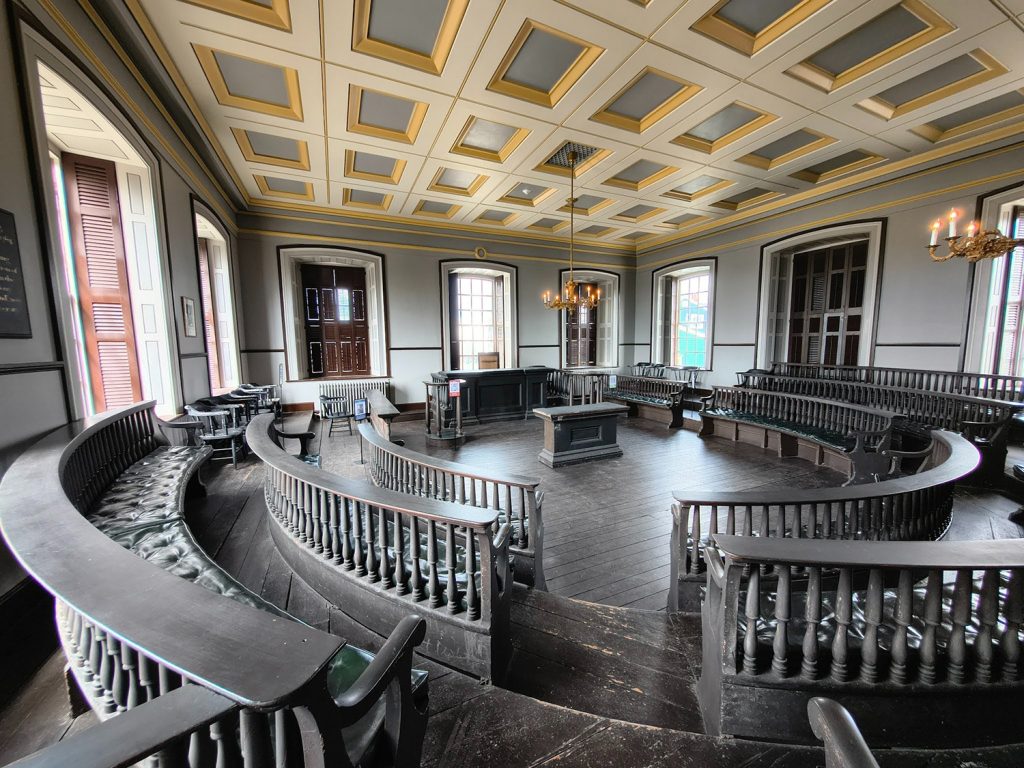
For decades Slater, (yes a relative of Samuel Slater – this is, after all, Rhode Island), pursued government recognition of the day, and in 1909 the first official RI Independence Day was observed. By 1913, the Daughters of the American Revolution had placed a plaque in the Old State House in Providence.This recognition in bronze seems to be the final straw needed to firmly establish the myth of RI’s own premature independence day. Today, the General Laws of the State of Rhode Island recognize May 4 as Independence Day and state that the 5/4/1776 “act declared Rhode Island sovereign and independent, the first official act of its kind by any of the thirteen (13) American colonies.”
While exact details of what happened in the spring of 1776 across many colonies might be confusing to us centuries later, its importance shouldn’t be. As RIHS’ Ring points out, “It’s very hard for the average American at this distance from 1776 to realize how different each colony was in political structure, economics, and culture. The fact that each colony moved towards both independence and unity – any which way they could – is part of the magic of the American experiment.”
In commemoration of this important and often-misunderstood step on the road to American independence, both the State House and the RI Historical Society will be displaying their copies of the Act of Renunciation on Saturday, May 2, 2026.
Untangling the story and the timeline, and the myth from the truth is a little daunting and sometimes disappointing for any historian cum journalist. One person at the historical society put it best by quoting the classic Western, The Man Who Shot Liberty Valance: “When the legend becomes fact, print the legend.”
Happy 250 Rhode Island!!!
For more events and information, and to see the Act of Renunciation, visit the RI 250 Commission website rhodeisland250.org