Author: Cathren Housley

  • Dear Dr. Brilliant Cliché and Granny Doctor: Just Busted

    Dear Dr. Brilliant Cliché and Granny Doctor: Just Busted

    ReeferMadness_04Dear Dr. Brilliant Cliché,

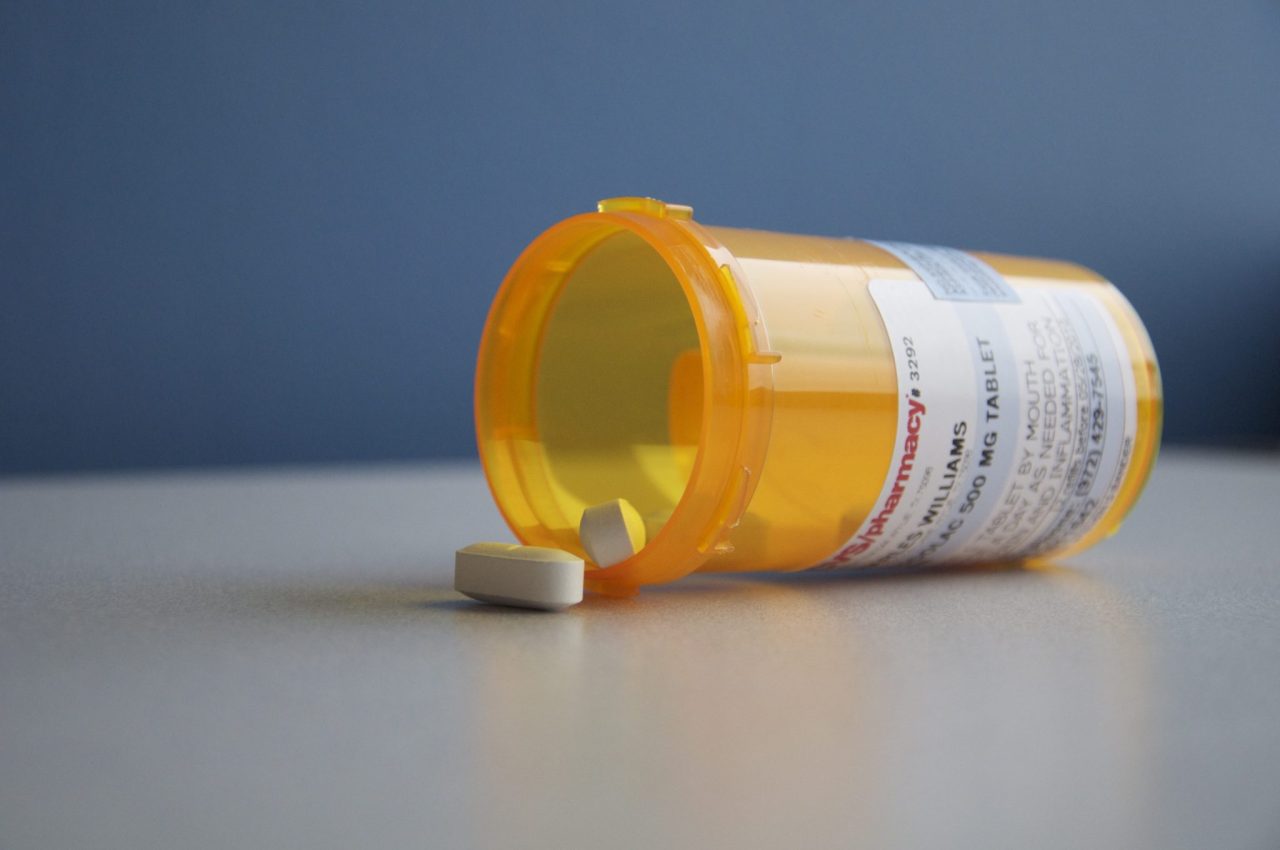
    My son is 19 and was recently caught smoking marijuana. He’s not a juvenile delinquent — his grades are good. The friends he smokes pot with are all otherwise good kids. My son has never previously been a discipline problem and has an amiable nature. However, his mom went ballistic and gave him ultimatums like, “If you see those friends again I’ll take the car away!” I am not sure that will help anything since he is 19 and goes to school away from home. I know he sees them anyway. I also know that no matter what we say he will smoke pot at school with his friends. I am at a loss as to what to do.

    Concerned Dad

    Dear Dad,

    As this is an extremely common problem and ever growing, I asked nearly everyone I know if they had any experience with this. I was surprised at how many did. Some of them just said, “So?” Most of them responded with, “When my son was that age, he did,” or “When I was that age you should hear what I did!” I would then get a long list of antisocial infarctions, sometimes from very respectable parents.

    None of us want our kids to experiment with drugs. It puts them in potential danger. But in the big scheme of things I’ve rarely met anyone who hasn’t done this and most of them don’t go on to completely screw up their lives. It seems to me that overall you have a good kid. At 19 there is not much you can do to control him, but it might be a good idea to have him get a job. I’d also encourage his successes, let him know you love him, and be a good role model yourself. Ultimately, his success or failure in life is up to him, not you.

    I would avoid ultimatums because they just don’t work. I’d also make sure that you don’t miss his successes because of his few negatives.

    Dr. Brilliant Cliché

    Granny says: To be honest, I can’t believe that in this day and age your wife flipped out like that. She must have either lead a very sheltered existence or she wears a massive set of horse blinders.

    Kids experiment. It is completely and utterly natural. I have watched many kids grow up over my lifetime and there’s something that seems ironically true — the ones who appear to be the best kids because they stick to the straight and narrow and listen to strict moms and dads are NEVER the ones who do anything exciting or interesting with their lives. Everyone who has an innovative streak was a headache for their parents.

    On the other hand, I have seen kids who seemed to be exemplary in every way turn out to be repressed as hell; they later exploded in dangerous ways. The prime example that comes to mind is a boy named Chris from my home town. He was an honor student, a winning athlete, went to church with his mom every week, and was all set for a good college at the end of high school with a National Merit Scholarship. Except Chris never made it to college. One fine summer night, he took his mom out into the fields behind their house, cut her into pieces with an axe, and put the body parts in a bag. He spent the next 20 years in an insane asylum. He did, however, never smoke pot.

    I seriously think that making a big deal out of this problem will have a negative rather than positive effect. I wouldn’t show approval because there are some real dangers with pot, as with any drug, especially for developing teens; but it’s absurd to treat him like a freakin’ criminal. Concerned Dad, tell your wife to ease up on your son. If this is the biggest worry you ever have about him, consider yourself blessed.


  • Alt-Health: Pandora’s Paradise

    The legalization of cannabis is nearly upon us and it is a move that I both applaud and dread. If we lived in a perfect world, with people who respected the properties and consequences of inebriates and used them to enhance life rather than replace it, there would be no contest. However, we don’t — so let’s look at the facts.

    First, the plus side. I have no idea why every state has not already made medical marijuana legal. There is enough clinical evidence to show that cannabis is highly effective in the treatment of many conditions, and in chronic illness its health benefits in ratio to harmful side effects make it a far less damaging choice for long-term use than pharmaceuticals. Medical marijuana research has also refined its properties to a science. It is now known that the non-psychoactive cannabinoids found in marijuana have medical properties as well as the THC components known to produce a high, making it possible to treat conditions with fewer of the mind-altering effects associated with pot. Medically regulated facilities dispense a product that has been reliably graded for every constituent.

    When it comes to recreational use of pot, there are advantages as well. Let’s be honest — people are always going to use recreational drugs, whatever the legalities. In a field that includes alcohol, crack, OxyContin and heroin, pot is by far the lesser of the existing evils. People who over-indulge or mix pot with drugs and alcohol are capable of causing damage both to themselves and to others, but no one has ever died from an overdose of the drug itself.

    However, I cringe when I think of the Pandora’s box that could be opened when marijuana becomes generally legal. Why? Because responsible use is one thing, but people are greedy idiots. Just as it did with cigarettes, Big Business is going to shove marketing campaigns and enticing new products down our throats in order to make as much money as possible with no thought to the consequences. And their greatest victims will be teens.

    Teens have tuned out warnings about marijuana because the nay-sayers are usually fundamentalist adults who rant that pot is a “gateway drug” that inevitably leads to ruin and damnation. Since this is patently absurd, it’s easy to ignore the dangers, but they are real. Chronic pot use among adolescents is far different than with adults. Teens are at a phase in life where they are developing the coping skills that will serve them into adulthood. When the world is enveloped in a pleasant fog, you neatly avoid the uncomfortable and anxiety-provoking feelings that a more direct look induces. You never learn to cope with unpleasantries. As a result, teens who smoke pot on a daily basis are 60% less likely to get a high school diploma or university degree and seven times more likely to attempt suicide in early adulthood. Getting stoned with your buds on occasion is one thing, pretty much everyone does it. But habitual daily use of pot before the age of 17 can handicap you for life.

    So, I have a parting message to those who are still chronologically young: Don’t be an idiot. All of those people who you are hanging out with and want to fit in with will be gone by the time you hit your 30s, but you will still be stuck with the choices you made. Be responsible with marijuana. It’s a powerful drug. It has the potential to do both great good and great harm. The choice is entirely up to you.

  • Alt-Health: Fear of Yeast

    Alt-Health: Fear of Yeast

    yeastWhen I began reading about the health effects of yeast, i.e., candida albicans, it was with an impersonal eye. I was intending to track down the latest research and wrap up the facts in an entertaining manner, if such a thing is possible with yeast.

    But as I continued, I found myself becoming emotionally involved. The problems that were caused by candida overgrowth seemed to speak to me personally: fatigue, digestive disorders, difficulty concentrating, mood swings … the lists went on and on. Autoimmune disorders, allergies, yeast infections, a craving for carbs — I became convinced that yeast organisms were responsible for every health problem I had and for some I never realized I had. They might be spreading through my body! I began perusing the many herbal remedies available online, seeing them as my best hope of survival.

    Then I noticed something: It seemed that no matter how I worded my Google search for scientific facts on yeast and health, the first page invariably came up full of articles that sent me to online companies selling alternative remedies and herbal cleanse products. Common sense checked my panic and I decided to ferret out what medical science had to say about the candida phenomenon before I pulled out my credit card and started ordering.

    Doctors recognize that candida overgrowth is behind such problems as thrush and vaginal yeast infections. They acknowledge that an overgrowth can be dangerous for those with HIV and compromised immune systems. However, they are skeptical of the fervor being stirred up over candida by the natural supplement market, and I can see their point. There are a lot of companies that stand to make money off of the media-fueled anxiety. It’s been done before — create a condition that doesn’t exist in order to sell products that will solve that problem. The goal is to create a demand for their product, and in this case, someone is twisting a few of the facts to suit their own purposes. A sample headline: “Candida overgrowth can be the root cause of literally hundreds of different problems in the body! An estimated 90 percent of the population has a problem with candida overgrowth, and doesn’t know it!!!”

    This sounds incredibly alarming unless you know that fully 100% of us have yeast because it lives in everyone’s body. It’s a natural presence there, like the bacteria in our intestines. Freaking out over it is like panicking over the fact that we grow hair. The role that it plays in those long lists of ailments is speculative to a great extent. Candida overgrowth certainly exacerbates health problems, but is it actually causing the illnesses it accompanies?

    In a healthy person, yeast levels stay in balance with the body’s operating system. When conditions arise that send that system out of balance, such as the use of antibiotics, damage to the immune system, stress or too much sugar, candida levels can get out of control. However, those yeast cells didn’t start multiplying all by themselves; their proliferation comes after the fact. Yes, an overgrowth of yeast is extremely unhealthy. But the only way to control candida in the long run is through diet and lifestyle changes. If you get rid of yeast with herbal flushes but don’t fix the underlying causes, it is just going to keep growing back. Of course, you’ll need more candida cleanse products. It keeps the market going.

    So, here’s some practical, and affordable, advice for those of you who have this problem and want to take control.

    1) Don’t feed the yeast. If you don’t feed it, it will starve and die off. Yeast loves sugar. Refined carbs are sugar. Fruit is loaded with sugar. Alcohol is sugar. Sucks, doesn’t it? Also off limits are bread and other yeasted foods, vinegar or mushrooms. These are often foods you crave the most, but here is an encouraging fact: Multiplying yeast is probably CAUSING your food cravings. Those organisms need to be fed. They clamor for food. You think you want sugar. You don’t. The yeast does. After the yeast dies, it will stop calling for sugar. I strongly suggest you go online and research the details of the candida diet to get the full picture.

    2) Pau D’Arco is one of the cheapest and best remedies for candida overgrowth, but it’s not an herb to be taken lightly. Pregnant or nursing women should not use it. It may have interactions with other drugs you are taking. I suggest that before trying the tea or other products, you research the company that makes them. The herb market is largely unregulated and some product samples tested contain none of the herb’s active ingredient.

    2) Are you taking oral contraceptives? If you get repeated yeast infections, stop. There are plenty of alternatives to birth control pills. See your gyn.

    4) If you take antibiotics, take probiotics afterward to cut those albicans invaders off at the pass and get your intestinal flora back to normal. I have no idea why medical doctors don’t tell everyone this.

    5) Take probiotics anyway. They make your GI tract a happier place to live.

    6) Stop stressing over everything and do yoga or something. You’ll live longer.

  • Ask Dr. Brilliant Cliché and The Granny Doctor: Jealousy and Love

    Ask Dr. Brilliant Cliché and The Granny Doctor: Jealousy and Love

    greenDear Dr. Brilliant Cliché,

    I am not sure if this is a problem, but it does worry me a lot. My boyfriend never gets jealous over me, not even the tiniest bit. I have never cheated on him but I’ve purposely flirted with other men to try get a reaction from him, and nada. I finally asked him about it and he said he believes in free will. He said he would be sad if I left him or if I cheated, but that it is my choice and I am free to go if that is what I want. I don’t know why but this drives me a bit nuts. Maybe because it is so damn unromantic? How can he possibly love me if he feels this way?

    Perplexed

    Dear Perplexed,

    You aren’t asking him to love you. You are looking for him to reassure you. Isn’t a man who is stable enough to be content with themselves, and yet still chooses to be with you, exactly the kind of partner you would want? There is no agenda or ulterior motive here. Why would you want to be with someone who doesn’t feel whole unless they are with you and professing undying love to you? That is more like an antidepressant than a relationship.

    Robin Williams in the movie Patch Adams said it best: “If you truly love someone you have to be able to let them go.” What you want is just about you. You want him to soothe your insecurities. That is a recipe for a dysfunctional roller coaster of a relationship. In my opinion, it is your boyfriend who should rethink his relationship with you; you are not at the same level of having an equal and healthy relationship. You are going to cheat on him someday when someone starts telling you what you want to hear and you will mistakenly think that is real love.

    I’ve heard people say you can’t choose love. It just hits you. There are many kinds of and many levels of love. This chemistry stuff is the most superficial and temporary level. Territorial and possessive love are both similar, as these are more about you than they are the other person. Trust, endurance, communication, admiration and respect are all parts of the longer-lasting, deeper kind of love. What differentiates them is that they are about the other person more than they are about yourself. Perplexed, you have a rocky road ahead of you. I hope this helps shorten your journey.

    Dr. Brilliant Cliché

    Granny says: Wow, do I have a different take on this. I think that Perplexed has a rocky road ahead of her if she listens to Dr. Brilliant’s advice. The negative assumptions he’s making about this poor girl are waaaay off the charts. How the hell did the blasé boyfriend end up as the superior partner in this equation?

    I have had many boyfriends over my lifetime and nearly all have been jealous, to varying degrees. It’s not a sign of neediness or dysfunction; in most cases, it’s the same way they’d feel about anything that matters to them. They know that men are predatory jackasses and their hackles go up if another male starts moving in on someone they care about. Married men feel this way about their daughters’ suitors too.

    However, the guy in my past who really stands out is not the jealous one, but rather the one who had an attitude EXACTLY like Perplexed’s boyfriend. I thought that he was so bloody evolved. I really thought his open-mindedness was a sign of emotional maturity. Ha! This guy turned out to be more neurotic and messed up than all of the other men combined. He actually liked the idea that other guys were turned on by me and saw it as elevating his status. Of course, he didn’t let me know that. He developed his little “I want you to be free” rap so he could appear enlightened. Turns out he was a closet gay and wasn’t possessive because I had no value to him other than as a means of keeping up a front.

    Listen, any red-blooded male worth his salt is not going to like another man ogling the woman he loves or coming on to her. It’s not because he “doesn’t feel whole unless he’s with her.” It’s because he knows exactly how conniving and devious other guys are. Rampant, needy jealousy is a sign of trouble. But some jealousy is a healthy sign that a man values his partner and wants to protect her. Any man who pukes up the bland garbage that Perplexed’s boyfriend is spewing at her isn’t enlightened or mature. He just doesn’t give a crap.

  • Alt-Health: A Little Peace of Land

    Alt-Health: A Little Peace of Land

    chivesAs a little girl, I noticed that every time my mother got pissed off at my dad, she would head out the back door, snarling to herself like a wet cat. An hour or so later she would return, purring quietly under her breath as if nothing had happened. For a while I suspected she had a bottle hidden out there, but after spying from an upstairs window I discovered what she was up to; she’d been digging in the garden, probably picturing my father’s head with every stab of the spade.

    Mom was smarter than she realized. Those who are fond of gardening will tell you that there is a peace to be found in those earthy, fertile furrows that can be found nowhere else outside of, perhaps, a child’s sand box. Digging in the dirt has a near magical effect. It can lower blood pressure, relieve stress and even speed recovery time in healing.

    How can something as seemingly ordinary as gardening have such a profound effect on humans? OK, this is going to blow your mind. Along with the more obvious reasons — the serenity, the beauty of nature, blah, blah, blah — there is actually a microbe in the soil that mirrors the effect of drugs like Prozac when inhaled or ingested, making people happier and more relaxed. Talk about universal medicine! Mycobacterium vaccae is, literally, as common as dirt and it can stimulate serotonin production just like the pharmaceuticals, without costing a cent. It would be fair to say that gardening was the earliest form of psychiatric medicine.

    In the 1800s, even science began to notice this effect. Dr. Benjamin Rush, considered by many to be the father of modern psychiatry, was intrigued to find that clients with mental illness benefited immensely from field labor in a farm setting. This discovery opened the door to a new approach to health — many western hospitals began looking at horticulture as a means for treating patients with psychiatric and developmental disabilities. Michigan State University offered the first degree in horticultural therapy in the 1950s and Kansas State University followed in 1972, creating a program that trained students in both psychology and horticulture.

    There is an eerie resemblance between the act of gardening and meditation. One reason that tilling the soil may be so successful at stress reduction is that it bypasses the analytical processes of the mind, putting people into a near trance-like state. Studies are currently underway to follow research subjects who submit themselves to a combination of gardening activity and MRIs over a period of months. Preliminary findings show that gardening may have a more profound effect on brain activity than we ever imagined.

    The health benefits of greenery do not stop at the head. In 1984, Roger S. Ulrich, a pioneer in the field of therapeutic environments at Texas A&M University, found that patients who viewed landscapes from their beds had less anxiety, needed less pain medication, and were released a day earlier than patients looking out onto brick walls. At NYU Langone Medical Center’s Rusk Institute of Rehabilitation Medicine, a therapy garden is used to help patients regain mobility after surgery or a stroke. Harvard naturalist and Pulitzer Prize winner Edward O. Wilson goes so far as to say that nature holds the key to human health. It is something we too often forget, encased as we are in concrete and glass, staring down at our devices — we are part of the natural world. If we can connect to it, Mother Earth can help restore us.

    The garden keeps on giving. There is nothing more satisfying, or healing, than cultivating and consuming your own herbs and vegetables. Communing with nature and growing fresh organic foods can be as rejuvenating as a week at the spa. Dr. Marcy Feibelman, president of the RI Association of Naturopathic Physicians (RIANP), believes that “food is medicine. Treating the whole person is an important part of our philosophy.” There is even a link at RIANP.org with tips for starting your own garden. Just click on the Food as Medicine tab.

    While you are at the website, use the link on the main page to contact your local representative and senator in support of House bill H5380 and Senate bill S0331. This important legislative move, currently under discussion, would allow the licensing of naturopathic physicians in RI and open the door for a better quality of natural medicine in our state, along with increased opportunities for job growth and economic development.

    A final note: According to a survey by Gardeners’ World magazine, 80% of gardeners reported being happy and satisfied with their lives, compared to 67% of non-gardeners. If you are looking for a natural and affordable way to improve the quality of your life, you couldn’t make a better choice than gardening.

  • Ask Dr. Brilliant Cliche and the Granny Doctor: Why Can’t I Find a Guy Like Dear Old Dad?

    Dear Dr. Brilliant Cliché;

    I am having terrible luck with relationships and I don’t understand why. I have heard that girls usually look for someone who resembles their father and this is why so many women from dysfunctional families with lousy dads end up in abusive relationships.

    But my own father was wonderful! He always made me feel loved and special and listened when I was having problems. You would think I would be attracted to similar guys, right? Wrong.

    Just about every guy I’ve gone out with seems as wonderful as my father at first. But the minute I start trusting them and feel close, they start taking me for granted…or just start running after someone else.

    What is the deal? Why am I getting the same abusive jerks that girls with awful dads are instead of someone nice like my own father?

     – Daddy’s Girl

    Dear DG,

    People who come from opposite backgrounds often get the same results on a functional level. Those who are treated poorly expect to be treated poorly so they don’t run from dysfunctional people as they should. People who are treated well expect to be treated well and don’t believe that men could be so insincere — so they don’t run either. Misinterpreting the intent of others can get you into trouble.

    You probably give people the benefit of the doubt and rationalize, or make excuses for their behavior. You just can’t fathom how someone can be uncaring, mean or disrespectful behind a polite facade. Unfortunately, as I have seen over and over, they most certainly can. Many people are douchebags, and 25% of people are mentally ill. You need to be more aware and figure out how to read people for who they are rather than what you expect them to be, or your life will be of poor quality and your relationships will fail. Behavioral economics research has shown that humans are not altruistic by nature. People behave well when others are watching, but very differently if they think they are not seen.

    Not all people are two-faced. Those who’ve experienced good role modeling and have made an investment in themselves can be genuinely nice. The quality of your life is dependent on the character, and skill sets, of those you surround yourself with. You have to learn how to gauge good qualities in others. Watch for a mismatch between what people say and what they do. Watch not only how they treat you, but how they treat those they aren’t expecting to get anything from. Kids learn through role modeling, so what kind of parents did a prospective mate learn from? Is there love and respect in their relationship?

    Don’t give up but also don’t allow anyone to treat you disrespectfully,

     – Dr. Brilliant Cliché

    Granny says: I’d like to know how old Daddy’s Girl is. An unfortunate fact of life is that teenaged girls are, for the most part, unbelievable idiots when it comes to men. Most of them are extremely self-involved and want to believe that they are special in some way. All a man has to do is lay on the compliments and apply some well-paced foreplay…the teen girl turns into silly putty. The only girls who seem to manage to escape this “idiot” phase are the ones who are so engrossed in studies of some sort, be it music, gymnastics or science fairs. They can be oblivious to the social whirl around them. Oh, and teen girls who are locked in cages. They can avoid men altogether. But that only lasts as long as the cage is locked.

    If I were to give DG any advice it would be this: Men are liars. They don’t necessarily mean to be, and don’t necessarily see what they are doing as lying. But they KNOW that women want to be special and they know they, the man, are only after sex … and they play the game anyway. This doesn’t make them bad. It just makes them dangerous to listen to. So the next time a man opens his mouth, don’t swallow every line whole and ask for more. Act skeptical. Pull out your device and ask him to wait a minute while you Google his dating history. Tell him you have a concrete rule: No fooling around until he’s met your mother and you’ve taken him to your volunteer nursing home job to see if the old ladies like him. If he has a sense of humor and is genuinely interested, this will be an amusing challenge. If he’s an asshole, he’ll make some disparaging remark about your character, and women in general, and stomp off in a snit. Either way, it’s a lot more fun for you than getting duped by another asshole.

     – The Granny Doctor

  • Alt-Health: Falling — The Great Equalizer

    Alt-Health: Falling — The Great Equalizer

    slipAfter watching Madonna fall backward off of the stage at the recent British Music Awards, I got to thinking. The old slip and fall is a great equalizer. It dumps us all indecorously upon our asses, celebrities and common folk alike. With the Motif Music Award Nominees issue upon us, I was curious to see just how many musicians have fallen at award ceremonies and performances over the years. There are entire websites devoted to this subject, a sign of how many of us enjoy watching the mighty fall.

    Destiny’s Child seems to be cursed by the Slip and Fall gods — Michelle Williams toppled on the stage in 2004 and Beyonce has taken some dives that could have turned a lesser person into a paraplegic. To her credit, she just kept on singing. In 2008, Joe Jonas slipped on glass, cut his hand and bled all over the stage. He made it look hot. Taylor Swift fell during a concert in 2010 and Justin Bieber has been slipping on stairs since 2009, once breaking his ankle. At the 2014 VMA awards, Iggy Azalea, Australian rapper, was twerking her impressive behind at the camera, a move that everyone appreciated, until she fell off the stage backward. The list of fallen idols includes Jennifer Lopez, Shakira, Drake, Katy Perry (who somehow managed to slip five times on the ruins of a giant cake), Demi Lovato and Rihanna. One Direction lost their direction on at least five occasions, but except for Pink, who landed in the audience during a 2010 performance and swore like a sailor, and Stephen Tyler, who nearly broke his neck in 2009, for the most part the pros can take a lickin’ and keep on tickin’. When Lady Gaga fell over a piano bench in 2011 she didn’t miss a beat. You’d almost think she planned it.

    But what about the rest of us? When the cameras aren’t rolling and the world isn’t watching, how easy is it for us to get up and walk away unscathed? I went online to look for some statistics and was startled at what I found. The pratfall may be a hallmark of slapstick comedy, but for most people, it’s not so funny. Fully 50% of all accidental deaths at home are due to falls and about 25% of people experience an injury after falling including lacerations, hip fractures or head traumas.

    This has been a particularly icy winter. I recently had a slip and fall myself down a couple of concrete stairs, landing flat on my ass. I had to go for x-rays and while waiting around the ER for a couple of hours, I took advantage of the amiable nurses and asked some questions. Each year, over 8 million emergency room visits are due to slips, trips and falls. Falls are the most common cause of traumatic brain injuries. We have all laughed at the expense of the elderly actress in the Emergency Alert commercials who croaks, “I’ve fallen and I can’t get up!” But it is no laughing matter. Every year, 33% of people over the age of 65 will experience a fall. Fifty percent of all elderly adults who are hospitalized for a fall will be unable to return to home.

    There is a depressing number celebrities who have actually died while performing. Comedian Dick Shawn, who is best known for his screen stage role as Hitler in Mel Brook’s movie, The Producers, collapsed during his comedy act and lay on the stage for five minutes before the audience realized it wasn’t part of his act. Doctors later said he died while fans were laughingly suggesting that someone steal his wallet. And not one, but TWO actors, Renato Di Paolo and Tiago Klimeck, accidentally strangled themselves during hanging scenes while portraying Judas in a Passion of Christ play. I am not sure if this is a commentary on Christianity or simply a matter of two actors who got a little too much into their roles.

    What can we do to keep ourselves from becoming a statistic? Well, first of all, I do not recommend simultaneously singing and moonwalking anywhere near stairs or the edge of a stage. However, it may surprise you to know that most people who fall do so on level ground, not from elevated areas. So my next advice might be to watch where the hell you are going and stop staring at your mobile devices. And don’t forget to tie your high tops, no matter how cool it may look to leave the laces undone.

    Awareness is the best form of prevention. But as I watch Madonna do that back flip over and over again, I have to admit — a lack of awareness sure is funnier on YouTube.

  • Alt-Health: How Does Film Affect Health?

    Alt-Health: How Does Film Affect Health?

    filmWhen I was a young girl, the movies made quite an impression on my malleable mind. I would walk out of a spy flick feeling suave and sophisticated, and if my sister suggested we stop for ice cream on the way home, I would sit in the car and dream while she and my dad went in for sundaes, because, after all, spies are too cool to go to Friendly’s. I would see emotional young performers in films have temper tantrums and flounce out of rooms, and I couldn’t wait to grow up and throw my own fits if grown-ups suggested I do anything practical with my life.

    Movies have always been a form of entertainment, adventure and sometimes a good scare. But they are really far more than that. We look to celebrities as role models and to their scripts as road maps for relationships, ethics and style. Star’s wardrobes, bling and social lives are given the same importance in the news as world summit meetings and the war in the mideast.

    This it made me wonder — if movies have that much influence, could they actually have an effect on the public’s health? The answer, according to research, is YES. Life does imitate art, and unfortunately, in the art of film, a lot of the leading characters have some really bad habits that have impacted us all in a negative way.

    Smoking In The Movies

    It is a signature scene from every film noir — the husky-voiced femme fatale with her face half in shadow, tendrils of smoke from her elegantly held cigarette spiraling up through a dim shaft of light. Movies made smoking seem sultry and sexy. They were the best advertising vehicle that the tobacco industry ever had. But did the American public fall for the trick?

    Doctors from the Norris Cotton Cancer Center in New Hampshire recently examined the connection between movie smoking exposure (MSE) and adolescent smoking. They found that the more smoking adolescents saw, the more they were likely to smoke. The less they saw, the less likely. Their conclusion went so far as to say that teen smoking would be reduced by 18% if smoking in PG-13 movies was largely eliminated.

    Smoking has an especially hazardous trickle-down effect on the population. Despite evidence that exposure to secondhand smoke dropped by half between 1999 and 2012, it is still credited with killing more than 41,000 Americans a year from lung cancer and heart disease. Sadly, it also causes an estimated 400 deaths from SIDS (Sudden Infant Death Syndrome). According to Dr. Tom Frieden from the Center for Disease Control, “these deaths are entirely preventable … the best way to reduce the harms from secondhand smoke is to reduce smoking.”

    Unfortunately movies that glorify smoking seem to be doing everything in their power to encourage us to start.

    Beauty and Barfing and the Movies

    They’re stunning, aren’t they? Those slender, polished and perfect stars who somehow make us believe that they are real people when they breathe life into their roles. But these elite individuals work with trainers and nutritional coaches and resort to massage, liposuction and drugs. The reed thinness of many leading ladies is not a natural thing.

    Yet millions of women believe the lie. The pressure in our culture to be thin is overwhelming and it starts early. In studies, girls as young as 3 and 6 said they were conscious of their weight. We measure ourselves against the Beautiful People and find ourselves lacking. In a People Magazine survey, 80% of the female readers who responded reported that the women they saw in movies made them feel bad about themselves.

    Movie stars have gotten even thinner in recent years. Allure magazine quoted actress Elizabeth Hurley as saying, “I’ve always thought Marilyn Monroe looked fabulous, but I’d kill myself if I was that fat.” It is not surprising that modern starlets are constantly confessing their food disorders in the tabloids. Self-imposed starvation has been given a certain glamour by the media that is not lost on women in the general population. For some girls, it can literally be a death sentence. Eating disorders have a higher mortality rate than any other psychiatric illness. As many as 20% of those who suffer from anorexia will die prematurely from complications related to their condition.

    Can we really blame the movies for the perception that women have about their own bodies? Well, the rate of eating disorders in Fiji surged following the introduction of Western television programming. You may draw your own conclusions.

    But the next time you go to the movies, notice the product placement and atmospheric fog from smoldering butts. Take note that someone is trying to hijack your entertainment time in order to shove their product or image down your throat. My suggestion to you is just say no.

  • Ask the Granny Doctor and Dr. Brilliant Cliche: Are Movies a Bad Influence?

    Ask the Granny Doctor and Dr. Brilliant Cliche: Are Movies a Bad Influence?

    Dear Dr. Brilliant Cliché;

    frankMy teenaged daughter and her friends are really into the Twilight movies. It’s such a widespread phenomena that I didn’t think anything of it. But when I watched for the first time myself, I was more than a little disturbed. The values that are being glamorized here seem so skewed — be effortlessly beautiful and strong forever, and be totally cool … and all you have to do is become a soulless blood drinker! I think that if someone from 100 years ago saw any of these new movies, they’d have a heart attack. I can’t help but wonder now if this stuff is a bad influence on my daughter.

    Concerned Mom

    Dear Mom:

    Pop literature caters to narcissistic fantasies: Someone will love you so much they will sacrifice their life for you. They will sell their soul or kill for you. In these books, people do not need to carry a mortgage. They are all free non-starving pirates, or millionaires, or beyond human concerns as they are dead.

    These novels are mere entertainment and of no consequence — video game escapism for women. However, if one is a teen with a limited life, cut off from other experiences such as a job or other outside involvements, there is a danger they will believe this fantasy stuff is real. For sheltered kids, pop culture might skew expectations. Normal young adults might dream of becoming queen of Australia someday, but realize that it is not very likely.

    One could argue that if continued through adulthood, escapist fantasies could allow a person to accept situations that they should otherwise being doing something about, like lousy husbands and dead end jobs. False expectations might even contribute to the lousy husband choice in the first place. Men often use the same pick up lines found in the novels, but never follow through in the long run.

    I believe the first novel considered to be pulp fiction was Frankenstein, written by Mary Shelley in 1818. It catered to women and was wildly popular. You should have your daughter do a comparison between Frankenstein and Twilight for extra credit in English. It would be interesting to show how things have both changed and not changed.

    Dr. Brilliant Cliché

    Granny says: I think the real question here is whether exposure to movies with trash values and fantasy sex is harmful to teens. I decided to do a little research on the subject rather than just offer my opinion. I was a little surprised and somewhat alarmed at what I found. At the University of Missouri, extensive studies were made of the movie habits of 1,228 teens and preteens between the ages of 12 and 14. Six years later, the researchers went back to the same subjects and followed up to find out how sexually active they were and whether they practiced safe sex. It was discovered that the teens who’d been exposed to more sexually explicit movies lost their virginity at a younger age, had more partners and did not practice safe sex. They were indeed inspired by the on-screen antics of stars.

    Unfortunately, about 57% of teens get most of their information on sex from the media and movies. I guess that the days are over when parents took their kids aside and had that talk about the birds and the bees. Now, it seems that parents will have to update those early sex lectures with info on handcuffs, hot wax and the undead.

    Teenagers are far more susceptible to suggestion than adults because of their newly surging hormones and their adolescent brains, which researchers claim are incapable of understanding the concept of consequence in connection to behavior. As a concerned parent, you may want to see every flick your daughter does and be prepared to discuss the content afterward. Unprotected sex with a hot vampire can seem like a great idea when you’re giggling with your friends, but it sounds pretty damned stupid when you’re talking with Mom.

    https://drbrilliantcliche.wordpress.com/

  • Alt-Health: Love Is All You Need

    Alt-Health: Love Is All You Need

    loveFebruary brings us Valentine’s Day, a celebration first linked with love during the Middle Ages. Today, it is a popular boon to florists, greeting card retailers and restaurant owners, but it is not a holiday that many of us would associate with health. Well, think again! As it turns out, love can be as essential to good health as exercise and vitamins.

    Before we get into the benefits of love, let’s make a distinction: We are not talking about a steamy, one night stand, is he ever going to call me back scenario here. The roller coaster ride that is commonly portrayed as love in the media and among wandering singles falls more accurately into the category of infatuation or lust. When it comes to love and your health, we are talking about the real thing — a long-term partnership that involves trust and commitment.

    Does this mean that those of us who are single are doomed to a life of pestulance and decay? Oh, please! If that were true, few humans would live past their 30s. The fact is, the love that friends feel for each other and the connections that family, community and compassion-based churches extend to us can be just as important. It isn’t your marital status as much as it is your support system. Life is easier — and your health is better — when there’s someone to share it with.

    So, what’s love got to do with it? Let me count the ways:

    1) Love can decrease stress levels and lower blood pressure. Research has found that happily married couples have lower blood pressure levels than singles. Ironically, couples in dysfunctional relationships have higher blood pressure than both groups combined. A bond with a loving friend can supply similar protection. People who profess to have the support of a trusted confidant have lower blood pressure than the loners, and those who lived in social isolation showed a 14.4 point rise in blood pressure over their more gregarious peers.

    2) Love can help keep you from catching the flu. In addition to being the best indoor sport around, having sex at least once a week can boost your essential immune cells as much as 30%. Good news for the infatuated and lust-driven among us! Orgasm increases the body’s levels of IgA, the antibody that fights off illnesses. It also increases your levels of oxytocin, a hormone that increases the relaxation response and subsequently, counterbalances the nasty depletion that stress and cortisol cause to your immune system. But a word of warning for those guys who jump out of bed and run: It’s not just the orgasm that does it. Physical closeness and time spent cuddling are essential to the protective benefits.

    3) People with love in their life are less depressed. Married men and women have less likelihood of developing any form of mental illness; the most striking difference is in the rate of depression. In fact, if you’re contemplating divorce, this may be a reason to reconsider: the World Health Organization has concluded that single and divorced people have a two to four times greater rate of depression than do couples. The consequences of dissolution and separation come to more than the painful legal fees.

    4) Love helps you live longer. They may joke that it only seems longer, but married men actually do live longer than bachelors; the mortality rate for single men can be up to 250% greater than that of their coupled counterparts. Wives tend to discourage drinking, smoking and unnecessary risk-taking, and also improve household nutrition. Married men are half as likely to have a heart attack, and both married men and women have drastically lower rates of diabetes, Alzheimer’s and lung disease. The unfortunate truth is that loneliness has twice the impact on early death as obesity, and is as bad for your health as smoking.

    Love is not just for passionate couples and Victorian heroines with heaving cleavage. We truly need each other. The love and caring we give has a real value and when we hurt each other, those harsh words can literally wound us. So the next time you consider making a cutting remark, don’t. Your forbearance may help prevent that nasty cold that’s going around.

    This Valentine’s Day, don’t worry if you can’t afford diamonds and the Ritz. The most important and valuable,gift you can give is your love.