Author: Cathren Housley

  • The Licensing of Naturopathic Physicians in RI

    Rhode Island licenses doctors and dentists, nurses, midwives, athletic trainers and dieticians for the medical community. They also license acupuncturists and their assistants, chiropractors, massage therapists and interpreters for the deaf. They do not license naturopathic physicians.

    To find out why, I went to the Department of Health, which issues all licensing permits for RI. A supervisor said they would welcome the chance to license naturopathic physicians, but the decision wasn’t up to them. That privilege belongs to the RI Legislature, and it is a decision they have so far declined to make. The Naturopathic Physicians Bill has been bandied back and forth since 2000. On April 6, 2014, Senator Picard attempted to reintroduce the bill, but the issue never made it to the vote and was recommended held for further study.

    It’s odd that the legislature didn’t feel it had sufficient information on which to base a decision, since they felt comfortable licensing virtually every other medical professional in the state. Did the naturopathic doctors drop the ball?

    I found quite the opposite to be true. Dr. Marcy Feibelman, current president of the RI Association of Naturopathic Physicians (RIANP), gave me an impressive outline of the efforts the association is making to raise awareness and gain involvement with the RI community. As to the government’s response? “During last year’s hearings for licensure of naturopathic physicians, the bill was well received by both the Senate and House health committees.”

    So why is the legislature dragging its heels on allowing the bill to go to vote?

    In RI no one is talking, but online, the opposition ranges from skepticism to outright derision. Massachusetts’ Kimball C. Atwood, M.D. goes so far as to state: “Naturopathy is both potentially and actually injurious when practiced according to the accepted standards of the profession. This injury is likely to be due to the failure of the naturopathic practitioner to recommend appropriate medical treatment,” and, “irrational, unscientific beliefs and practices abound in naturopathy, likening it more to a cult than to a valid form of healthcare.”

    These are alarming accusations. But the mission statement of ANP tells a somewhat different story: First Do No Harm (Primum Non Nocere.)

    Naturopathic physicians follow strict guidelines to avoid harming patients. They use methods and medicinal substances that minimize the risk of harmful side effects. They respect and work with each individual’s selfhealing process. They are open to working as adjunct healers with medical professionals.

    None of this seemed either irrational or likely to cause harm to a patient, so I decided to look at the patient harm track record western medicine has. In 2013, the Harvard School of Public Health issued a report that stated 43 million people are injured worldwide each year due to unsafe medical care. A recent update on a study by the Institute of Medicine in NY estimates that at least 210,000 deaths per year in this country are associated with preventable harm in hospitals; the true number may be more than 400,000.

    This brings us to the heart of an important issue: the current health crisis in America. Nobody can deny the value of western medicine. If I were to be hit by a truck or have a medical emergency, I would head directly to an ER or critical care hospital. Western medicine is unparalleled in their skill at crisis intervention. The problem is that few people live their lives in a state of crisis. Far more of us fall into the category of “chronic.” And it is here that western medicine has serious failings. The facts are in:

    • Chronic diseases are the cause of 7 out of 10 deaths each year in the United States.
    • About 1 in 2 adults live with at least one chronic illness.
    • More than 75% of healthcare costs are due to chronic conditions.
    • The percentage of U.S. children and adolescents with a chronic health condition increased from 1.8% in the 1960s to more than 7% in 2004. The numbers are still climbing.

    In western medicine, it is standard practice to diagnose patients according to symptom clusters and prescribe drugs or surgery for treatment. Once that patient walks out the door, they are usually on their own. Unfortunately, this is the real danger zone for people with chronic conditions. There are usually lifestyle factors that, if unaddressed, will lead to recurrent relapse. Yet surveys show medical doctors avoid emphasizing lifestyle changes because if they do, patients simply find another doctor who will give them pills or procedures. And no wonder — our public health education in America comes mostly from the pharmaceutical companies that spend billions of advertising dollars a year shoving their products down our throats.

    Naturopathic doctors consider patient education vital. Their focus is on prevention, treatment and optimal health through methods that encourage an individual’s selfhealing process. NDs truly excel in the management and treatment of chronic health problems. It is not surprising that the medical community would pull out all the stops to launch a campaign against that goal. Let’s face it — a lot of MDs could be out of business if naturopathy were to succeed.

    There is a real need for naturopathic medicine today. We can no longer afford to rely solely on our medical system for health. No matter what procedure we have or medication we take, when we walk out of that office, we go home to our own lives. The decisions we make there can mean the difference between constant relapse or personal recovery. Ultimately, responsible self-care is the only route to sustainable health.

    RI and Massachusetts are the only remaining states in New England that do not license naturopathic doctors. I urge everyone to contact their representatives and give this issue the importance it deserves. The bill may not be reintroduced in 2015 without our support. Please visit ndaccess.com/rianp for further information on naturopathy and links to RI State Representatives.

  • Ask Dr. Brilliant Cliche and the Granny Doctor: It Just Takes Patience

    Ask Dr. Brilliant Cliche and the Granny Doctor: It Just Takes Patience

    resolveDear Dr. Brilliant Cliché;

    I am so sick of the hypocrisy! Every New Year’s Eve, I listen to people babble incoherently about all the great resolutions they are starting tomorrow.

    Tomorrow comes and some of them manage to actually make it one day. I’ve seen them go as long as a month. Then — boom! That’s it. I start hearing excuses and elaborate explanations as to why the one slip meant nothing. Before you know it, they get to the point where they don’t even bother with the excuses anymore. If I ask what happened to the resolution, they just say, “Oh, shut up.”

    Why do people even bother with this BS? It’s obvious that nobody can just do it.

    Betty Brown

    Dear Betty,

    Recent evidence has shown that for the most part, humans don’t pay much attention to their lives. They operate largely on autopilot. Habits and ritual are what define who we are. Occasionally, we may stop and take a look at ourselves. New Year’s Eve is one of these times. We access what we would like to change, we make resolutions … we pay attention for a while. Then we revert back to auto pilot and do what we were doing before.

    Permanent change is possible, but studies show it requires conscious attention for two to seven years to install a new behavior into our automatic processes. Most people give it a month. If they don’t see results by then, they say have given it their all and quit. Advertising is brilliant because it can capture our attention with a true issue but at the same time manipulate us with false expectations of quick results.

    So, yes — you can just do it; but you have do it every moment of every day for the next 7 years. I have noticed it gets easier after about 5 months, but it’s by no means automatic at that point. Any stress can cause a person to revert to old behaviors before that waiting period is up. It takes about 10,000 hours of

    practice before a new behavior truly becomes part of us.

    Dr. Brilliant Cliché

    Granny says: New Year’s Eve is when everyone makes resolutions because that’s when EVERYONE is making resolutions. The communal support is there. Advertisers even change the concentration of commercials on TV. During the holidays, you get continuous messages to indulge and splurge, along with voluminous offers for antidepressants. But after the holidays, the fitness clubs, nicotine gum and Slim

    Fast sales pitches skyrocket.

    There’s nothing wrong with that wistful yearning for change. The problem is that when people anticipate change, as with New Year’s, they usually allow themselves to be extra indulgent before they quit. This is why the whole idea of resolutions, in the hands of idiots, can actually be dangerous.

    Real change takes time. If you are going to try to alter a habit of a lifetime, I do not suggest that you ever try to “just quit.” A much better idea is to replace the old habit with a new one. Practicing the new habit gives you something to do while you are going nuts over withdrawal from the old one.

    Reprinted with permission from Dr. Brilliant Cliche: drbrilliantcliche.wordpress.com; Facebook: facebook.com/drbrilliantcliche?fref=ts&ref=br_tf

  • Ask Brilliant Cliche and the Granny Doctor: I Can’t Pee In Public!

    Ask Brilliant Cliche and the Granny Doctor: I Can’t Pee In Public!

    Dear Dr. Brilliant Cliché,

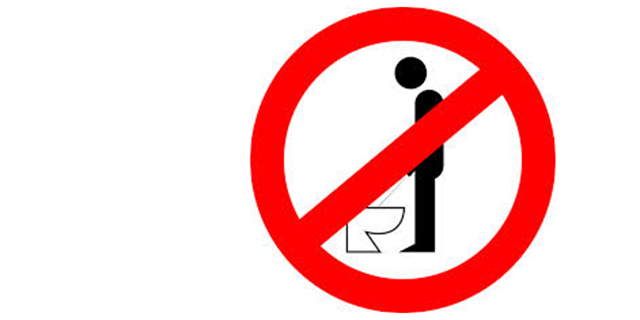
    peeThis is a bit embarrassing, but it’s bothering me and I really want to do something about it. Since as far back as I can remember, I haven’t been able to pee in public restrooms. Men’s bathroom urinals are all lined up next to each other, exposed, and if someone else is in the room I can’t relax enough to let it flow. I know that no one cares and no one is looking at me, but I can sense them there and just that awareness is enough to impede nature’s progress. Once, I went to a cognitive therapist about it and discussed my thoughts and did relaxation techniques, but it didn’t help because it’s something that is more of a gut instinct than intellectual. I really don’t have a clue. What can I do??? It is really annoying.

    J P

    Dear J P,

    Veterinary research is sometimes years ahead of human psychological studies; you can conduct tests with dogs that you couldn’t with people. But the hardware for emotion in dogs’ brains is similar to that in human brains. That’s why humans and dogs relate so well to each other. Recently, canine research revealed that there are two different pathways for the emotion of anxiety. The first is an oxytocin pathway. Oxytocin is sometimes referred to as “the bonding hormone.” Any form of separation anxiety such as grief, social phobia, shame or fear of abandonment is most likely carried on this pathway. My guess is that your inability to pee in public is based here.

    Currently there are no medications that target this pathway. Good relationships, hugs and orgasms increase oxytocin, but these are all a bit inconvenient for the purpose of using public urinals. The other type of anxiety follows a norepinephrine pathway. This is the hormone and neurotransmitter most responsible for concentration, and is reality-fear-based, such fear of being eaten by a tiger. We have many medications for this type of anxiety but they don’t really relate to your issues.

    However, here’s an interesting fact: Anger also runs on this pathway and can override it. If you get angry enough, it will stop your fear. Anger can also turn off empathy and override an oxytocin-based fear. Here’s why it might work for your peeing problem: That visceral sense of other people you have is really a form of empathy. If anger turns off empathy, your visceral reaction will turn off too. So the next time you’re in a bathroom and that sense of others comes creeping into your head, just visualize killing them. Of course don’t do it! This is just a visualization exercise. The more graphic and horrible the scenario, the more pee you will have to enjoy.

    Dr. Brilliant Cliché

    Granny says: My advice to J.P. is if you can’t pee in public, then pee in the stall, for heaven’s sake. Every public men’s room has at least one stall for the purpose of other human excretion needs that nobody wants to do in public. Modesty is not an unnatural thing for any of us. There isn’t a woman’s public bathroom anywhere that has open urinals for ladies, not even in the far east where women pee in floor urinals rather than in toilets. It’s still all done behind closed doors. Perhaps society has an idea that men are not as modest as women. Maybe you are just a bit more modest than most. It’s not a personality disorder, it’s a normal human preference. Don’t sweat it!

    Oh, and my comment on Dr. Brilliant’s advice is this: What are you, nuts?