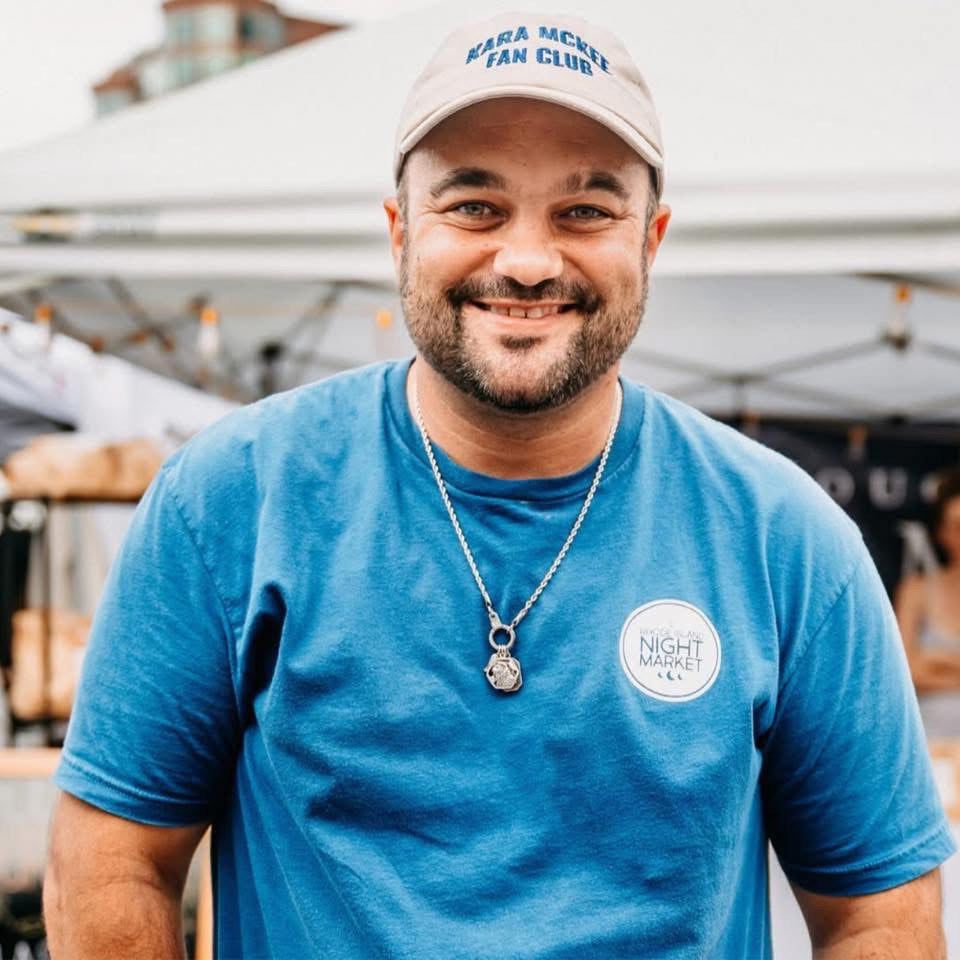
Everybody loves Ed. No matter who you talk to about this guy, the love for Ed Brady shines through in every conversation. It is also clear how much he loves his home state.
Ed is a social entrepreneur, producer, and community leader. He was born and raised in Rhode Island. After graduating from Bryant University, he moved to Hollywood to get hands-on experience working behind the scenes on film and television sets. After several years in California, he returned home. For the past 15 years, he has helped raise tens of millions of dollars for local ventures, nonprofits, and community-based projects across the state.
He loves the Ocean State. I am not kidding here.
He is the co-founder of Cranston Cares, a nonprofit focused on building a more equitable city through collaboration and positive action. He is co-creator of The Thirsty Beaver Pub and part of the founding family behind the event-based technology startup RestauRent. During the pandemic, he served as Vice President of the Cranston City Council and advocated for small businesses and economic recovery. In 2022, he purchased and began restoring the Historic Park Theatre to preserve it as a hub for arts and culture. And, if that wasn’t enough, he just wrapped up the pilot season of The Search RI, a community-driven showcase celebrating emerging artists right here in RI. This latest project caught my attention and we hopped on a video call so I could learn all about it.
Dennise M Kowalczyk: What inspired you to create The Search RI and how does it amplify the existing talent landscape in Rhode Island?
Ed Brady: I was born and raised in RI and spent some time in Hollywood after graduating from Bryant with degrees in film, television, and business. While I was there, I saw how deeply diverse arts communities were celebrated. When I came home in 2008 and started my first production company, “401,” I realized that while RI has always uplifted artists, there was still an opportunity to create more inclusive, collaborative community gatherings that showcased local talent in new ways.
In today’s post-COVID world, there’s a lot of division — especially online. I remember the bulk of the posts used to be what kind of sandwich you ate for lunch. I felt called to create something rooted in unity. This vision wasn’t mine alone. It took a collaborative community. Friends and family were supportive from the beginning. Artists like Johnny Gates and Kara McKee who were both on “The Voice,” immediately signed up to be part of it. Many other members of the arts community signed on early simply because they believed we could grow our homegrown creative scene together. It has taken a village to bring this to life. Other folks who got involved at the start include DJ Finesse, Ericka Atwell Cardona, Ryan Ardito, Lupe Aguilar, Chachi Carvalho, Tara Iacobucci, Kelvin Fabian, and Maddie Levine from Fun 107. Chris Revill, who introduced the two of us, is one of the early-on content creators.
We also recognized the power of digital storytelling. Social platforms now allow artists to share their work without waiting for traditional gatekeepers. That realization helped shape The Search RI into a platform where artists could showcase themselves locally while still reaching global audiences. We are also producing a documentary about the project with hopes to screen it at the RI International Film Festival.
DMK: I want to amplify appreciation about the spirit of collaboration. I moved to Rhode Island eight years ago and it can be a little tough to navigate the community here, unless you “know a guy,” and you know exactly what I’m talking about. And because it is built on a foundation of collaboration, the show is not solely a competition — it is a format that creates a unique experience for the artists.
EB: From the start, we wanted this to be different from traditional talent competitions. I learned from a few people who had been on national shows that when artists are cut, they are then left without support. We wanted to stay in motion with the artists we discovered.
We built a mentorship model where experienced creatives — musicians, producers, comedians, dancers — were paired with participants. The goal was to help them continue performing, collaborating, recording, and building relationships long after the showcase ended.
We also created a safe space for artists to explore their creativity freely. We gave structure but also allowed autonomy. Over nine months, we watched confidence grow. Artists shared personal highs and lows on camera. They found a community. They supported each other regardless of background or identity. The result was an environment where people felt truly seen — often for the first time.
Our goal is to find a way to get them on more stages far after the show and have a connected network where they could still reach out to these mentors and record studio sessions and stay in motion.
DMK: Can you walk us through the journey from open call to the grand finale?
EB: It began with a podcast conversation between myself, Johnny Gates, and Karen McKee where we shared the vision publicly. Media coverage followed, and soon we received hundreds of video submissions from across New England in music, comedy, and dance.
It was a nine-month process. We held auditions at venues throughout the state and even scouted talent at open mics. Originally, we planned to cast 25 artists, but the talent pool grew to 45. Rather than eliminate performers early, we encouraged collaboration. If artists chose to work together — for example, singers performing with dancers — they could all remain part of the showcase. This approach led to two semifinals and ultimately a grand finale featuring 24 performances in March at The Historic Park Theatre. Along the way, participants engaged in live filming sessions, mentorship activities, and storytelling projects highlighting both performers and behind-the-scenes creatives. The goal was always to showcase RI as a hub of artistic innovation.
DMK: What surprised you most about the artists and their stories?
EB: The level of undiscovered talent was incredible. Many participants were balancing demanding careers and personal challenges, yet they found time to reconnect with their inner artists.
Some shared deeply vulnerable journeys — from performing while battling illness to using dance as therapy in recovery. The platform gave people a space to invest in themselves again. That momentum drew in photographers, filmmakers, technicians, and volunteers who wanted to contribute purely because they believed in the mission.
It became a therapeutic creative movement, not just a show. Everyone has a story to share.
DMK: What challenges did you face producing The Search RI and how did you navigate those challenges?
EB: The biggest challenges were the ones I faced inside of myself — managing self-doubt and sustaining faith without guaranteed funding. We didn’t start with major financial backing. We relied on collaboration, in-kind support, and belief in the vision. We pooled our collective resources.
As artists, we all experience emotional highs and lows. The support from the community helped carry the project forward. Instead of hearing, “No,” we focused on finding the next solution, the next pivot, the next opportunity. By the finale, the shared sense of accomplishment was deeply emotional and affirming.
DMK: As you look at what’s next for The Search RI, what are you dreaming about the future of the project?
EB: I envision a lasting creative ecosystem — something like a locally rooted version of a live sketch or variety platform, with monthly or even weekly showcases. Alumni from the first season could become mentors for future participants, creating a legacy network of artists who support one another.
Ultimately, I want artists to own their intellectual property and feel empowered to collaborate across disciplines and cultures. The goal is to celebrate RI on an international stage while keeping the project authentic and community-driven. Expansion into other New England markets is also part of the vision.
DMK: What else are you looking to accomplish on a personal level?
EB: I’m committed to continuing the inner work required to grow as a leader and social entrepreneur. Preserving creative spaces — like the historic theatre I own — remains a priority so artists always have a home to perform.
Whether that path leads to building film studios, leading nonprofits, or returning to public service, my focus is mission-driven work that uplifts others. I believe in learning, teaching, and staying in motion. If I keep doing the daily work, I trust the journey will unfold in meaningful ways.
DMK: Thank you for your time, Ed!
The winners of The Search RI were announced in April. Dancer, Ryane Currie and singer, Scarleth Peoples who performed an emotional duet at the finalist event in March were selected by audience vote. As shared on the announcement post, “History was made and we are just getting started! The moment continues.”
Indeed it has.
To learn more about the project, visit TheSearchRI.com. Follow Dennise on IG @TheAdventurebroad.
Following the publication of this article, Motif has made corrections to a few of the names and spelling. Karen McKee has been changed to Kara McKee, Tara Aqibuchi has been changed to Tara Iacobucci, Erica Atwood has been changed to Ericka Atwell Cardona and Joe Cardona has been replaced with Ryan Ardito. Photo attribution has been added for Cole Harper, @graphicole. Motif regrets the errors.