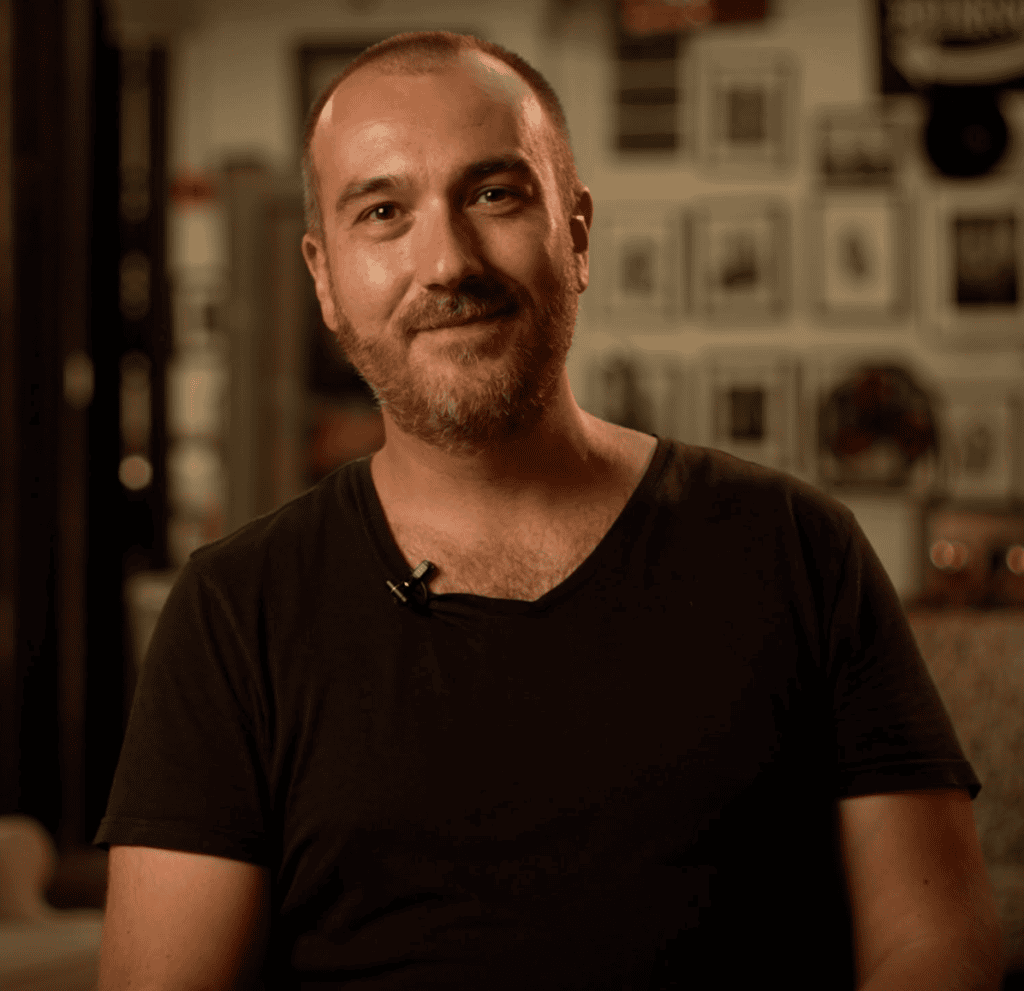
There is something wonderfully Rhode Island about filmmaker Kirk Benttinen’s approach to storytelling: start with curiosity, find the people doing interesting things, and see where the story takes you.
His project, RI Docs, began as a way to reconnect with his home state after moving back to RI, following years away. It’s evolved into a growing collection of documentaries about Rhode Islanders — from artists and photographers to a pizza-obsessed assistant principal — with a bigger goal of “capturing the humanity of Rhode Island.”
And he isn’t stopping with documentaries. He envisions a Rhode Island filmmaking ecosystem where local filmmakers can make films for local audiences, audiences can directly support the work they value, and movie theaters can once again become places where people gather, connect and experience a little movie magic.
I sat down with Kirk to talk on a video call to talk about RI Docs, The Pizza Principal, the challenges facing independent filmmakers, and his big vision for the future.
Dennise: What sparked RI Docs in the first place?
Kirk Benttinen: I think, like most of my work, it came from a place of curiosity. I wanted to come back to Rhode Island and use my work to connect to the people and place here. Coming out of the pandemic, becoming a dad, going through years of isolation and then moving back to my home state, I really wanted to actively reconnect with people here. I thought using my work to do that would put me directly in contact with people. I was really just curious to see what kind of incredible stories I could uncover. And it has evolved and changed very much since those first few days of kicking the idea around. It’s been absolutely wonderful.
DMK: You’ve said that the common thread among these very different people is “capturing the humanity of Rhode Island.” What does that mean to you?
KB: I quickly realized that my interest in doing these documentaries was rooted in having direct relationships with my fellow Rhode Islanders. I haven’t taken on historical stories or tried to tackle famous Rhode Island events because I’m very interested in connecting with people who are alive now. We have more documentation than we’ve ever had with video and photos, but most of what we’re capturing stays at the surface level. A hundred or a thousand years from now, we’ll have a lot of selfies and quick little TikToks. But I would be saddened if someone couldn’t hear the voice of someone describing something meaningful in their life—what motivated them, what required courage, or what it was like to live through these times in their own individual way. That is incredibly important work to me.
DMK: One of the people you documented is photographer Carmel Vitullo. What did her story teach you?
KB: When I discovered Carmel and started looking at her street photography, I needed a forklift to get my jaw off the floor. She walked around with her camera, with no plan and simply reacted to the things that happened around her. I was surprised that someone with such talent and such a large body of work could have been overlooked, even in a small place like Rhode Island. What I find so inspiring about her life is that she really did live and work in obscurity. She had commercial photography jobs that paid the bills, and then on weekends and after work, she did this thing she loved purely because she loved doing it. She reminded me that the art, in and of itself, is completely contained. The value is in the experience of the artist engaging with their life and the world. If you’re currently making incredible art and no one knows about it, that doesn’t mean you should stop. Just keep making it.
DMK: RI Docs is also about bringing people together. Tell us about The Pizza Principal.
KB: The Pizza Principal is the first feature-length documentary as part of RI Docs. It’s about a pizza-obsessed assistant principal who, after the unlikely popularity of his local pizza reviews, is thrust into the local spotlight. That reignites his lifelong dream of becoming a professional writer. His love of pizza and his dream of writing come together through Rhode Island pizza and the ripple of his writing into the community of Rhode Island pizza lovers. The film combines things I love — mostly pizza — with stories about people digging deep to find the courage to pursue something meaningful.
DMK: And the premiere isn’t exactly a traditional film screening, is it?
KB: No. The Pizza Principal premiere is really a prototype for the types of events we want to continue hosting in RI. We’ll screen several RI Docs shorts, then The Pizza Principal, at Uptown Theatre on November 20, followed by a filmmaker Q&A. There will be a pizza party, local artists providing entertainment, surprise elements, and opportunities for attendees to participate in community art projects. My goal is to create experiences where people don’t just come and sit — they actively participate… And, of course, it culminates in an after-party where people can meet the pizzerias featured in the film, taste their pizza, and mingle.
DMK: What do you see as the biggest challenge for filmmakers trying to build sustainable careers in Rhode Island?
KB: The film industry is going through rapid change. There are fewer and fewer opportunities for filmmakers across the board, distribution has changed, and the traditional ways of doing business aren’t serving the majority of people anymore. In RI, we’ve benefited enormously from the work of the Film and TV Office and the productions that have come here. But there simply aren’t enough big productions to sustain everyone. One thing I’m trying to do is lead by example. You can make films in RI cheaply and creatively and then build a direct relationship with the audience you’re making them for. I want Rhode Islanders to see themselves represented on the big screen — to see their favorite pizzeria or coffee shop, to hear the names of places they grew up going to. I believe that representation creates an audience.
DMK: You’re also thinking about how people learn filmmaking. What would you like to see?
KB: I’m very interested in a traditional apprenticeship approach. There are more film schools than ever, they cost more than ever, and there are fewer film jobs than ever. That math doesn’t work. I would love to see young people coming out of high school learn filmmaking on the job, getting paid while gaining hands-on experience without taking on enormous debt. But I also think it’s important to remember that “young people” can simply mean people who are new to filmmaking. It doesn’t matter if you’re 80 or 20. I didn’t get into filmmaking until I was in my 30s, and I would want that same support and inclusion for people entering the craft at any stage of life.
DMK: Finally, you have a much bigger vision for Rhode Island filmmaking. What does that look like?
KB: I want to create a place that brings back some of the feeling of movie magic — a studio theater, a third place where people can come together. The documentaries are the first step: real stories about Rhode Islanders living now. But I want to make narrative films, too — crime movies, romantic comedies, horror movies — all taking place in RI, with RI as the setting and Rhode Islanders as the characters. I want to make those films here, for Rhode Islanders, and screen them in this theater. I’m interested in making the theater the place where you experience the film. You sit with other people, put your phone away, think, feel, reflect and connect. It’s a tall order. And the popcorn’s got to be good.
DMK: Why do you believe Rhode Island can actually become a significant filmmaking hub?
KB: To me, it’s self-evident because we’re Rhode Island. What can’t we do? We have this reputation as this tiny, scrappy place that punches way above its weight. We have Providence, the Creative Capital, and so much creative energy, intelligent people, tough, gritty, hardworking people. We have incredible places to film, all conveniently located. If you need a city, you’ve got Providence. If you need the ocean, you’ve got it. If you need a rural setting, you can get there within 20 or 30 minutes. That translates to lower budgets. I think the biggest obstacle is simply lack of imagination. I approach things by asking: Is it possible or impossible? If it’s possible, then let’s figure out how to do it. There’s an opportunity here to create rewarding jobs for Rhode Islanders, connect people through shared experiences, create films that function as cultural exports, and even drive tourism. The film industry is decentralizing. There is a need for local and regional production hubs. Rhode Island is well-positioned to provide a solution to that need—if we invest in ourselves and our infrastructure. And I believe we can.
BTS with DMK is a Motif series exploring the people, stories, and creative energy behind RI’s independent film community. It is also available as a podcast. To learn more about RI Docs, visit ridocs.org. Find Dennise @TheAdventureBroad.