Author: Emily Olson

  • Voting Nation

    Voting Nation

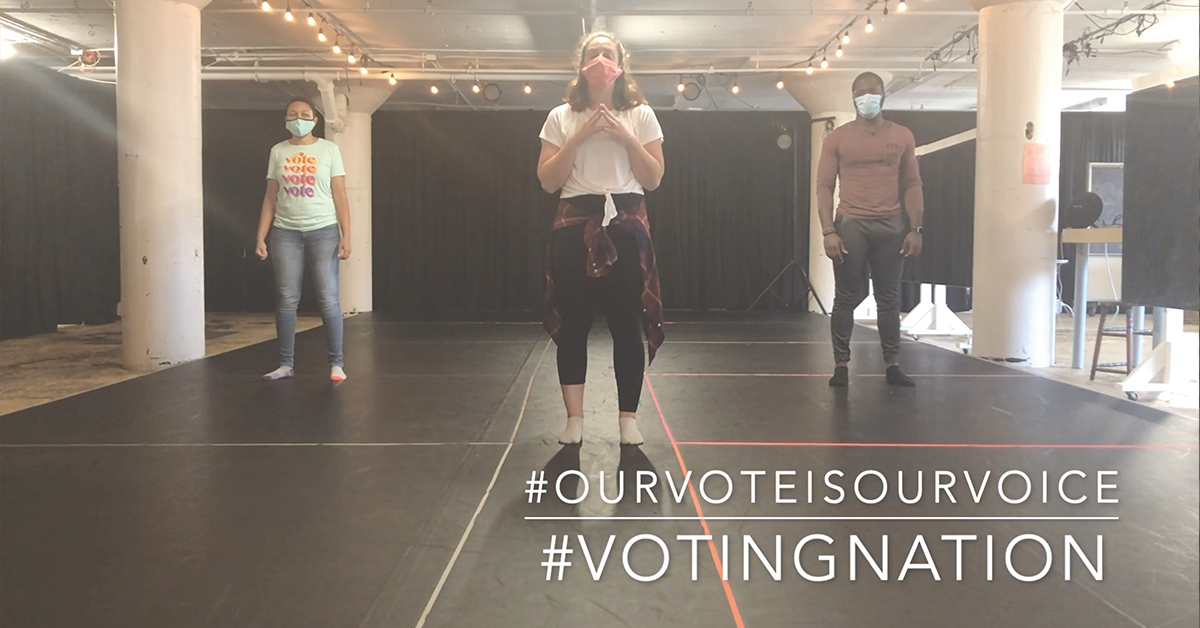
    When Tammy Brown of The Womxn Project approached Alicia Wilder of Metamorphosis Dance Company suggesting they organize a flash mob to promote voting, Wilder was instantly on board. The song they chose to dance to is Janet Jackson’s “Rhythm Nation.”

    “If you really take the time to listen to the lyrics, it is so relevant to the world we live in right now, and emphasizes the importance of coming together and using our voices to create change,” Wilder said of the song choice.

    With support from Metamorphosis company members Lea Marie D’Arminio, Allie Smith and Simon Oloaye, the duo created an instructional video. They’re asking participants to learn the dance, then upload a video of them performing it with a little freestyle at the end.

    Why did Wilder feel called to encourage others to vote? “There is a lot about 2020 that has left me feeling helpless, or as though I have a lack of control,” she said. “I’ve spent a lot of my free time reflecting on how I can be more active in my community, and as a white ally. I feel it is my responsibility to do all that I can to encourage those around me to participate in this coming election, and to come together to fight for the rights of people who have been oppressed for far too long.

    “After talking in depth with Tammy about where the project could go, how we could do it safely and follow COVID guidelines, and how to get the younger voting generation involved, we decided that a social media campaign was the right choice.  The idea of making this a fun, easy to learn dance, brings a sense of joy to the idea of voting and voting awareness.  It allows us to get the message across, while inviting people to have some fun!  Dancing or jamming to a great song like this, is always a good way, in my opinion, to let go of something, and feel a sense of freedom, and happiness.” 

    Wilder said about the role of art in politics, “I think art, in general, allows people to work out what they are feeling and how they respond to things, without having to use words. … Though we don’t all have the same experiences, we all can experience the same feelings.  This is an important tool for communication in all aspects of life, but can act as a facilitator for conversation in relation to politics.”

    Learn the dance at vimeo.com/471366893, then upload it with #ourvoteisourvoice and #votingnation, and tag @thewomxnprojecthq and @metamorphosisdanceco. For more information, go to fb.com/metamorphosisdanceco

  • Eat Your Veggies!

    Eat Your Veggies!

    Providence has a long history with veganism and vegetarianism. In the 1970s and 1980s, it was home for the North American Vegetarian Society’s annual summer fest; it birthed Like No Udder, the world’s first vegan ice cream truck and now it has Plant City, one of the first vegan food courts in the world.

    This rich vegan and vegetarian culture is the perfect environment for Providence Vegan Restaurant week, which starts October 30 and runs through November 8. Chris Belanger, who owns Like No Udder vegan ice cream with his wife, Karen, runs the event and spoke to us about its second iteration.

    “The goal is to bring more vegan options to the community,” he said, explaining why so many local restaurants that are not traditionally vegan or vegetarian are participating. He said that the chefs of non-vegetarian restaurants are excited to flex their creative muscle and work with new ingredients.

    The rules around the event are loose for restaurants. Some offer daily vegan specials, others offer discounts on vegan options and others are offering three-course prix fixe meals. The goal is to make the event feel special for attendees, but also, “we want to show restaurants that there’s demand for vegan options,” Belanger said.

    Providence Vegan Restaurant Week runs Oct 30 – Nov 8. For a full list of participating restaurants, go to vegrestaurantweek.com or follow them on Instagram @pvdveganrestauranweek

  • Voting Nation

    When Tammy Brown of The Womxn Project approached Alicia Wilder of Metamorphosis Dance Company suggesting they organize a flash mob to promote voting, Wilder was instantly on board. The song they chose to dance to is Janet Jackson’s “Rhythm Nation.”

    “If you really take the time to listen to the lyrics, it is so relevant to the world we live in right now, and emphasizes the importance of coming together and using our voices to create change,” Wilder said of the song choice.

    With support from Metamorphosis company members Lea Marie D’Arminio, Allie Smith and Simon Oloaye, the duo created an instructional video. They’re asking participants to learn the dance, then upload a video of them performing it with a little freestyle at the end.

    Why did Wilder feel called to encourage others to vote? “There is a lot about 2020 that has left me feeling helpless, or as though I have a lack of control,” she said. “I’ve spent a lot of my free time reflecting on how I can be more active in my community, and as a white ally. I feel it is my responsibility to do all that I can to encourage those around me to participate in this coming election, and to come together to fight for the rights of people who have been oppressed for far too long.

    “After talking in depth with Tammy about where the project could go, how we could do it safely and follow COVID guidelines, and how to get the younger voting generation involved, we decided that a social media campaign was the right choice.  The idea of making this a fun, easy to learn dance, brings a sense of joy to the idea of voting and voting awareness.  It allows us to get the message across, while inviting people to have some fun!  Dancing or jamming to a great song like this, is always a good way, in my opinion, to let go of something, and feel a sense of freedom, and happiness.” 

    Wilder said about the role of art in politics, “I think art, in general, allows people to work out what they are feeling and how they respond to things, without having to use words. … Though we don’t all have the same experiences, we all can experience the same feelings.  This is an important tool for communication in all aspects of life, but can act as a facilitator for conversation in relation to politics.”

    Learn the dance at vimeo.com/471366893, then upload it with #ourvoteisourvoice and #votingnation, and tag @thewomxnprojecthq and @metamorphosisdanceco. For more information, go to fb.com/metamorphosisdanceco

  • Rhode Island in a “Tough Spot”: A summary of the governor’s October 15 press conference

    Rhode Island in a “Tough Spot”: A summary of the governor’s October 15 press conference

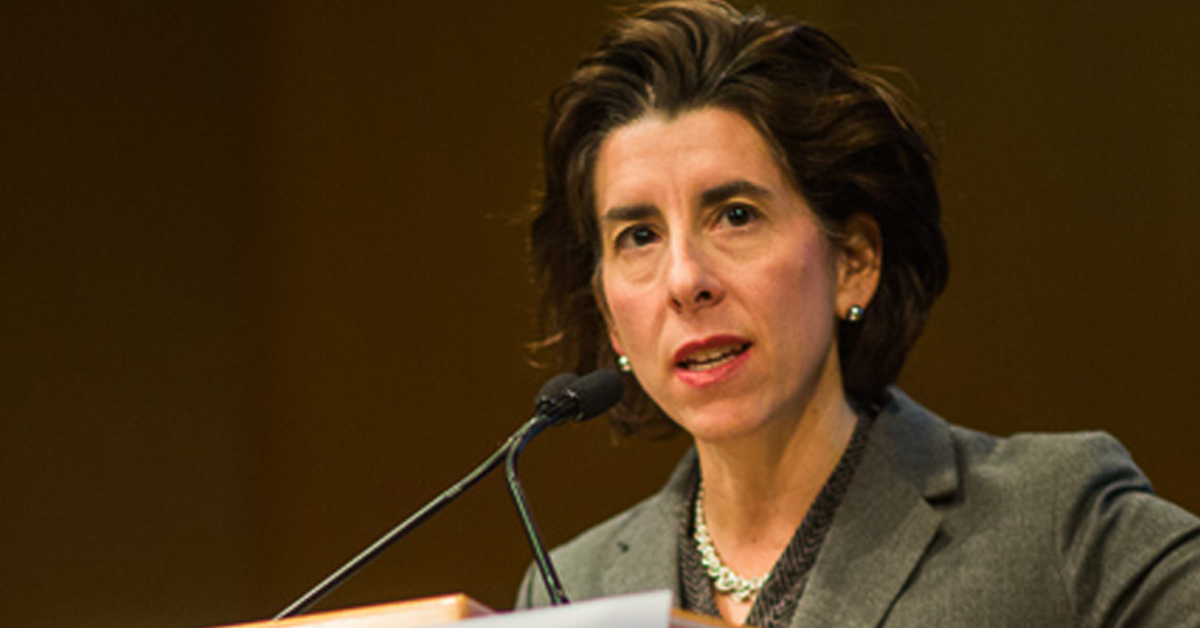
    Governor Gina Raimondo and DOH director Dr. Nicole Alexander-Scott gave an emergency COVID-19 presser today at 1pm.

    There were big upticks in today’s COVID data; DOH reports 228 new cases since yesterday. There are 129 people hospitalized for reasons related to COVID-19. Of those, 12 are in the intensive care unit and five are on ventilators. The percent positive rate for cases yesterday is 1.9%, but overall according to state leaders metrics are trending slowly up. The state saw two additional deaths since yesterday; both were in their 90s. This brings the Ocean State’s total fatalities from the coronavirus to 1,149.

    Governor Raimondo and other state leaders promised new restrictions at yesterday’s press conference. Rhode Island COVID cases have been creeping up slowly over the autumn. Today the governor only announced one major change to restrictions, ordering common areas and workplace break rooms closed for 90 days. Raimondo said she was not lowering the social gathering limit, that it will remain at 15. According to state officials, analyzing the data and contact tracing shows most COVID spread is happening in groups well under the allowed limit. 

    “We’re in a tough spot right now,” the governor said. “We’re not where we wanna be.” While no new big restrictions are on the horizon, the state is committed to enforcing restrictions on the books. Crucially, new mask-wearing regulations will be forthcoming, as the state expects Rhode Islanders to wear masks when in the presence of someone they do not live with. Governor Raimondo reminded Rhode Islanders big parties or other gatherings could incur fines of $500 per person. Rhode Island State Police have announced they are tripling enforcement presence for Halloween in a few weeks. Raimondo also asked college residents, teenagers and young students not to go out and party for Halloween. Department of Business Regulation will be stepping up enforcement of fines on businesses that violate COVID regulations.

    Additionally the governor asked people to follow some of the COVID restrictions for trick-or-treating this year. Some of the guidance includes individually bagging candy to give away and finishing trick-or-treating before dark, among others. “It’s not forever, this is for now,” said Raimondo. While it’s fun to make jabs at the governor for implying the virus is afraid of the dark, trick-or-treating during daylight hours is to limit the time (and possible exposure) of community spread. Dr. Alexander-Scott noted it was possibly for a sick person to transmit COVID-19 by passing out candy, and said parents should feel welcome to wipe down candy.

    The governor also asked people to keep Thanksgiving local, advising them not to travel on a plane or train. More official guidance and restrictions will be made available next week, but Raimondo added that there would be no official prohibition on Thanksgiving. The governor also said the reason for some of these restrictions and guidance was to avoid having to shut down the economy again.

    Governor Raimondo also wants to step up asymptomatic testing again, using it to surveil community prevalence of COVID-19. If you are a close contact worker, a legal adult younger than 40, travel to or from other states, or recently attended a large protest or demonstration, the governor advises you to get tested.

  • In Their Own Words: Jennifer Douglas (D), Senate District 34

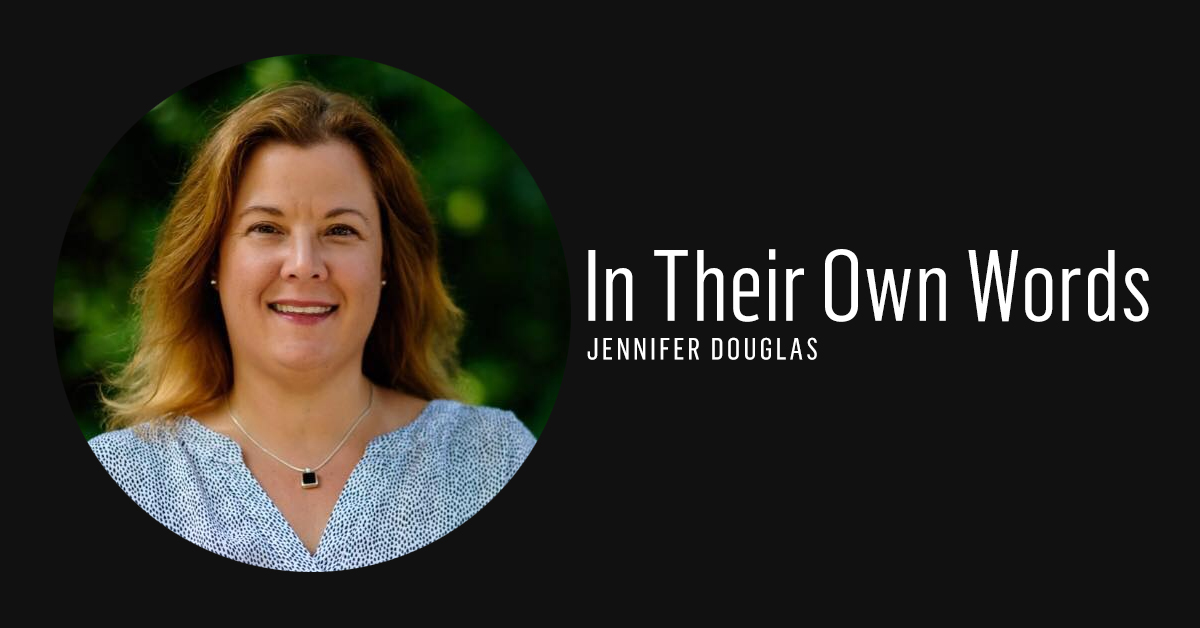
    In Their Own Words: Jennifer Douglas (D), Senate District 34

    We talked to many of the local candidates running for public office in the upcoming 2020 election. We asked each of them the same set of questions, with the promise to print their answers only lightly edited for clarity. The following answers are from Jennifer Douglas (D), running against incumbent Elaine Morgan (R), for RI Senate District 34. 

    Motif: What are, in order, your top three priorities or issues if elected?

    Jennifer Douglas: I will work on legislation to increase the minimum wage to $15 an hour to fight poverty and stimulate the economy.

    I will work on legislation to implement the environmental policies outlined by the Green New Deal (GND).

    I will work hard to encourage and grow small businesses in the area that will complement the character of our rural community. 

    Motif: After the election, the Supreme Court is scheduled to hear a case with ramifications that could eliminate the Affordable Care Act, potentially reducing the high insured rate in Rhode Island. In a country without ACA protections, what should healthcare for Rhode Islanders look like?

    JD:  Healthcare is a human right, not a way for insurance companies to get rich. Single-payer healthcare will improve health outcomes, save Rhode Islanders money and guarantee a woman’s right to choose. I work in the medical field. I see so many patients who can’t afford their medications, who don’t get the testing they need because they can’t afford the deductible, and forgo lifesaving treatment so they don’t lose their homes and livelihoods due to overwhelming medical debt. We can do better. We need to do better.  

    Motif: Do you think police departments are overfunded, and if so, how would you reallocate those resources?

    JD: I know in my own community our police operate on a lean budget, so they’re definitely not overfunded. In others, they have the money for equipment that can militarize their departments and I also don’t believe that is necessary. What I would like to see is our police receive the training and support they need to do the jobs they signed up for — actual police work. Our police aren’t social workers or drug counselors or dog catchers, yet we expect them to attend to every need in our community. Let’s remove that burden so they can do the important work they were hired to do. 

    Motif: Should school funds be pooled and redistributed on a weighted scale to address statewide equity issues, or should districts continue to fund their own community schools? Are there school districts that should be combined?

    JD: Rhode Island’s schools are failing and students cannot meet even basic benchmarks. And the problem is funding. The state provides inadequate resources for education, forcing school districts to rely heavily on local property taxes. This leads to inequality between different districts, where most cannot generate enough revenue to provide their students with a quality education. To fix this problem, we must amend the Rhode Island constitution to explicitly provide a right to a good education for all children, and our state must pick up the revenue shortfalls in communities that cannot generate enough money from local property taxes.

    Motif: COVID most harshly impacted a lot of core industries in Rhode Island (eg, hospitality, restaurants, arts/entertainment). What can elected officials do to revitalize these industries and improve the lives of our poorest residents?

    JD: COVID has highlighted the inequity our communities face. Job losses have left people without health insurance in the middle of a pandemic. Our small businesses are closing permanently. All of my platforms address this crisis we’re facing now, and will strengthen our state going forward. Investing in small business, advocating for fair wages, providing universal health care, and finally, demanding that corporations and the extremely wealthy pay their fair share will lessen the burden on the hard working people of this state. It’s time we invest in all people, not just profits for the well-connected few. 

    Motif: Climate change is a very real threat in Rhode Island — we are in close proximity to the ocean and broke temperature and drought records this year. If elected, what steps would you take to protect the environment?

    JD: In this coastal state, we need to be focused on addressing climate change. Erosion, severe weather, downed trees, long power outages affect us all. I support a Green New Deal. We will invest in green energy and create jobs to build the infrastructure for it, putting people to work and ensuring our economy is sustainable. We will NOT, however, allow our forests to be cleared by corporations for solar fields. 

  • A Scary Story

    A Scary Story

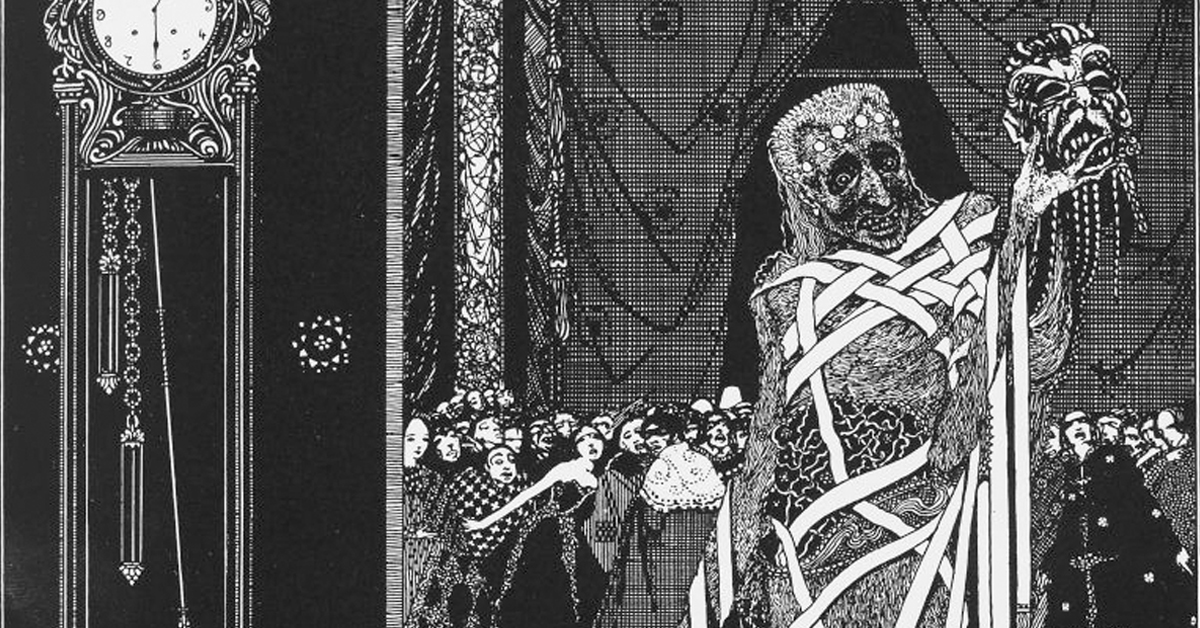
    Illustration for “The Masque of the Red Death” by Harry Clarke, 1919

    A wealthy prince, thinking himself protected from a plague that sweeps his land, hosts a lavish party in his castle, inviting all his wealthy friends to eat, drink and play, waiting for the plague to burn itself out and focusing on their own interests.

    Now imagine that prince is the President, his castle the White House rose garden. Who could have guessed that Edgar Allan Poe’s short story “Masque of the Red Death” was so prescient?

    “And Darkness and Decay and the Red Death held illimitable dominion over all.”

  • On the Cover

    On the Cover

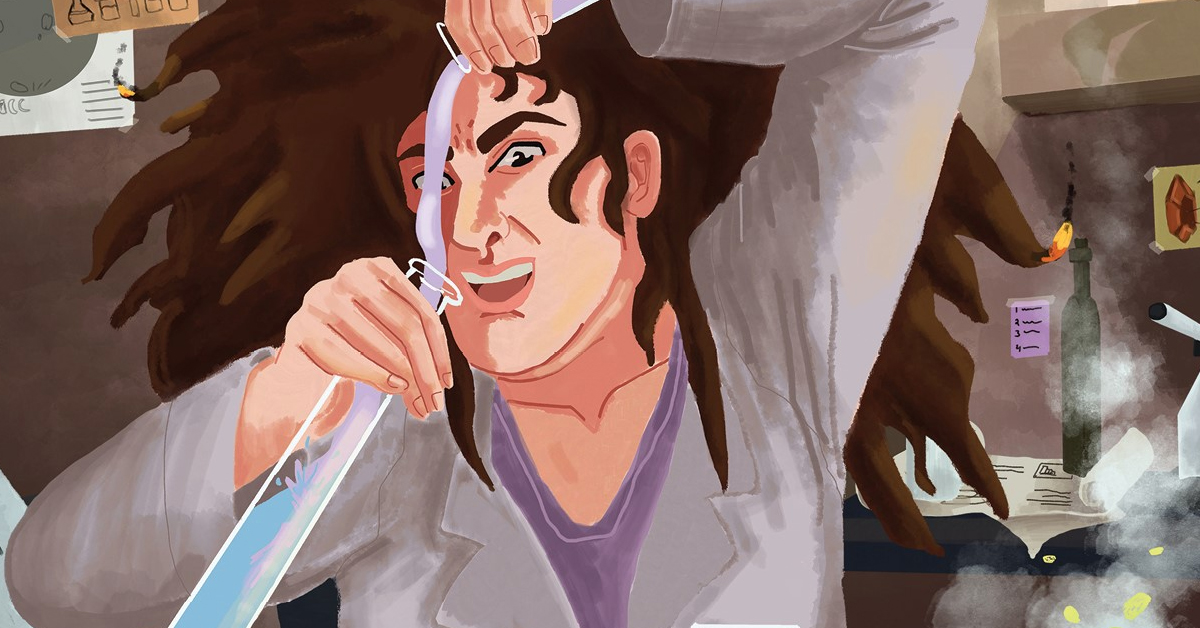
    Alexia Reyes is the talented artist behind our cover art this month, and we talked to her about what inspired her design. “I’m not sure if there was a message in mind when creating this,” Reyes said, “but there were a lot of goals. I wanted to portray the scientist as a woman, but not have the audience think that she is a villain. She could be mixing liquids for a cure of a disease!” Whether the disease is one she unleashed on the world remains to be discovered.

    Much of Reyes’ art is informed by nature. “There is something about painting plants, trees and flowers that’s just so much fun and easy to create! I feel as though artists can’t get nature wrong. If something in nature is ‘ugly’, ‘crooked’ or ‘weird’ then it’s perfect for drawing.

    To see more of Reyes’ work, go to alexiareyes.com or follow her @alexiareyesart

  • Beauty and the Grotesque: Soyoon Cha explores the dark side of human nature

    Beauty and the Grotesque: Soyoon Cha explores the dark side of human nature

    Delirium. TV/video installation with performance, 2016.

    Soyoon Cha’s art is a study in contradiction. Her photographs of models in the forest wearing diaphanous gowns seems something from a fairy tale. But some of her sculptures, installations and video projects feel fueled by nightmare. “With my artwork, I’ve always fixed on the shadow of the self through Jungian theory about how you have to embrace the darker parts of yourself to know your whole self. Being in an enlightened community, I always like to show the alternative, polar opposite in a sense.” 

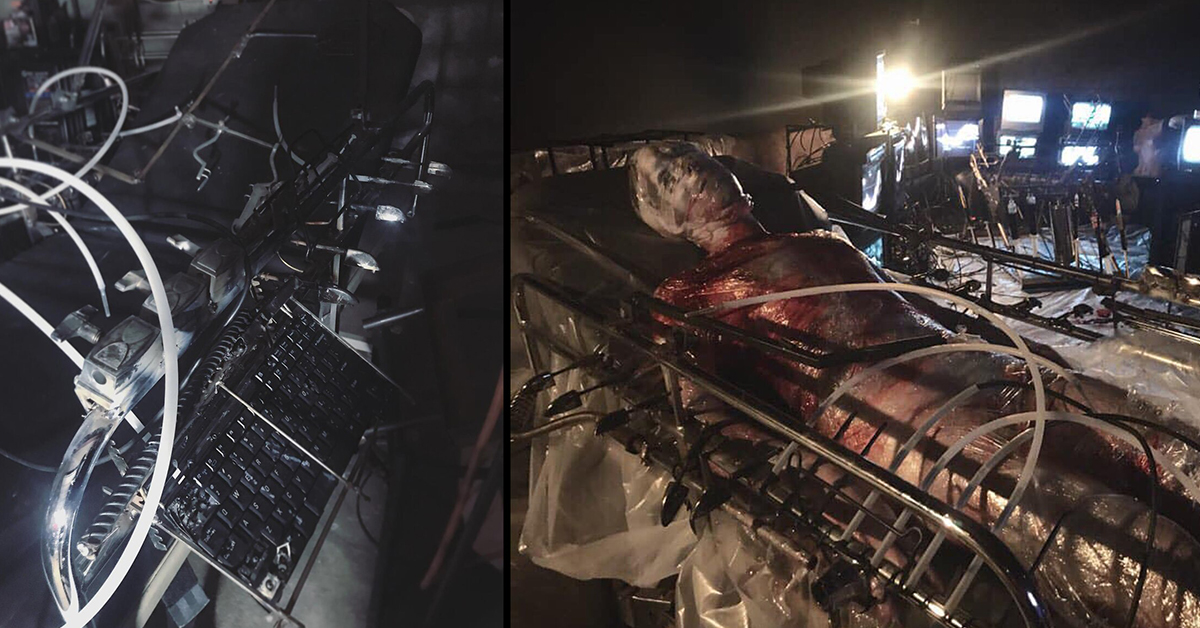
    The enlightened community she speaks of is The Reliquarium, a live/work artist space located in Lincoln, that Soyoon has been involved with since 2013. She’s currently working with them on a huge build — TimeZone, which is a 25-room game space that leads players through space and time, so they can win points by facing physical and mental challenges. Soyoon helped design the alien spaceship room. “I like tubes and metal and industrial things,” she says. “I drew from that to bring a lot of different elements into the room. It involved a lot of welding.” 

    Illusion of Torture. Sculpture with video and performance, 2017.

    Her personal sculpture projects also involve a lot of welding. “I like to put metal trash together and try to make something as uncomfortable as possible,” she says. Hospital gurneys, wheelchairs, metal teeth and custom torture devices artfully displayed in a kill room certainly can be uncomfortable — even terrifying — to view. But this discomfort is the point because, she says, that’s a feeling people need to embrace. 

    Her video projects are either projected or shown on old TVs configured in a variety of ways. One project, called “Delirium,” takes place in a forest and includes a model who seems to be plugged into the television sets. Many of the models she works with are Reliquarium members. “When I work with models,” she says, “even when it’s delicate, I try to show something grotesque with the beauty. I like to submerge them in viscous materials — mud, clay, milk, honey — and have them express raw visceral emotions.”  

    Gurney Modification. Sculpture, 2018; Soyomyoyo x Quackinsaw performance, 2019

    She recently finished a seven-video project that focuses on the seven deadly sins. “I immersed people in viscous materials, but kept them in their sin,” she explains. Gluttony is smeared with cake. Greed is streaked with gold and glitter. The project has yet to be shown, but she’s using the forced downtime the pandemic has given her to find ways to put her project on view. “It’s a year-long project that has yet to see the light of day,” she says. But fans who lust for more need not wait. She’s just released a preview of her project in book form, that includes “manic musings,” poetry and her description of the process. 

    For more, go to soyomyoyo.com or @soyomyoyo  

  • Trust Science?: Americans on both sides of the political divide struggle to decide who to believe

    Trust Science?: Americans on both sides of the political divide struggle to decide who to believe

    Americans seem to be dividing themselves into two camps: those who trust science and those who don’t. But even those who traditionally support science and have faith in agencies such as the CDC are looking askance at those agencies, wondering if they’re falling prey to political pressure.

    Dr. Michael Fine, doctor, community organizer and former head of the RI Department of Health says that the distrust comes down to money. “I actually think it has to do with the entry of the profit motive into science and public life,” he said. “What’s happening is not science in the public interest, it’s science for profit. … I think people smell it and feel it and that’s what makes them suspicious of science.”

    Dr. Fine brings up vaccine development as an example. “The polio vaccine was estimated to be worth $6 billion to $7 billion to the guy who figured it out. But when he was asked if he would patent it, he said, ‘Are you nuts? This is for everybody.’ Because he has that motivation, people trusted it.”

    He compares that attitude to the current development of a vaccine for COVID-19. “The government put $10 billion for vaccine development into five companies, two of which have never brought a vaccine to market before. They had no experience, but what did happen was that the value of their stock went through the roof.”

    Distrust of the motivation behind public health efforts isn’t a modern phenomenon. Dr. Fine cites the Tuskeegee Experiment as one of the reasons why people in the Black community can be suspicious of healthcare. In the Tuskeegee Experiment, 399 Black men with latent syphilis were asked to participate in a study and in exchange, would receive free medical care. But that medical care didn’t come. “Those researchers didn’t have the community’s interest at heart. They weren’t for profit, but they were willing to experiment on others.”

    Dr. Fine maintains that once profit and self-interest enters the picture, the public is wise to question the motives of the science they’re being offered. “Even the people with the best intentions end up being complicit in it,” he says. “It’s amazing how profit has permeated all of our lives, and we’ve let it happen. … I think we are in real trouble as a society, and it’s not because of who’s President. It’s because we’ve allowed every part of our lives to be corrupted. Every place you turn, someone is trying to tempt you to do something in their interest. And that’s how our public life has become corrupted. Until we say it and we confront it, we’ve got a real struggle in front of us.”

    The reasons behind people’s lack of faith in science may differ, but Dr. Fine believes the various points of view stem from the same source: a recognition of profit over people. “People on the right, I think, really believe that COVID is overplayed in order to strengthen the deep state or something like that. Like crazy whining liberals are trying to manipulate ordinary Americans by inventing these stories,” he says. “I think a lot of this stuff, when you look at the deep structure, is really connected to various conspiracy theories, which themselves are driven by this unrelenting manipulation for profit.”

    So how do we avoid this manipulation and get to the truth? “I have trouble figuring out what the truth is myself,” he says. “When I read scientific studies, I spend a lot of time trying to look for the sources of intentional bias and manipulation.”

    He seeks non-self-interested sources, recognizing that it isn’t always easy to figure out who those people are. “That’s why at the end of the day I believe in small government. Not in the sense that the government shouldn’t be part of people’s lives, but I want to be able to look in the face the people who impact the part of the government that affects me. I want to know their kids and spouses and the ethics that rule their lives. That’s the way I get a sense of whether what someone says is true or not.” 

    Where is true north on Dr. Fine’s moral compass? “The center of my ethical construction is that it’s bad to profit off the misfortune of others. Once we start allowing profit off the misfortune of others, we begin to get a vested interest in causing the misfortune, and that puts us at war with each other.” 

  • Make America Worse Again

    Make America Worse Again

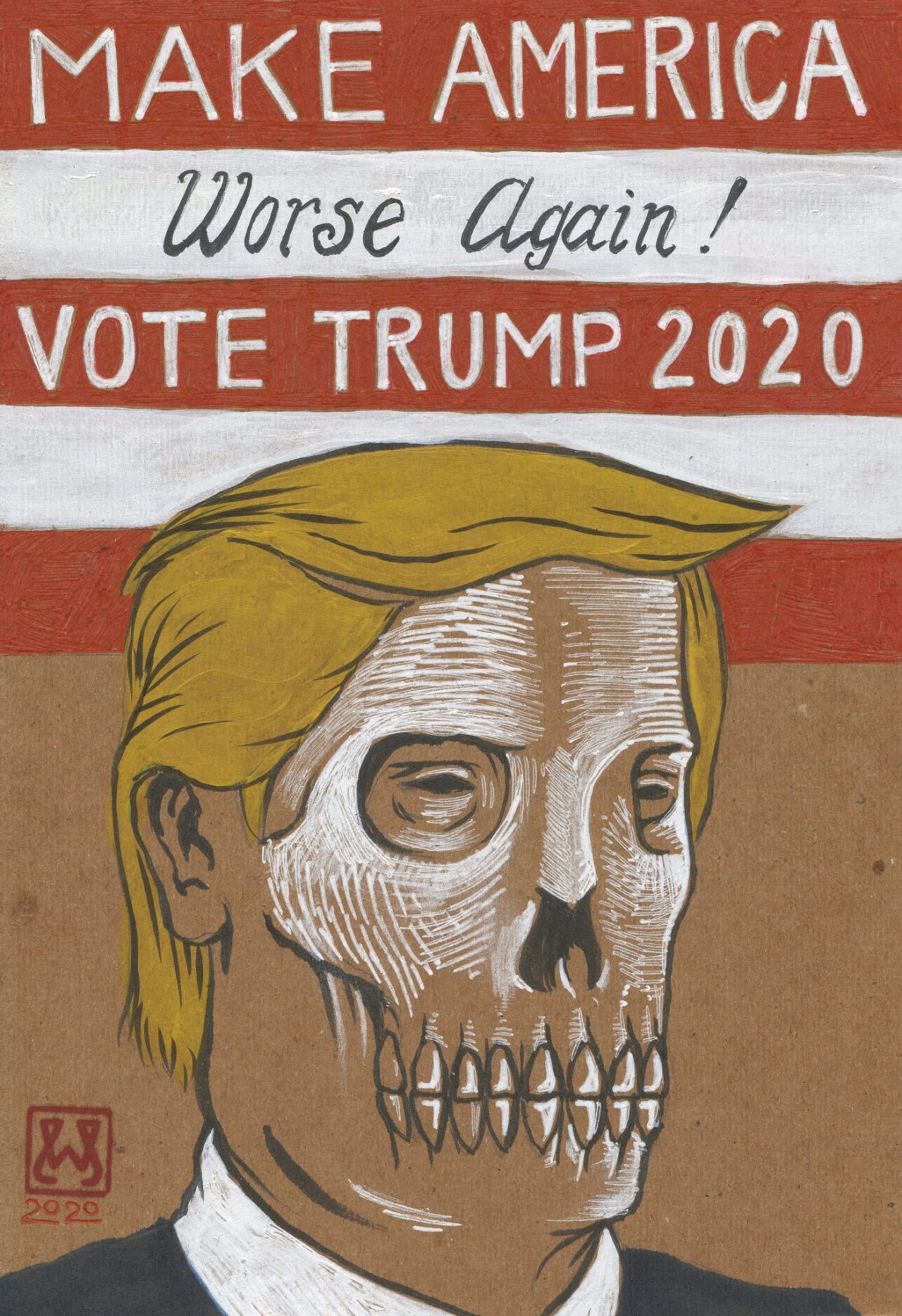
    William Schaff is a Warren-based artist who has lent his talents to many endeavors, but is perhaps most well-known for his skulled-up faces (check out his signature style on the faces of Gina Raimondo and Allan Fung he illustrated for our October 2018 cover).

    His most recent project is the skulled-up face of Donald Trump — pictured here — paired with the text “Make America Worse Again, Vote Trump 2020.” He made this image a free download for people who wanted to hang it in their window or anywhere they deemed appropriate. “Have at it!” he wrote.

    Schaff’s fans decided the most appropriate place for this image was a billboard, so they each pitched in a few bucks and made that dream a reality. The billboard went up on October 5, and you can see the skulled-up Trump at the corner of Dorrance and Friendship streets where it will remain until November 5 when all our questions will be answered — or perhaps more will be raised.