Author: Sean Carlson

  • Impossible Tasks: On fifth album, Adynata, Vudu Sister burnishes hope in the darkness

    Impossible Tasks: On fifth album, Adynata, Vudu Sister burnishes hope in the darkness

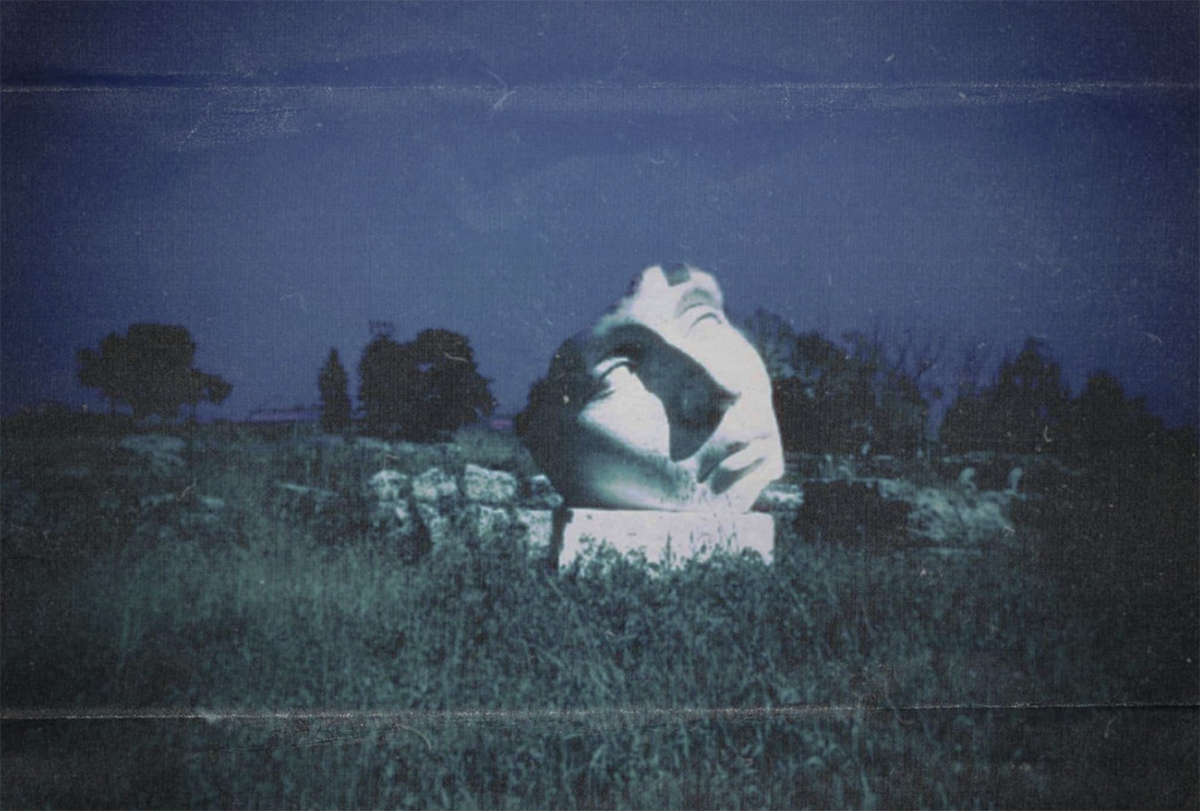
    (Photo credit: Keith J.G. McCurdy, from the cover art of Vudu Sister’s Adynata; photograph of the art installation LO SGUARDO – Humanitas – Physis by sculptor Igor Mitoraj at the Neopolis Archaeological Park of Siracusa in Sicily, Italy)

    After nearly a decade of songwriting in a gothic-folk tradition often tinged with early ’90s grunge, Keith J.G. McCurdy drew from a deeper well in crafting Vudu Sister’s 2021 EP, Burnt Offerings. As a Classics and English double major with a minor in Medieval Studies at the University of Rhode Island, he empathized with the heroines written into the poetry of Ovid’s Heroides and the tragedy of The Oresteia by Aeschylus. With the support of URI grant funding, McCurdy worked under the mentorship of Dr. Daniel Carpenter, to meld academic and musical interests into songs and lyrics in Latin and Ancient Greek that voice the pain of these goddesses of myth:

    Rapiebar ut tenebra / Subterra recluserat,” McCurdy intoned. “Οἱ ἄνεμοι ἔχοντες ἡσυχίαν / ἐπί τῇ εὐρείᾳ θαλάττῃ.”

    “I was snatched as the dark / Under-earth had opened.”

    “The winds having silence / Over the wide sea.”

    Vudu Sister started as a solo project, with a folksy 2011 debut, Bastard Children. Recording with Ben Knox Miller of The Low Anthem at Providence’s Columbus Theatre, Household Items in 2013 ventured into jangly alt-rock, while 2016’s Mortis Nervosa allowed for what McCurdy describes as a “visceral catharsis,” or “a spiritual bloodletting.” Each album expanded the range of songwriting that fed the narrative and linguistic creativity of Burnt Offerings. The latest album, Adynata — a Greek term chosen by McCurdy for its rhetorical and literary meaning of “impossible tasks” — returns Vudu Sister to the English language and introspection found in the first person.

    “In addition to my love of fairy tales, antiquated literature, and ancient arcana, I wanted something that evoked a sense of weight akin to Sisyphus’s boulder,” said McCurdy.

    With Diane O’Connor on violin, Isabel Castellvi on cello, and Emma Newton on harp and piano, Adynata weaves elegance throughout a pervasive and penetrating heaviness. In support of the album, McMurdy played solo sets in March at The Quencher in Newport, Arcane Mead in Providence, and Sons of Liberty in Kingston, with the full band joined by Eryka Fir of Westerly and Long Kate of Providence for a record release party at Myrtle in East Providence.

    McCurdy said he tends to avoid “overt political themes” in his songwriting but instead aims to “imbue a more abstract approach.” Like the figures from ancient lore embodied on Burnt Offerings, Vudu Sister’s abstractions treat the present day within a greater continuum, including recurring imagery from near and distant histories and weaving connections across time.

    “I think in retrospect, the strongest motif I seem to have kept revisiting was an abstract idea of home, finding home, and/or not feeling at home where one resides,” said McCurdy.

    As an artist in Providence, McCurdy credits the influence of H.P. Lovecraft’s novella The Shadow Over Innsmouth and short story “The Call of Cthulhu” as setting examples of alienation within the notion of home, which informs the lyrics and sound of “Non-Euclidean Geometry.”

    On “The Valley” — which McCurdy said “might be the bleakest, darkest song I have in my catalog” — allusions to the world’s holy sites are set in proximity to images of rot and ruin.

    “Under the Light of the Moon,” constructs a ghost story as a gothic ballad recounting a woman returning from the dead to seek revenge on the men who had wronged her in life.

    “Black Flowers” in ways responds to Lord Byron’s 1816 poem “Darkness;” its vaunted sensuality finds the world “void” and “the populous and the powerful” as a “lump of death:”

    I had a dream, which was not all a dream.

    The bright sun was extinguish’d, and the stars

    Did wander darkling in the eternal space,

    Rayless, and pathless, and the icy earth…

    “In this black hour when hope has died,” McCurdy echoes the “pathless” and “icy earth” of Byron on Vudu Sister’s lament, not all is lost, for “the figure I’ve found looks gorgeous in bloom.”

    McCurdy credits “Having Trouble Sleeping” as emerging from a month spent in Sicily, Italy in 2021 and discovering a place where he found a temporary, previously unknown sense of peace.

    And the closing track, “Passage of Ships,” again steers through apocalyptic themes and the hereafter, dipping into waters akin to Mad Season’s “River of Deceit.” The 1995 single from the supergroup’s sole studio album Above was heralded for bringing together members of Alice in Chains, Pearl Jam, Screaming Trees, and The Walkabouts. The band’s brief existence followed individual addictions as a collaborative pursuit of rehabilitation, attempting to excise demons while caught in an era of modern mythmaking and fighting the currents to avoid drowning.

    “There is a lot of darkness with little glimmers of light poking through,” McCurdy said about Adynata. “The lyrical material offers some semblance of hope in these dark places.”

    # # #
    Vudu Sister’s fifth album Adynata is available digitally via Bandcamp and for purchase on vinyl, CD, and cassette. Follow @vudusister on Instagram for upcoming performances.

  • Behind the Lights: Showing them something different, with William Succoso

    Behind the Lights: Showing them something different, with William Succoso

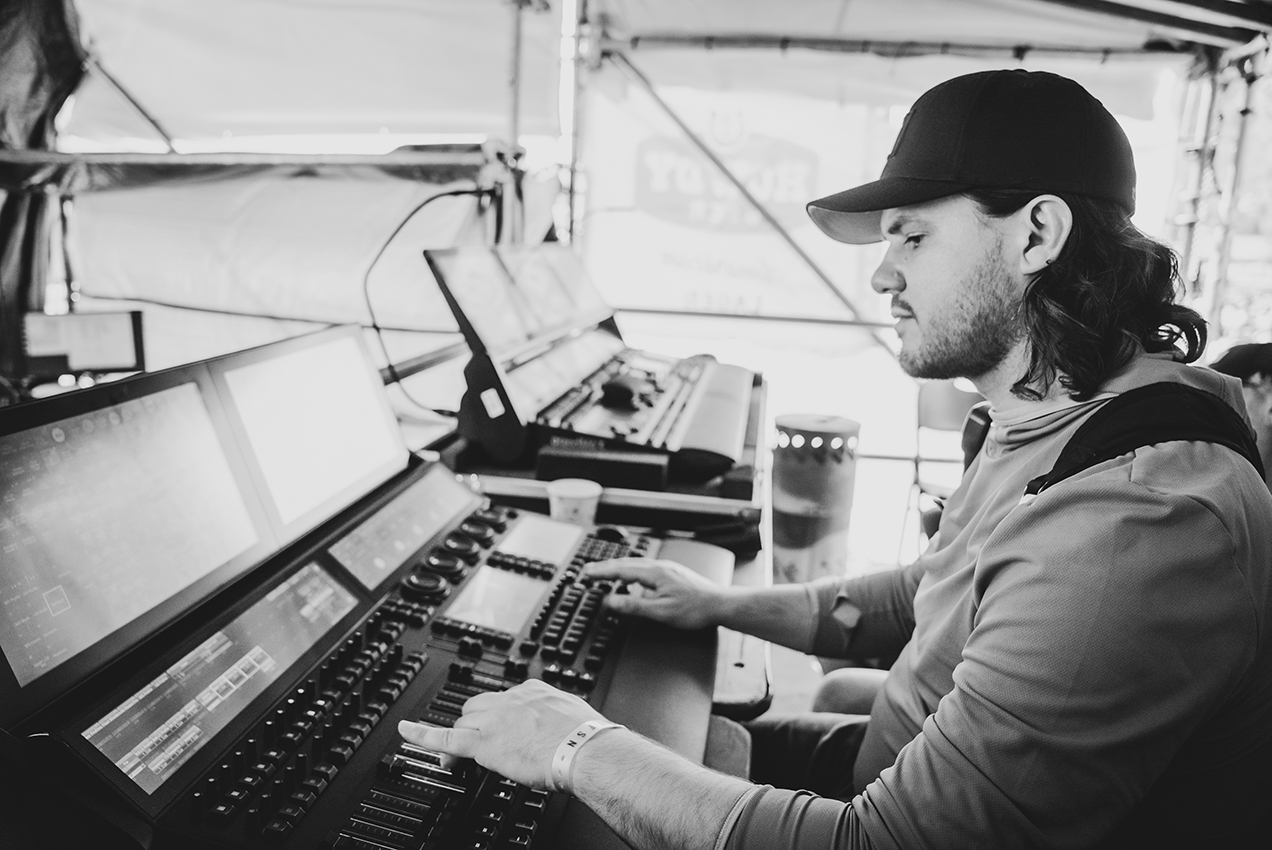
    Photo Credit: Jared Lichtenberg

    Seeing himself as a “roadie in training for a very, very long time”—having supported his mother’s country and classic-rock cover band, Roadhouse Band, on Long Island since childhood—lighting designer William Succoso first found himself mesmerized by the visual effects created by the lighting systems at summer concerts on Jones Beach. He tried his own hand at learning the A/V elements in high school productions and church basement shows.

    “I was a theater kid,” said Succoso. “I loved doing set construction and design, but I hated being covered in paint. I still loved impacting the shows visually and noticed that everybody in the booth wasn’t covered in paint. That got me into the tech side of things, and I just kept doing it.”

    As an undergraduate at Marist College in Poughkeepsie, N.Y., Stuccoso made regular weekend visits to Providence with a close college friend whose girlfriend studied at Johnson & Wales University. Succoso transferred to SUNY-Maritime in the Bronx with intentions of entering the Coast Guard until he landed a part-time lighting operator gig at the Bowery Ballroom, a venue on the Lower East Side of Manhattan. The weekend commitment turned into a full-time position.

    “I was working with bands that I wasn’t familiar with up until the day I worked with them,” said Succoso, about his decision to set off on his own after three years in-house supporting a single venue. “If I wanted to create something that was more in tune with the music, I had to work with the artists directly, to learn their music and to develop and design something around that.”

    Following his first tour out on the road to do lighting for the Punch Brothers, Succoso supported other associated projects like Nickel Creek and I’m With Her, a trio comprising Sara Watkins, Sarah Jarosz, and Aoife O’Donovan. Thirteen years later as an independent lighting designer and production manager, he has created an atmosphere for artists like The Machine, a Pink Floyd tribute band, and electronic dance music (EDM) deejays, as well as Gregory Alan Isakov.

    “My whole approach is, especially with somebody like Gregory, who has a very devout fan base that has often seen the show presented many, many times before, is, how do you show them something different?” said Succoso. “How do you present the music in a way that’s not only unique but also gives the artist a sense of continuity. How do we find a sort of ‘home’ here?”

  • Lighting Isakov: Illuminating the music of Gregory Alan Isakov and the Rhode Island Philharmonic Orchestra

    Lighting Isakov: Illuminating the music of Gregory Alan Isakov and the Rhode Island Philharmonic Orchestra

    Gregory Alan Isakov and band, with support from the Rhode Island Philharmonic Orchestra at PPAC on Thursday, January 29, 2026. Photo by Gregory Alan Isakov’s tour photographer, Kenzi Everitt, @kenzieveritt.

    As the house lights dimmed on a nearly sold-out crowd of 3,000 at the Providence Performing Arts Center on January 29, the Rhode Island Philharmonic Orchestra, silhouetted in silence on stage, anticipated the arrival of singer-songwriter Gregory Alan Isakov at the foreground. Under a shadow cast by a backlight stepped Isakov, with his solitary croon and guitar opening into “She Always Takes it Black,” the closing track on his 2013 album The Weatherman. Overhead, an array of orbs and smaller bulbs suggested a celestial nightscape, warm with a reddish glow.

    After the 2016 studio album Gregory Alan Isakov with the Colorado Symphony saw the stripped-back folk songs of Isakov’s first five albums recomposed with an orchestral richness, his songwriting and lyricism continued to mature on Evening Machines (2018), which earned a Grammy nomination, and Appaloosa Bones (2023), which charted on the Billboard 200. Following solo sets at the Columbus Theatre in 2015 and PPAC in 2023, Isakov’s 2026 return to Providence included, for the first time, support from the Rhode Island Philharmonic. Lighting designer William Succoso, on tour with Isakov, worked to color the evening’s ambiance.

    “To start with, we kept it fairly mellow because we knew we were going to climb,” said Succoso in a phone interview after the performance. “The tempos were going to get up there, the songs were going to get up there, so it was nice to just ease into something, and then away we went.”

    When architectural firm C. W. & George L. Rapp designed the original Loew’s Theatre Building in Providence as an ornate cinema in 1928, the construction plans included a decorative rosette at the center of the ceiling dome. Although wired for electricity, the chandelier meant for the space was never installed during the building’s incarnations before rebranding and reopening as PPAC. In the early 2000s, PPAC commissioned glass artist Dan Dailey, a RISD alum who studied under Dale Chihuly, to design the grand chandelier that serves as a centerpiece today.

    But on stage, PPAC’s rigging system behind the scenes extends almost 70 feet above the performers, with vertical pipes known as box booms located at either side to enable custom lighting for the venue’s events. In addition to nearly 200 dimmers, 100 ellipsoidal stage lights, and three 3,000-watt spotlights on site at the theater, dozens of line sets, or metal bars called battens, hang over the stage, allow for versatility in positioning set pieces or additional lighting.

    The arrangements for Isakov’s PPAC performance began months in advance, with Succoso scoping an overarching vision and specific technical requirements in the context of a full tour. Isakov’s late January run featured more than a dozen concerts in just over two weeks, starting in New Orleans and traversing up to Montreal, including two nights at Boston’s Wang Theatre.

    “His music is very moody in a great way,” said Succoso. “We wanted these shows to reflect how people feel when they’re sitting in their living room listening to the music, and I doubt anybody is sitting in their kitchen with a big light on listening to a Gregory Alan Isakov record.”

    Providence was the first night of the winter tour to integrate an orchestra, followed immediately by back-to-back dates featuring the Colorado Symphony at Radio City Music Hall in New York. Succoso said the variance between lighting Isakov alone, or with one or two backing musicians, and creating a focal point and sense of balance across dozens of musicians posed a challenge.

    “I just want him to stand out, or somebody in his band, or the conductor,” said Succoso. “You don’t want to affect their ability to play, so if you can’t create negative space by going really dark how do you make somebody stand out? You do that by going brighter than the background, which gets into this weird limbo that isn’t super-bright, that sets this intentionally moody show.”

    With 17” of snowfall remaining on the city’s streets after a weekend blizzard and the morning temperature climbing slowly from 7°F but failing to break past freezing point, an early load-in at PPAC enabled the crew to set up their audio and visual equipment with ample time before the Rhode Island Philharmonic Orchestra arrived. Isakov and his backing band joined them for a midday set rehearsal. The full run-through created an opportunity to test the sound and lighting in advance, while the musicians secured a sense of their dynamic and instrumentation together.

    As the evening performance began, a backdrop hung behind the stage depicting a muted but evocative image of the natural and fabled American West, open space between a canyon’s bluffs. A sparkle of lights against the fabric hinted at a vaster canopy as the backing band assembled by Isakov’s side. Leading into “Amsterdam,” a rising murmur from the symphony fell into harmony, with the philharmonic’s string section steadily climbing toward a crescendo.

    “I realized putting these tracks in order today, you just keep getting sadder,” Isakov said later from the stage. Transitioning into “Master & a Hound,” he added, “And we’re not even there yet.”

    For almost two hours, across two sets punctuated by an intermission and an encore featuring “Time Will Tell” and “Feed Your Horses,” the illumination of the globes in suspension conjured suns and moons in equal measure, or a fragment of some starry and planetary expanse. At one point, violin and upright bass dueled under a single spotlight, its beam calling forth the spirit of an Eastern European jazz bar or cafe session. Throughout, Isakov held prominence, and so too did his band and the orchestra—the moods that their music elicited matched by gentle hues.

    “It’s like a tight wire act,” said Succoso. “It’s something that we dance across the whole night.”

    Gregory Alan Isakov will return to New England on October 2 and October 3, 2026, supporting Zach Bryan at Gillette Stadium in Foxborough, Mass.

  • Life Flashes: Sleepwalker steps between imagination and illusion

    Life Flashes: Sleepwalker steps between imagination and illusion

    Photo by Erin Smithers.

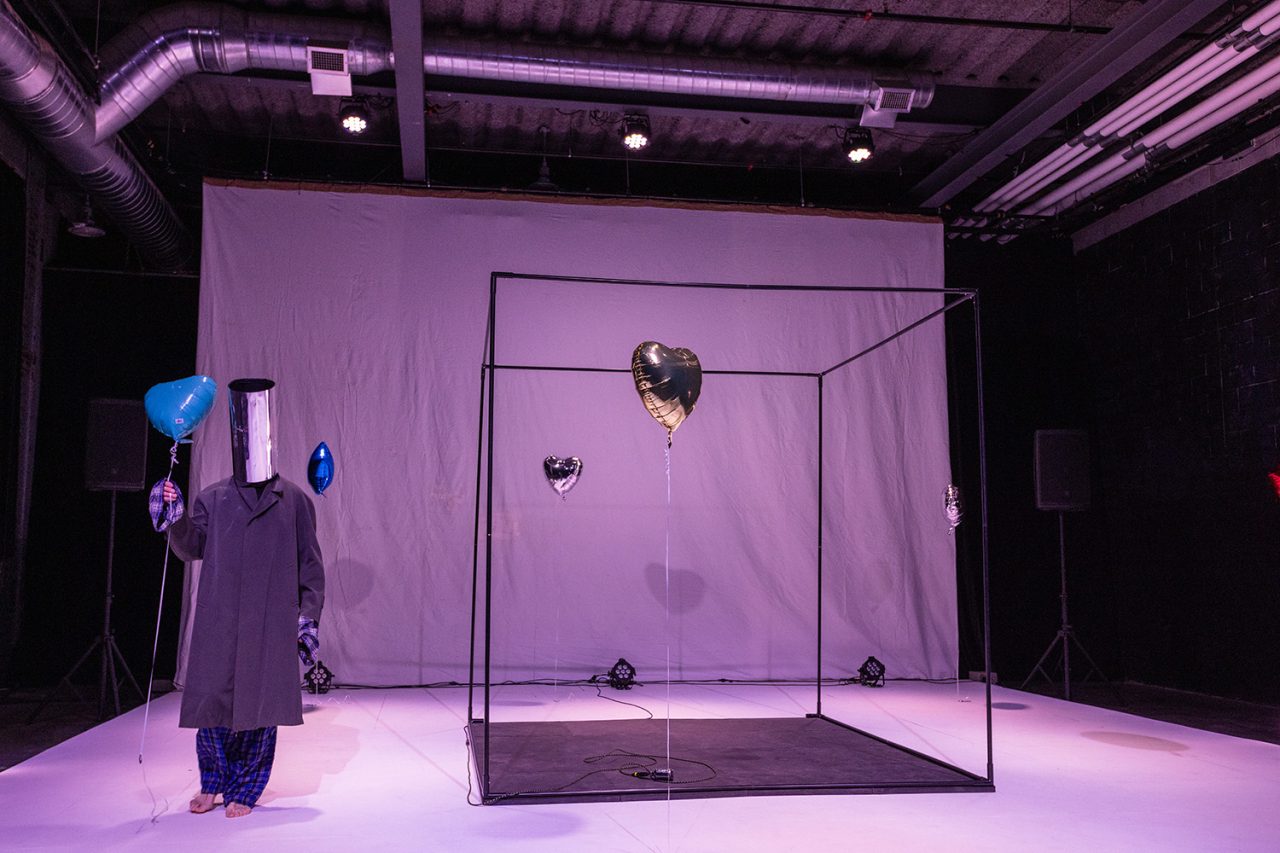
    In Sleepwalker, a one-man show created and performed by Andy Russ and stage managed by Ollie Crowe, at the Wilbury Theatre Group in Providence, an open-air cell claims center stage. Absent walls except for a floor panel, the metallic frame of the cube suggests an imprisonment while allowing for permeability. Its bars segment the blankness of the backdrop curtain and remaining theater space, and within their contours the action begins even before the first act.

    While the audience filters in, a fully masked Russ paces back and forth within the box under the pall of dim lighting. His silhouette looms and lurches along the wall behind him, as if a silent secondary character. A lack of identifiable features beneath his dark garb and a furious pace of motion creates a nervous energy, while Russ’s hold on a vintage radio microphone — and the availability of ear plugs upon entry — anticipates some forthcoming but unknown disruption.

    Billed as a multimedia meditation, Sleepwalker wrestles in sight and sound with the statement and question: “They say that your entire life flashes before you when you die. But then what?” 

    The first of three acts, “punchline,” compresses the moments of life into an industrial soundtrack amplified by a pulsating light show projecting a kinetic visual display into the surrounding void. Constrained within his cell, Russ thrashes through distorted vocals and spoken word repetitions. With the venue located inside the WaterFire Arts Center, the intermittent beams of passing traffic along Valley Street flickered with reminders of life carrying on beyond the drawn blinds.

    “Even though I had a sort of punk vibe in mind, inspired by Nine Inch Nails and Ministry and all that,” said Russ in a phone interview, “I’m a lighting designer as well and have recently been doing a lot of work with using video as part of the light design and projection design. So that was me exploring raw energy in a visual way, like, how can I mirror the sonic with the visual aspect?”

    The tension of the opening collapses into “a hug held to long,” as Russ enacts a kind of burial, tucking himself under a blanket within the same cell where his vocals and movement had only moments earlier dominated. The act’s title draws from what Russ considers a “serendipitous accident,” following a miswriting of his original intention: “too long.” He said the typo of the more familiar phrasing opened up the possibility of thinking about the scene in a different way.

    A projection of self-recorded musings — part Blair Witch Project, part contemporary video selfie — ponders death before segueing into a readout from Lydia Breckon honoring the ancient mythologies and cultural symbolism of honeybees. A film montage relays an insect’s vantage. In an age of colony collapse, the tradition of telling the bees about life events works bidirectionally.

    “Bees are in almost every culture, in every culture’s folklore,” said Russ. “More often than not, they are tied to this link between the everyday real world and the afterlife or realm of the gods.”

    The third and final act, “pins & needles,” teases the tingling sensation of the body’s limbs falling asleep, as Russ positions helium balloons anchored by weights throughout the room, around the periphery of the empty cell at its center. After a lull with the inflated hearts, stars, and orbs in subtle motion offering an illusion of stillness, Russ returns unmasked, wearing pyjamas, shifting between a delicate barefoot tiptoeing and the jabs and thrusts of a boxer or a soccer player. He calls out names under each balloon, with an urgency and vitality that continue, until they don’t.

    “For me that last image is more about possibility, but it’s important that I’m leaving it open and vague,” said Russ, noting the pleasure he derives from hearing his audience’s interpretations. 

    “Through popular media, we are often fed the same flavors over and over again,” said Russ. “What I find personally interesting is experimenting with new ‘flavor combinations’ — with visuals, with sound, with text, with movement, with image, things like that. There’s that sense of novelty and exploring the experience of being alive and life and everything that comes with it.”

    Sleepwalker premiered at the Wilbury Theatre Group from January 8 to 10, 2026. Russ says he’s hoping to make an appearance in some form at the next Providence Fringe Festival.

  • Resonant Oscillations: Lost in a metaphysical hex with doom pioneers Earth

    Resonant Oscillations: Lost in a metaphysical hex with doom pioneers Earth

    After paving a distorted pathway in the early ’90s with three albums on Sub Pop Records, the band Earth — bearing a name chosen in homage to Black Sabbath’s original moniker — marked their emergence from an extended period of recovery with the 2005 release of Hex; Or Printing the Infernal Method. The album saw Earth join Boris, Saint Vitus, and Sunn O))) as experimental, doom-laden labelmates on Southern Lord, with their droning metal crediting the grittiness of Merle Haggard, Cormac McCarthy’s Blood Meridian, and Ennio Morricone’s film scores, including The Battle of Algiers, Cinema Paradiso, and The Good, the Bad and the Ugly.

    Twenty years later, on November 5, 2025, Earth returned to form in Rhode Island for the first time in a decade with a sold-out performance of Hex in its entirety at Machines with Magnets (400 Main St., Pawtucket). But for all who anticipated a concert, first a physics lecture broke out. 

    Having contributed piano, organ, trombone, and tubular bells to earlier Earth recordings, Steve Moore — who records solo as Stebmo — took the floor with his Wurlitzer electric piano and handheld Casio SK-1 portable synthesizer to open the night with renditions of jazz legends, Alice Coltrane, her husband John Coltrane, and Bobby Hutcherson. Between his own “Art Forms” and “Happy Ending,” Moore’s performance of the avant-garde detoured into discourse.

    “Our hearts beat around one or two beats per second, sometimes slower than that if you’re very good at relaxing,” Moore explained, using the heart rate as a familiar point of orientation before expanding into the mathematics that explain musical frequencies. “This is where most of the music that exists in the world is sitting, right around this tempo, right around this rhythm.”

    Moving to the mind, Moore mused over how electroencephalograms, or EEGs, reveal resonant oscillations, or brainwaves, that measure across a wider range of speeds than the heart. With their higher end roughly equating to where the pitch of sound begins, or a “very, very low note,” he compared such oscillations with the point at which a series of single photographs become an animation. Moore turned to his trombone to demonstrate the phenomenon of energy being contained in any instrument, making it a resonant physical body capable of altering others.

    Similar to how people believe they “see” light, when in reality they apprehend the reflection of light off something else, Moore placed the properties of music in a category between the mystical and the mathematical. Tracing the harmonic series, or natural modes, as resonant with the biological division of cells and the long-standing logic of Moore’s Law, a principle established in 1965 by engineer Gordon Moore (no relation), that led to decades of computing advances, Moore spoke to the power held within the powers of two as a bridge toward beauty and wonder. 

    Within the oscillations that create musical notes, he argued, are the underpinnings of human empathy, echoed in the head and the heart alike, and an ability through those notes to see oneself and experience an “otherness” in tandem, allowing for music as a universal language.

    Invisible to the eye, but auditorially experienced, Moore’s introductions to the physics of sound seemed to be in service of establishing an anticipatory logic for appreciating the force of Earth. 

    Earth set up in silence, allowing for Moore’s antecedent monologue to speak its own volumes before embarking upon their 80-minute foray through Hex, from “Mirage” through to “Tethered to the Polestar.” The overhead rotation of a disco ball in the shape of a skull reflected a scatter of light flickering over a red pall cast onto blank walls as the instrumental repetitions, digressions, and returns of Earth set a slow, steady pulse with the night passing through an unspoken peace. 

    Before concluding, Earth introduced a new track, “Scalphunter’s Blues,” with the promise of a tenth studio album on the horizon — to be recorded in March 2026 with a planned release date in October. Whether inspired or confounded by the underlying physics at play, as the amps were turned off and the lights came on, the audience of 200 left the venue with a new paradigm for understanding the oscillations of Earth, their reverberations and echoes sensed even if unseen.

  • The Changing Light of Mirah: Singer-songwriter reinforces hope at a house show in Providence

    The Changing Light of Mirah: Singer-songwriter reinforces hope at a house show in Providence

    Mirah’s second full-length, Advisory Committee (K Records, 2002), came out during the spring of my freshman year at Boston University. While the album’s title perhaps suggested some homage to academia, the songwriting mostly revealed a study of contrasts. Spartan and robust, serious and mirthful, soft and assertive, literal and symbolic, the singer-songwriter Mirah Yom Tov Zeitlyn, who performs as Mirah, narrated the falling and failing of love with an earnestness and whimsy entwined. Released within weeks of Wilco’s Yankee Hotel Foxtrot and Songs: Ohia’s Didn’t It Rain, Mirah’s Advisory Committee also entered rotation on my desktop computer’s CD-ROM.

    As happens, those songs and their lyrics — “The stars so far / Stay up all night” — anchor memories of my own all-nights, sprinting on term papers, sitting around with my roommate and friends, skateboarding home from house parties in Lower Allston. So when I stepped into a Providence home on a late-April evening to see Brooklyn-based Mirah play a set organized by The Undertow Collective as part of a three-day weekend tour including living-room shows in Boston and New Haven, CT, my thoughts drifted toward some reverie as I claimed a seat beside a window ajar onto a quiet street. As Mirah took the floor barefooted and wielding her guitar, the radiance of her vocals regrounded our small crowd in the present. She opened with “Information,” off 2018’s Understanding, pleading “When you read the papers, find / How not to lose your heart or to waste your mind.” As newspapers have morphed online and the barrage of harms often erode hope, still she marries our own passage of time (“You won’t get younger than you’re feeling now”) with the threat from the barriers we erect (“But if you put up a wall to protect your side… This is how you will kill and die…”).

    Introducing “Don’t Die in Me” from 2004’s C’mon Miracle, Mirah noted how a typo in the metadata on one streaming platform had changed the title to “Don’t Die on Me” — evidencing how something as seemingly insignificant as a single letter can significantly transform its meaning. Reminiscing on the arc of her songwriting since before the advent of Napster and MySpace, Mirah’s newer lyrics spanned the pandemic and parenthood with a living-room presence that reinforced the power of being present. Mirah recorded her next album in Los Angeles with a band comprising Jenn Wasner (of Wye Oak and Flock of Dimes), Meg Duffy (of Hand Habits, with contributions to The War on Drugs and William Tyler), and Andrew Maguire (contributing to John Vanderslice, The Dirty Projectors, and other projects). While still associated with K Records, her longtime home, Mirah said her new record will most likely come out early next year on her own label, Absolute Magnitude Recordings.

    Whereas the “babies” cited in Mirah’s earlier songs were often passing loves, the environmental scars she challenged in “Gold Rush” on 2014’s Changing Light (“We dammed up plenty but still felt empty / The land was rich but we left it poor”) bore all the more urgency when paired with her new lyrics of motherhood, nursing and nurturing “the baby of my dreams,” especially in light of US domestic policy shifts to encourage logging in national forests and sunset of environmental regulations and protections.

    The poetry of Mirah’s songwriting has long woven the political into the personal. Over the years, she played local D.I.Y. spaces including AS220, The Dirt Palace, and, more recently, Lost Bag. At the house show, in an era of digitally mediated music and the consolidation of independent venues, Mirah’s acceptance of a forgotten lyric or a missed chord change while playing surrounded by reminders of everyday life — a houseplant, framed photographs, ceramic displays — allowed for a rare intimacy. Working through old and new alike, she wound through the past and the present, her own and ours, without letting go of the tenuous thread any of us hold over the future.

    For the night’s final song, “Ordinary Day” off Understanding, Mirah set down her guitar, plugged her mobile phone into the sound system to play a MIDI-style electronic sequence, and broke out a dinosaur-shaped automatic toy bubble machine. Stepping amidst the audience with her microphone as bubbles swirled around the room until they popped, Mirah left off with both a declaration and call to action in the face of the world:

    We won’t stop falling in love

    No, we won’t stop falling in love

    Don’t stop falling in love

    No, don’t stop falling in love — •

  • Breaking down the Mood Machine: Liz Pelly riffs on music in the age of Spotify at Providence’s Lost Bag

    Breaking down the Mood Machine: Liz Pelly riffs on music in the age of Spotify at Providence’s Lost Bag

    In “Big Mood Machine,” her 2018 essay for The Baffler, journalist Liz Pelly honed in on the role of digital music as part of “a burgeoning industry surrounding technology that alleges to mine our emotional states.” Zeroing in on Spotify and its familiar categorizations, ranging from “Chill” and “Focus/Study” to “Commute” and “Girls Night Out,” Pelly detailed how the feelings implied by personal soundtracks serve up a swell of marketing opportunities. In her first book, Mood Machine (Atria/One Signal, 2025), she expands on years of earlier reporting to unpack Spotify’s self-described position as “a traffic source for an advertising product” and the broader implications of using listener data to predict future behavior — well beyond musical preferences.

    On February 20, Pelly appeared before a full house at Lost Bag in Providence for a conversation hosted by Michael Sugarman from the Initiative for Digital Public Infrastructure at UMass Amherst, where he is developing Freq as an open platform for music communities. As attendees claimed seats across rows of metal folding chairs, a flyer circulated around the room with a handwritten IP address on a typed invitation to connect to a local streaming server.

    In a BlueSky post days before the event, Pelly invited local musicians to send a song along to Sugarman for inclusion in a “collective creation” to play at the venue. Establishing a simple server using an old Dell desktop computer he bought for $40, Sugarman set up Jellyfin’s open source streaming software and populated a playlist of Providence-area artists. Through a laptop plugged into the venue’s PA system, the mix added a distinctive, idiosyncratic touch as Pelly opened with an excerpt from Mood Machine that attempts to trace the origins of “aesthetic rap,” a vague yet surging subgenre, during a series of sponsored concerts in Brooklyn.

    But rather than winnowing her way through the semantics of musical descriptions or the preferences of individual listeners, Pelly’s work pokes at the commercial constructions that often steer them. In the case of Spotify, she recounts how a tip led her to investigate the influence of major labels in shaping the company’s playlists well before the Stockholm-based company went public. Reporting more than 675 million monthly active users in its most recent earnings filings, Spotify’s desktop and mobile platform promises access to a vast trove of music — as well as a growing collection of audiobooks and podcasts — available through a free, ad-supported model and a premium subscription service. Pelly doesn’t critique the ease of discovery and playback so much as mine the business motivations to reveal their impact on listeners and artists alike.

    Drawing from her own experiences in independent, all-ages music scenes and alternative arts spaces, including as an active cooperative member with the now-disbanded Silent Barn in New York, Pelly notes with woe a dramatic shift toward “listeners being sold music more as a utility than an art form, and musicians starting to see themselves more as content creators than artists.”

    Digging into the devil in the details, she surfaces the practice of integrating synthetic music — think more anonymously manufactured fillers, less Brian Eno artistry — with lower royalty payouts on playlists that draw millions of listeners. She splashes cold water on the trickle-down economic argument behind pro-rata royalty-sharing, wherein the most popular songs reap a far greater payback on their playbacks, with little left for independent musicians. Noting that commercialization and consolidation have long been rampant in the music industry, Pelly highlights the cultural accelerant of massive data sets on browsing and listening behavior. While Mood Machine centers around Spotify, it’s also a reminder of the scale and influence of modern technology. From club cards to credit card purchases to social media platforms to streaming film and television programming, greater personalization generally involves a level of data collection and data sharing with immense business value that’s undervalued by individuals. The consequences are social and political as well, as personal choice becomes less a matter of self-determination and more a byproduct of intentional engineering.

    With culture expecting easier access to more things at lower prices, the attendance and attention of Pelly’s audience suggested a potent alternative that need not be entirely analog. Donations collected at the event generated enough funds to install Sugarman’s streaming server at Lost Bag in perpetuity, starting with a localized soundtrack shuffling between the industrial dance of Davey Harms, the expansive electronica of Isabella Koen, the garage aggression of Mother Tongue, the ambient experimentalism of Russian Tsarlag, among others.

    Unlike Spotify’s expansive selections that may be widely accessible, Sugarman reinforced how the small size and simple setup of his server provides a different strength. He encouraged anyone, including other venues, to set up their own using Jellyfin or Plex as a media server, without technological sophistication, to forge greater creativity and community.

    “It might seem grim to realize that what makes culture less interesting for listeners is also what makes it less sustainable for artists,” Pelly writes in Mood Machine. “But knowing the opposite is also true — that working collectively to improve material conditions for musicians benefits all of us who love listening to music, too — is where there’s power and possibility.” •

  • Laying the Groundwork: A conversation with Stephen Brodsky of Cave In

    Laying the Groundwork: A conversation with Stephen Brodsky of Cave In

    Cave In emerged from the Merrimack Valley north of Boston in the mid-1990s to become a prominent presence in New England’s D.I.Y. music scene, their blistering and emotive hardcore-inspired approach to metal finding a natural home at local shows in warehouses, basements, and community centers. They quickly went on to become a juggernaut on stages across the country and around the world. With their maturation, Cave In pushed boundaries to integrate a spacier, almost psychedelic, experimentation to their sound on Jupiter (Hydra Head Records, 2000), an album recently re-released by Relapse Records as a special 25th-anniversary edition. In the stream of commerce, the band stayed afloat as mainstays on Hydra Head Records, with a brief foray into major-label territory with Antenna (RCA, 2003) and a swing back to the anchor found in classic Metallica and Iron Maiden riffs on their seventh, and most recent, full-length Heavy Pendulum (Relapse Records, 2022). Over a six-month period in late 2024 and early 2025, vocalist and guitarist Stephen Brodsky, dedicated regular time to an artist residency at Myrtle designed to inspire new work. During this time, Brodsky shared acoustic covers of influential bands like 108, Lifetime, Snapcase (with whom Cave In played at Lupo’s in Providence in 2000), Still Life, and Unbroken — and the folk music of Leo Kottke for good measure — while also playing a monthly show.

    In the lead-up to Cave In’s March 27 concert with Glacier at Myrtle, Motif’s Sean Carlson interviewed Brodsky, traversing the band’s history, influences, and other musical projects across three decades.

    Sean Carlson (Motif): The intensity and technicality and emotion of Cave In’s early metal has stayed with you and yet evolved dramatically over the past 30 years. How do you see the arc of the band?

    Stephen Brodsky: When we started in the mid-’90s, we were just young teenagers excited to fully immerse ourselves in the most thriving music scene happening around us. It wasn’t enough to simply go to the shows. We wanted to play an active role, and our vehicle became Cave In. I think we realized eventually that being in a band wasn’t necessarily about the sound of the music, but rather the intent of it. And I’d like to think we’ve carried that same feeling with us from one chapter to the next.

    SC: One of the shows that must still cause fans’ mouths to water was when in 1998; you played with Coalesce, Converge, Dillinger Escape Plan, Neurosis, and Unsane at St. John’s Gym in Clinton, Mass. Festivals today would collapse over themselves to secure such a line-up, but this was a local show held in the gymnasium of a Catholic church. What, to you, made those years and relationships so special?

    SB: Neurosis was still this untouchable entity at that time. Certainly no one in Cave In had ever spoken to those guys before, but they were the band that we all wanted to be. There was just nothing like it at the time, and the whole thing just felt legitimately scary. I used to get that feeling as a young kid walking into the horror section of a movie rental store. To my memory, everyone else on the bill felt like we had just won the lottery playing that show, and that was such a cool feeling to share. But a show like that didn’t just appear out of the blue. There were a good five years or so of everyone involved playing and setting up shows of various sizes, putting out records and zines, just making things happen. It’s fair to say the Neurosis show was a culmination of all that groundwork being laid by lots of driven individuals.

    SC: You seem to have a voracious musical appetite and are certainly no stranger to experimentation, whether playing solo, or with Cave In, or with other projects like Kid Kilowatt, Mutoid Man, New Idea Society, and Old Man Gloom. How have you found yourself to be gravitating in these different directions?

    SB: Music is something to be shared with friends, so these other bands and projects are usually just born out of various friendships and wanting to see what may come of them in a musical sense. As far as my solo work, that stuff keeps me connected to the earliest time of my musical life – being just 12 or 13 years old, alone in my room with a guitar, trying to figure out how to hear myself through it.

    SC: What other forms of art have you seen as influences on your lyrics and songwriting?

    SB: There’s always been a connection to visual art with music. When I was younger, I used to just lose myself with pens or colored pencils and scraps of paper, zoning out to cassettes or records spinning on the turntable. Poetry is a big one for writing lyrics. If I’m working on something and get hung up on a spot that’s feeling bland or lacking depth, I can usually count on Emily Dickinson or Sylvia Plath to get me seeing things in a new way. Maybe it’s something to do with them also having a New England connection. Some modern writing inspirations would be Melissa Brodeur, Sadie Dupuis, B.R. Yeager, and Sam Pink.

    SC: Before your recent Myrtle residency, what memories stand out from playing Rhode Island?

    SB: One of Cave In’s first shows outside of Massachusetts was in Rhode Island. I seem to remember the show being in a garage. This would’ve been 1996. That same year, I think, we played the Living Room in Providence with Grade, who came down from Canada. They had just put out their album And Such Is Progress, and we were way into it. One of our few Kid Kilowatt shows was in a Rhode Island basement opening for Regulator Watts, who were a huge influence, as were Hoover, the band they descended from.

    SC: Tell us about your residency as a solo artist at Myrtle? How did it come together?

    SB: Shortly after I’d released my first solo record in 1999, I got a package in the mail from a fan who felt inspired to share their home recordings, some cool 4-track stuff on a cassette with “Tommy Alien” handwritten on the label. Years later, that same Tommy played in Drug Rug, a band that got some attention around Boston. This is also the same Tommy who reached out about having me and Adam McGrath, who also does vocals and guitars in Cave In, play as a duo at his new venue. I’d heard that other artists were doing residencies at Myrtle, so I brought it up with Tommy, and he very generously offered me one. Pretty cool. And I probably still have that Tommy Alien tape kicking around somewhere.

    SC: How have you found your music helpful in confronting or coping with life’s difficulties?

    SB: The role of independent music is the same as always. The moment you write a piece of music, you’re an independent musician. It doesn’t matter who else hears it. It doesn’t matter if it gets recorded. Devices are optional. You don’t even need an instrument. You can make a beat on your lap with bare hands. You can write a lyric that means the world to you, or that makes no sense at all. Maybe it’s just random sounds coming out of your mouth. And you certainly don’t need a microphone to sing. So much sorrow in this life comes from feeling like we are not in control. Independent means you are in control. Independent music can happen anywhere, at any time, and it belongs to you. It’s really that simple. •

    Cave In will be joined by Glacier at Myrtle, 134 Waterman Ave., East Providence on Thur, March 27. 7pm. 21+. $28.

    (Cave In’s albums (top L to R): Beyond Hypothermia (Hydra Head Records, 1998), Until Your Heart Stops (Hydra Head Records, 1998), Jupiter (Hydra Head Records, 2000), Antenna (RCA, 2003), Perfect Pitch Black (Hydra Head Records, 2005), White Silence (Hydra Head Records, 2011), Final Transmission (Hydra Head Records, 2019), Heavy Pendulum (Relapse Records, 2022).)

  • Art in the Public View: Walking through RI’s street scenes

    Art in the Public View: Walking through RI’s street scenes

    Shortly before an array of computer printouts and hand-written notes announcing business closures and curbside pickup policies presented a kind of collective commentary on COVID-19 along North Main Street, somebody spray painted a plea on an undeveloped lot near Rhode Island School of Design’s administration building: “PUT SOME ART ON THIS WALL!”

    https://www.instagram.com/p/CclWa98un05

    For months, the state-owned site between Cafe Choklad and Mills Tavern was an active construction zone. Where a portion of wall had been removed to expose soil retained by metal mesh, workers assembled fragments of street signs – CLOSED, DETOUR, EXIT – into an orange and white montage held in place by a ladder of wooden slats bolted into the cement. The project’s completion left behind a blank gray wall until the burst of graffiti – whether earnest advocacy, self-referential statement, or marketing stunt – colored the concrete canvas.

    The booms and busts of local history, as well as more recent development decisions, have shaped the landscapes that allow for the art, both intentional and inadvertent, that adorns the region’s walls. In PVD and Pawtucket, as in Warwick and Woonsocket, the insignias of earlier occupants remain imprinted on the facades of old mills and warehouses. An abundance of highway overpasses and underinvestment in pedestrian infrastructure results in unlighted and unused spaces. As entrenched inequalities persist, makeshift memorials honor lives lost too young and community programs seek to elevate stories celebrating pride and resilience.

    “When a local artist tells their story via their art, it is deep and I can see their soul in it,” said Marta V. Martinez, founder and executive director of Rhode Island Latino Arts.

    While artistic expression has long provided an outlet for making sense of, or making a statement on, the world, it’s also creating opportunities. PVD’s tagline as “The Creative Capital,” grew out of a 2009 brand development project with North Star, a place-branding and marketing agency headquartered in Jacksonville, Florida. Since then, local arts organizations and city officials have funded and facilitated prominent displays of art throughout the downtown:

    • On Aborn Street, Shepard Fairey’s mural “Providence Industrial” applies strong and sharp shadowing to render an industrious spirit to the Superman Building, the Crook Point Bascule Bridge, and the Biltmore Hotel — icons from the eight years he spent in the city. 
    • On Custom House Street, Baltimore-based Gaia worked with the Tomaquag Museum (390A Summit Rd, Exeter) on “Still Here,” an expansive mural featuring Lynsea Montanari holding a photograph of Narragansett and Wampanoag tribal elder Princess Red Wing, as a symbol representing the continuity of local Indigenous life.
    • Between Clemence and Mathewson Streets, “She Never Came” covers the full expanse of a building with a man hunched across an empty table with a ring in hand and a rat on his shoulder. The mural by Bezt, half of the Polish street art duo Etam Cru, channels more Willard than Ratatouille.
    • In local photographer Mary Beth Meehan’s “SeenUnseen” series, a portrait of Bidur Diab Killi, the first woman to arrive in RI as a refugee from the Syrian civil war, smiles above a parking lot off Snow Street, inaugurated in 2017 by Mayor Jorge Elorza.

    “Working in public is complicated as it includes many voices and stakeholders that are easy to identify and often not so much,” said Yarrow Thorne, founder and executive director of the Avenue Concept, a PVD-based nonprofit dedicated to supporting public art. Public murals and the installation of other works in public spaces involve managing copyrights, artist fees, material costs, community outreach, insurance coverage and other layers, said Thorne.

    https://www.instagram.com/p/CZxN8vVva7D/

    In July 2021, an agreement between The Avenue Concept and the City of Providence detailed a shared belief that “public art provides not only aesthetic benefits but also opportunities for education, inspiration, quality of life, increased tourism and economic development.” After Providence’s police and fire departments and Verizon raised no objections to The Avenue Concept’s proposed placements of public installations, the City granted the organization exclusive easements through 2030. The Avenue Concept agreed to present an annual plan to the City for approval.

    “We create infrastructure for our public art portfolio of murals and sculptures and programs to change and evolve over time,” said Thorne. “It’s making space for artists and taking care of logistics. We’ve created standards and tools to ensure that artists can focus on executing their personal vision with as much flexibility as possible.”

    This summer, the Avenue Concept is working with Emblem 125, a residential and retail project under development in the Jewelry District, to commission a mural by Aryz and coordinate his travel from Spain. Five new sculptures will also be placed throughout downtown PVD.

    “It’s challenging because, as I’m told by some of our artists, they are being told that the local talent is not as high quality as it can be and they are encouraged to leave RI to establish themselves elsewhere,” said Martinez.

    At the moment, Rhode Island Latino Arts is supporting Rene Gómez with a two-year residency. His mural, “El Corazón de Providence” graces the interior of La Broa’ Pizza (925 Broad St, PVD). His utility-box portraits feature Juan Pablo Duarte, the most widely celebrated founder of the Dominican Republic, and Josefina “Doña Fefa” Rosario, memorialized as the “‘mother’ of Rhode Island’s Latino communities” in the Providence Journal after her death at 90. Martinez said she hopes the support gives Gómez space to create and build his portfolio. He’s currently at work on a series of portraits that Martinez expects will be displayed later in the year. 

    Local nonprofits AS220 and New Urban Arts also support community mural projects, as does the City’s department of Art, Culture, and Tourism. In Pawtucket, a focus on public art emerged from the city’s annual arts festival (Held since 1999, the 24th annual event is scheduled to take place from September 9 to 18). These publicly supported efforts have led to nine sculptures, 12 murals, and 28 painted utility boxes on the streets of Pawtucket.

    In November, Gabriel Calle Arango traveled from Medellín, Colombia to contribute a mural, “Esperanza,” to Slater Memorial Park. And as part of the Cornerstone Corporation project under development at 6 George St, representatives of the city and arts organizations will review more than 100 bids proposed by artists across the country, to integrate public art along Pleasant St.

    https://www.instagram.com/p/Cb-IgzQuu4X/

    “We are the city of the arts,” said Emily Rizzo, Pawtucket City Hall spokesperson. “Pawtucket has always had that kind of involvement. One of our goals is to continue attracting more artists, fostering them, continuing the momentum and representing the cultures in our community.”

    Throughout the Creative Capital, and across RI, publicly and privately funded projects alike captivate – and capitalize on – sustained interest in these street scenes. But as brick walls and utility boxes increasingly become approved platforms for creative expression, unsanctioned equivalents remain misdemeanors under state law. The Avenue Concept maintains 240 square feet of “legal walls” outside its headquarters (304 Lockwood St) for artists seeking safe, legal space on which to experiment and share their work. Otherwise, those heeding the call to “PUT SOME ART ON THIS WALL!” typically must be accepted into formal programs or risk criminal charges.

    As mobile apps, self-guided walking tours and even runners’ meetups encourage audiences from near and far to explore and celebrate public art as a local attraction, the intentions of the artists themselves and the exterior spaces that serve as their canvases reveal even deeper stories of the city and its communities. Is a mural on a shuttered storefront a touristic invitation or a distraction from the emptiness of its interior space? Is the patching of a crack on a wall beauty in the eye of the beholder or a reminder of the need to invest in basic maintenance?

  • Some Latent Linguistic Irreverence: Alta L. Price on language learning while printmaking

    Some Latent Linguistic Irreverence: Alta L. Price on language learning while printmaking

    Image sources: Alta L. Price, World Editions

    As an undergraduate arriving at Rhode Island School of Design in 1997, Alta L. Price was dead-set on studying German at “the school across the street” — Brown University. Growing up in New York’s Mohawk Valley, Price had fallen in love with the language rather by accident as a teenager after stopping by the village green to browse a used book sale raising funds for the local library. They left with New Directions 19, a 1966 anthology containing four poems by the German writer Hans Magnus Enzensberger translated into English, and an appetite whet by the realization that literature could live across languages. In PVD, Price received approval from both RISD and Brown to begin their first German classes. A requirement: climbing College Hill.

    “The presence of German in my life is definitely like a bizarre childhood dream that just insisted on surfacing in strange ways no matter where I was or am,” said Price.

    At RISD, an initial interest in drawing shifted toward printmaking, following a taste of lithography with Andrew Raftery and an introduction to the intaglio technique led by visiting professor Carol Wax. They wandered the RISD Museum and lingered in the campus library amidst the sights, sounds and smells of half a million prints and clippings held in the Picture Collection.

    Although Price hoped to study abroad in Mainz, Germany — home to the Gutenberg Museum — departmental requirements limited the option. Instead, they followed the advice of a drawing instructor, Tom Mills, to set sight on a junior-year honors program in Rome. In preparation, Price said PVD became “my own personal Babel.” They juggled German at Brown, Italian at RISD, and “a welcome respite from all language” in the studio. While studying in Italy, Price met an international network of German-speaking artists at a conference and exhibition in Tuscany.

    Adept in both German and Italian upon returning to RI, Price found the art of translation across their studies, from philosophy to handmade paper and writing systems to the literature of the Bible. During a class in graphic design, Price discovered the professor John Hegnauer alternated the course title between an introduction to the hand-carved letter and an introduction to the hand-drawn letter. The fluidity and variability of that naming, said Price, “might have spoken to some latent linguistic irreverence lurking within me.”

    From PVD, Price moved to the outskirts of Washington, D.C. for their first job after graduation, at an art center in Riverdale, Maryland. An interest in reconnecting with fellow RISD alums later brought them to New York. During nearly two decades in Long Island City, Queens, they worked in publishing and earned an MFA at Hunter College. Price now resides in Chicago.

    As well as papermaking and printmaking, Price runs a consultancy specializing in literary translation. Their works range from artistic resources Alfa-Beta: The Study and Design of Type and The Book Cover in the Weimar Republic to narratives like Alexander Kluge’s montage Anyone Who Utters a Consoling Word is a Traitor and Anna Goldenberg’s family memoir of Jewish exile and return, I Belong to Vienna. PEN America named Price as one of five finalists for its 2022 PEN Translation Prize for their translation of New Year by Juli Zeh from German.

    “Radfahren ist pure Entspannung,” Price construes as “Cycling is pure relaxation” in New Year’s opening. Like many of Price’s experiences, the pages resurface a memory of PVD. During Price’s senior year, they were bicycling when a pre-med student opened a car door directly into their path. A helmet protected their head from the pavement. More than two decades passed, until 2021, before Price rode a bike again. In New Year, they continue as the protagonist “shifts gears, pushes down harder on the pedals, and forces himself to keep breathing calmly.”

    “I am only a translator today,” said Price, “thanks to a string of serendipitous events during my years in RI and the ongoing support of folks I met there, at both RISD and Brown. ”

    Alta L. Price’s translation of Juli Zeh’s novel New Year was published in 2021 by World Editions.