Email: jennmotifri@gmail.com

Cell: 401.641.1235
Office: 401.312.3305
Truck tolling got all the attention this week at the statehouse, but stalwart efforts to introduce a legislative change that would likely have 1000 times the financial impact on daily lives in RI also took a small step forward, if mostly under the radar.
Tax and Regulate legislation was proposed and will be reviewed in committee. It’s the 5th year (imagine how far ahead of the curve we might have been 5 years ago!) that this bill has been proposed, with only small improvements and details happening from year to year. It has yet to make it out of committee, but there are a few reasons hopes are higher that this could be the year it finally reaches a vote:
New elements this year are mostly refining the packaging and labeling requirements for edibles containing marijuana, including stricter allowances for childproof packaging. There are also new allowances for taxes raised from local establishments to make their way back to those community funds.
The legislation is being proposed by House Representative and Deputy Majority Leader Scott Slater (D District 10) and Senator Josh Miller (D District 28). This time out, the bill has the support of 17 sponsors – almost half – of the senate chamber including Senator Majority Leader Dominick Ruggerio (D District 4) and Judiciary Committee Chairman Michael McCaffrey (D District 29).
This is the year to write your rep or state senator and show your support for this overdue legislation.
The Rhode Island medical marijuana law has been on the books since 2006 but still remains controversial. As part of the fiscal year ending 2017 state budget proposed by Governor Gina Raimondo on Feb. 3, although structured as a budget bill, H. 7454 Article 14 (pages 194 through 229) makes numerous substantive changes to the state’s medical marijuana program.
Michael Raia, communications director for the state Executive Office of Health and Human Services, said the proposal is “an attempt to improve the integrity and quality” of the program. Patient cardholders would be able to buy from any compassion center without having to designate it as their caregiver (as currently required), which he said would improve accessibility. Instead of a caregiver who grows for them, patients could designate an “authorized purchaser” allowed to buy for them from a compassion center. (A patient who grows for himself or herself could designate neither an authorized purchaser nor a caregiver.) Raia also pointed to other provisions that would encourage expedited consideration of patients in hospice care.
However, the main change attracting attention from patients and caregivers is the proposed chapter (21-28.6-15, p. 220) that would require “every marijuana plant, either mature or seedling” to be “accompanied by a physical medical marijuana tag” purchased from the Department of Business Regulation. The per-plant tags would cost $150 each for patients who grow for themselves and $350 each for caregivers and others, although no reason is given for the price difference.
A tag would be valid for one year and could be transferred among different plants and seedlings throughout the year, although only one at a time.
Fees from licensing cardholders would be put into a restricted fund to cover the costs of the medical marijuana program, but the revenue from tag sales would go into the state general fund (21-28.6.19(c), p, 227). At the same time, the net revenue tax paid by buyers at compassion centers will be reduced from 4% to 3%.
The distinction between mature plants and seedlings (which current law distinguishes as “usable” and “unusable” marijuana) would be eliminated, so seedlings would weigh against the plant count limits. The proposal would also reduce by half, from 12 to 6, plants allowed to a patient who grows for himself or herself. Caregivers would still be allowed to have up to 24 plants and grow for up to five patients (including themselves if they are also a patient), but there would be a new limit of 24 plants in any single location “except for licensed compassion centers, licensed cooperative cultivators, and licensed cultivators.” Each grower would be limited to a single location that would be required to be registered with the Department of Business Regulation. If two or more growers have a cooperative cultivation facility, a new provision requires that it must be separately licensed.
Raia defended the tag plan as an effort to provide “a level of accountability” and “bring some oversight and order to a marketplace that hasn’t had that” due to “ill-defined rules.” In particular, he said that a major goal was to “cut down on the overflow into the illegal recreational market” from the legal medical market. Of the anticipated $8 to $8 1/2 million in revenue, he said, $1 to $1 1/2 million would be used to improve the administration of the medical marijuana project. Another major goal, he said, was to enable the Department of Health to develop regulations for testing of safety and quality, although he was unable to say at this time how the costs of the required testing would be funded. “We’re focused on the legislative process, and promulgation of the regulations would come after the legislation is in place,” he said.
The current statutory provision that allows a patient to appoint up to two primary caregivers (21-28.6-6(d), p, 202) would be removed, which would have the apparent effect of reducing the number to only one. Patients would no longer designate a compassion center as a caregiver and could purchase from any licensed compassion center, but all compassion centers would be required (21-26.8-12(g)(3), p. 216) to record every dispensing transaction into a statewide database that they would also check before dispensing – to prevent a patient from exceeding a 15-day limit. Patients would be identified in this new database by their card number but not by name. A new class of “licensed cultivators” would be created who grow for compassion centers rather than for particular patients.
There is a wide variety of other proposed changes. Possession of marijuana products made by extraction using flammable chemicals, such as butane hash oil (BHO), would be totally banned for both patients and caregivers. Medical professionals from states other than Rhode Island, even Massachusetts and Connecticut, would no longer be allowed to certify a patient’s need. Current law mandates the Department of Health decide an application or renewal within 15 days, and this would be changed to allow the department to set its own time limit by regulation.
The patient and caregiver community has reacted extremely negatively to the proposals, especially to paid tagging and reductions in plant count. The Rhode Island Patient Advocacy Coalition in a statement on their web site said the lower plant counts, in combination with reclassifying seedlings as plants, effectively constitute a 75% reduction in production for patients who grow for themselves and for caregivers who grow for a single patient. Whether patients, many on disability, are in a position to pay this up-front per-plant fee has also been questioned.
The proposed changes, taken together, appear to be an effort by the state to discourage growing by patients and caregivers and instead to provide economic incentives for patients to obtain medical marijuana from compassion centers. The proposed changes also appear to remove the extensive statutory regime (21-26.8-12(b), pp. 207-208) that mandates the licensing of exactly three compassion centers, no more and no less, and instead leave the total up to the discretion of the Department of Health by regulation: under the new proposal, the department would appear to be free to license dozens of compassion centers or none at all.
After a long holiday season, PVD is waking up and bringing some great talent back to the city. After putting out their new full length Abandoned back in August, Defeater is returning to PVD for a short East Coast tour. This will be their last stop before they head to Europe for a few months. They will head back this way in May with Turnstile.
PVD locals Way Out are celebrating their new EP release at Aurora; their post punk sound always makes for a great show. As220 is hosting a late night show with locals Waste Of Life and Honest John. This is a great line-up with Massachusetts hardcore bands Swamps and Foxfires, and venturing all the way from New Jersey is 9/6.
This month, Firehouse 13 is hosting a matinee punk show with some local favorites. Fucking Invincible is kicking off their tour in PVD with Deathface and Hussy at Aurora. They are touring their new EP I Hate Myself and Want You To Die released by Atomic Action Records. Although the EP has not been released quite yet, you can pick up a limited version at their shows along with a ton of other merch!
February 13: The Met — Defeater and Caspian, O’ Brother
February 19: Aurora PVD — Way Out (EP release) Black Beach, Savage Blind God, Laika’s Orbit
February 20: As220 — Swamps, 9/6, Foxfires, Waste Of Life, Honest John
February 21: Firehouse 13 — Held Hostage, Out.Live.Death, Cheech, Barroom Heros
February 28: Aurora PVD — FI, Deathface, Hussy
Important note: Phillipe and Jorge deeply mourn the passing of our longtime friend Buddy Cianci. See our special reminiscences and tribute to him.
Whaddya Expect?
Phillipe and Jorge hope the members of the House Oversight Committee (the “Out, Damn Spot!” Committee), looking into the 38 Studios scandal have compost piles at home so they can enrich them with the tons of horse manure shoveled at them by former House Finance Committee Chairman Steve Costantino when he testified before them recently.
As anyone with an inkling of how Little Rhody government works is well aware, the house finance chair is one of the most powerful people in state politics — in ways having more clout than the governor. Which is why Costantino’s claims to the committee that he acted at someone else’s behest when he suddenly upped the ante on his bill to provide guaranteed loans to businesses by $75 million prior to a vote on the bill — supposedly without knowing the $75M was targeted for 38 Studios — doesn’t pass the laugh test. Costantino, an oily, arrogant little weasel if you ever saw one, also told the Out, Damn Spot Committee he was pressured by the then Economic Development Corporation (now RI Commerce Corporation) to increase the bill’s total, laying the blame on the EDC for the resultant public rip-off. Pul-eeze. Costantino would no more have felt pressure from the EDC than he would a homeless person walking in off Smith Street to make demands of His Highness.
As P and J have pointed out before, Costantino first claimed publicly he was being a good little boy and following the orders of his “superiors.” His “superiors” do not include the EDC. Rather, his direct superiors — note the plural, folks, it’s important — were the unspeakable little punk House Speaker Gordon Fox (now in prison for unrelated crimes), and then House Majority Leader Nick Mattiello (now house speaker and not in prison). Fox took the fifth about a gazillion times when questioned about the 38 Studios deal, which of course always points to a defendant’s innocence. Costantino’s other “superior,” Mattiello, has done his best Sgt. Schultz “I know noss-sink!” impression to date, in essence saying Fox and Costantino regarded him as either too stupid or incompetent to be let in on the subterfuge. Or he’s lying and willing to look like an out-of-the-loop dope who was played by his colleagues. Either way, fine credentials for the now most powerful man in Biggest Little’s political universe.
But since Mattiello re-convened the House Oversight Committee and handpicked its chair, Lady Macbeth (Rep. Karen MacBeth), we shouldn’t expect her own “superior” to be called before the Out, Damned Spot Committee any time soon. This, despite Costantino’s accusing his “superiors” in assertions before he got to the stage where you could expect that anytime his lips were moving he was lying. Ignorance is bliss, eh, Nick?
Civics 101
We all know about the current problems in Flint, Michigan, but there must also be something in the water in North Smithfield that damages the brain.
A town council meeting in North Smithfield is not normally something that attracts much attention. Phillipe and Jorge are not saying the town is out in the sticks municipality-wise, but the only thing they are missing is a blind kid on the front porch of town hall quick-picking a banjo.
For proof of its off-every-beaten-path sense of reality, a recent council meeting looked to have been directed by Jerry Springer, with members having a go at each other with various charges of wrongdoing that ranged from sleeping on the job to accepting large boxes of chocolate-covered strawberries as “bribes.” (Listen, darlings, if you ever want to bribe P&J, you better bring something more than a cheap version of a Whitman’s Sampler to the table, and it damn well has to pack a bigger punch than a bunch of marinated fruits.)
The fuse was lit by the comments Councilor Roseanne Nadeau left on the webpage of the local rag, The Valley Breeze, which included calling the chocolate treats a “bribe” for a previous vote. She was summarily asked to resign from the council. To cut a long story short about this asylum scene from Marat/Sade, while charges of sleeping on the job by the town planner remained moot as the inmates squabbled, perhaps the most laughable confrontation came from councilors Paul Zwolenski and Nadeau over who left the meeting with the biggest box of chocolates.
“Paul took the biggest box and said, ‘I deserve this,’ and left,’” claimed Nadeau. “Roseanne Nadeau took the largest box of chocolates that night,” countered Zwolenski, in brilliant riposte worthy of Oscar Wilde or Winston Churchill.
Both councilors are believed to be over the age of 9.
RIP, Malcolm Grear
James Malcolm Grear (known to all as Malcolm) passed away on January 24. He was a major figure in the Rhode Island arts community, having been a faculty member at the Rhode Island School of Design since 1960. He also founded and ran an award-winning design studio, Malcolm Grear Designers, Inc., in Providence. He was a teacher and mentor to numerous young designers. Jorge remembers performing with his band, The Young Adults, at a party back in the 1970s at Grear studios on Eddy Street. Unfortunately, the thing he remembers most was a Brown University professor (who will remain nameless) yelling because the grad student he was trying to seduce had a crush on J. This, of course, had nothing to do with Malcolm, but it’s the kind of thing you remember.
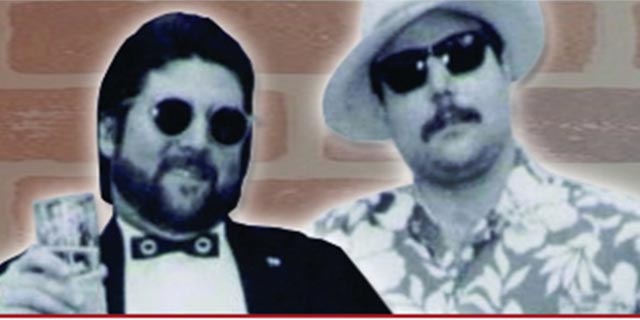
By now, we’re sure that you have read much about the legendary, enigmatic mayor of Providence who passed away on Thursday, January 28, at the age of 74. Vincent A. “Buddy” Cianci was a friend of Phillipe and Jorge’s, and referred to in the Cool, Cool World column as either Buddy “Vincent A.” Cianci (to flout journalistic form, since 75% of his supporters probably didn’t know his real first name) or the Bud-I, for his almost religious focus on his own one and only exalted presence.
Having spent decades covering the Bud-I when he was mayor, appearing with him on the radio or at fundraisers, hanging out with him at taverns and other late night haunts, we, like many others, have a bunch of stories and anecdotes about the “Bud-I years.” But instead of the tried and true yarns cited by the mainstream remembrances, here are a few that took place behind the scenes with the involvement of P&J alone or as a pair, that you might find entertaining or enlightening.
We considered Buddy a longtime friend, and a typical encounter with him might have gone along the lines of Buddy saying, “You two assholes were criticizing me about (insert scandal here), and none of it was true. How’re ya doing? Let’s have a drink.” P&J used the Dr. Jekyll and Mr. Hyde analogy long before Judge Ernest Torres invoked it at the Bud-I’s sentencing for conspiracy, and it has always seemed an apt and even fair one. From the Marquette Law School rape accusation to the birth of the “Renaissance City” to exalting Our Little Towne nationally and internationally to his stay at the government’s pleasure at Ft. Dix to his last hurrah during the 2014 run for mayor of La Prov, the man was a force of nature who could make you laugh as easily as cry.
Here goes from the Phillipe and Jorge Bud-I vault …
The Legacy
One of Buddy’s favorite stories was when he attended a big political shindig in Florida after having been elected Providence mayor for the first time at the ripe age of 33. He was ordering a drink when the bartender said, “You look familiar.” Busting his buttons with pride, the Bud-I informed him he was the mayor of Providence, Rhode Island. To which the bartender replied, “Do you know Raymond?” (For our younger readers, “Raymond” meant Raymond L.S. Patriarca, the nationally notorious head of organized crime in New England, with a home office on Federal Hill, who Cianci prosecuted for a mob murder.) Such was the celebrity pecking order for Little Rhody in those days.
But P&J believe that from now on, if it hasn’t happened already, the Bud-I’s legacy will be that whenever you introduce yourself on your travels as coming from Providence, one of the first questions out of the mouths of strangers will be, “Did you know Buddy?” Salud!
On the Silver Screen
In 1996, there was two-part documentary, Vote for Me: Politics in America, which appeared on PBS. One of the segments was about Buddy and, somehow, he found out that Jorge was the narrator for the film. A couple of months prior to its scheduled debut on national television, J got a phone call from Buddy, ringing up from City Hall.
Buddy to Jorge: “Do you have a videotape of the show?”
Jorge: “Yes, I do, Buddy.”
Buddy: “Bring it down here. I want to see it.”
Jorge: “When?”
Buddy: “Right now.”
J jumped on the Broad Street bus (he was living in an illegal loft off of Broad at the time) and headed down to City Hall to the Bud-I’s office. As soon as his secretary let him know he was there, Buddy signaled him into the office and whipped out a couple of Cuban cigars (smoking these in City Hall was as illegal as J’s loft). They puffed away and J gave him the videotape that they watched via the VHS in his office. Buddy liked it and so, he rewound it and started buzzing City Hall employees to come into the office and watch it.
They watched it again and then Buddy says, “Hey, let’s have a premiere here at PPAC before it airs on TV. Have you got the producer’s number?”
“Yes, I do.”
So Buddy called Louie Alvarez (one of the producers) in New York and asked if he wanted to do a premiere at the PPAC. Louie said, “Sure,” and then Buddy immediately called PPAC to, a) book a date and, b) get the place for free. Then he gave marching orders to one of his assistants to call the union that would work a show like this at PPAC and get a deal with them.
And, yes, the premiere happened at PPAC and, yes, a fine time was had by all.
Pen Pals
Speaking of PPAC, its renovation was one of the most fond and proudest of Buddy’s memories. Phillipe and Jorge corresponded with the Bud-I while he was living at his Ft. Dix gated community, where we would send him info about behind-the-scenes activities in Our Little Towne and the state. He also kept up through the copies of The Urinal and Providence Phoenix he received. Although these missives were confidential, the carefully handwritten 8 to 10 page letters we received showed a very human side of the man — although he would manage to get in one gripe every time about being nailed on only one indictment out of many that had him sent away for five years, and losing the subsequent appeal by only one vote. But looking back on his years as Hizzoner, he once wrote in 2005, “I take great solace knowing that what a lot of what so many people accomplished during my years in office are taking fruit — the PPAC now presenting The Lion King is a big trip from when those neighbors wanted to tear the theater down so many years ago.” His love of the arts and promoting same were critical to La Prov’s turnaround, as the likes of AS220’s Bert Crenca and WaterFire’s Barnaby Evans have been telling every news outlet upon the Bud-I’s passing.
You Guys Suck
Then there was the time in the early ‘90s, at a fundraiser/auction for Crossroads RI at the Roger Williams Park casino. They invited numerous local “celebrities” (Patrick Kennedy, P&J, Channel 12’s Karen Adams, etc.) to do humorous skits and then auctioned off prizes. P&J were downstairs having a drink with the Bud-I (who made a point of telling us, “You guys sucked”) before we went back upstairs to our table where we were sitting with Mary Ann Sorrentino. The Bud-I was supposedly leaving and headed to the men’s room to steel up his courage, so to speak, before leaving for the next event, but he apparently heard Karen Adams doing her skit that included joking references to the mayor his own self. He stormed back upstairs and, when the bids came in for whatever prize was being auctioned off, he kept bidding but insisting that, if he won, he wanted to have the microphone again.
Naturally, he made the highest bid and got the microphone back and immediately launched into a spiel about how Phillipe & Jorge sucked and so did Karen Adams. We all had a good laugh, rolled our eyes and could only say, “Well, that’s Buddy,” and then he was gone with the wind.
Hall Monitors
While media outlets like you to think that everyone presenting their happy news is oh-so-chummy off the air as well, nothing could be further from the truth than when Buddy joined WPRO after coming back from his enforced vacation. The Bud-I couldn’t stand his fellow radio hosts John DePetro (well, everyone loathes DePetro) and Dan Yorke for putting the boot on him for his past transgressions. And the extent of his disdain for both of them led to station insiders saying that DePetro and Yorke would practically have someone check the halls for Cianci before they left their studios lest they encounter him face-to-face and feel the wrath firsthand.
Entourage
Don’t cross Buddy. That was gospel for anyone in Our Little Towne who wanted to survive Mr. Hyde’s emergence from the dark side. Most notably taught that lesson were the stiff WASP-y necks at Brown’s University Club who denied the Bud-I admission, and then surprisingly found permits to renovate their East Side eating establishment extremely hard to obtain. At least until they were forced to take a walk down College Hill to plant a soon well-publicized kiss on a certain derriere at City Hall, accompanied by an approved membership application to their boys’ club.
It was also a rule famously broken by a bar/restaurant on North Main Street during the Bud-I’s reign. When Buddy arrived at the popular club late one evening with a full entourage, the bouncer allowed the mayor in for free, but insisted the rest of his entourage pay the cover charge. By noon the next day, the bar’s licenses had been lifted for violation of whatever ordinances immediately came to mind, which could have ranged from health violations to having ugly cocktail glasses.
Snap Shots
But the Bud-I could also take a joke … at times. A photographer friend of P&J’s was at the grand re-opening of the Arcade in downtown Providence years ago, where all the city’s major domos donned top hats for the ceremony. Our pal noticed that when they prepared to play the national anthem, all the top hats came off — except for Buddy’s. He had evidently snagged his famous toupee on the hat, and rather than risk tearing it off and having a shot of his bald head appear in the next day’s paper, he just left his hat on. When P&J informed him of this lapse in etiquette, and we knew why, he got a good chuckle. But he did get a bit miffed after he was sent to Ft. Dix when a member of the cast in an annual Providence Journal Follies show claimed to be wearing an actual Cianci rug during the production, writing to inform P&J that all of his real “squirrels “ — an elite lineup ranging from “new haircut” to “getting a bit long” to “a touch of gray now” — were in storage under the stewardship of David from his beloved Squire’s hair salon. Since he arrived back in Little Rhody sans squirrel to the delight of one and all, the location of the most famous rugs in local history (sorry, Rustigians) remains a well-kept secret.
Best Line Under Duress
The Bud-I almost couldn’t help but come up with a good line, even under pressure or in the worst of times. In a famous story when the feds were breathing down his neck, he was given a photo by a local FBI man from a video showing his chief of staff, Frank Corrente, taking a bribe and tucking it away in his office right after being handed it. Running down to Corrente’s office and bursting in screaming at him about being a moron for being caught red-handed on tape, Corrente reportedly said, “I can say I was taking it out to give to him, not putting it away,” to which the Bud-I screamed, “What do you think they are going to do, run the tape backwards in court?!?!”
We loved you and we will miss you mightily, Bud-I, you wild and crazy guy.
Save the Bay’s Tom Kutcher spends a lot of time on the water. As the organization’s baykeeper, one of his jobs is to identify and respond to environmental threats. When he took the job four years ago, Rhode Island Recycled Metals on Allens Avenue was front and center on Kutcher’s radar screen.
“They’ve been operating full-scale out of compliance for a long time,” said Kutcher. “Not in compliance means that every time it rains, everything washes through that scrap pile, picks up a bunch of pollution, washes off what was a contaminated site with a use restriction for PCBs, which is really carcinogenic, washes through that mud and out into the bay.”
The Hummel Report first focused on Rhode Island Recycled Metals in early 2012, when the company had already ignored orders from the Rhode Island Department of Environmental Management to correct storm water and hazardous material violations.
The state’s Coastal Resources Management Council granted the Massachusetts-based company a permit in 2009 with a focused mission: to scrap the Juliette 484, a Russian submarine that had been turned into a museum upriver but sank during a storm two years earlier. The operation quickly evolved — without permission — into an on-the-shore recycling, car crushing and scrap operation.
The DEM sent inspectors repeatedly to the facility, but the state’s bark wasn’t backed up with much bite.
So was the company getting protection from the governor’s office or the general assembly? The Hummel Report obtained a 2012 email from DEM director Janet Coit saying she received a call from then-Speaker Gordon Fox’s office about Rhode Island Recycled Metals, as well as three calls from its owner, Edward Sciabba.
She asked for an internal meeting before getting together with Fox later that week. She noted… “A lot of care has gone into how we handle this to allow the business to maintain its operations, and to evaluate with care impacts on the quality of the bay.”
Through a spokeswoman, Coit told us she does remember getting a call from someone in the speaker’s office inquiring about the status of the company and asking that she meet with the owner. But, the director added, she never met with Fox or was pressured by him or his office about the case. The meeting with the speaker she referred to was to discuss upcoming legislation in that year’s session.
“These guys are polluting. There are mechanisms in place to fine them,” Kutcher said. “They’re supposed to have … water discharge permits, they’re supposed to have management in place. They have none of it in place. Fine ‘em. If you sped by the place on Allens Ave you’d get a ticket, right? But you can dump a bunch of pollution into the bay?”
The irony: After nearly seven years, the company still had not removed the Russian sub, the reason it was given permission to open. The sub has been partially dismantled, but remained firmly below the surface of the Providence River when we went out with Kutcher.
He said it’s particularly frustrating since the Narragansett Bay Commission is spending upward of a billion dollars in three phases for a storm water containment system that has dramatically improved water quality in the Providence River and Narragansett Bay.
Ten months ago the attorney general’s office finally got involved, filing suit against the company. The case was assigned to Judge Michael Silverstein who issued several directives last year.
“When the court ordered that they needed to remove the boats from the water, they constructed a new ramp, which looks like a three-boat-wide boat ramp that slopes right into the water, right off the site, so every time it rains now, everything is going directly into the Bay,” Kutcher said. “Since the court order.”
Save the Bay’s executive director, Jonathan Stone, says the AG’s involvement was long overdue.
The company did sign a consent decree with the state in 2013 to clean up the property, but Stone says it lacked a key component. In December the state filed a motion for a receiver to take over the company, saying this crane on a barge in the river was leaning over a submerged pipe that carries water across the river to East Providence. The company righted the barge the day before a hearing, and Silverstein continued arguments on whether to appoint a receiver.
But the court did allow an auction of equipment on the site, which has dramatically scaled back its operation.
Kutcher is tired of the delays and excuses.
“I’m aggravated, I’m frustrated. It’s frustrating, because it’s an easy case. It’s a no-brainer.”
The Hummel Report is a 501 3C non-profit organization that relies, in part, on your donations. If you have a story idea or want make a donation go to hummelreport.org, where you can also see the video version of this story. You can mail Jim directly at jim@hummelreport.org.
On January 20, the Providence Student Union (PSU) held a rally to demand the introduction of ethnic studies courses to all Providence public high schools by next fall.
Students gave speeches about the need for a more inclusive and nuanced curriculum to a crowd of over 75 people outside the Providence School Department. “They make it seem like our countries are meaningless,” said Diane Gonzalez, a senior at Classical High School. She said students would be more excited for classes if they felt the material was relevant to them and their families.
The students also spoke about how the few mentions of people of color often happen in problematic ways.
“The oppression of enslaved African-Americans and Native Americans is disguised as this ‘cultural exchange,’” said Lee Caraballo during her speech. Another student, Latifat Odetunde, questioned why black history in the curriculum starts and ends with slavery.
While 91% of students in Providence public schools are students of color, fewer than 100 of their textbooks’ 1,192 pages are dedicated to people of color, making up less than 10% of the history curriculum, says Afaf Akid, a senior at E-Cubed Academy. As well, about 75% of Providence teachers are white, and Seena Chhan, a student from Central High School, spoke about wanting these courses to be taught by teachers of color.
The PSU’s campaign is not the first of its kind. Students around the US, in Oregon, California, Texas and Arizona, have made similar demands, to varying success. Gonzalez said she was inspired by the documentary Precious Knowledge about the fight for ethnic studies in Arizona. “They were not only learning about history; they were learning about oppression and about how to be leaders in their communities,” she said. “I deserve an education that makes me feel powerful.”
A recent study conducted by Stanford University looks at an ethnic studies pilot program with at-risk 9th graders and found that the course led to attendance improving by 21% and GPAs rising nearly a grade and a half.
The students put tons of work into organizing the event, such as coordinating with many different groups around the city, including Direct Action for Rights and Equality (DARE), the Providence Youth Student Movement (PrYSM), Youth in Action, the Environmental Justice League of RI and more, said Justin Silva, a student member of PSU. About a week prior to the rally, they also organized a petition aimed at the Providence School Board stating their demands, which has now been signed by close to 500 people.
Silva said that most people have been supportive so far. The crowd, largely made up of high school students of color, also consisted of teachers, administrators and other supporters. The Providence School Board superintendent, Chris Maher, attended and says he is in favor of ethnic studies classes.
More than anything, the students seemed excited, and determined, to learn new material. They carried brightly colored signs with slogans such as “My history is my identity” and “Without knowledge of history we are like a tree without roots.” They spoke about Zapatistas and Che, and in one speech, held up black and white photos of important resistance leaders — Bayard Rustin, Grace Lee Boggs, Ella Baker — and taught the crowd about them.
The rally ended with a chant: “Our History Matters.”
What’s your favorite TV show? “Twin Peaks”
What’s your favorite book? Homicidal Psycho Jungle Cat
What’s your biggest pet peeve? Loud chewing
Did you make any resolutions for 2016? I want to make more of my own clothes.
Cheers to Armando DeDona, who finally cut the ribbon at Long Live Beerworks, the first microbrewery in the capital city, on January 9. Head to 425 West Fountain Street for tastings and growlers of ’Nuff Said IPA, Black Cat Pale Ale, Milk Milk Stout, and other treats Wednesday – Friday from 4 – 9pm and on Saturday from 1 – 8pm.
At the grand opening event, a line stretched around the building – and master brewer DeDona stood outside with the waiting crowd (and checking IDs). Folks in line said they’d been waiting 90 minutes to reach the front and their Milk Milk Stouts.
“The pale ale and IPA were fantastic. And the growler size is perfect,” said customer Bill Parry, departing the packed venue with growlers in hand. The record for longest commute went to a couple who came from Dallas, Texas for the opening. Asked what they were expecting to experience, they said, “Good beer.”
We also talked to DeDona about the opening.
Motif: Is this more than you expected?
Armando DeDona: We didn’t expect this much. I’ve been very nervous leading up to this – there’s only room for 25 people at a time. So we’re hoping people have patience. But we’re also going to be open four days a week after this. So after today it should be pretty easy to come in, have a sample and pick up some beer.
It’s been a long journey. It began with the idea that I wanted to leave my job and do this full time. My wife and I started looking at ways to do that. We were looking at property in the outskirts, but then in Providence, last year, they changed the zoning so that a brewery could be in the city. So we found this spot – we’ve been building it out for about a year. It’s been a lot like spinning plates. I’m here 100 hours a week, so if anyone wants to drop by…
Motif: So it’s a part-time gig.
AD: Right.
Motif: How does it feel to be the first [production] brewery actually in Providence?
AD: It’s good – we’re the first one [production brewery] in 60 years. We didn’t want to be anywhere but Providence – we live just a few blocks away and we walk this area all the time already. We’re a neighborhood brewery, but we’re not just for the neighborhood. It’s an up and coming area, so we’re hoping for a lot of customer traffic.
“It’s nice to see this street happening – we’re excited about revival in general, and people starting up new businesses,” said two patrons, waiting patiently at the end of the daunting line. “It’s exciting.” ‘Nuff Said indeed.
** Ed. Note Motif considers Brewpubs and Breweries different types of businesses and in no way means to disregard the accomplishments of Union Station and Trinity Brewhouse. Union has been serving handcrafted beer since 1993 and Trinity brewpub opened in 1994, both in downtown Providence, and both are amazing instigators and supporters of the local craft beer community.