Category: Breaking News

Rapidly breaking news, usually short takes.
  • Nicolella, Gamache named youth poetry ambassador, deputy: Annual appointments resume in 2022 after pandemic hiatus

    Nicolella, Gamache named youth poetry ambassador, deputy: Annual appointments resume in 2022 after pandemic hiatus

    Lourdes Nicolella of the Moses Brown School, 2022 youth poetry ambassador. (Photo: RI Center for the Book)

    Lourdes Nicolella of the Moses Brown School has been selected as youth poetry ambassador and Adi Gamache of the Met School has been selected as deputy youth poetry ambassador for 2022 by Poet Laureate Tina Cane, the RI Center for the Book announced in a statement. Adam Fontaine of Smithfield High School and Cyprus Weaver of Westerly High School received honorable mentions.

    “This initiative is designed to bring more poetry directly to our state’s youth and to inspire young people through example. Just as the state poet laureate position symbolically affirms Rhode Island’s support of poetry, the youth poetry ambassador is meant to validate and support the creative potential of our young people,” said center director Kate Lentz in a statement.

    The deputy collaborates with the ambassador and performs any duties in her stead should she be unavailable.

    Nicolella is a senior at the Moses Brown School where she serves as the editor-in-chief of the literary magazine, Omnia. Her goal as ambassador is to “create an inclusive youth literary community within RI, where young people of all different backgrounds are welcomed and encouraged to use their minds, hearts, and voices as a force for social justice.”

    Adi Gamache of the Met School, 2022 deputy youth poetry ambassador. (Photo: RI Center for the Book)

    Gamache said, “Being named the deputy youth poetry ambassador is an incredible opportunity which I will try my best to live up to. To be able to meet and learn and share one’s art with others is a gift few get. More than anything, what I want to do with my poetry is change – if only for a second – the way someone views the world. Perhaps that is how the world itself is changed – with dominoes of repeated hope.”

    A launch and reading celebration will take place at the State House Library in late February. Nicolella and Gamache will participate in poetry readings with other youths at additional library events to be announced.

    Nicolella will receive a $250 cash prize and an opportunity to record a reading for Cane’s distance reading series “Poetry Is Bread.” Gamache will receive a $100 cash prize. Both will have the opportunity for their poetry to be featured on RIPTA buses as part of the “Poetry in Motion” series.

    The 2022 appointments will be the fourth annual (except for a two-year term during the pandemic), following previous ambassador Moira Flath and deputy ambassador Kiani Sincere-Pope (2018), ambassador Catherine Sawoski and deputy ambassador Tyler Cordeiro (2019), and ambassador Halima Ibrahim and deputy ambassador Eugenie Rose Belony (2020/2021).

  • Alexander-Scott not running for Congress: Former RI health director bows out of politics for now

    Alexander-Scott not running for Congress: Former RI health director bows out of politics for now

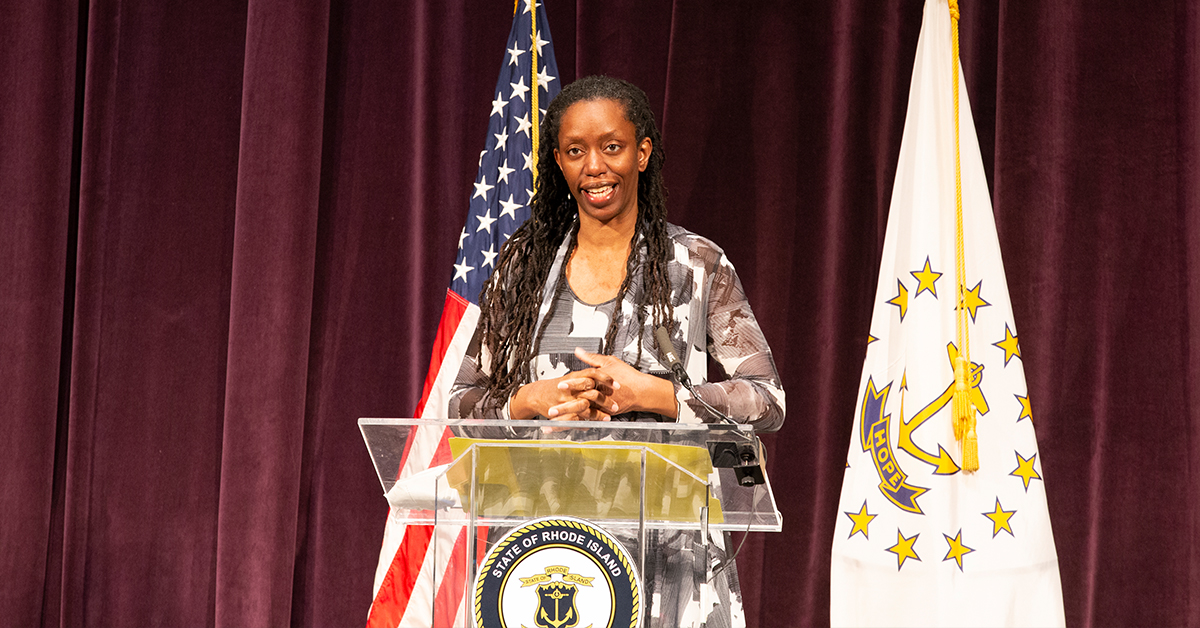
    “Pandemic Groundbreaker” Dr Nicole Alexander-Scott on the cover of Motif, May 2021.

    Dr Nicole Alexander-Scott, who resigned from her post as director of the RI Department of Health a few weeks ago (“RI Health Director Alexander-Scott resigns: Led state’s COVID-19 response from the beginning”, by Michael Bilow, Jan 13, 2022), sent Motif a statement ending speculation that she would be a candidate for the open seat being vacated by Rep. James Langevin who said he will not run for re-election.

    Other than today’s statement, she has given no public indications of the reasons for her resignation nor of her future plans.

    Gov. Daniel McKee said at his press conference on Jan 27, “The doctor said she had ‘a window of opportunity’ in more than one meeting. I asked her to stay, each time it accelerated… She felt as though she had ‘a window of opportunity.’ That’s her words. My word was ‘stay.’ But if not, let us do a professional exit strategy.”

    “I am writing to let you know that after taking the time to fully explore the real possibility of me running for the seat opening up in Rhode Island’s second congressional district, I have decided to not enter the race,” Alexander-Scott said in the statement. “It was an honor to be contacted and urged to run by so many fellow Rhode Islanders over the last few weeks. I gave serious consideration to running because I saw this as a unique opportunity to advocate for change on the national level on the issues that I have committed my career to: health, equity, and the need to give every person and every community an equal opportunity to thrive. I also gave running serious consideration because diversity in representation matters. While a person from any background or gender could make an exemplary congressperson, we need to work to ensure that the group of people we elect is reflective of all of the communities served.”

    Alexander-Scott is among the most widely known and recognized persons of African-American heritage in RI, appearing with then-Gov. Gina Raimondo at live televised press conferences first daily and later weekly and bi-weekly with Gov. Daniel McKee. Motif featured her on the cover of its May 2021 issue on the theme of “pandemic groundbreakers.”

    “While I will continue to be open to opportunities like this in the future, I remain as committed as ever to building strong, healthy and resilient communities in every ZIP code from any position I am blessed to serve in. I look forward to still advancing this critical work and having a strong impact on policies at a national level that will benefit the public’s health, as part of the next opportunity that I take on, in this unique moment,” she said in the statement. “Hopefully, all Rhode Islanders will join with me in making sure we invest in better communities for all families.”

  • RI Gov. McKee updates blizzard situation: 9:30am press conference

    RI Gov. McKee updates blizzard situation: 9:30am press conference

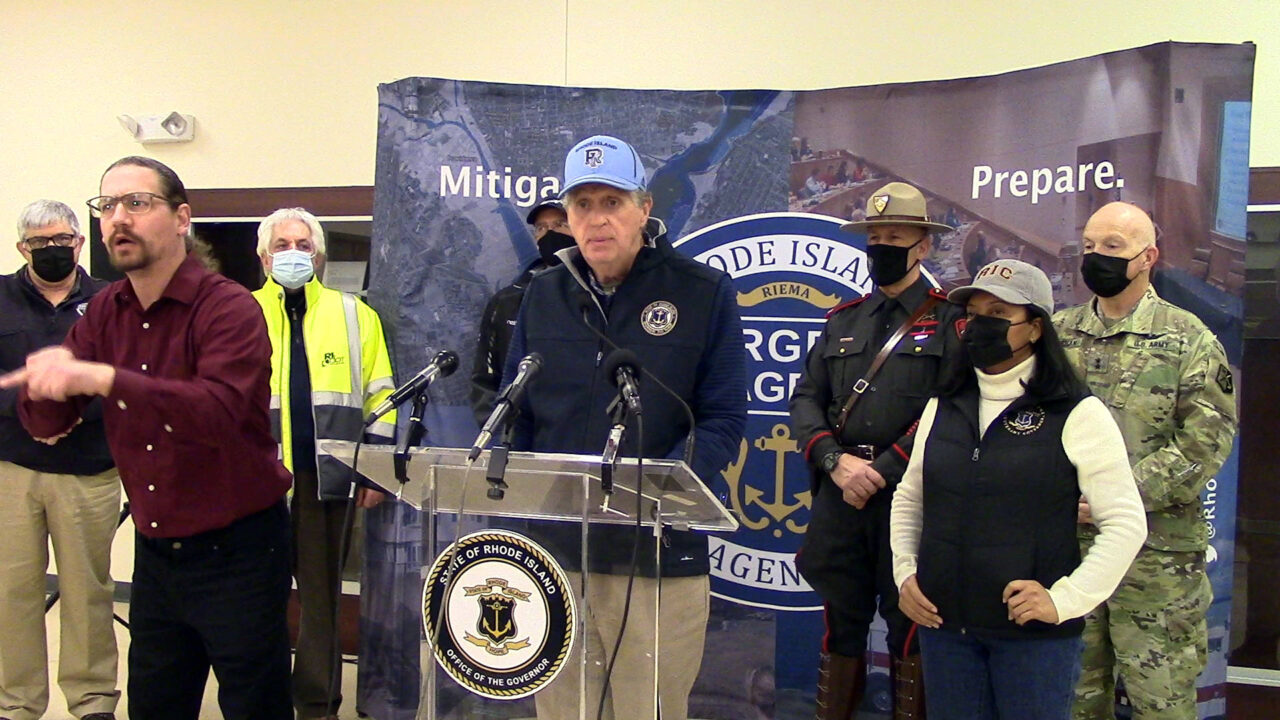
    Gov. Daniel McKee and Lt. Gov. Sabina Matos at the RI Emergency Management Agency with his team responding to the blizzard from Department of Transportation, National Grid, State Police, National Guard, Jan 29, 2022, 9:30am. (Photo: Michael Bilow)

    (Click here to watch the full press conference.)

    After declaring a state of emergency and imposing a travel ban because of the blizzard affecting RI today, Gov. Daniel McKee gave a progress report at a press conference held at the Emergency Management Agency (EMA) in Cranston this morning at 9:30am. He was accompanied by Lt. Gov. Sabina Matos along with leadership from the EMA, Department of Transportation, National Grid, State Police, and National Guard.

    “As we expected, the storm started accumulating overnight and the winds have picked up. We are now seeing significant snowfall and rapid accumulation. We are experiencing snowfall between one and three inches an hour, totally between 18 and 24 inches by the time this is all said and done. And as I mentioned yesterday, this is one of the top snowfalls in a 24-hour period in the history of the State of Rhode Island at this point in time. That’s what we expect and that’s what we’re getting,” McKee said. “We expect the heaviest snows to be between 10am and 4pm today. That’s why the best thing that we can do right now is stay off the roads. Stay home right in the comfort of your own home. Between 11pm last night and 2am This morning, the Rhode Island State Police responded to 15 weather related accidents. Since then conditions have only getting worse. Don’t put yourself in harm’s way, and again don’t put the people – all the first-responders out there, all our traffic plowers, you know people are behind the plows – don’t put them in harm’s way. So stay off the roads, please. Let us let our plows do their job and then we open things up and we’re in good shape as we recover tomorrow.”

    McKee said all bridges are closed except for emergency vehicles, including the Newport Bridge, the Jamestown Bridge, and the Sakonnet River Bridge. McKee said that many parking bans have been imposed, and this is a matter of safety for access by fire and rescue. Have devices, including flashlights, charged, McKee said, although only about 75 households so far have experienced power loss from the storm.

    Update: At 12:30pm, the governor told Motif that due to limited safety and visibility, state police have been directed to be cease patrolling roads and maintain positions in case they need to be called out to respond. He said he has not been able to leave the EMA facility to see for himself due to weather conditions, and his press spokesman said that would likely have to wait until tomorrow.

    Requests have been forwarded to President Joe Biden for a federal disaster declaration to provide resources to help the state, McKee said, and the director of the Federal Emergency Management Agency (FEMA) had offered assistance.

    “I want to say thank you to everyone who is on the job doing the work making sure Rhode Islanders are safe: our plow crews, DPW workers, police officers, firefighters, first-responders and healthcare workers. Thank you on behalf of the people of the state of Rhode Island. This is a team effort, and because of the great team we have, we’ll get through this. If you have an opportunity, help your neighbor if you can. Make sure that you’re careful and we will see good results because of the great work that is happening in the local communities and on the state level,” McKee said.

    Lt. Gov. Sabina Matos address the public in Spanish summarizing much of what McKee had said immediately before, adding “Just a reminder about the United Way, 211 is the number that you can call, if you need shelter or food. They have volunteers available answering the phone 24×7, so make sure you reach out to the United Way if you need assistance.”

    State Police Superintendent Col. James Manni said, “As I stated yesterday, we do not put the travel bans in effect lightly. We realize that it creates some hardship for some people. But I’m happy to report that the vast majority of Rhode Islanders are staying off the highways. I drove most parts of the state today and I only saw a handful of vehicles. We do make exceptions, if you’re essential personnel and you must be at a hospital, nursing home, doctor, people that are involved in plow operations. We make those exceptions, but the the highways are fairly light. We have not issued a summons at this point.”

    Department of Transportation Director Peter Alviti said, “The reports that we’re getting in and my own observation out on the road is that everything is going exactly according to plan. We told you yesterday, we would have a full complement… about 155 of our plows and about 350 private vendors out there. They were deployed last night as we planned, they stayed out all night last night pre-treating the roads. At this point [9:30am] we’ve got what we expected, about four to seven inches across the state… As we said yesterday, the intensities which you can see is now picking up along with the wind gusts is going to create challenges for them… The general public is cooperating and so are the trucking industry: there are literally no tractor trailers on our highways and very few vehicles that I passed I when I was on the road this morning… Things are about to get a lot worse out there. So if you’ve stayed off the road, up until now, we certainly thank you for that. The next few hours are crucial. It’s going to be dangerous out there. There’s going to be very low visibility. There are whiteout conditions happening out there right now… Our folks are doing what they do, they’re going to punch through the other side of this. We told you yesterday our plan, that plan is in full effect and it’s working, so we’re going to stay with it.”

  • McDonald named interim RIDOH director: Part of new transition team

    McDonald named interim RIDOH director: Part of new transition team

    Dr James McDonald, medical director of the RI Department of Health (RIDOH) since Feb 2012, has been named interim director following the resignation of Director Dr Nicole Alexander-Scott on Jan 13 and of Deputy Director Tom McCarthy on Jan 18, both resignations effective Feb 1, according to a statement issued this morning by the office of Gov. Daniel McKee. “Dr. McDonald will assume the day-to-day responsibilities of RIDOH director while the search for a permanent candidate continues,” the statement said.

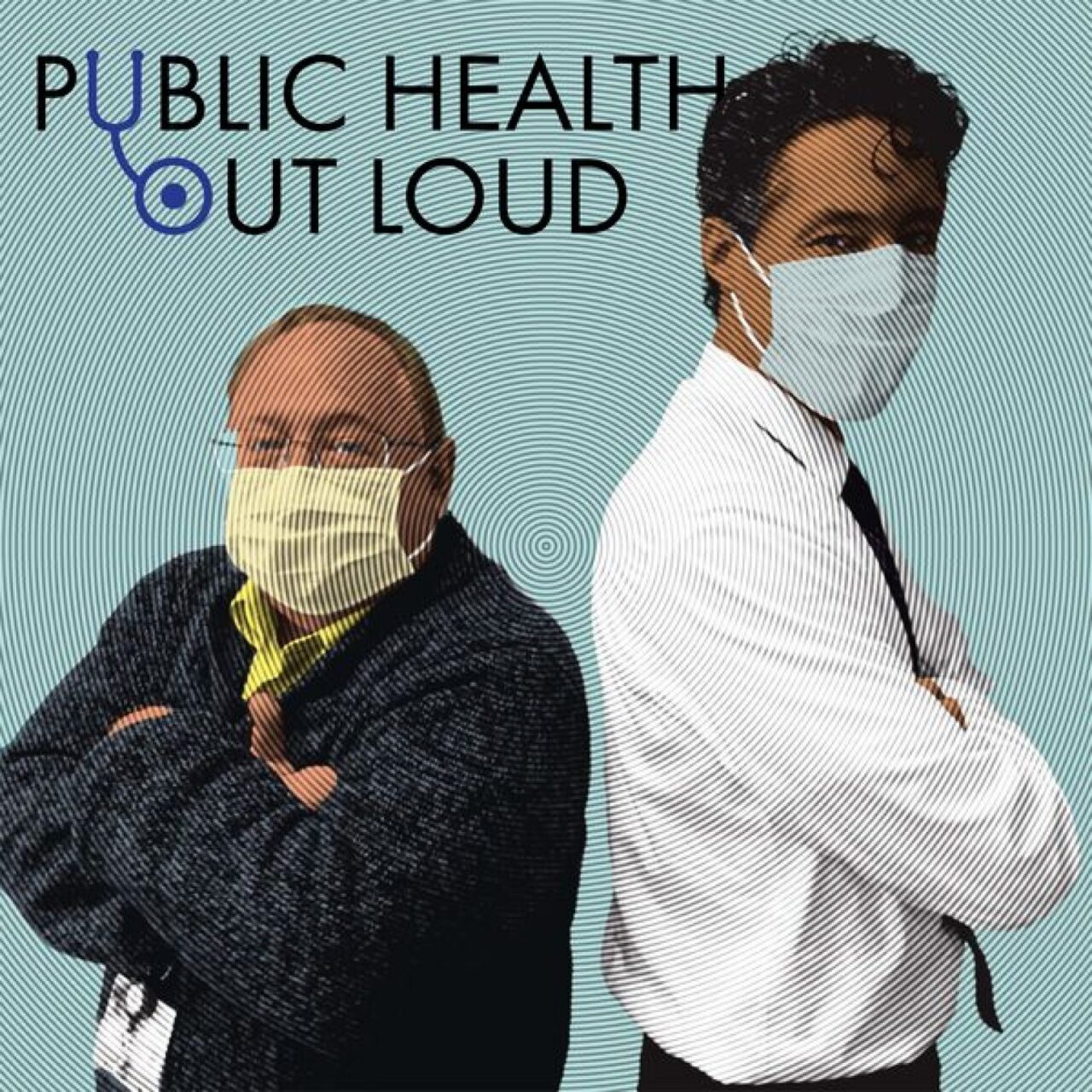
    Dr James McDonald of the RI Dept of Health and Dr Philip Chan of the medical school at Brown University (L-R), in a publicity photo for their podcast “Public Health Out Loud.”

    McDonald will be familiar to many from his appearances standing in for Alexander-Scott to give her a break from the grueling daily press conference during the first months of the pandemic. He is board-certified in both pediatric and preventative medicine, and served as a medical officer with the US Navy including as director of health services for the Naval Health Clinic New England in Newport. In collaboration with Dr Philip Chan of the medical school at Brown University, he has produced a weekly podcast series “Public Health Out Loud” since Nov 2020. McDonald, known for self-deprecating humor, posed in a publicity photo back-to-back with Chan — who is a head taller. In an Aug 2021 on-air interview with WPRI Channel 12, McDonald hurled jelly beans around his office to demonstrate the ease of contagion from the Delta variant of the virus.

    In addition to McDonald, McKee named three others to what he termed the “Health Transition Support Team.”

    Ana Novais currently serves as assistant secretary of the Executive Office of Health and Human Services and previously worked for RIDOH as deputy director, as education and outreach co-ordinator focusing on children’s health issues, and as minority health co-ordinator.

    Ernie Almonte currently serves as chief of staff to Lt. Gov. Sabina Matos and previously served for 16 years as the Rhode Island Auditor General where he was responsible for the State of Rhode Island financial, performance and fraud audits.

    Chris Abhulime is deputy chief of staff to McKee. He has a background in clinical laboratory science in addition to being board-certified as a psychiatric-mental health nurse practitioner, and he is a doctor of veterinary medicine.

    “Our Administration has moved quickly to put an experienced leadership team in place at the Rhode Island Department of Health to ensure that our COVID-19 response remains strong,” McKee was quoted saying the statement. “I thank Dr. McDonald, Assistant Secretary Novais, Ernie Almonte, and Chris Abhulime for stepping up and I look forward to continuing to work with all of them during this transition. I also want to thank the career staff at the Department of Health who continue to do the work of ensuring access to quality health services for all Rhode Islanders.”

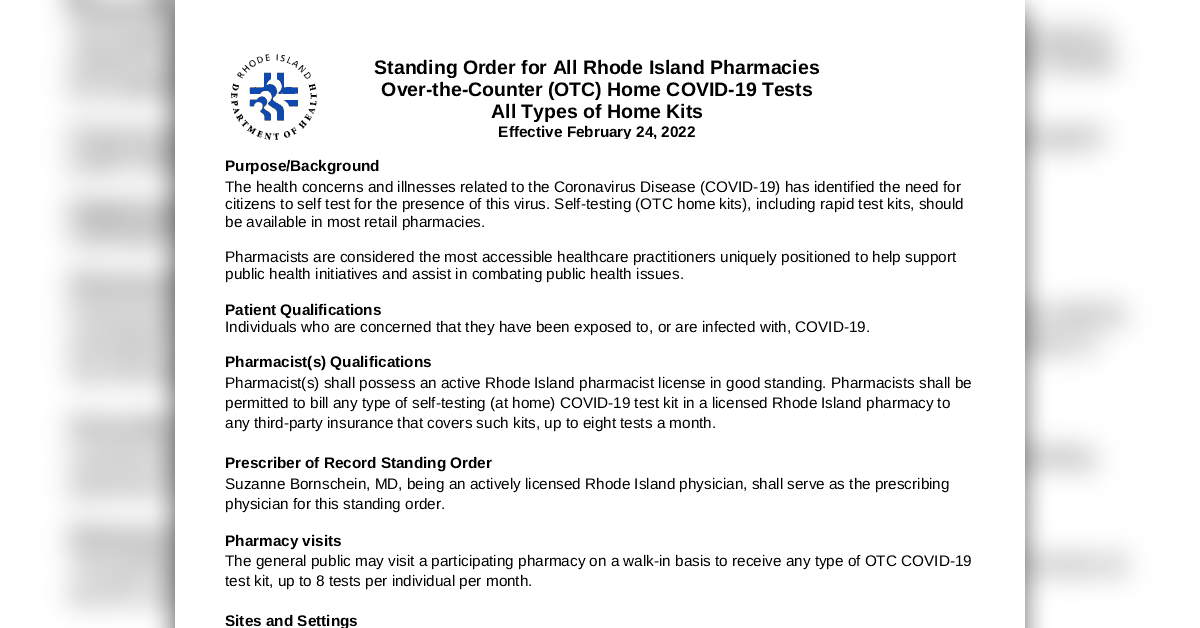
  • Free rapid COVID-19 tests available: US government web page, pharmacies

    Free rapid COVID-19 tests available: US government web page, pharmacies

    Every residential address in the US can order four rapid antigen test (RAT) kits for free, expected to be delivered in late January, through an official government web page: covidtests.gov (which currently redirects to a site operated by the US Postal Service special.usps.com/testkits). Persons need enter only their name and shipping address to place a free order, and optionally can enter an e-mail address to be notified about order progress. The ordering system opened publicly one day earlier than had been announced.

    According to the web page, “the tests available for order: are rapid antigen at-home tests, not PCR; can be taken anywhere; give results within 30 minutes (no lab drop-off required); work whether or not you have COVID-19 symptoms; work whether or not you are up to date on your COVID-19 vaccines; [and] are also referred to self-tests or over-the-counter (OTC) tests.” It is recommended to take an at-home test “if you begin having COVID-19 symptoms like fever, sore throat, runny nose, or loss of taste or smell; or at least 5 days after you come into close contact with someone with COVID-19; or when you’re going to gather with a group of people, especially those who are at risk of severe disease or may not be up to date on their COVID-19 vaccines.”

    The federal government maintains a web resource of physical locations where COVID-19 testing services can be obtained, often at no cost: hhs.gov/coronavirus/community-based-testing-sites/index.html

    This free program is separate from and in addition to a federal mandate that private health insurers either directly cover or indirectly reimburse each insured individual for up to eight at-home over-the-counter RAT kits per month, up to $12 per test. Families on the same insurance plan are eligible for RAT kits on an individual basis, so a family of four would be eligible for eight each, or 32 tests, per month.

    Coverage applies equally regardless of whether the private health insurance plan is purchased directly or as part of a group such as through an employer. Most insurers will pay directly for the tests at point of purchase, such as an in-network pharmacy, much the same as prescription drug coverage, but otherwise may require the insured person to pay up-front and submit receipts for reimbursement.

    Each person covered by Medicaid (but not Medicare) or Children’s Health Insurance Program (CHIP) programs is eligible for direct purchase of up to eight RAT kits per month from any in-network pharmacy with no cost or co-pay.

    Medicare (as opposed to Medicaid) pays for laboratory tests but not at-home tests, and may require prescription by a health professional; however, some Medicare Advantage programs may cover at-home tests, so it is necessary to check the specific plan.

  • RI Health Director Alexander-Scott resigns: Led state’s COVID-19 response from the beginning

    RI Health Director Alexander-Scott resigns: Led state’s COVID-19 response from the beginning

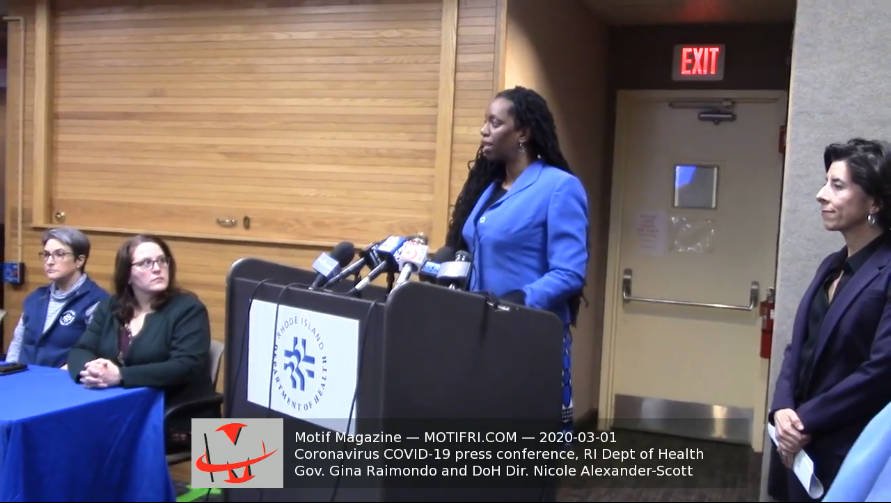
    RI Department of Health Director Nicole Alexander-Scott announcing the first case of COVID-19 in the state on Mar 1, 2020, with Gov. Gina Raimondo to her left. (Source: https://www.facebook.com/motifri/videos/599954260585364)

    Dr Nicole Alexander-Scott, MD, MPH, who has served as director of the RI Department of Health (RIDOH) since 2015 and spearheaded the state’s response to the COVID-19 pandemic from the beginning, has resigned effective two weeks from today, according to a statement from Gov. Daniel McKee, and the governor “regretfully accepted.” She will continue in a consulting role for three months following her departure to assure continuity, the statement said.

    Alexander-Scott had her own encounter with the virus, testing positive on Dec 12, 2020, leading to then-Gov. Gina Raimondo, Commerce Secretary Stefan Pryor, and vaccine expert Philip Chan, MD, of RIDOH and Brown University School of Medicine observing a precautionary quarantine as close contacts.

    A native of Brooklyn, NY, Alexander-Scott is a nationally recognized expert in her field. She completed a four-year combined fellowship in infectious diseases of adults and children at Brown University, after finishing a combined internal medicine and pediatrics residency at SUNY Stony Brook in 2005 and medical school at SUNY Syracuse in 2001. She obtained a master’s degree in public health (MPH) from Brown in 2011. The statement from the governor noted that she is one of the five longest-serving state public health leaders in the nation.

    “Dr. Alexander-Scott has been a steady, calm presence for Rhode Island as we’ve worked together to fight the COVID-19 pandemic,” said Governor Dan McKee in the statement. “Her leadership has been crucial to our whole of government response – helping Rhode Island become number one in testing nationwide and getting more people vaccinated per capita than nearly any other state in the country.”

    “Serving as the director of the Rhode Island Department of Health has been the most rewarding experience of my career,” said Dr. Nicole Alexander-Scott. “I would like to thank all Rhode Islanders for their trust over the past two years as we have navigated this unprecedented public health crisis together. It has been an honor to serve you. I would also like to thank all the healthcare providers and community partners who have supported the work we have been doing at RIDOH since 2015 to ensure that everyone has an equal opportunity to be healthy, regardless of their ZIP code, race, ethnicity, sexual orientation, gender identity, level of education, or level of income. And finally, I would like to express enormous gratitude to the members of my RIDOH family. They embraced me, taught me, challenged me, picked me up when I was down, and had my back every step of the way.”

    In addition to co-leading the state’s response to the pandemic, the statement noted, Alexander-Scott established the Health Equity Zone program that has become a national model for how to situate needed health care facilities in underserved areas in collaboration with local community leaders, led the response to the opioid crisis by getting naloxone (Narcan) into the hands of first responders and private individuals as well as opening some of the first harm reduction centers in the country, and arranging $82 million in financing to replace the state health laboratory with a “new Rhode Island Center of Excellence for Laboratory Sciences [that] will make Rhode Island better prepared for any future epidemic or pandemic with improved public health services, be an economic driver for the state, and foster more collaboration with private industry and academic institutions.”

  • FDA shortens wait for COVID-19 vaccine booster to 5 months, expands eligibility down to age 12

    FDA shortens wait for COVID-19 vaccine booster to 5 months, expands eligibility down to age 12

    Major changes were authorized this morning to increase access to booster shots for the COVID-19 vaccine from Pfizer-BioNTech by the US Food and Drug Administration (FDA).

    There are three main changes: (1) the time between completion of the primary vaccine series until eligible for a booster shot has been reduced to five months from the prior six months, (2) booster shots are authorized for ages 12 to 15 under the same conditions as for those 16 and older, and (3) children ages 5 to 11 who are unusually immunocompromised are eligible for an additional third dose as part of their primary vaccine sequence.

    The FDA said in a statement, “The agency has determined that the protective health benefits of a single booster dose of the Pfizer-BioNTech COVID-19 Vaccine to provide continued protection against COVID-19 and the associated serious consequences that can occur including hospitalization and death, outweigh the potential risks in individuals 12 through 15 years of age.” The FDA said the decision relied upon safety and effectiveness data, including a study of 6,300 Israelis ages 12 to 15, that showed no appreciable risk of adverse reactions, and in particular “The data shows there are no new safety concerns following a booster in this population. There were no new cases of myocarditis or pericarditis reported to date in these individuals.”

    “Throughout the pandemic, as the virus that causes COVID-19 has continuously evolved, the need for the FDA to quickly adapt has meant using the best available science to make informed decisions with the health and safety of the American public in mind,” said Acting FDA Commissioner Janet Woodcock, MD, in a statement. “With the current wave of the omicron variant, it’s critical that we continue to take effective, life-saving preventative measures such as primary vaccination and boosters, mask wearing and social distancing to in order to effectively fight COVID-19.”

    “Based on the FDA’s assessment of currently available data, a booster dose of the currently authorized vaccines may help provide better protection against both the delta and omicron variants. In particular, the omicron variant appears to be slightly more resistant to the antibody levels produced in response to the primary series doses from the current vaccines,” said Peter Marks, MD, PhD, director of the FDA’s Center for Biologics Evaluation and Research. “With this in mind, the FDA has extended the range of individuals eligible to receive a booster, shortened the length of time between the completion of the Pfizer primary series for individuals to receive a booster and is authorizing a third protective vaccine dose for some of our youngest and most vulnerable individuals.”

    The three-dose primary vaccine for young children is a very unusual situation, the FDA emphasized: “Children 5 through 11 years of age who have undergone solid organ transplantation, or who have been diagnosed with conditions that are considered to have an equivalent level of immunocompromise, may not respond adequately to the two-dose primary vaccination series. Thus, a third primary series dose has now been authorized for this group. This will now allow these children to receive the maximum potential benefit from vaccination… Children 5 through 11 years of age who are fully vaccinated and are not immunocompromised do not need a third dose at this time, but the FDA will continue to review information and communicate with the public if data emerges suggesting booster doses are needed for this pediatric population.” When appropriate, this third primary series dose would be administered at least 28 days after the second dose.

    UPDATE Wed, Jan 5, 2022: The RI Department of Health issued a statement that practices in the state will adopt the new FDA guidance for the Pfizer vaccine: “The booster interval recommendations for people who received the Johnson & Johnson vaccine (two months) or the Moderna vaccine (six months) have not changed.”

  • RI app shows verifiable vaccination status: Generates trusted secure QR code

    RI app shows verifiable vaccination status: Generates trusted secure QR code

    (App download links at end of article.)

    RI has updated and renamed its “401Health” app (previously “Crush COVID RI”) for Google Android and Apple iOS, the office of Gov. Daniel McKee announced today. The main purpose of the update is to add support for displaying the user’s vaccination record via a securely trusted QR code, which can be read by another app, the SMART Health Card Verifier, also available for both Android and iOS. The updated app continues to support previous features such as maintaining a private diary that the user can choose to share with contact tracers should that be necessary, links to schedule tests and vaccination doses, and access to display published statistical data about the COVID-19 situation in the state.

    The two components, the record holding app and the verifier app, depend upon cryptography to assure the record comes from a trusted issuer, such as the State of Rhode Island, and has not been tampered with or modified. The system is similar to how web browsers handle sensitive information, such as credit card numbers for on-line purchases. In theory a QR code record could be printed out onto physical paper to be scanned by a verifier, but it is unclear at this time whether the RI apps or web sites will support this in addition to dynamic on-device display.

    In order to make this work, RI has joined the SMART Health Card Framework administered by the Vaccine Credential Initiative (VCI), a non-profit coalition of government and non-government health care and technology organizations headquartered from Boston-based MITRE Corporation (formerly “MIT Research”) using an open-source public protocol specification licensed by Boston Children’s Hospital. The Framework is supported worldwide, including in the US, Canada, the UK, Japan, and Israel. The full technical specification details, as with many open-source projects, are publicly downloadable from GitHub.

    The Framework is only a set of specifications, and it is up to the SMART Health Card Verifier App, published by the Commons Project, to implement the verification process, scanning and testing presented credentials (a QR code) against the CommonTrust Network’s Registry of trusted record issuers, also maintained by the Commons Project.

    VCI publishes a “Code of Conduct” that “expects verifiers to adhere to the following core set of requirements in order to protect and properly interpret SMART Health Cards: Verifiers shall not store SMART Health Cards, or any data included within them, beyond what is required for verification at the time of presentation. Verifiers shall check SMART Health Cards against a list of trusted issuers. Verifiers shall comply with all applicable laws, including the California Consumer Privacy Act.”

    According to the Computational Health Informatics Program (CHIP) at Boston Children’s Hospital that licenses and administers the underlying system, “SMART Health Cards contain just the information required to display your vaccination history and/or test status, and the choice to share your Card is up to you. In most cases that means: They contain: Your legal name and date of birth; Your clinical information; Tests: date, manufacturer, and result; Vaccinations: type, date, and location. They should not contain: Your phone number; Your address; Your government-issued identifier; Any other health information.”

    The governor’s office said in its statement, “The VCI coalition prioritizes privacy and security of patient information, making medical records portable and reducing healthcare fraud.”

    According to the Commons Project, their SMART Health Card Verifier App will “Quickly scan a SMART Health Card to confirm COVID-19 vaccination using the Verifier app at your small business, live music venue, school, or sporting arena. Scanning a SMART Health Card QR code reveals: Whether the SMART Health Card is valid; Whether the issuer is in The CommonTrust Network’s Registry of trusted issuers; [and] Key information on the SMART Health Card (issuer name, vaccine type, dates of vaccine doses, and name and date of birth of vaccine recipient).”

    “By embracing the open-source SMART Health Card Framework, Rhode Island joins seven states, numerous countries, and pharmacies such as CVS, Walgreens, Rite Aid, and Walmart that are already utilizing the secure SMART Health vaccination technology for record standardization. The State looks forward to partnering with Connecticut and Massachusetts as they onboard in the coming weeks and months,” McKee’s office said in its statement.

    “Rhode Island has administered close to 2 million doses of COVID vaccine and almost 300,000 booster doses, and our neighbors deserve a convenient, safe, and efficient way to access and store their vaccination record,” McKee was quoted in the statement saying. “I have downloaded my vaccination card to my phone and it was very simple. If you haven’t gotten vaccinated yet, it’s not too late. If you haven’t yet, get boosted.”

    “We want to make it as easy and convenient as possible for you to securely access your vaccination information,” Department of Health Director Nicole Alexander-Scott was quoted saying in the statement from the governor’s office. “This new app is a great way to verify for others that you have received the critical protection that comes with a COVID-19 vaccine primary series and booster dose.”

    401Health RI app
    Google Android play.google.com/store/apps/details?id=com.ri.crushcovid
    Apple iOS apps.apple.com/us/app/crush-covid-ri/id1511308593
    SMART Health Card Verifier app
    Google Android play.google.com/store/apps/details?id=com.thecommonsproject.smarthealthcardverifier
    Apple iOS apps.apple.com/us/app/smart-health-card-verifier/id1572691390
  • Monoclonal Antibodies (MABS) Delays: Effective COVID-19 treatment faces logistical obstacles

    Monoclonal Antibodies (MABS) Delays: Effective COVID-19 treatment faces logistical obstacles

    Treatment with monoclonal antibodies (MABS) is recommended and authorized to keep patients who test positive for COVID-19 out of the hospital, reducing the severity of mild to moderate symptoms. The treatment is done on an outpatient basis by a one-time infusion that takes several hours. In RI, however, there is a logistical backlog on quickly delivering MABS treatment to patients.

    Motif was approached by a reader who tested positive on Friday, Dec 10, but was told the earliest opportunity for MABS treatment would be Wednesday, Dec 15. In response to our inquiry, RI Department of Health (RIDOH) spokeswoman Annemarie Beardsworth confirmed that “most MAB providers are scheduling three or four business days after a patient’s/provider’s request. This time-frame is due to the very high demand occurring currently, but is also exacerbated by patients and/or healthcare providers calling multiple MAB infusion sites to see where they can get an appointment soonest, scheduling multiple appointments at different MAB infusion sites, and then not canceling appointments they don’t attend. This causes a tremendous amount of unnecessary administrative burden on the MAB providers and slows down the scheduling process.” She continued, “Unfortunately, when patients do not cancel appointments they don’t plan to attend, it prevents other patients from using that appointment slot. Some MAB providers tell us they can see as many as 8-10 no-show appointments per day. RIDOH reminds all patients to cancel any MAB appointments they are not planning to attend so that other patients can get their needed treatment.”

    There are logistical obstacles beyond just patient no-show appointments, Beardsworth told Motif. “Rhode Island has an adequate supply of MAB product in Rhode Island and we have been administering at a very high rate of our biweekly federal allocation. Like most other states in the country, Rhode Island is experiencing a healthcare worker shortage, so there are fewer providers than we’d like who can administer MAB. RIDOH is actively working to recruit and onboard more MAB providers. The MAB that is the easiest and fastest to administer is in short supply federally, so combined with fewer providers who can administer MAB, each administration takes longer when using the other infusion (IV) products.”

    While three or four business days is still within the 10-day limit after onset of symptoms, almost a year ago when the treatment was first made available in RI, on Friday, Jan 8, 2021, RIDOH Director Nicole Alexander-Scott said, “Rhode Island now has a doctor-recommended treatment for COVID-19 that is extremely effective at preventing people from developing severe disease and from being hospitalized because of COVID-19. The key, though, is starting early: The earlier you start treatment after testing positive, the better and more effective this can be. After completing a simple infusion, intravenously, of this treatment, many people with COVID-19 start feeling better as early as the next day. The treatment does not require hospitalization, and it’s intended to help prevent people from actually having to be hospitalized.” (See “New Treatment Available: Monoclonal antibody treatments for all eligible RI patients”, by Michael Bilow, Jan 9, 2021.) At that time, she said the plan was to have infusion sites co-located with larger testing sites, so that eligible patients can get the new treatment immediately after testing positive by a rapid test. “We’re working to build out as many different infusion sites as possible, particularly at places where there is a lot of testing already occurring, so that you can just go to the next room if you’re at one of our testing sites that’s able to accommodate this and get access to the treatment. We want to get at every element,” Alexander-Scott said.

    It stands to reason that patients would benefit from following longstanding RIDOH advice to get tested as soon as possible after symptom onset and to seek MABS treatment, if indicated, as soon as possible after a positive test result.

    The RIDOH website – covid.ri.gov/covid-19-prevention/treatment – has information about who is eligible for MABS: “You can use MABS if you test positive for COVID-19, started having mild to moderate symptoms in the past 10 days, and are at high risk for progressing to severe disease.” It also describes who should not get MABS, how to obtain MABS if you have no primary health care provider or no health insurance, and lists – covid.ri.gov/mabs-infusion-services – MABS infusion service providers.

  • Omicron in RI: First patient identified

    Omicron in RI: First patient identified

    Omicron has been detected in RI, according to an announcement this afternoon from the office of Governor Daniel McKee. “The individual who tested positive is a person in their 20s who lives in Providence County and recently returned from travel in New York. The individual completed a primary vaccination series and had no record of a booster shot. Contact tracing on this case is ongoing,” the statement said.

    Omicron virus variant detected by state as of Dec 8, 2021. (Source: US CDC https://www.cdc.gov/mmwr/volumes/70/wr/mm7050e1.htm?s_cid=mm7050e1_w#F1_down )

    Classified as a “variant of concern” by the World Health Organization and assigned the Greek letter “Omicron” as a mnemonic, the variant (also known as “B.1.1.529” in the PANGOLIN nomenclature) of the SARS-CoV-2 virus that causes COVID-19 was first detected in South Africa in a specimen collected on Nov 9 and has since been observed worldwide, in the US first on Dec 1 and in 22 states as of Dec 8, according to an early release issued yesterday in the flagship Morbidity and Mortality Weekly Report (MMWR) by the US Centers for Disease Control and Prevention (CDC). The CDC said that of 43 Omicron patients so far identified in the US only one had been hospitalized (for two days) and none had died. (See “Omicron virus ‘variant of concern’: More transmissible, unknown if otherwise more dangerous”, by Michael Bilow, Nov 26, 2021.) While the scope of the threat may not be assessed for a few more weeks, the CDC warned that “Mutations in Omicron might increase transmissibility, confer resistance to therapeutics, or partially escape infection- or vaccine-induced immunity.”

    In general, viruses mutate frequently but most mutations have no practical effect while a few mutations can give the virus a reproductive advantage, which first happened with the variant designated as “Alpha” (B.1.1.7) and later with the variant designated as “Delta” (B.1.617.2). (See “Don’t Panic: Explaining coronavirus mutations”, by Michael Bilow, Dec 26, 2020.) Despite the heightened concern about Omicron, the CDC said, as of the week ending Dec 4, nationally the Delta variant is currently estimated to account for 99.9% of infections because its significantly greater transmissibility allowed it to supplant prior variants.

    Chart of SARS-CoV-2 variants detected in RI, cumulative as of Dec 9, 2021. (Source: https://ri-department-of-health-covid-19-variant-data-rihealth.hub.arcgis.com/ )
    Number of SARS-CoV-2 variants detected in RI by week, as of Nov 20, 2021. (Source: https://ri-department-of-health-covid-19-variant-data-rihealth.hub.arcgis.com/ )

    The statement from his office quoted Gov. McKee: “We fully expected that Omicron would eventually be detected in Rhode Island as it has been in our neighboring states. I want to be clear: Rhode Island is prepared. This is not cause for panic.” The statement also quoted RI Department of Health (RIDOH) Director Nicole Alexander-Scott: “Given the recent findings of the Omicron variant in our region, it is not at all surprising that we have identified this case in Rhode Island.”

    “The case was identified through the ongoing genomic surveillance program coordinated by RIDOH’s State Health Laboratories,” the statement said, quoting Alexander-Scott: “I want to thank the staff at our State Health Lab who have been working diligently to sequence more test results than ever before. Together, we can keep each other safe and healthy throughout the holiday season.”

    Both McKee and Alexander-Scott emphasized that the best protection measures against the Omicron variant are the same as against the Delta variant: get vaccinated including a booster shot if eligible, practice proven public health measures such as wearing a face covering indoors and in crowded public places, maintain physical distancing, use proper ventilation, and be tested regularly. The statement said: “COVID-19 vaccine helps protect against the Omicron variant of COVID-19. However, booster doses are particularly important in providing additional protection. Everyone older than 5 years of age should get a primary series of COVID-19 vaccine. Everyone older than 16 should get a booster dose. (If you got Pfizer or Moderna for your primary series, you should get a booster dose at least six months later. If you got Johnson & Johnson [Janssen] for your primary series, you should get a booster dose at least two months later.)”

    The statement said that Gov. McKee “will be announcing a comprehensive set of actions early next week to address the increased number of COVID-19 cases and alleviate pressures on our hospital systems while at the same time keeping our schools open for in-person learning and preventing economic disruptions to our small businesses. The comprehensive set of actions the governor is focused on are vaccination, testing, masking and staffing capacity. The governor is continuing to meet with his whole of government team over the weekend to finalize the executive actions he will undertake.” Although McKee said at his regular weekly press conference on Thursday that he was reluctant to resume restrictions from earlier in the pandemic such as lockdowns or indoor masking mandates, he was clear that all options were on the table.