Category: Breaking News

Rapidly breaking news, usually short takes.
  • Omicron virus “variant of concern”: More transmissible, unknown if otherwise more dangerous

    Omicron virus “variant of concern”: More transmissible, unknown if otherwise more dangerous

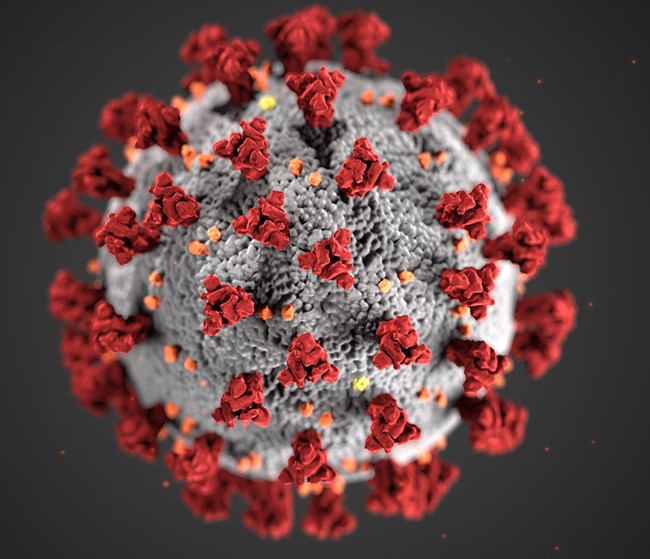
    A new “variant of concern” (VOC) for the virus that causes COVID-19 has today been assigned Greek letter “Omicron” by the World Health Organization (WHO) at an emergency meeting of the organization’s Technical Advisory Group on SARS-CoV-2 Virus Evolution (TAG-VE).

    In the particular case of the new Omicron variant, designated B.1.1.529 in the PANGOLIN nomenclature, its prevalence where found so far in South Africa and Botswana strongly suggests that it is more highly transmissible than the Delta variant B.1.617.2 it supplanted. “This variant has a large number of mutations, some of which are concerning. Preliminary evidence suggests an increased risk of reinfection with this variant [in patients recovered from infection from another variant], as compared to other VOCs. The number of cases of this variant appears to be increasing in almost all provinces in South Africa,” the WHO said in a statement.

    According to WHO, the first known case of the Omicron variant was found in a specimen collected on Nov 9. According to the PANGOLIN sheet, it was first sequenced for detection on Nov 11.

    WHO TAG-VE said that while standard tests are able to detect the Omicron variant, one of its characteristic mutations, called “S gene dropout,” causes one of the components of ordinary polymerase chain reaction (PCR) analysis to fail, and “this test can therefore be used as marker for this variant, pending sequencing confirmation. Using this approach, this variant has been detected at faster rates than previous surges in infection, suggesting that this variant may have a growth advantage.”

    Whether the Omicron VOC exhibits harmful behavior beyond increased transmissibility, such as increased virulence or increased resistance to vaccines and treatments, is not yet known and is unlikely to be known for several weeks, but at this time there is no evidence for it. Vaccines work by training the immune system using proteins present on the outer surface of the virus, so in theory the more mutations a variant exhibits the greater the risk that the immune system trained by either a vaccine or a prior infection will be unable to recognize the variant as effectively.

    Promoted from status as a “variant under monitoring” (VUM), the VOC designation of Omicron is the most severe classification, used for variants with significant genetic mutations that demonstrate, at a level of global public health effect, evidence of increased transmissibility, increased virulence, or increased ability to escape tests, vaccines, or treatments. The status of “variant of interest” (“VOI”) is between the two, with evidence of significant mutations and consequence but not yet affecting global public health. WHO assigns Greek letter designations to VOIs and VOCs to aid in public recognition: there are currently four active VOCs (Alpha, Beta, Gamma, Delta) and two VOIs (Lambda, Mu) prior to the new Omicron designation. Variants demoted from VOC or VOI to VUM retain their Greek letters (Eta, Iota, Kappa, Theta).

    Shortly after the WHO announcement, President Joe Biden issued a statement that the US would ban travel from a number of African countries: “As a precautionary measure until we have more information, I am ordering additional air travel restrictions from South Africa and seven other countries. These new restrictions will take effect on November 29. As we move forward, we will continue to be guided by what the science and my medical team advises.” Biden further said the best way for Americans to protect themselves is to get a booster shot if they have already been vaccinated and to get vaccinated if not already.

    Biden noted the global spread of the pandemic: “Finally, for the world community: the news about this new variant should make clearer than ever why this pandemic will not end until we have global vaccinations. The United States has already donated more vaccines to other countries than every other country combined. It is time for other countries to match America’s speed and generosity.”

  • Meet Charlotte: One of the first RI children protected by COVID-19 vaccine

    Meet Charlotte: One of the first RI children protected by COVID-19 vaccine

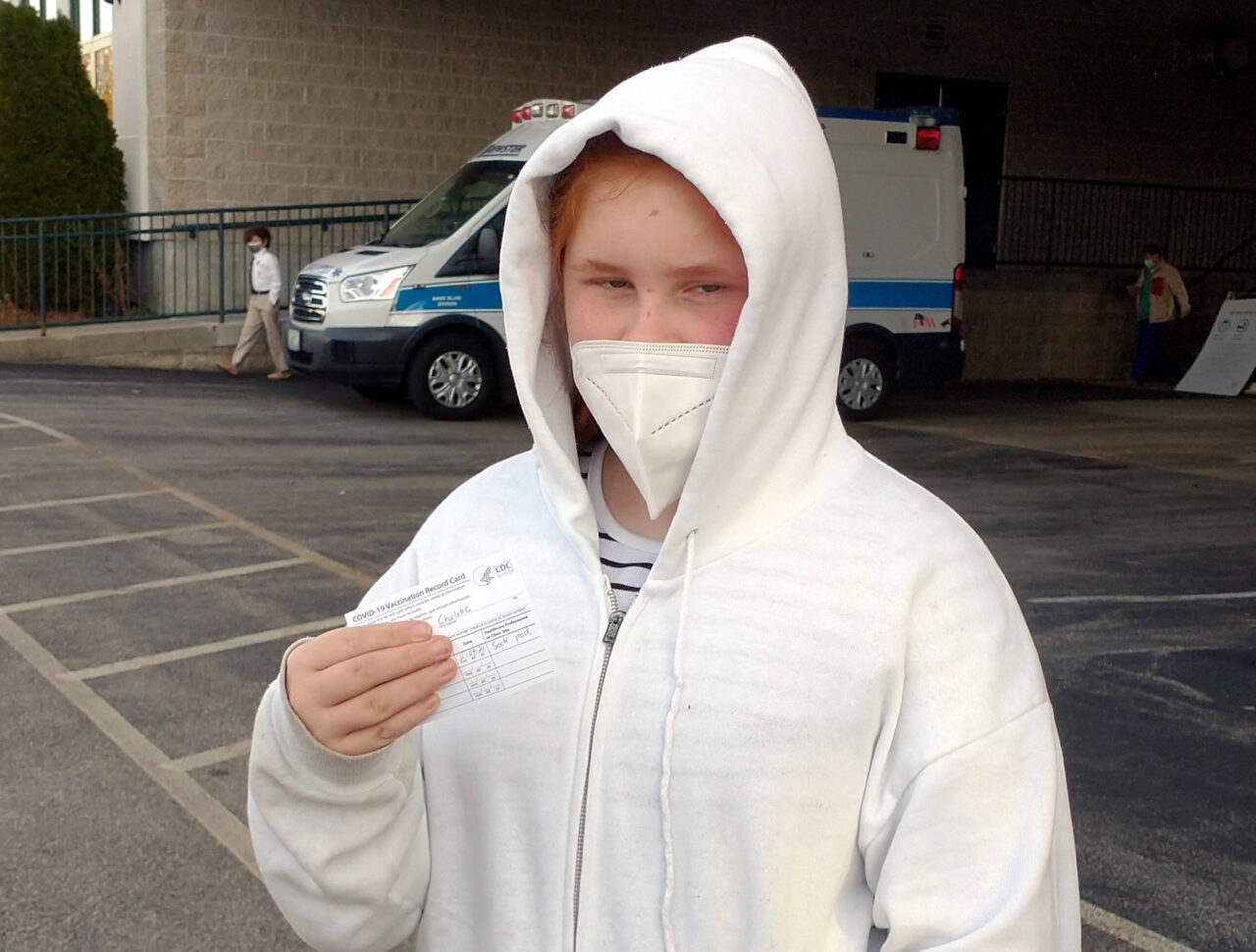
    Charlotte O’Gorman, age 10, displaying her card outside the Sockanosset center, one of the first children in RI to receive the Pfizer pediatric COVID-19 vaccine. (Photo: Maureen O’Gorman)

    Maureen O’Gorman was so eager to schedule a COVID-19 vaccination for her 10 year-old daughter Charlotte that she began refreshing her web browser repeatedly 15 minutes before appointments opened yesterday at 2:00pm. They were able to obtain a 7:30am slot this morning at the state-run Sockanosset facility when it opened, making Charlotte one of the first in RI to receive a dose of the Pfizer pediatric vaccine.

    In addition to vaccination appointments at state-run facilities and independent pharmacies at vaccinateri.org there will be children-only clinics at schools with a continuously updated list at covid.ri.gov/5to11vaccine. Every school clinic is open to all children aged 5-11 regardless of which school they attend or where they live. Chain pharmacies (including CVS, Walgreens, Walmart, and Stop and Shop) offer scheduling through their own web sites. Family and pediatric medical offices are in many cases offering vaccinations with further information available by contacting the office directly. (See “RI Children Ages 5-11 Likely Start COVID-19 Vaccinations Nov 8”, by Michael Bilow, Oct 27.)

    UPDATE: On November 5, the RI Department of Health (DoH) cautioned that it is important to register for vaccination in advance: “Vaccination sites plan the amount of vaccine to have on hand using registration information. People who arrive at vaccination clinics without appointments may not receive a vaccine if there is not enough supply at the clinic. Registering in advance is the best way to guarantee that a dose will be on site for your child.”

    Charlotte herself has been eager to be vaccinated. When she received her flu shot a few weeks ago, she joked that she was “practicing” for her COVID-19 shot. “Everyone there, they were really comforting. ‘It’s not going to hurt. We’ve got your vaccine.’ Everyone was very nice. It was fun,” Charlotte said about her experience, but “I don’t feel any different.” The Band-Aid hurt more than the shot, she said.

    Maureen said that the facility was well set up; she was surprised there were not more children in queue, but guessed that the early morning time might not be popular although hers was one of three or four family groups in that time slot. It worked out well for them, she said, because they could go on their way before school and work.

    “They had a separate shot area. They had three stations set up to handle kids in a separate area with a separate waiting space. There were coloring pages during your wait period. They gave all the kids a fidget spinner. They asked which arm they wanted,” Maureen said. “There are three kids named ‘Charlotte’ getting their shot at Sockanosset today,” so the facility was careful to distinguish by surname and date of birth, she said.

    Maureen works as an educational supervisor and as an adjunct college professor. “I decided to get Charlotte vaccinated because, with the holidays coming up, she’ll be mixing with people of all ages and I want to make sure that everybody involved is as safe as possible, for her health and the health of those around her. I also consider it very high priority because I work in a congregate care setting… that’s had several outbreaks, so she’s at high risk of exposure through me,” she said. “I want to keep her as safe as possible. At the beginning of this, she actually stayed with relatives, but now that’s not practical because of the spotty nature of the thing and she has to go to school in person.”

    Nationally, non-profit organization focusing on health issues KFF reported parents of children aged 5-11 attitudes toward COVID-19 vaccination: 34% eager, 32% wait and see, 7% only if required, and 24% definitely not. KFF separately explained, “This means there initially will likely be high demand for vaccines, when scale up and distribution issues noted above may pose challenges. After this initial surge, however, the primary challenge is likely to shift to addressing concerns or questions that contribute to reluctance to vaccinating younger children.”

    Parents of children 5-11 on COVID-19 vaccination: 34% eager, 32% wait and see, 7% only if required, 24% definitely not. (Source: https://www.kff.org/coronavirus-covid-19/poll-finding/kff-covid-19-vaccine-monitor-trends-among-children-school/ )

    The RI Department of Health (DoH) recommends COVID-19 vaccination for everyone eligible. DoH said in a statement yesterday, “Children of all ages can become ill with COVID-19. Most children do not become as sick as adults. However, some children become severely ill with COVID-19. Children with underlying conditions, such as obesity, diabetes, and asthma, may be at higher risk of serious illness with COVID-19. Since the start of the pandemic, 194 children 14 and younger have been hospitalized in Rhode Island with COVID-19. Additionally, children can spread COVID-19 to the other people in their lives (who may be more vulnerable).”

    A personal experience started Maureen thinking that an encounter with COVID-19 infection could “come back to haunt” Charlotte long into the future: before she was old enough to attend school herself, Maureen caught chicken pox from her older brother, a typical childhood case that was almost forgotten until decades later, in 2020, when she had an outbreak of shingles as an adult.

    “I know that in most kids COVID-19 is not a big deal, and you could probably count on one hand the number of children my daughter’s age who have died of COVID-19, but nowadays post-polio syndrome is a thing and people who had chicken pox get shingles [later in life]. We don’t know what the COVID virus that lies in your body is going to look like in 30 or 40 years. So I’m kind of thinking long-term on this. I don’t consider her high-risk at this moment in time; of course she could get COVID and she is low risk for immediate danger now, however I don’t know what carrying COVID in her body for 30 or 40 years, what that would look like. So my middle-aged daughter will be thanking me someday.”

    Maureen emphasized, “Charlotte will never get shingles because she got the chicken pox vaccine. Charlotte will never get post-polio because she will never get polio thanks to a vaccine. I do not know what post-COVID will look like in 2058, but Charlotte will never need to worry about it.” In other words, from a cost-benefit perspective the risks of not vaccinating are substantial and unknowable, while the risks of vaccinating are quantifiable and understood.

    “I don’t have any anxiety about the vaccine. My understanding is the only serious side effect is the myocarditis [heart inflammation] that’s only been an issue with males, and insofar as I’m aware there are no cases of that not resolved successfully,” she said. “It’s easy for me to be brave and say I have no concerns about the vaccine, but I have a daughter so, right then and there, we’re talking about a myocarditis risk that goes from a very slim chance to effectively zero chance,” she said.

    Disclosure: Maureen O’Gorman is an occasional contributor to Motif. She wrote about the first day of drive-through COVID-19 testing in RI (“Drive-Thru for COVID-19 Test: These efficient test sites will help RI reach the goal of testing 1,000 Rhode Islanders a day”, Apr 1, 2020).

  • RI Children Ages 5-11 Likely Start COVID-19 Vaccinations Nov 8

    RI Children Ages 5-11 Likely Start COVID-19 Vaccinations Nov 8

    Children in RI could start receiving COVID-19 vaccinations on November 8, 2021, “give or take a few days,” Department of Health (DoH) staff member Tricia Washburn told a meeting of the DoH Vaccine Sub-Committee on October 27.

    The prior day, the US Food and Drug Administration (FDA) Vaccines and Related Biological Products Advisory Committee (VRBPAC) voted 17-0-1 to recommend authorization of a Pfizer vaccine for children. While the Pfizer adult vaccine had previously been authorized for age 12 and older, the vaccine for ages 5-11 is a new pediatric formulation with one-third the dose; data submitted by Pfizer showed it to be 90.7% effective in preventing symptomatic COVID-19. The pediatric formulation is color-coded in orange packaging to prevent confusion with the adult formulation in purple packaging.

    Although the FDA usually follows the recommendation of its advisory panels of experts, it is not required to do so. UPDATE: Late in the afternoon of October 29, the FDA officially issued an emergency use authorization (EUA). UPDATE: Final CDC authorization was issued in the evening of November 2, and RI began vaccinating children on November 4.

    While the FDA is a regulatory body that decides whether a drug is safe and effective, after FDA authorization it is the role of the US Centers for Disease Control and Prevention (CDC) to recommend appropriate use, and its Advisory Committee on Immunization Practices (ACIP) is scheduled to meet on November 2-3 to consider use of the pediatric vaccine, including for which patients it may or may not be appropriate.

    Many of the VRBPAC members expressed concern that the data were based on small studies with an insufficient number of participants to detect rare adverse reactions that may occur less frequently than 1 in 10,000 vaccine administrations, thereby making cost-benefit analysis difficult because most children infected by COVID-19 have mild cases. Rare adverse reactions such as heart inflammation (myocarditis and pericarditis) can be painful and require hospitalization, but so far have resulted in fairly quick full recovery.

    It is hoped that the lower-dose pediatric formulation will reduce risk of adverse reaction relative to the adult formulation. The consensus was that for some children, especially those with existing medical conditions that leave them at high risk for severe complications if infected, the benefit of vaccination is clear. For the average healthy child, however, while vaccination does protect the child being vaccinated, the main benefit of vaccination is to protect others and the community as a whole, raising a question of medical ethics as to whether it is appropriate to expose them to risk, however small, of adverse reactions. For this reason, the VRBPAC members cautioned, COVID-19 vaccine mandates or requirements for children would be premature, and they expressed the hope that the ACIP guidance would respect the rights of individual families to decide to defer vaccination for young children.

    Assuming the FDA emergency use authorization (EUA) and CDC guidance are in place by November 4, Washburn said, state-run vaccination facilities, such as Sockanosset, could begin vaccinations for ages 5-11 around November 8.

    “November 4 is the ‘best possible case,’ assuming CDC issues final guidance and any clinical recommendations by that date, and we have all admin operations for state sites ready to go,” Washburn told Motif via e-mail. Administrative work includes incorporating the FDA and CDC guidance into informed consent forms on the web registration system and translating this into multiple languages. “The team works pretty quickly and it is possible but I am very cautious with setting expectations, so that is why I said it could be sometime before or after November 8. There are some sites like pharmacies, doctor’s offices, hospitals and federally qualified health centers that are ready to start on Nov. 4, assuming CDC comes through by that date, as they run their own registration systems.”

    The state expects an initial allocation of 27,000 doses of the Pfizer pediatric vaccine in three tranches of 9,000 doses each, following the EUA first in 1-5 days, second in 3-7 days, and third in 5-9 days. After that first week, supply is expected to flow at 9,000 doses per week, making available a total of 108,000 doses by early January 2022. In addition to the doses supplied through the state, the Federal Retail Pharmacy Partnership (FRPP) is expected to receive an initial allocation of 13,500 doses in the first week after EUA and continuing to receive 4,500 doses each week after that, a total of 54,000 doses by early January 2022. Because each child requires two doses, supply will be sufficient to vaccinate 81,000 children, comprising the entire age 5-11 population of RI.

    COVID-19 vaccinations are completely free to patients by federal government regulation, so parents who choose to have their children vaccinated by their regular pediatricians will be exempt from co-pays and other fees such as office visits if the only service provided is vaccination.

    Several members of the Vaccine Sub-Committee expressed concerns that pediatric offices may be choosing not to participate in COVID-19 vaccination programs because it takes more time to vaccinate children than adults, especially if there is significant counseling involved to address cost-benefit concerns. While none suggested a desire to bill patients directly, they suggested the state work with insurers to create a separate billing code for the 15-30 minutes of counseling expected to accompany pediatric vaccination, a concern especially for clinics and practices serving large Medicaid populations where the economic operating factors are already at the margins.

    As of the meeting, of the 134 family and pediatric practices in RI, 40% are ready to administer vaccinations, 19% have started but not completed the process of being ready, and 40% have not started.

    Each of the 39 cities and towns in RI will hold at least two pediatric vaccination clinics to administer first and second doses. Local education agencies (LEAs) will hold clinics in schools. High-density communities (HDCs), such as Central Falls, will hold additional clinics due to higher prevalence of infection and reduced access to health care services. On-line events providing vaccination information will be conducted in both English and Spanish.

    In other news, the Vaccine Sub-Committee was told that, as of October 22, about 47,000 booster doses have been administered in RI with strong demand.

    RI has reached 90% partially and 82% fully vaccinated of the population age 18 and older, corresponding to 78% partially and 71% fully vaccinated of the total population.

    The state continues to invest substantial effort to close the gap in vaccination for those Black, Indigenous, and People of Color (BIPOC) with weekly rates exceeding those for the non-BIPOC population since May, holding more than 700 clinics to address “cold spots” where rates were lower than statistically expected.

    Fully vaccinated rates among non-college students age 12 and older continue to vary enormously by geography, with wealthier municipalities such as Barrington and East Greenwich reaching 80% while poorer ones such as Pawtucket (41%), Providence (40%), Woonsocket (36%), and Central Falls (35%) well below.

  • Trolling RI Pols: Bullying public officials for doing the right thing

    Trolling RI Pols: Bullying public officials for doing the right thing

    The Rhode Island arm of the national right-wing foundations — Koch, Bradley, Scaife, and others — have targeted Jennifer Lima, a school committee member in North Kingstown, with totally ridiculous accusations about critical race theory, marxism, and brainwashing impressionable minds. 

    The Gaspee Project, a secretive conservative Rhode Island political group, is funding the gathering of signatures for a recall election against Lima.  A statewide non-profit, associated with the “RI Center for Freedom and Prosperity,” Gaspee is trying to make Lima into a statewide issue. The front page of their web site currently features a hysterical screed against her, “Extremists have taken over the Democrat Party…don’t let them come for you next!” Dig deeper and you come to another blare: “Stop the Indoctrination of our Children! Help us remove the pro-CRT & Marxist school committee member.” (“CRT” here stands for “critical race theory.”)

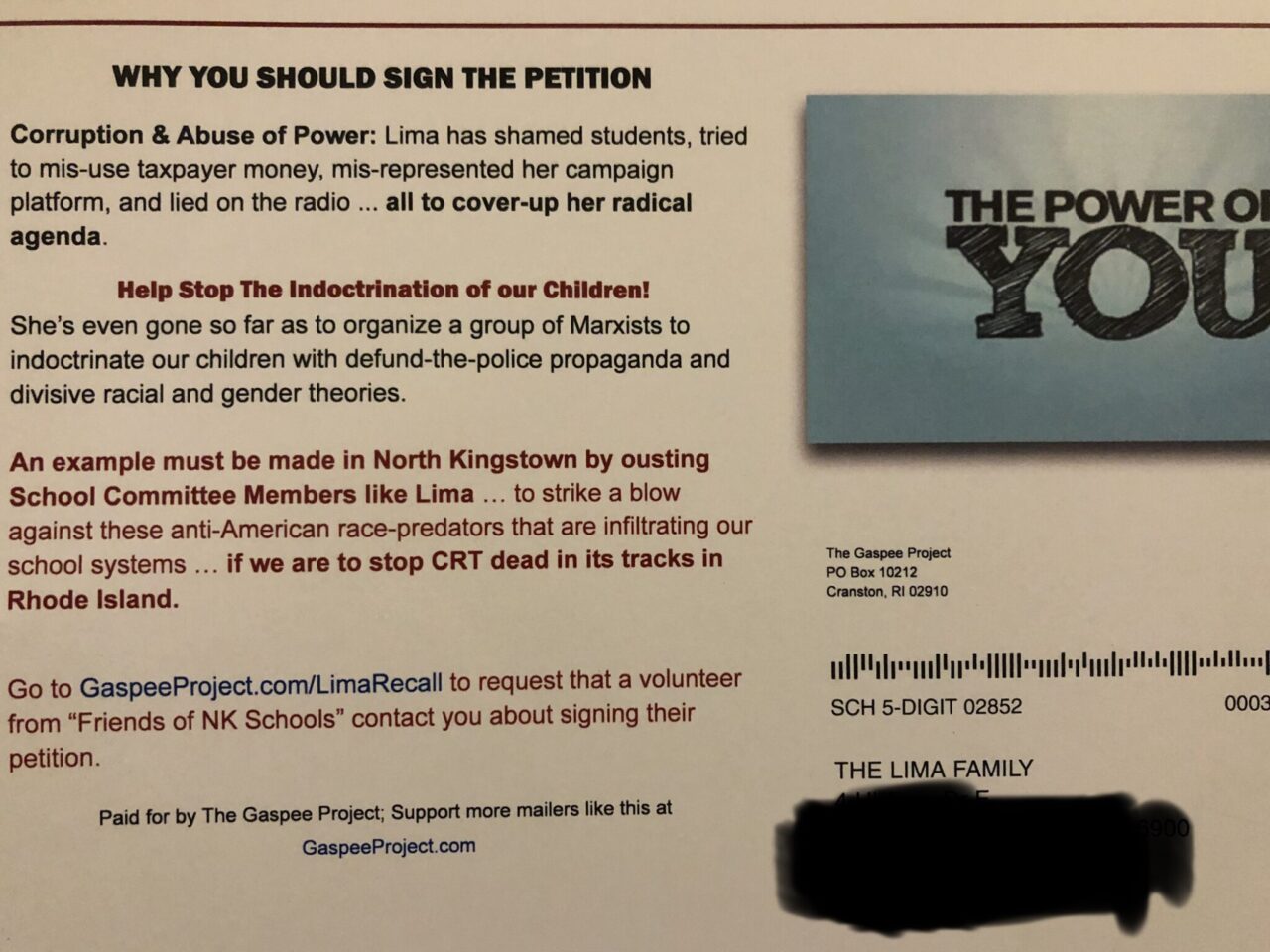
    An inflammatory postcard mailing accused Lima of corruption, abuse of power and trying to “organize a group of Marxists to indoctrinate our children with defund the police propaganda and divisive racial and gender theories.” In fact, the recall petition against her cites only “opinions that her constituents do not share.”

    Lima’s central offense is simply having the temerity to call for giving all students a fair shake, and to ask the schools to look at the ways in which some students might not get one. Running on that platform, she got more votes last fall than any other local candidate.

    Lima is not pushing to bring CRT into NK schools. In fact, to climb down into the weeds for a moment, she disagrees with CRT theorists who claim that racism is inevitable because of the structure of our society. She says it is not, but it takes people with awareness and sensitivity to eradicate it. Ms. Lima ran on the premise that our classrooms need to be a place where being anti-racist is actively taught and is an expected part of the learning culture, and that is how we will build a world where all children are equally able to reach their potential.

    She believes students deserve to be presented with age-appropriate, accurate lessons on historical and contemporary issues that help them become the critical thinkers we need to make this a more just and equitable nation.

    As a matter of policy, the Gaspee Project and its associated Center for Freedom and Apple Pie squawk if you ask who their donors are, but they have received hundreds of thousands of dollars over the past decade from the Donors Trust, a pass-through non-profit whose purpose seems only to be anonymizing the hundreds of millions of dollars that pass through it. Donors Trust is a creation of the Koch network, funded by Koch money.  The Center for Freedom and Apple Pie will doubtless call this a lie, but they will also refuse to provide any kind of accounting of their donors that might demonstrate otherwise. They do not dispute their membership in various networks of Koch-funded right-wing organizations, like the State Policy Network, an association of “think tanks”, whose website suggests removing restrictions on for-profit hospitals as the first priority for dealing with the coronavirus.

    Nonprofits like the Gaspee Project are classified as “social welfare organizations” and are allowed to do public education, but are not allowed to participate in elections. But the rules for recall elections are vague and do not restrict the signature-gathering period. So, this local arm of national dark money feels free to tamper with our school committee.

    This is sad, and nothing more than an attempt to bully a school committee member, who manages both to embrace her serious purpose and remain full of joy. Their goal is to make an example of her, to discourage others like her from seeking elective office. 

    Harassment and bullying just like this is why Emily Cummiskey resigned as South Kingstown’s School Committee chair in June, and Christie Fish left the committee altogether. Mission accomplished in SK, they move on to NK, looking for another scalp.

    If you’d like to see the Gaspee Project Screed, visit gaspeeproject.com/recall

    Read more about the Donors Trust on Senator Whitehouse’s web site: whitehouse.senate.gov/news/speeches/time-to-wake-up-277-donors-trust

    And here: sourcewatch.org/index.php/DonorsTrust

    If you’d like to support Jennifer Lima in her efforts to resist the trolls, please contribute here: secure.actblue.com/donate/lima4nk

  • FDA Recommends Third Pfizer Vaccine Booster Shot: Only for age 65 and high risk of severe COVID-19

    FDA Recommends Third Pfizer Vaccine Booster Shot: Only for age 65 and high risk of severe COVID-19

    September 17, 2021 — In an all-day meeting that became somewhat disorganized at the end, the Vaccines and Related Biologic Products Advisory Committee (VRBPAC) of the US Food and Drug Administration (FDA) recommended, by unanimous 18-0 vote, authorization for third booster doses of the Pfizer COVID-19 vaccine, officially now called Comirnaty, but restricted to those either age 65 and older or at “high risk of severe COVID-19.” By informal poll, the committee also recommended including in the latter category health care workers and others at increased likelihood of exposure by virtue of occupation. Exactly who is at “high risk” will be left to the Advisory Committee on Immunization Practices (ACIP) of the US Centers for Disease Control and Prevention (CDC) who are expected to meet next week. Basic eligibility for booster doses kicks in six months after primary vaccination has been completed.

    This unplanned vote was taken after the planned vote on authorizing third booster doses for the general public without age or other restrictions was resoundingly defeated, 16-2. The consensus expressed by the members seemed to be that the data provided by Pfizer with their application was of low quality and based on a study with small sample size of 330 test subjects. The cost-benefit balance was clearer, the committee clearly thought, with older people whose immune systems are naturally and normally less robust. Because vaccines work by teaching the immune system to recognize a virus, the effectiveness of a vaccine is ordinarily reduced with age.

    The first vote was a blunt rejection of expressed desire for widespread booster dose authorization sought by Pfizer and the Biden administration. While the FDA is not obligated to follow the recommendations of its advisory committees of outside experts, it is extremely rare for them to be overruled.

    Most of the questions from the committee were directed to guest experts from the Israeli Ministry of Health and the Weizmann Institute. Israel leads the world in vaccinating its population, approximately three months ahead of the US and the UK, and made the decision to authorize third booster doses beginning in July in phases, first to age 60 and older and eventually within a few weeks down to age 16 and older. The Israeli experts said that the virus reproduction rate, known as R0 (“R-nought”), was about 1.3 when booster doses began to be administered, a bad situation corresponding to a doubling of infections every 10 days, and fell to 0.96 by the end of August, a slight day-to-day decrease in total infections. They said that their model predicted that without booster doses the entire hospital capacity of the nation would have been exhausted by the beginning of September.

    The Israeli experts emphasized that the vaccines even without a third booster dose remained very protective, but they observed a reduction in effectiveness from 97% after initially completing full vaccination to 85% six months later. While any vaccine more than 50% is medically valuable, they explained that these numbers implied a breakthrough rate of 3% (=100%-97%) rising to 15% (=100%-85%), a five-fold increase. Officially, the committee was supposed to consider only the data submitted by Pfizer with the application, using the Israeli data only for general guidance.

    Because almost all useful data on the virus now must be derived from real-world observational studies rather than randomized controlled trials, it is difficult if not impossible to determine whether increasing occurrences of breakthrough infections are attributable to waning vaccine effectiveness per se or to other factors such as the nearly universal prevalence of the newer delta variant of the virus. Such statistical confounding factors left the committee unsure of how to compare risks and benefits. Ultimately, the committee was concerned that booster doses in young people might cause rare but significant adverse effects, such as myocarditis (inflammation of the heart muscle), and seemed to conclude that the data were insufficient to compare such risks to those resulting from COVID-19 infection.

    There was a clear expectation that Pfizer would reapply for authorization of booster doses for the general public without age restriction once they had better data.

  • Toward Enshrining Roe v. Wade: Texas Law Backfires

    Toward Enshrining Roe v. Wade: Texas Law Backfires

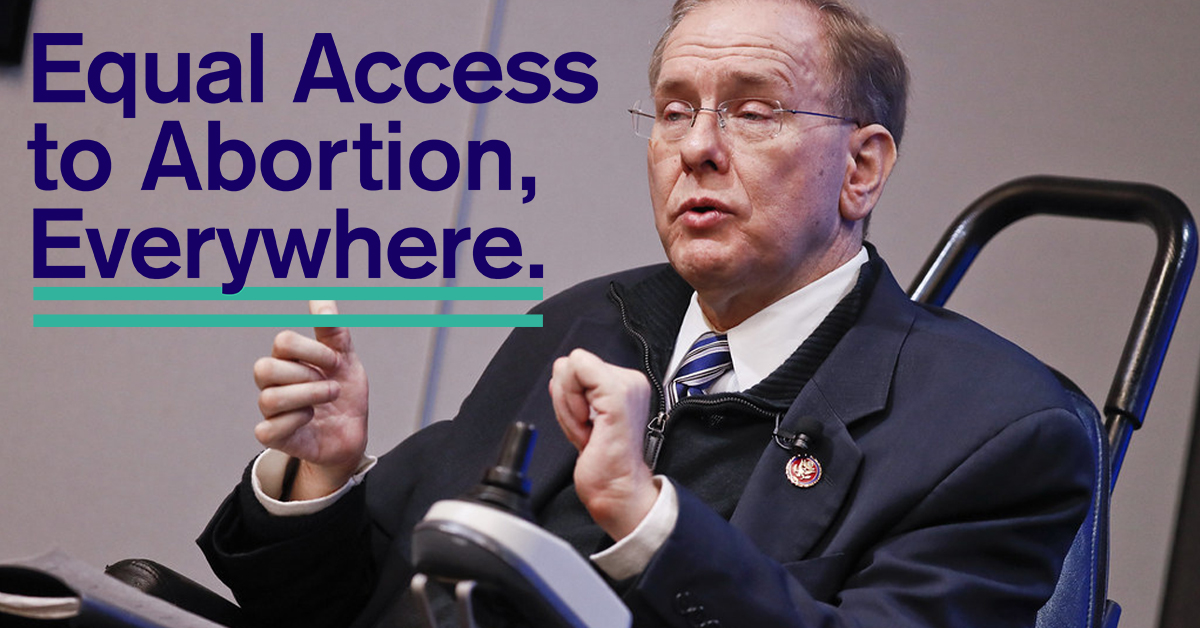
    Last week hell froze over as RI Congressional Rep Jim Langevin came forward in an editorial supporting a woman’s right to choose (Providence Journal, September 9, 2021). In case you missed it, the Texas legislature has enacted legislation essentially putting bounties on women who opt to terminate a pregnancy after the first six weeks.

    As a result, Langevin, who has long opposed a woman’s right to choose, has become a co-sponsor of the Women’s Health Protection Act, meant to protect women’s rights to safe and accessible abortions throughout the United States.

    “Faced with the reality that Roe might no longer be the law of the land in a few months,” Langevin wrote, “I have come to the conclusion that I cannot support a reality where extremist state legislators can dictate women’s medical decisions. At the end of the day, we have to put our trust in women.”

    Bravo, Rep. Langevin!

  • Thank You, George Wein: What his legacy means to the life of a local jazz musician

    Thank You, George Wein: What his legacy means to the life of a local jazz musician

    My first few years at the Newport Jazz and Folk Festivals were spent standing behind a cart, selling ice cold drinks to festival attendees. I’d chase the shade with my umbrella, while listening to legends and newcomers play, and daydream about what it must look like from up there on the historic stage. As I’d count change and try to get through the long lines of people waiting to buy water or soda between sets, occasionally I’d look up and see a golf cart moving slowly down the path with a little sign on the windshield that read “The Lean Green Wein Machine.”.

    George Wein, art by Charlie Hall
    George Wein, art by Charlie Hall

    All day I would see George Wein in the passenger seat, riding back and forth trying to catch as much of each performance as he could, going to meet with someone or doing the work that needed to be done to keep the festivals operating. Every so often he’d stop near where I stood so he could sit with the folks and take in the music. I’d watch him smile and bob his head in time, enjoying the fruits of his long, often arduous journey to secure these festivals’ rightful distinctions as the first and most important in American music history.

    So much has been said about his life already. In his early days, he was a determined self-starter, a visionary who changed what musical festivals could be. Later, he became a courageous ally, who sought to use his platform to advance racial justice and equity in an industry with a poor record of inequality and outright abuse. The tributes all talk of his casual but electric personality, how admired he was by those who knew him, and how much love he had for the music he helped foster in the world.

    I never got to meet Mr. Wein, which may have been good for both our sakes. I’m sure I would have stumbled over my words as I delayed his golf cart, trying to tell him how important his festivals are to me. Both the Jazz and Folk Festivals provided me with enough inspiration to keep the wheels on my dream greased for another year. I am so glad that he decided to take a chance on starting these festivals in a little seaside town down the road from where I grew up. Without his legacy I probably wouldn’t be trying to chase mine. 

    I like to think that one day as he drove by my cart, he looked and saw me — a teenager standing in awe at the majesty of the moment unfolding, a young musician his mouth agape in wonder at the music and revelry surrounding him. George might’ve smiled to himself knowing that he was reshaping yet another person’s life as he sputtered off in “The Lean Green Wein Machine”.

    Ben Shaw is a local composer, performer, and writer. Find him at benjaminshawmusic.com and on instagram at @benjaminshawmusic.

  • Evictions may resume: Moratorium ended by US Supreme Court

    Evictions may resume: Moratorium ended by US Supreme Court

    In an unsigned “per curiam” opinion — supremecourt.gov/opinions/20pdf/21a23_ap6c.pdf — the US Supreme Court tonight ruled that the US Centers for Disease Control and Prevention (CDC) lacks legal authority for an extension of a nationwide eviction moratorium past July, immediately placing an estimated 3.5 million Americans at risk of homelessness during the COVID-19 pandemic. Three justices, regarded as liberals, filed a signed dissent, unusual for a per curiam ruling.

    Unless Congress acts to extend the moratorium by legislation, which is considered politically very unlikely, $47 billion already allocated to pay landlords for back rent may not be disbursed in time to save tenants from eviction.

    See our earlier story, including information about how to apply for rent assistance in RI and MA: motifri.com/eviction-october.

  • Pfizer COVID-19 vaccine fully approved by US FDA: RI hopes will boost take-up rate

    Pfizer COVID-19 vaccine fully approved by US FDA: RI hopes will boost take-up rate

    The US Food and Drug Administration (FDA) today approved full licensure for the two-dose Pfizer-BioNTech COVID-19 vaccine that was given Emergency Use Authorization (EUA) on December 11, 2020, for recipients age 16 and older. It will now be known under the trade name “Comirnaty” (pronounced koe-mir’-na-tee). The identical vaccine will continue to be available under EUA issued May 10, 2021, for recipients ages 12 to 15 and under subsequent EUA as a third dose for immuno-compromised recipients.

    About 92 million people in the US have been administered the Pfizer vaccine under EUA. Full approval is expected to persuade some who have been hesitant to get an “experimental” vaccine. Full approval may also smooth legal obstacles to COVID-19 vaccine mandates by public and private employers and schools, where existing vaccines (such as for measles, mumps, and rubella) are already mandated.

    In a statement, the FDA said approval was based upon clinical trial data from both before and after the EUA, including one for effectiveness with 40,000 participants and one for safety with 44,000 participants, in each case half receiving the vaccine and half receiving a placebo. The vaccine was found 91% effective in preventing sickness from COVID-19. About 12,000 vaccine recipients were monitored for adverse events for at least six months.

    “The FDA’s approval of this vaccine is a milestone as we continue to battle the COVID-19 pandemic. While this and other vaccines have met the FDA’s rigorous, scientific standards for emergency use authorization, as the first FDA-approved COVID-19 vaccine, the public can be very confident that this vaccine meets the high standards for safety, effectiveness and manufacturing quality the FDA requires of an approved product,” said Acting FDA Commissioner Janet Woodcock, M.D. “While millions of people have already safely received COVID-19 vaccines, we recognize that for some, the FDA approval of a vaccine may now instill additional confidence to get vaccinated. Today’s milestone puts us one step closer to altering the course of this pandemic in the U.S.”

    “Our scientific and medical experts conducted an incredibly thorough and thoughtful evaluation of this vaccine. We evaluated scientific data and information included in hundreds of thousands of pages, conducted our own analyses of Comirnaty’s safety and effectiveness, and performed a detailed assessment of the manufacturing processes, including inspections of the manufacturing facilities,” said Peter Marks, M.D., Ph.D., director of FDA’s Center for Biologics Evaluation and Research. “We have not lost sight that the COVID-19 public health crisis continues in the U.S. and that the public is counting on safe and effective vaccines. The public and medical community can be confident that although we approved this vaccine expeditiously, it was fully in keeping with our existing high standards for vaccines in the U.S.”

    In Rhode Island, free vaccination sites can be found on the state government web site vaccinateri.org for the general public, as well as more than 100 back-to-school clinics in communities listed at back2schoolri.com.

    RI Gov. Dan McKee said in a statement, “To anyone who was on the fence, the science is crystal clear. These vaccines are safe, and they are very effective at keeping people healthy. It is time. It is time to protect yourself. It is time to protect your family. It is time to get vaccinated. We have vaccination opportunities available in communities across Rhode Island. If you have not gotten your shot, get vaccinated today.”

    “The FDA did an extremely thorough review of this vaccine and reaffirmed that it absolutely was safe,” said RI Director of Health Nicole Alexander-Scott, MD, MPH, in a statement. “It is undeniable that the COVID-19 vaccines save lives. If you are eligible, get vaccinated today to protect you and your family. It’s easier than it has ever been before.”

  • Police punching, spitting on juveniles: Body cam video released by PVD

    Police punching, spitting on juveniles: Body cam video released by PVD

    Still frame from Providence Police body cam video of July 9, 2021, incident. (Source: Providence Police)

    Providence Police at 5pm today released 41 separate body cam video recordings from a July 9 incident where three juveniles were arrested following a vehicular pursuit. Some of the video appears to show police officers punching and spitting on the juveniles, as well as threatening to arrest bystanders for talking disrespectfully.

    The video was posted to the City of Providence channel on YouTube: youtube.com/playlist?list=PLkouFj-lemZkN1nrRZXTJ3fRYDoKpoHWF

    “An internal review of this incident is ongoing and Providence Police Officers Domingo Diaz and Mitchel Voyer remain on Administrative Leave with pay until the review of this incident is complete,” an official statement said. “Pursuant to the Law Enforcement Officers’ Bill of Rights (LEOBR), the Providence Police Department is prohibited from making any additional comments on the furtherance of this ongoing investigation,” the statement also said.

    The release of the video recordings was authorized by the state Office of the Attorney General because the criminal investigation has been substantially completed, the statement said without making clear whether that refers to the juvenile arrestees, the police officers, or both. Numerous request were filed demanding release of the recordings under the RI Access to Public Records Act (APRA), the statement said.