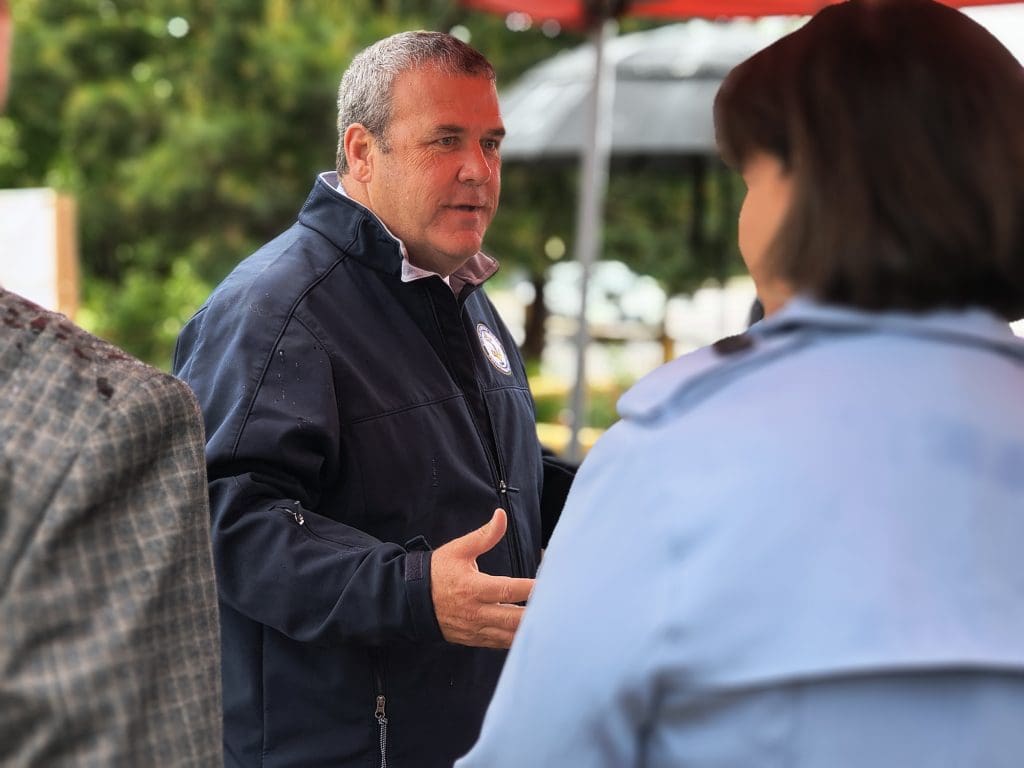
A summer 250 years in the making awaits Rhode Islanders. While RI250 commemorations have been underway for several years, the period between May 4 (Rhode Island Independence Day) and July 4 marks crunch time for planners and organizers – as well as the payoff for years of hard work. Motif spoke with RI Secretary of State, Gregg Amore, and some members of his staff about the RI250 events for this summer.
The signature must-see event of the celebration will be “uniquely Rhode Island,” said Secretary Amore. On July 4th there will be a special extended WaterFire in Providence. According to RI250 Program Coordinator Lauren Fogarty, the banners for each of the 39 cities and towns will be on display, while the Providence River will be lined with 250 American flags. WaterFire attendees will be able to see performances at offstage sites, and it will be themed around the American Revolution.
There will be substantial “ancillary programming” to accompany the Water Fire/Philharmonic event, said the Secretary. This will include RI’s historian laureate, Keith Stokes, Native American speakers, and a student poet, among others. July 4 will also see the RI State House open during the day from 1 – 3pm to display all of RI’s copies of the Declaration of Independence.
For the concert, Jamie Allen, Interim Director of Artistic Operations for the Rhode Island Philharmonic, told Motif that this special evening performance will be on the steps of the State House and open to all for free. Guest conductor Lee Mills will lead the orchestra in a celebration of music by American composers, and Broadway vocalist, Michael Maliakel will appear. Maliakel is known for his three-year run as “Aladdin” in the Disney Broadway musical, as well as for his outstanding rapport with live audiences and his stage presence. In case of rain, the concert will be moved to the Veterans Memorial Auditorium, where seats will be available for free on a first-come, first-served basis.
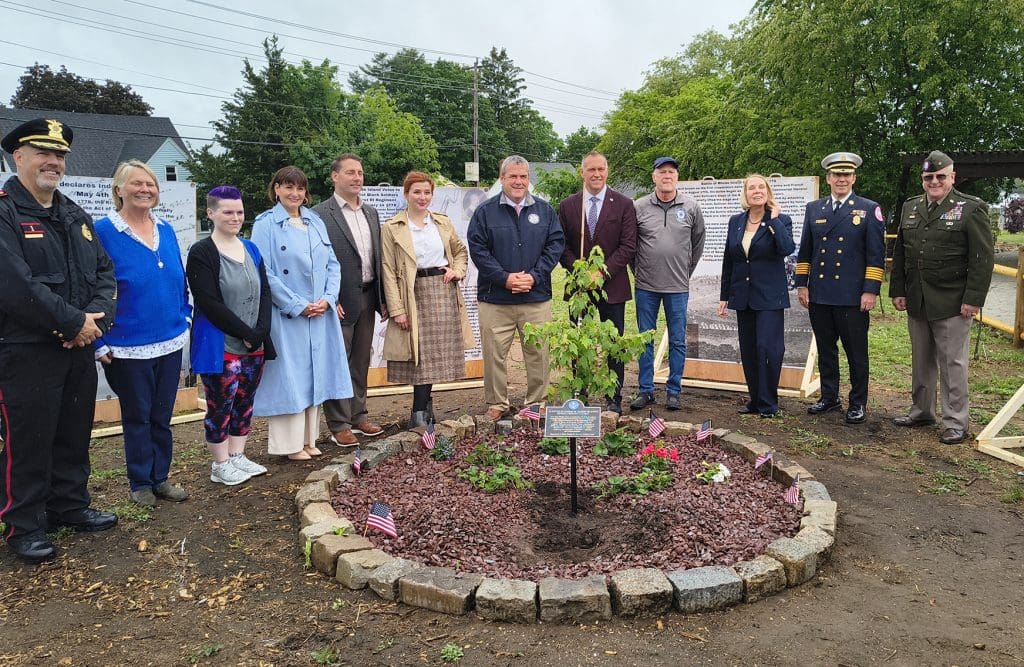
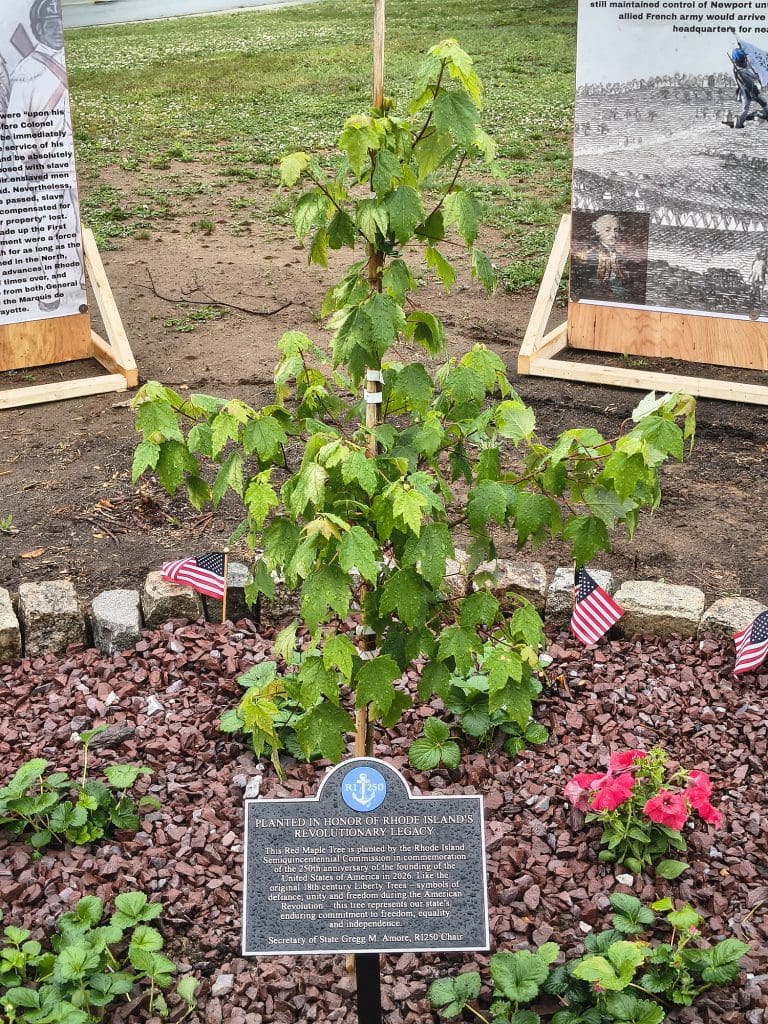
Programming across the state has included events focused on veterans, immigration, Indigenous history, Black history, and local industrial heritage, as well as the American Revolution. During June & July, one of the state’s copies of the Declaration will go on tour to be displayed in each of RI’s 5 counties. An ongoing project will be to plant a new “liberty tree” in each of the 39 cities and towns of the state. All of these seedlings are related to the last known colonial liberty tree, located in Maryland. Numerous states have adopted the project as part of the America 250 nationwide effort. On July 11, Newport will have a living history day, allowing visitors to learn about French soldiers and sailors and their role in the fight for American independence. Late in the summer, the US Coast Guard’s Tall Ship, the Eagle, will be coming to Newport.
Even nostalgia gives way to modern economics. Many older Rhode Islanders remember the 1976 gathering of Tall Ships from over 14 nations, including Secretary Amore, who saw them as a boy. Coordinator Fogarty said that in 1976, the Tall Ships came on “invitation alone” but in 2026 every vessel requires financial sponsorship. With a focus on providing grants to every community, another large gathering like 1976 didn’t become a goal of RI250.
RI 250 programming is about more than just tourism. There are educational efforts, cultural outreaches, community partnerships, and yes, some tourist moments. The RI250 commission is composed of educational, civic, and professional leaders from across RI,who have been sitting on committees for over 5 years, all preparing for this summer. The commission has done most of the work through existing organizations and local communities. Grants, guidelines, tie-ins, branding, and a website are how the commission has worked alongside partners. Lesson plans and professional development experiences for teachers will help keep the message of the commission going long past 2026. Earlier RI250 programming included a sold-out appearance by filmmaker Ken Burns at Rhode Island College, tied to the PBS launch of his documentary on the American Revolution in 2025. History we know is being remembered, history we do not know is being uncovered and brought forward because, as Amore says, “It’s a look back on our nation’s history, so that we can look forward.”
Amore comes by his Semi-Qunicentennial credentials honestly; his own father was a member of the Bicentennial RI76 Commission, and the Secretary remembers spending part of his 1976 having to, “Wear a tricorn hat and march down Taunton Avenue.” This year, he faces a few more challenges. The RI250 commission was already sitting before Amore took office, so his team inherited a work in progress. The team was also faced with living up to memories of the bicentennial and confronting an America with a different cultural and media outlook than in 1976.
Nostalgia for 1976 makes it seem like a halcyon time. With his history teacher training, Amore took a look at the facts and not just his memories, “I do think we have a kind of a rear-view mirror memory of that event; the nation was struggling then too, right? Post Vietnam hangover, there was a very bad economy at the time… it was a little more contentious… than I thought.”
In the 2020s people aren’t glued to their rabbit ear TV sets watching three channels, so the commission has engaged with influencers and gone onto social media to tell its story, as well as creating a website. Events for RI250 will be ongoing during the summer and into the fall. To find a local gathering or see statewide events listed, visit rhodeisland250.org.
The General Assembly ends the work of the commission in October with a final report due January 2027. With some great revolutionary moments still to reach their 250th, such as Rochambeau’s landing and the Battle of Rhode Island, it might seem a premature conclusion. Will the commission get extended? “That’ll be a legislative decision, …if that’s the direction they want to go,” said Amore. With the RI250 commission potentially entering its final months and effectively drafting the first outline of RI’s tricentennial commemorations, Motif asked Secretary Amore how he thinks the RI300 committee will know 2026 was a success. “I think they’ll talk about the educational efforts for sure, and I hope that everybody…. stops and reads the plaques next to those Liberty trees, which will have grown and will be producing shade… I think people will remember, like we remember, what we want to.”