Mall culture has been a global phenomenon for decades. Just the word “mall” conjures an iconic set of images: tables surrounded by restaurants in a food court, movie theater popcorn, escalators, gleaming tile floors, and, above all, rows of retail stores outfitted with mannequins and sale signs. Malls have often been depicted in media, including movies, but not limited to “chick flicks” like Mean Girls and Clueless. Other notable appearances have been in comedies like Elf and Paul Blart: Mall Cop, and even in horror like Dawn of the Dead. “Mall goth” is a subculture; “mall music” describes easily listenable tunes that comprise the background of many lived experiences. Though they are especially associated with suburban American family outings or as playing the host of teenage hangouts, mall settings are familiar and recognizable to audiences across every medium they appear in. The mall, it seems, is for everyone.
So, what happened? In recent years, there has been an observable decline in the sales and traffic at these conglomerates nationwide. The mall was a glamorized third space, portrayed as the ideal social and personal experience. In one, you could buy entertainment, a sense of individuality through fashion, recreation, meals to share, and above all, a time and place to spend with friends and family. Several factors have been blamed as contributors to the decrease in mall performance: a lack of disposable income as the economy worsens, the COVID-19 pandemic that kept consumers at home, and the changing habits of the average person, which trend toward online purchases rather than in-person.
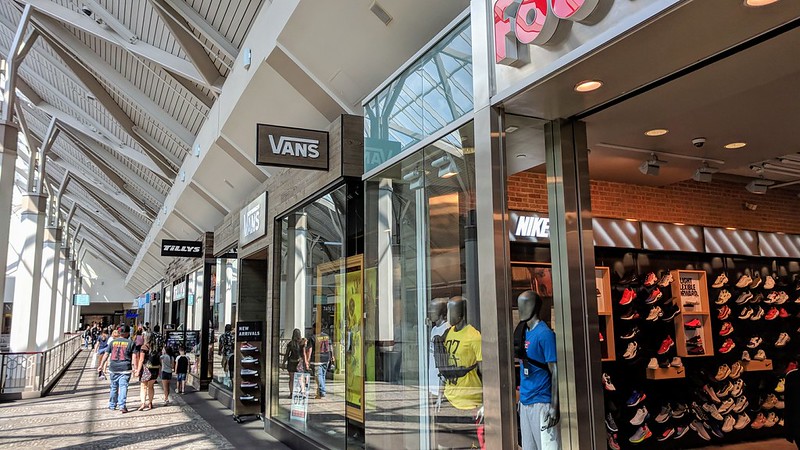
Providence Place’s features include the “classics” – stores often found in or associated with malls – like Apple Cinemas, Build-A-Bear Workshop, the Cheesecake Factory, Claire’s, and Auntie Ann’s. It too has fallen on hard times. It was first opened in 1999; just 25 years later, it was placed into receivership after accumulating debt of over 250 million dollars. In early 2026, the mall was sold into new ownership for just over $130 million. Joseph R. Paolino Jr., who was mayor of Providence from 1984 to 1991 and championed the establishment of a city mall, is one of the figures involved in the sale. Paolino Properties partnered with Pyramid Management Group, which was also involved in the original development of the mall, and a second firm called DW Partners to make the purchase possible.
Paolino has faith that the mall can be restored to its former status as an economic pillar in Providence. He reports that seven million people walk through the mall’s doors annually: it is far from being “dead.” He describes his purchase as an investment, asserting that he is not looking to “flip” it or change it drastically in any way. Instead, he identifies his greatest priorities as making the mall “safe, secure, [and with a] great diversity [of] clientele… a great shopping experience for all.” This aim includes trying to attract more varied storefronts, including vendors in sectors like grocery and healthcare, improving the establishment’s parking, and hiring more security personnel. When asked about his target demographic, Paolino repeats the need for the mall to reach a range of people of all ages, both local and traveling.
Though Paolino highlighted the recent sale as being the first time the mall has been locally owned, his vision for Providence extends far beyond retail sales. He has previously identified homelessness and mental health as key issues for current public servants to focus on, and intends to use other parts of his portfolio to build a stronger community, more equipped to help local underprivileged communities. A statement on his company’s website pinpoints Kennedy Plaza as a target area for improvement. Furthermore, he wants Providence to develop into “the capital of the art network of New England.” The mall could play a role, he says, by becoming an exhibit space in conjunction with the nearby convention center. However, Paolino emphasizes the importance of cooperation from government officials in the pursuit of these goals. He discussed speaking with David Morales, a candidate for Providence mayor, about art and its visibility in Providence. A quick perusal of Morales’ website shows that he has made this part of his platform, and that he wants to unify the city as a “creative capital.”
The Providence Place Mall has been a political topic since its inception. Various mayoral candidates debated its very existence for years, with budget and land negotiations passed back and forth until what was considered a viable solution was found. People have publicly posited that its creation led to a lack of space for affordable housing in the city. Former anchor stores like Nordstrom and JCPenney closed their doors, and rumors are currently circulating that other important tenants could be leaving their spaces vacant soon. There is no doubt that the mall is still in use, but whether or not it can be a continuing asset for its community remains in question. Only time will tell.
Genevieve Carcano holds a dual Bachelor’s degree in Cultural Studies and Creative Writing; her hobbies include photography, thrifting, and trawling around trying new coffee shops.