Theodore “Teddy” Jennings lived to the remarkable age of ninety-eight. For the entire second half of that, he resided in the same Victorian-style home nestled in the West Elmwood neighborhood of Providence. He married three times, outliving each magnificent woman and madly in love every time. He was even-keeled, kind and energetic to the end, a fixture in the neighborhood who was well known and well liked by all of the locals. For varying reasons along the way, he never had children; the timing and circumstances never aligned. His real pride and joy, however, was his garden. It was immaculate, well cared for, and pristinely maintained all the way through to his death.
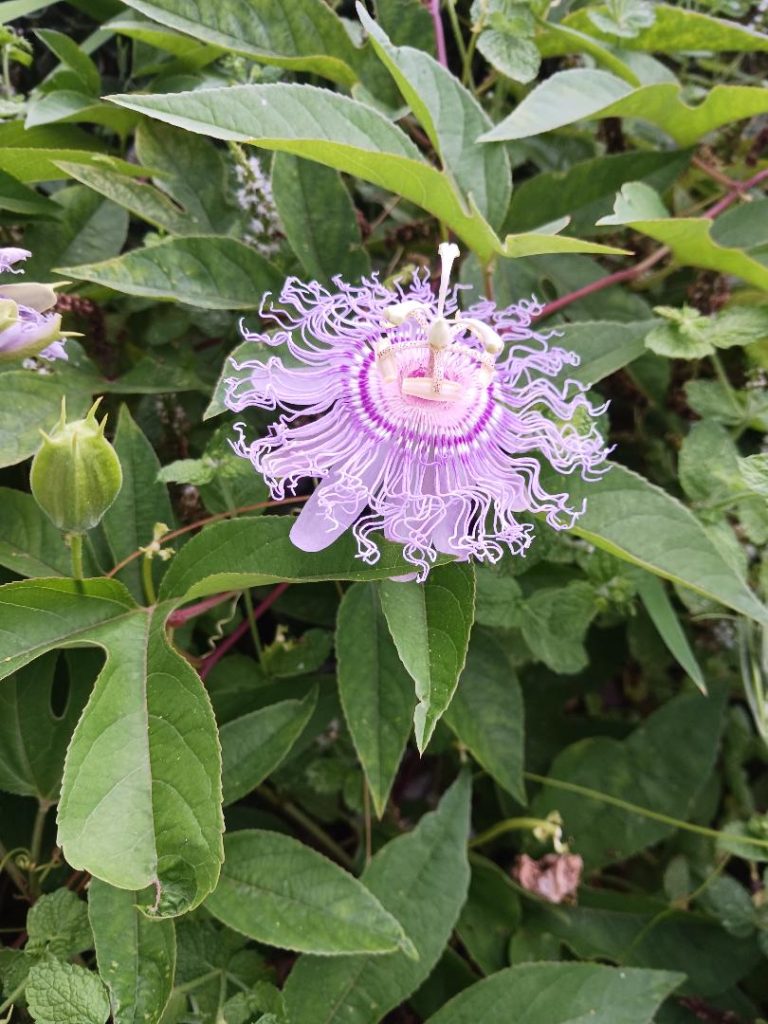
It was his second wife, Jessie, who would go on to introduce him to the idolatry of botany. Through her, he learned the art of perennials versus annuals. Everything was perfectly synchronized to fit the scheme of the seasons. Colors were presented at certain intervals to fit the theme of the weather. There were varying shades of blue and white flowers growing during the winter months, resilient and persistent. Vibrant pastels and fiery hues dominated the landscape during the warmer months with their reds, oranges and yellows that bled into autumn. His personal favorites were the flowers that grew out of the vines for passion fruit, (or passiflora). They dazzled and danced, drawing the eye amid a sea of green with their soft purple and consistency that resembled strands of hair.
When Jessie passed, he carried the torch, keeping up with every miniscule need that the garden required. He watered and tended; he soiled and shaded. He studied weather patterns and treated them accordingly. When Teddy passed, it became overgrown and neglected within a month. The house itself became a point of contention immediately upon his death. As there was no apparent heir, the property was put up for auction with the victorious owner emerging as one Wayne Slade, a trust-fund fueled real estate developer from New Jersey looking to gentrify everything in sight, not because of any moral obligation but solely out of fiscal benefit. His subordinates and clients had secretly nicknamed him the “Sun-Burnt Turd” in reference to his eternally orange appearance from artificial creams, despite a naturally pale complexion. He ran a firm with two other capitalistic vultures who preyed on similar properties in ailing neighborhoods all along the east coast.
When Wayne zeroed in on Teddy’s house as a potential profit turner, it was guaranteed he’d get it, backed by an ill-gotten inheritance. His father had been a slum-lord who milked minority communities and bled them dry via dilapidated properties and exorbitant rents. It was in Wayne’s conditioning to take advantage when an opportunity presented itself. His ultimate plan was to level the house entirely, repave the entire lot and sell it back to the city as overflow parking for Rhode Island Hospital which sat just a few blocks over. The first challenge to this was locating a contractor to raze the property and prep it for the next stage. He thought he had found it in Santoro’s Restoration. Company owner Jay Santoro was scheduled to start the work and everything. The night before, however, he wrapped his Harley Davidson around a tree after his front tire hit a fallen branch; he died on impact.
Meanwhile, the garden at Teddy’s house grew more aggressively and more prominent. Web-like green vines spread in every direction while enveloping the original flowers as their nucleus. Green became the dominant color across the entire property, taking over everything in a slow but deliberate coup. Every time Wayne or one of his lackeys came to eye the place, the plants grew more, it seemed, as if nature was erecting a wall to block the unwanted gaze of humanity. At one point, Wayne had secured Mendez Brothers Landscaping to clear everything outside of the main structure, including the garden. This would have gone according to plan had it not been for one Mendez brother getting stabbed to death by a jilted lover and the other going to jail for cocaine possession. After that, Wayne couldn’t get anybody to work on the property. Word had spread among the contractor community that it was cursed. This was all hearsay, of course; nothing could be proven. It was hard to deny, however, that there was a black cloud of bad luck that seemed to hang heavy over this humble plot of land in Providence.
Meanwhile the garden continued to grow, wild and untamed. Vines slowly overtook every inch of the home, spreading upwards, inwards and out until nothing but the front door and the windows were visible from the street. Neighbors questioned how fertile it all seemed without any real tending; the rumors were that Teddy’s ghost was still active. Eventually, the Sun-Burnt Turd himself resorted to showing up with a shovel and hoe in hand himself. If he was going to flip this property, then he would have to do the work on his own. He spent an afternoon sweating under an unforgiving sun, digging, pulling and clipping. When an unusually long thorn pricked his skin, he thought nothing of it, wiped the trickle of blood away and retreated to his penthouse apartment. That night, however, a prevailing ailment would begin to torment him. It began as a fever, paired with nausea, vomiting and diarrhea. And then, he could swear that every inch of his very flesh was subtly turning a soft shade of green. What began as an almost pleasant pastel slowly went to a darker, richer green, almost earthy. A rarely encountered toxin would invade his immune system within days, hurling him into a comatose state and leaving ownership of the house in limbo once again.
Meanwhile Teddy’s garden grew and grew, oblivious to all of the legal machinations behind the scenes, and ultimately uncaring.
Photo courtesy of the author