Every Venezuelan has lived this moment.
An American asks, “Where are you from?”
You answer, “Venezuela.”
They reply, confidently: “Minnesota?”
I don’t know if it’s the rhythm of the word, the way we roll the Z, or just the fact that people hear what they’re already familiar with. But it happens every time. Venezuela becomes Minnesota. A harmless misunderstanding. A joke as old as time.
Lately, though, the joke doesn’t land.
Because in a very unfortunate twist of history, Minnesota is starting to feel like Venezuela.
I watch the news and my body reacts before my brain does. Armed groups in the streets. People shot during protests. Detentions justified as “law and order.” A government insisting that violence is protection, that fear is safety, that dissent is the real threat. The language is different, the accents are different — but the playbook is the same.
In Venezuela, we had a name for these groups: colectivos. Paramilitary gangs backed — implicitly and explicitly — by the state. They weren’t official police, but they were protected. They terrorized neighborhoods, broke up protests, dragged people away, shot first and asked no questions later. All in the name of “defending the nation.”
Tell me that doesn’t sound familiar.
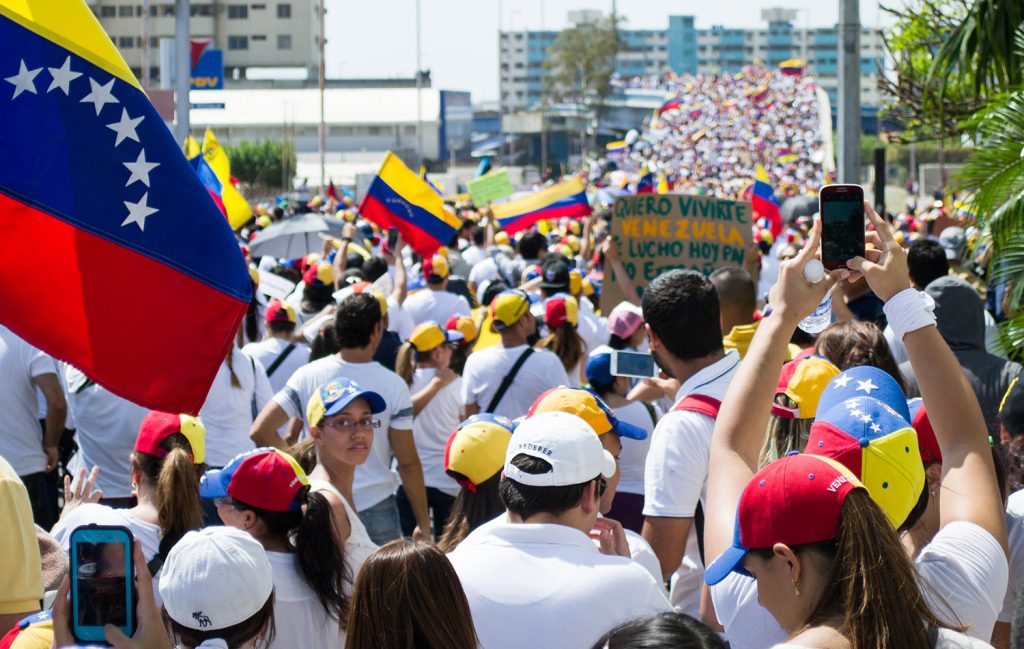
As a Venezuelan who protested, marched, protested again, and then protested some more — who ran from tear gas and rubber bullets, who watched people die in the streets — I don’t have the luxury of pretending this is abstract. I recognize the early signs because I survived the ending.
That’s the hardest part to explain to people here. This didn’t start in Venezuela with hunger or hyperinflation or mass migration. It started with division. With rhetoric. With leaders convincing half the country that the other half was the enemy. With the idea that rights were conditional, that safety required obedience, that some lives were worth less if it meant order for others.
And slowly, then suddenly, everything changed.
People ask me why I’m quiet online lately. Why I’m not posting hot takes about Trump, ICE raids, Minnesota, Maduro, María Corina Machado, Nobel Prizes, Greenland, invasions — pick a headline, any headline. The truth is simpler and harder: It’s too much.
It feels like PTSD.
I didn’t come to this country for fun. I didn’t leave Venezuela because I wanted novelty or adventure. I ran. I ran from violence, from government-backed terror, from the constant fear that today might be the day someone doesn’t come home. Seeing those patterns reappear here — at your doorstep — does something to you. It freezes you. It exhausts you. It makes you careful in ways you wish you didn’t have to be.
That doesn’t mean I believe in silence. It means I believe in survival.
Protesting matters. I will never say it doesn’t. Protests saved lives in Venezuela, even if they didn’t save the country. But if you don’t feel safe protesting — if your immigration status, your skin color, your gender, or your past make the streets dangerous — there are other ways to resist that are just as powerful.
Help your neighbors. Check in on the people living next door. Call your local representatives. Help someone register to vote — literally sit with them and do it. Build a community where cohesion, not division, is the goal.
Authoritarianism thrives on isolation. On convincing us that we are alone, that everyone else is the enemy, that there is no point in trying. The most radical thing you can do sometimes is simply show up for one another.
Because division is the real weapon.
They want MAGA versus liberals, Christians versus heathens, immigrants versus citizens, chavistas versus oposición. I come from the future. I’ve seen where that road leads. It leads to political prisoners. To families torn apart. To people disappearing into systems that no longer pretend to be fair.
Minnesota? No — I said, Venezuela.
But yes. Those political prisoners too.
I don’t write this to say it’s too late. I write it because it’s not. Not yet. There is still time to recognize the pattern and refuse to repeat it. There is still time to choose solidarity over fear, community over cruelty, humanity over “order.”
So when someone asks me where I’m from and I say Venezuela, and they reply Minnesota? I don’t laugh the way I used to.
I pause.
And I hope, desperately, that this time the confusion stays just a misunderstanding. Not a prophecy.
Author Irene Yibirin is the Culture Ambassador at Imperiall