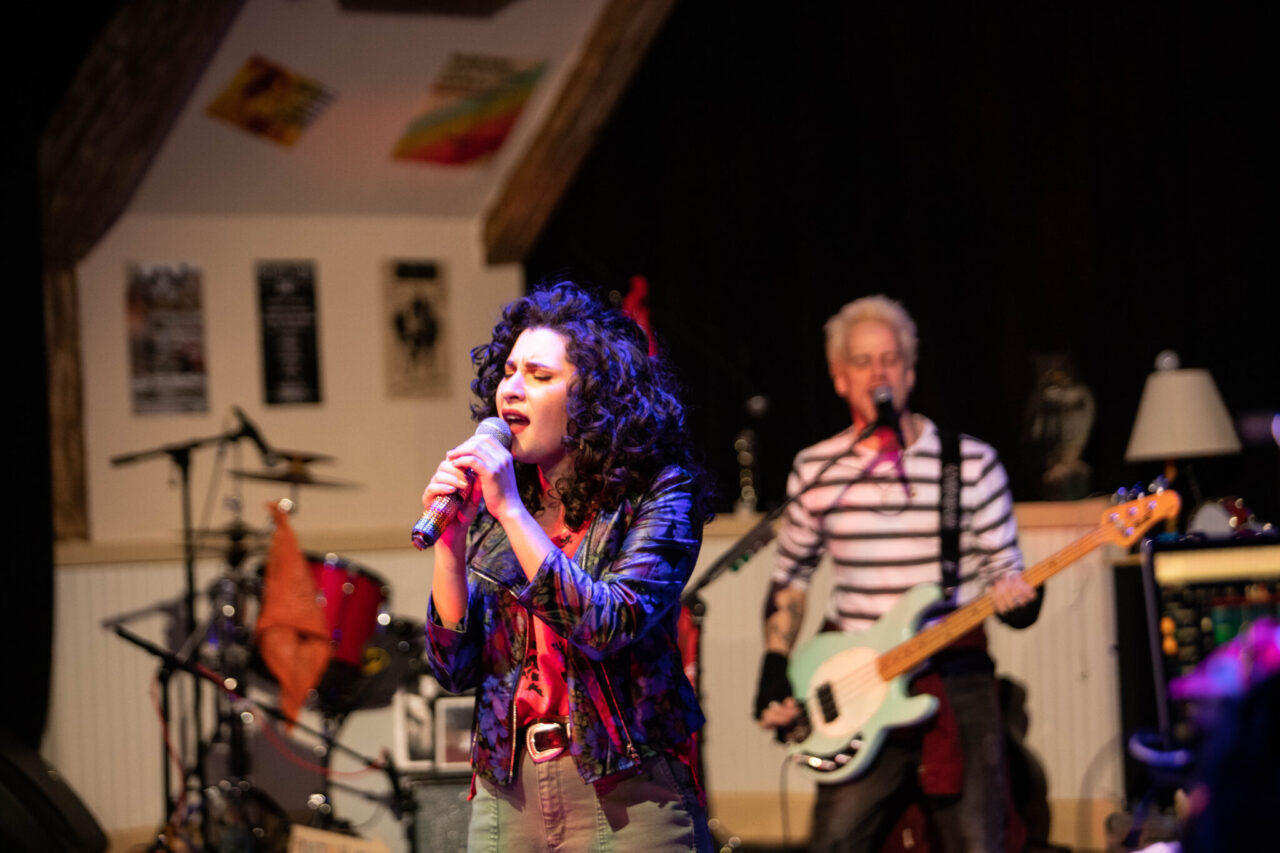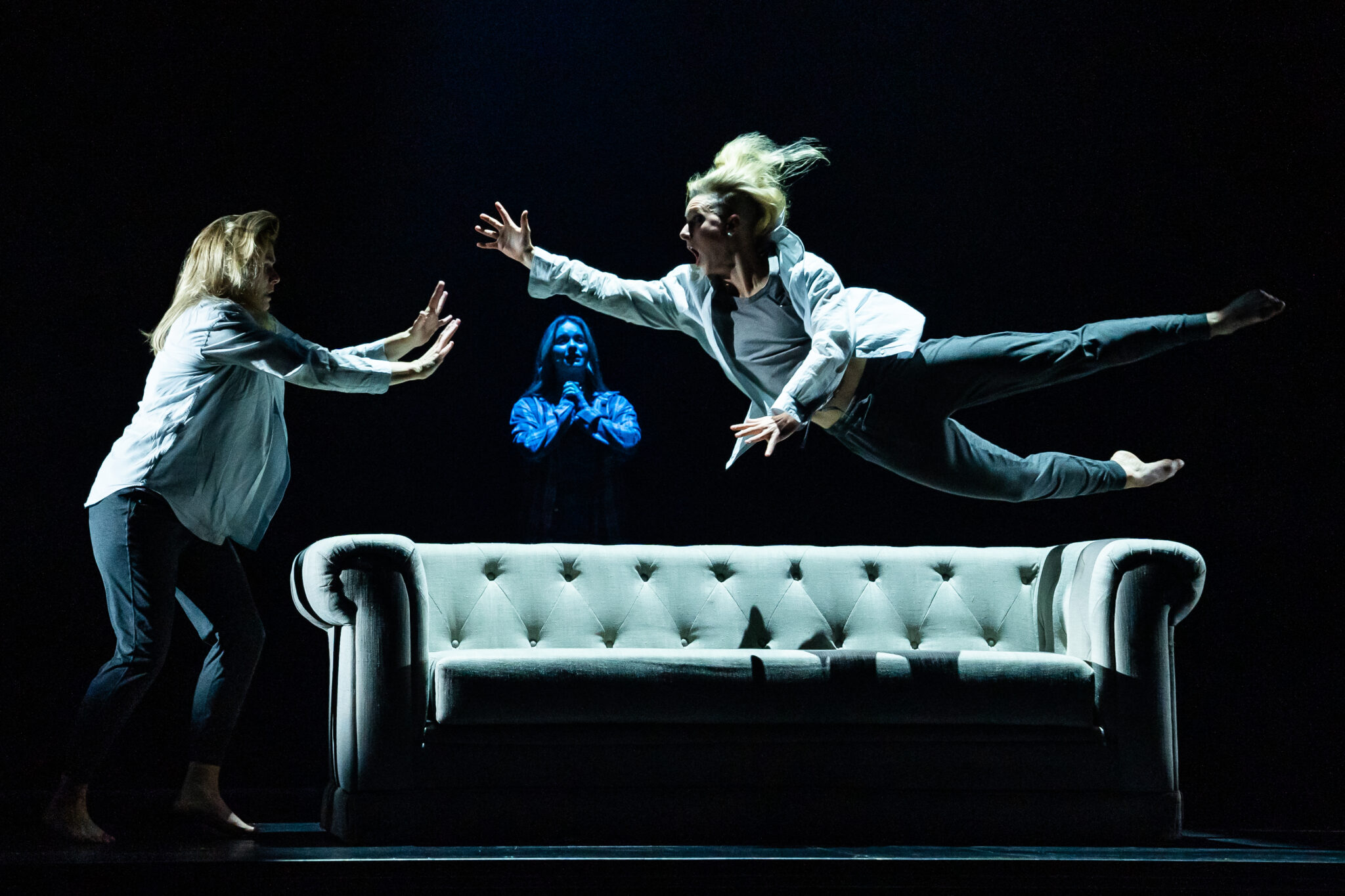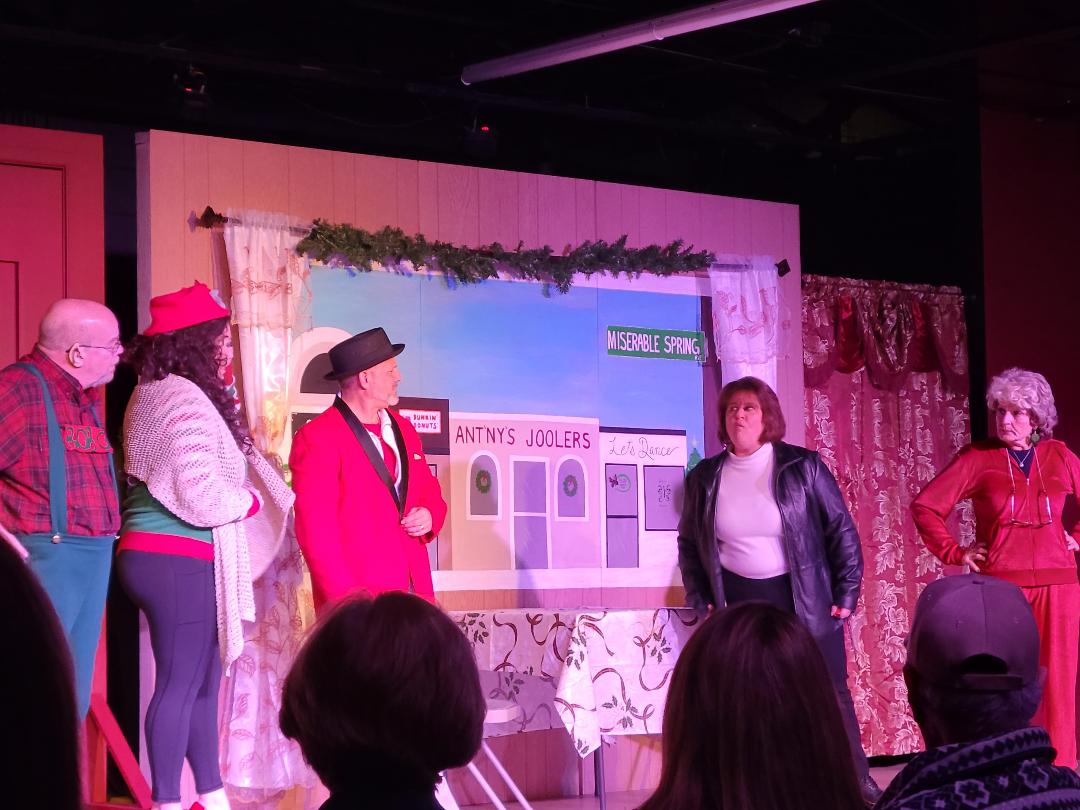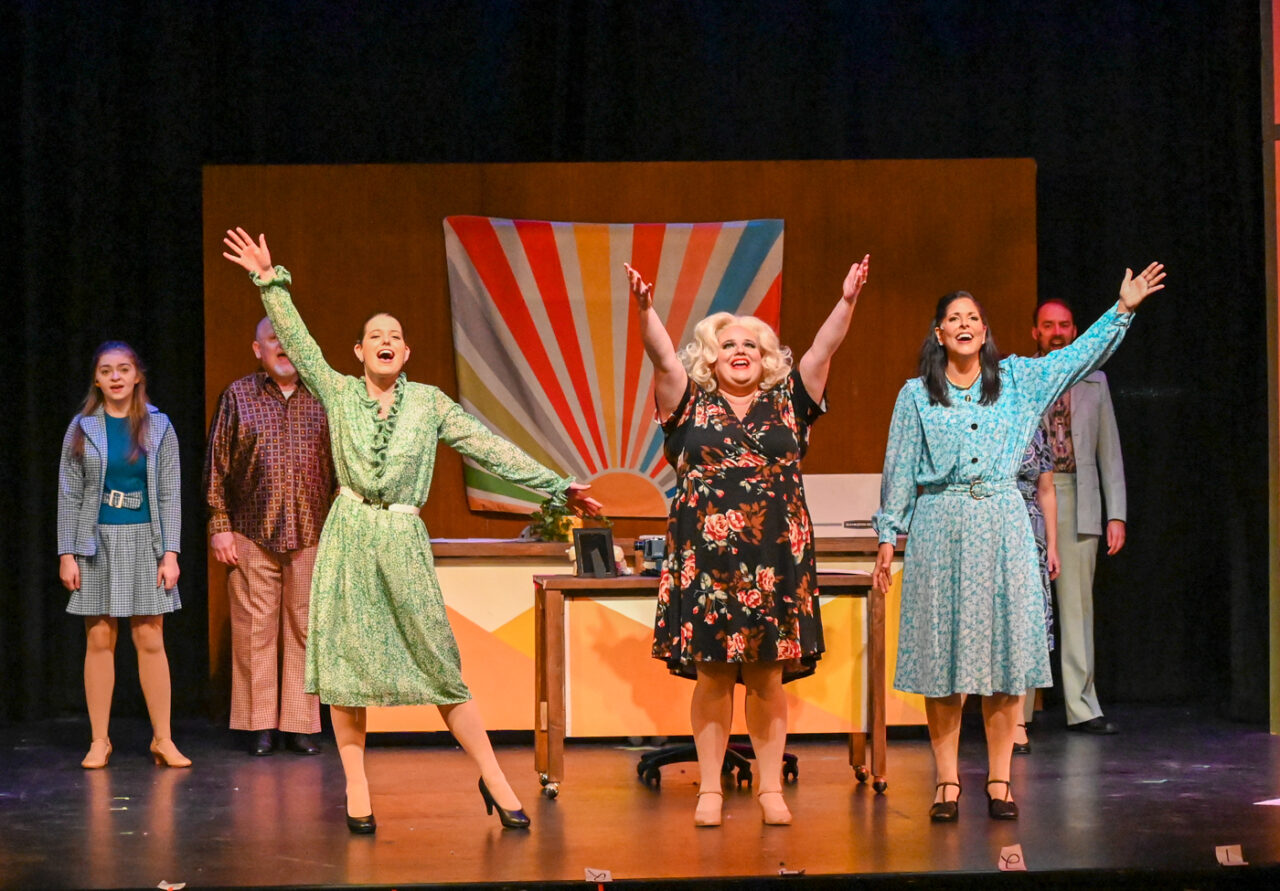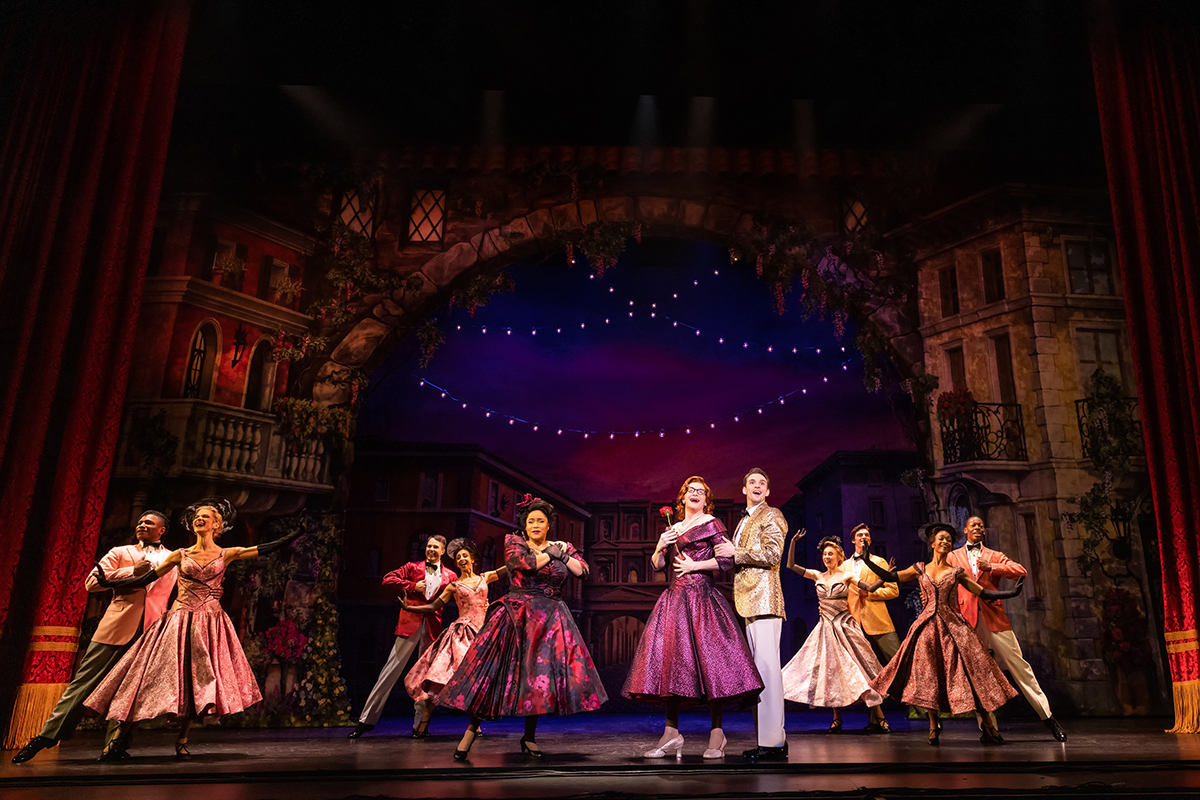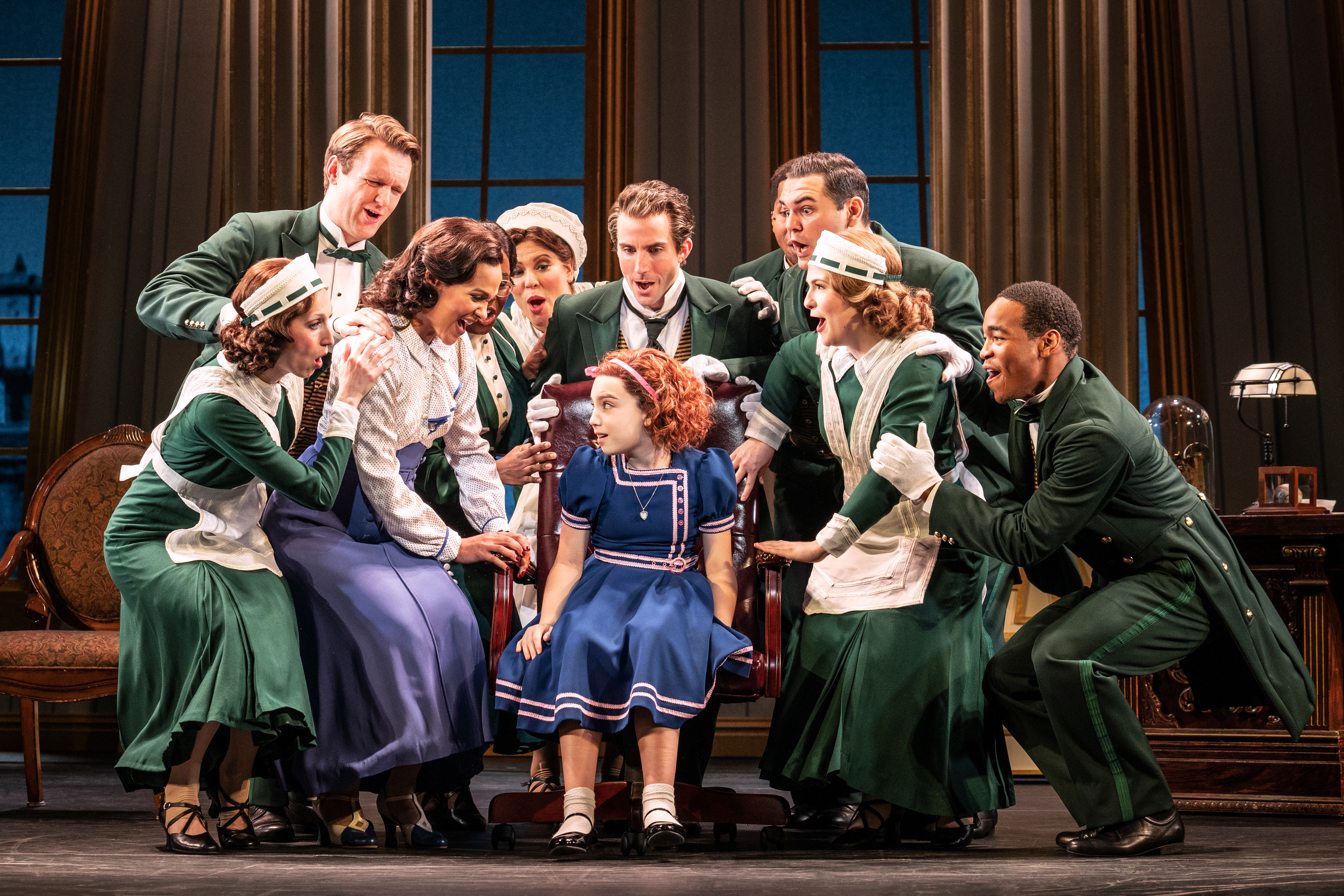
Leslie Alexander as Mrs. Higgins, Shereen Ahmed as Eliza Doolittle and Kevin Pariseau as Colonel Pickering in The Lincoln Center Theater Production of Lerner & Loewe’s MY FAIR LADY. Photo by Joan Marcus.
Thursday was opening night of the North American Tour of Lincoln Center Theater’s critically acclaimed production of My Fair Lady, a musical based on George Bernard Shaw’s 1913 play Pygmalion. This being a Broadway production at PPAC, directed by Bartlett Sher, you surely don’t want to miss it! Disregard Hepburn’s classic movie and prepare yourself for a truly new and memorable theatrical experience. The main character, Eliza Doolittle, is a low-born flower seller who accidentally crosses paths with the brattish aristocrat, Professor Henry Higgins. Shereen Ahmed expertly delivers her rendition with perfect pitch, comedic timing and eventual elegance. It’s a pleasure watching Ahmed as she whirls through the amazing revolving sets by Michael Yeargan. Being annoying is her job, and she executes that all too well, yet Eliza never looked so alive!
The part of Higgins is cast to Laird Mackintosh, and it was Colin Anderson who portrayed him this night. Anderson had us laughing as he hurled the crass insults at Eliza (because it’s all true!) with the precision of a pro ball player. You feel sorry for the poor girl, yet Anderson’s delivery won’t allow for the withholding of laughter. It would seem the story revolves around Higgins, as this is a love story at the core. A confirmed bachelor, Higgins sings of never letting a woman into his life, however, Eliza worms her way into his heart and he does eventually grow accustomed to her face.
Kevin Pariseau, a native Rhode Islander hailing from East Providence and a Brown alumnus, portrays Colonel Pickering, the phonetic expert compadre of Higgins. His rich voice is mesmerizing as he adds a soothing touch to Higgins’ constant badgering of Eliza. This gentleman adds balance between the bickering couple with style and grace.
Times are changing, and keeping up with them can be challenging for some. “I think it is a show that people need to see now,” said Ahmed. “There’s joy, there’s humor and some very deep conversations underneath it all.” Ahmed is likely referring to the modern changes within the production, such as gender and race-blind casting, and the party scene the night before Eliza’s father’s wedding in which gender norms are challenged by attendees. These are adaptations the more conservative theater attendees may not have been expecting, but nobody was bolting for the doors. The entire production was fun from beginning to end.
Period costumes were absolutely stunning. True to the era, the ladies wore gala-ready, oversized hats adorned with feathers and other ornamentation. One scene in particular had all twirling cast members adorned in shades of gray. It’s hard to know where to look next as you take it all in. Of course, Ahmed is absolutely breathtaking as she enters the king’s ball in shiny beading, rhinestone-studded jewelry and tiara. Hats off to Catherine Zuba for her vision here.
Music was spot on. The orchestra didn’t miss a beat under John Bell’s direction, as well as Ted Sperling’s supervision. Kudos to cast members who effortlessly dance throughout with Christopher Gattelli’s choreography. Arrive 30 minutes early and you’ll be treated to a Mighty Wurlitzer pre-show concert by house organist Peter Edwin Krasinski (except the Saturday matinee).
Performances run through Sunday. For more info, visit ppacri.org
David Crossley and Elizabeth Parent embrace in a nostalgic moment.Photo by Richard Griffin
The world premiere of A Tree Falls in Brookline, written by local playwright David W. Christner and directed by Richard Griffin, is a comedy you don’t want to miss. Considering the Community Players are celebrating their 100th year, these folks are no strangers to quality performances. Some of the faces change, some stick around for many productions. One thing is for sure—these folks know how to put on a play!
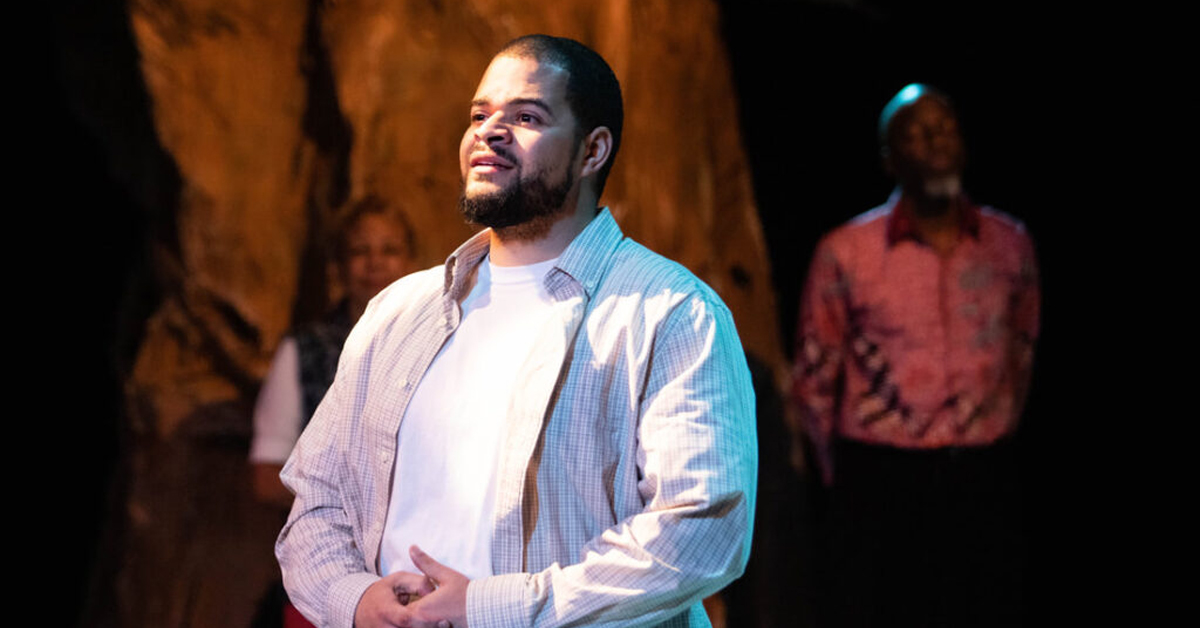
With this particular production, we see the main character, Cormac McIntyre—skillfully portrayed by David Crossley—released from the hospital after a fallen tree limb leaves him with amnesia. He awakens to an unfamiliar world in which he cannot recall who his true friends are, whether or not he is married, and where he should go from there. Dr. Alex Warner, portrayed by C. Richard Koster, appears to be a scatterbrain himself at the VA hospital emergency room. Enter Allison (Elizabeth Parent), who slowly helps him upright his shaken world as he weeds through the deceptions as well as the truths. Geoff White as Ripley Randolph and Camille Terilli as Gwendolyn Fairfax help create the chaos that also abounds.
Meet the Writer
World-renowned playwright David Christner may live in RI, but he’s a man of the globe. He was born in Sweetwater, Tennessee and raised in rural Oklahoma. He attended high school in Mountain View, a small farming community. Christner came to RI in 1966 to attend the Naval Officer Candidate School in Newport. After serving as a commissioned officer in Vietnam and two years ashore in Norfolk, VA, he attended grad school, then chose to settle here permanently.
Even though Christner has written four novels and ten screenplays, he still feels a bit apprehensive when his work goes public. “I’m at the point where I just want to go hide in a bar somewhere until it’s all over,” he says. “This happens every time a play opens. I have to do this! ‘Everyone is just going to hate it. Why do I put myself through this?’ I don’t know; I can’t seem to quit writing. I’ve tried, over and over. I just don’t seem to have what it takes to quit. I wrote a new play–The Old Man and the She–after Brookline, and now I have a new idea kicking around in my head for another play.” When asked if he would be present at the premiere he said, “Oh, I will be there! My wife insists that we go.” Linda was indeed there by his side.
“This play came out of the blue. For reasons unknown, I decided to read A Tree Grows in Brooklyn, which I had avoided doing during high school. Turns out, it was first published in 1943, the year I was born. The underlying theme of the novel is perseverance, represented symbiotically in the story by the Tree of Heaven surviving all kinds of abuse growing in Brooklyn, just as Francie in the novel had to do.
“Once I finished the novel and switched the title, I was pretty sure I could write a play to fit the title. So, I thought what if a tree falls on some guy and he loses his memory. From there, the idea just took off. What if the guy was a writer? Okay, great! What writer? What writer do I know most about? Ole number one, that’s who. That way I don’t have to make anything up. This was the easiest play I ever wrote—three maybe four weeks from curtain rise to curtain fall, and it was a ton of fun.
“When I started, I didn’t even know if there was a golf course or VA hospital in Brookline, but just before COVID-19 started I was having dinner at a friend’s house and I met a guy who had grown up in Brookline. He told me that the Brookline Country Club—simply known as “The Club”– has a famous golf course and a VA hospital. I needed both for the play. And I learned just yesterday (Feb 15) the US Open Golf Tournament is being held at Brookline this year.”
Speculations on the cosmos, sex, war, religion, injustice, environmental exploitation, aging, women’s issues, the homeless, the colonial slave trade and capital punishment have formed the thematic content of the plays and novels Christner has written to date. His plays have been produced in the US, Australia, Japan, Belgium, India, Ghana, Singapore, Italy, Russia and Canada.
“All my plays have an important underlying theme, perseverance in this one. Although my plays deal with serious social issues, most of them are comedies because I think it is much easier for audiences to deal with hard realities when they are being entertained.”
Indeed they do. There is a steady comedic flow through Brookline, complete with clever quips and an element of nostalgia as well. Moreover, the play is semi-autobiographical, minus the traumatic brain injury, as Christner borrows from his own history to round his main character. The social/political commentary in the play is enhanced by his use of purposefully selected Vietnam-era rock music. This may be serious subject matter but, like any comedy, there is a happy ending. Romance abounds, as this is also a love story, like a play within a play. And that Cormac dude can sing!
Christner also references outside plays/novels and their characters. Gwendolyn Fairfax is a pretentious fictional character in Oscar Wilde’s novel, The Importance of Being Earnest. She portends with the face of morality. Cormac McIntyre may be a play on Cormac McCarthy, author of No Country for Old Men, which plays heavily on the idea that the nature of evil has changed, while old values no longer exist. Ripley Randolph, “friend” of the lead character, likely refers to Randall Ripley, professor in the Political Science department at The Ohio State University and Dean of the College of Social and Behavioral Sciences, whose many publications on politics, economics and bureaucracy have helped shape congressional policies.
It can be difficult bringing such strong themes to life on stage, but regarding A Tree Falls in Brookline, which had to be delayed a year due to COVID-19, Christner is very pleased with what he sees. “I think (Director) Richard has a great cast, and he seems to have a good feel for the humor in the play.”
David Christner, Writer of A Tree Falls in Brookline
Meet the Director
Richard Griffin is a film director, has been for many years, and is also an actor. Like most artists, he occasionally likes to challenge himself by stretching his wings and trying something new. He proposed to Community Players Board Member Karen Kessler that he’d like to try his hand at directing. Not long after, he received a call from her asking if he’d like to direct a new play, A Tree Falls in Brookline. After reading the play, he knew this was something he’d like to take on. He explains, “I’ve acted for the CP since 2000, steadily for the past five or six years. I sort of threw my hat into the ring to direct. I literally just jumped from a two-month film into this play.”
He is incredibly impressed with his cast of 10. “If you cast the play correctly, you’ve done 80% of the work,” he says. “Obviously there was a two-year break for most actors due to the pandemic. Coming back after that, and during the rehearsal practice two weeks ago, they were rehearsing with masks on the entire time. Their face is such a big part of their tool box. This is a real challenge for any actor, and they were just fantastic! It was truly incredible to watch them, and they really embodied these characters so well.”
Stage Manager Maxine Wolfson was essential to this production as well. “Maxine and I have worked together now a second time, and she is wonderful at just keeping everything so organized. The importance of keeping the tone in stage very light,” he explains. “Nobody has to worry about if everything is in the proper place. She’s just amazing at what she does, a good morale boost for everyone. A stage play lives and dies by its stage manager. It’s the person who ensures everything runs smoothly. I can’t image doing anything without her as my stage manager.”
How does someone who usually directs film shift gears to the stage? “This is their 100th season, so everything is run like clockwork. They (Community Players) were able to jump into this very quickly and still be very organized. It really is a family atmosphere. It’s community theater, we’re all doing it because we love it.”
It doesn’t hurt that the subject matter strongly appealed to Griffin as well. “The thing that really attracted me to this play is that the characters are at least 50 or older. It was wonderful to do a play about people in that time of their life. It’s not about growing older and being regretful about it. These people are still very much alive– vital and energetic. I was really attracted to the subject matter because of the age of the characters. We’re a very youth-oriented culture. These actors pulled it off so beautifully. Hope for us all!” Griffen goes on to say, “It’s a gentle comedy, not like a slamming-door farce, and I like that.”Simple sets, by Grifkos Scenics, help to emphasize the actors’ skills and dialogue. The lighting, by Amelia Holton, changes with each mood’s highs and lows. Costumes by Pamela Jackson reflect the individuals’ profession or current state of mind (and lack thereof!). Much attention is given to the little things, and the larger things go home with you. All this, paired with a strong cast, solid writing and direction, makes A Tree Falls in Brookline truly worthy of your time.
Richard Griffen, Director of A Tree Falls in Brookline
All shows are performed in the Jenks Auditorium, 350 Division St., Pawtucket, RI. For more information, visit www.thecommunityplayers.org or call (401) 726-6860.
Tickets available at https://app.arts-people.com/index.php?ticketing=tcpri
Abstract. Surreal. Soulful. Musical. Spiritual. African-inspired. Social injustice. Women’s beauty. All of these come to mind when we consider the works of North Providence artist Nixon Leger. Look no further than the cover of this issue to see for yourself: Leger chose a piece he calls The First Regiment. “I was just looking for something very RI,” he explains. “They asked the slaves to fight in exchange for freedom, so they agreed to fight.”
Leger hails from Belle Anse, a small town in the southeast of Haiti. The French name translates to “beautiful cove.” It was in this picturesque place in the Caribbean that he developed his great passion for art at an early age. After studying under master painters in Haiti, he earned a degree in painting. He believes that painting is another way to share your life.
Leger continues to create amazing works in Providence using acrylic, oil, collage, burlap cloth, canvas, wood and objects found. His style has changed over the years as well: “There’s a fragmentary symbiosis,” says Leger. “A lot of fragmentation. There’s also expression of extractionism, a little bit of realism. This style emerged in 2020 during COVID.”
When Leger first came to the US as an honored artist, he discovered his painting degree would not be recognized. He had to learn English before enrolling at URI, where he earned a degree in studio art in 2017. His creations reflect symbols and images from his native culture, faith and vivid imagination. Having gained recognition for his personification of plantain leaves, he became affectionately known as the “Banana Leaf Man.” Often the heads of his subjects are shaped like the tail of a plantain leaf. “This speaks to my latest movement of people, protestation and insurrection. I use this same style in many of my creations,” he explains. Biomorphic social commentary is just one of the many themes Leger employs, however. Many pieces symbolize Black pride, dignity and unity.
Alison O’Donnell (Motif): How is it you came to live in USA/RI?
Nixon Leger: After growing up in Haiti, I tried the other countries in the Caribbean. They suffer. They don’t have the opportunities that we have in terms of economy, and politics are the worst. Haiti is one of them that suffers and has been trying to transition in these areas since 1804, so we have a lot of trouble — different presidents, etc. We have poor people, lack of work. The state can’t offer them anything better. So many of us have difficulty living well, so you go to school, finish school but you don’t really have a future you can count on. Most of us suffer from a lack of work and have to travel to look for a better life. I had trouble with that.
The major reason I traveled was that I wanted to stay in the United States to continue my career in terms of the possibility to paint and eventually sell more. I have more family here in RI. But I want people to know that even though I’m looking for a better life, I’m also looking to show my art because I know if I have the opportunity, I can have success in my life and live better. The major reason is for my career.
AOD: What makes your work unique?
NL: In 2002, I would create a person in banana leaves. I didn’t see anyone doing that. It was amazing that I started this process early. The funny thing about it is, after 14 years there would be a Haitian president who had this nickname. Jovenel Moïse had a plantation of plantains, so they called him the banana leaf man too, but I had this name 15 years earlier. They gave me a lot of plantain leaves to produce, so I fell in love with them. But not everyone can paint these. I had to figure out how I could use the leaves to represent something else. I had to sketch the leaves to make them look human. I played with them very early in my work. I don’t show the leaves [in the background], I incorporate the leaves into the painting. There is freedom in the pieces. I play with lines, with cloth additions. With the freedom, I can do many things.
AOD: What’s your favorite piece and why?
NL: I do not have a favorite. If I had to choose, it would be Symbiosis Fragmentary (Mutation 67) because of the process. Some of my paintings I don’t show, so I go through the process. This image, I can’t recreate it. It just happens. If I lost this painting, it would be heart-wrenching. That’s the only reason I can answer this question.
[Another special piece is called Unity, which depicts two humans intertwined.] I took everything from the plantain tree. The leaves and the tails — the tail of the plantain — is the shape of the people’s heads. If I replaced this, it would be the actual banana.
AOD: What is your artistic process?
NL: I can’t choose one. Surrealism and abstract because I love the way surrealism portrays the object because I love them, and abstraction makes me feel like, wow! It may say more than a realist image. My mind sometimes produces them together without knowing. Those two give me a freedom to find myself and do whatever I want. The purpose is for the artist to do his own thing. What can you show the people as to your originality? My style keeps changing, otherwise I would feel like I was in prison.
I don’t draw before I paint. Very early I took my freedom to paint because I want to be free. That’s why I don’t stand on religion, only because I don’t have my freedom. I have too many woes to respect. If I have to do a portrait, I have to make sure the eyes are well done, the light, the shadows. I have to follow the process, so I don’t have much freedom. But when I’m free on the canvas, I can go all over with the lines, without judgment, able to produce a beautiful landscape, seascapes, anything. I do photos in that kind of style, in my own understanding. Pictures say more than just a sentence.
I don’t consider myself in any specific style because I work by emotion, by what I feel. If I want to do something abstract, if I want to do something in realism, I would take time to do it. It’s happened that I have a lot of pictures [that are] abstract and surrealist. That’s why most people who see my work assume I’m an abstract painter. I have a range of abstract, a range of abstract mixed with impressionist.
AOD: Do you incorporate a visual hierarchy in your work?
NL: There is a focal point. To me, it’s part of creation. It’s not something that I just paint. There’s a process … In most of my work, I do a simple background. I put more importance on my abstract than my surrealist work. For me, I’m showing the importance of creativity. I like a picture that says a lot. Look at it, analyze it. But for me, I know some paintings are deep in thought. That’s the kind of painting I take pleasure in producing and creating.
Indicating a painting he’s titled Next Generation, depicting a woman carrying a son on her shoulders, Leger continues, “Sometimes I consciously do the next generation. They will pave the path for us. The woman is carrying a child. You can see a different way. You can extrapolate the image. This mother is carrying the way for him and for her. If we extend it, this generation is above the next. It would be the same in the process. My kids now already do a lot of things I did as a kid. Things evolve, and their kids will do the same.”
AOD: How has your religion influenced your work?
NL: I was born Catholic, and I became Protestant in 1993. In 2016 I stepped back from Christianity. There were subjects not specific to one religion but there were more pictures displaying Christianity before 2016. After a while, I learned more about my story. There’s a complication for us in Haiti. We can’t embrace our (original) culture. One thing in our culture is Vodou, which is portrayed by many as evil and bad. We don’t have a chance to explore and know what it is. You are afraid to ask questions and go on this path. Now what’s happened to me in my life, being in church many years, knowing many things, I figure I didn’t know the right story about Christianity. I now embrace Africanity. There are many things I didn’t know about Africanity since they hid it from us. That’s our roots, we’re connected to it. During this period of 2016, I would embrace my Africanity. I knew what beauty was, but I then embraced African beauty because scientists/scholars say Africa was the first. If we want to know about religion, we have to go to the first civilization and follow the process of what the correlation is between them. The process of this awakened me from before when I was a Christian.
It was a difficult path because growing up as a civilization we live as Frenchmen because we were colonized by the French, forced to be Christian, so we never embraced our culture. Vodou is a package – the way people live, eat, act in their nature. People tend to see the mysticism only and make it look bad or evil because they don’t want you to know about it, but it’s a beautiful thing where people respect each other, and nature. If Western civilization tells us something is either good or bad, we tend to believe it. They know what kind of different leaves to take for medicine. This is knowledge: They go to laboratories to make pills but it’s from the plants. Even though I was connected by music, at four years old I discovered and consciously portrayed forms of trumpets and drums. Before Passover, the popular band Rara goes throughout the country. Haitians like these sounds. When we have those together it’s a great harmony, but people call it evil.
My quest is to learn more. I don’t see Vodou as a religion, because religion is like a cage you have to stay inside and follow the rules. The question of religion is to understand many things. Even in Vodou they’re not sure because they made people believe them. It’s a good thing when you ask yourself questions. It’s an opportunity to have modern knowledge. Without this you wouldn’t be able to see the difference in the information. Vodou in Haiti is complicated because it would be mixed with Christianity, the French spirituality. This quest requires information and knowledge because people often do something for a while without knowing why. That’s our job as people. We try to understand. It’s our job to question, to search for information.
AOD: Favorite places to go in RI?
NL: You would be amazed. When I came to RI, I was Christian and very limited in terms of going into different places… Just church, exhibitions or different types of events and festivals. I didn’t explore other places like bars. But I discovered a place on Westminster Street, a space for Salsa on Thursdays, Roots Café (formerly Aurora). You feel like you’re welcomed. They talk about music, games. It’s a space where artists can go and chat together.
AOD: What does the future hold for you and your work?
NL: I dream to have a space that can handle all my paintings because lack of space puts a wall on your creation. There’s sometimes a large canvas you can’t show if you don’t have space. That’s important for artists. You need to create more space for artists because we have many who can’t afford a studio. We’re happy to say we have a lot of artists in the city but there isn’t anything being done to create the opportunity to offer space. If we had a space here in RI for artists to create, people would travel just to visit artists’ studios. This is important to the artist.
AOD: How do you choose which pieces to exhibit?
NL: Mostly I choose the ones I think speak to a current theme. I have an African theme, I have a range of religious themes, political injustice. I have a range of new geometric abstraction mixed with surrealism. This particular exhibit [at URI, see details below] is to celebrate my 25 years. People will have a chance to see all of my different styles. My place is too small to show favorites. That would require a larger space to show all the paintings I could choose, so I chose by theme. These best express your time, not favorites.
I use my medium to tell a story, to put out things that people can see. One of the two big pieces in the exhibition is called The Wait. The other one is a piece portraying a small group of people using violins to change people because they’ve been so affected by terrorists and let a few people dominate them and suffer. That’s what we’re experiencing in Haiti right now. People are terrorized en masse. I can’t say anything where people will hear me, but I use my painting to express myself. Hopefully, this will reach a large population instead of just friends on Facebook. It’s happening all over, it’s the reality of the world. When I do something, we have a different way to see it.
You can see these amazing works of art for yourself. Leger is currently holding an exhibit, free and open to the public, which celebrates 120 pieces of his work over the past 25 years:
URI Providence Campus Urban Arts and Culture Programs present CELEBRATING NIXON LEGER! 25 Years of Art From Haiti to Rhode Island: A Solo Exhibit, which runs through Feb 24, Mon-Thurs 9 – 9, Friday 9 – 5. Gallery Reception to be held Feb 17 from 6 – 8pm, featuring an artist talk, celebrity guests and the music of Sidy Maga.events.uri.edu
For more information on Leger, visit his home page at nixonleger.com.
Providence is the star, stage and celebrated guest at the upcoming A Pageant for Providence, a COVID-safe performance-art walking tour taking place downtown. Taibi Magar, an acclaimed director, together with her life and professional partner, Tyler Dobrowsky, who served as associate artistic director at Trinity Repertory Company, created this project to celebrate the Providence community. They project provides space for people to reflect on the past year and offers an opportunity for healing as we move toward discovering what the new normal will be.
Pageant is a direct response to the pandemic. “It’s been a devastating year,” says Magar. “Our industry almost entirely collapsed. But out of this wreckage, we started doing work together, which has been pretty incredible.”
She describes the event. “It’s part ritual, it’s part performance. It’s more like a space for reflection and catharsis, and asking questions about how to be in space with each other again.”
“We have all gone through something,” adds Dobrowsky. “Let’s just have a moment to reflect on what we’ve gone through, to dream about what the future could hold. [Pageant is] very much built for this moment.”
The project, made possible by arts funds and a grant from the New England Foundation for the Arts, celebrates the creative vision of various artists, including writers, dancers and musicians. The event starts as a series of audio tours, each of which leads participants on a unique walking tour through the city. Participants may choose one of six possible tours, each with its own distinct audio experience that includes songs, stories and historical testimony. All six tours will convene at the Providence Rink in Kennedy Plaza where a short communal ceremony concludes the tour.
A Pageant for Providence takes place August 12-14 in Providence and is free to the public. For more info, visit PageantforProvidence.com.
Providence’s Head Trick Theatre is all about live performance and sharing space with an audience; however, COVID forced them to shift. Their latest production is a web series, Dangerous Liaisons, adapted and directed by Head Trick founder Rebecca Maxfield from the novel by Pierre Choderlos de Laclos. “I think it works as an episodic structure. Our production is based directly on the novel rather than being an adaptation of the existing play,” Maxfield says.
In the story, master manipulator the Marquise de Merteuil seeks revenge on a former lover by trying to arrange the premarital seduction of his young and naïve bride-to-be, Cécile. However, her dearest friend, the Vicomte de Valmont, has other prey in mind: He wants to seduce the seemingly unassailable Madame de Tourvel, a virtuous married woman. The story of sexual and romantic war games is told through letters, which lends itself well to current realities.
“The story is really well-suited to the conditions we’re working under right now, with everyone writing these letters or creating these videos from their homes or wherever they’re stuck at the time, when paper or a screen is the only means you have of communicating with people,” says Maxfield.
How did all this first come together? “I think we had auditions for it in May, so it’s taken a while for it to be completed and start airing,” Maxfield says. “Everything was filmed at home via actors’ webcams. Auditions were open to people in any geographic location, but most people are local and have worked with me before.”
Maxfield met with actors in a Zoom meeting, which she says “was pretty much like what a live rehearsal would be like so we could get on the same page theatrically.” The main cast includes Stephanie Traversa, Pooja Usgaonkar, Dan J. Ruppel, Gail Rosewood, Charlie Santos and Sarah Sinclair. “I’m so excited to finally start showing the world what we were working on during the summer and fall,” says Maxfield.
What’s next for Head Trick? “We are in rehearsals for an audio production for A Midsummer Night’s Dream,” Maxfield says. This will be a site-specific audio piece. “I didn’t just want to do a Zoom reading of something. Rather than sit in your house listening in one sitting, it will be released for download with guidelines for where to listen to specific scenes, such as a natural setting, or where you might go for a feeling of authority.”
She explains, “In a normal show, the presence of the audience impacts the show in a certain way. The actors feed off the audience’s response. If you choose to listen to the forest scenes in a super deep forest, versus sitting by a river with river sounds and different bird sounds, there’s a different feel. It was important to me to create something where the audience was a partner the way that they are in live theater.”
The Dangerous Liaisons intrigue unfolds with new episodes every Tuesday and Friday. Each episode runs 5 to 10 minutes in length and airs at 8pm on Head Trick’s Youtube channel ().
Dangerous Liaisons is free to watch. Donations are appreciated and can be made through Head Trick’s web store (). Note: This series contains sexual themes and references to non-consensual sex. For more information, visit headtricktheatre.org or fb.com/headtricktheatre.
The Wilbury Theatre Group has teamed up with The Rhode Island Council for the Humanities’ Culture is Key Initiative, and will soon be presenting the fruits of their labor with Capture the Block: Stories from Ward 15. Culture is Key is an initiative to understand, test and evaluate the role of cultural participation on our state’s civic health. Working in collaboration with journalist Ana González of The Public’s Radio, and with support from ONE Neighborhood Builders, The Wilbury Theatre Group solicited stories from neighbors in the Olneyville section of Providence who were willing to share their experiences of loss and resiliency in the COVID-19 pandemic. The project will culminate in Capture the Block.
In keeping with their mission, The Wilbury Theatre Group, being a nonprofit theater company that engages our community in thought-provoking conversation through new works, artistic director Josh Short contacted González for this collaboration. “The very real and human impact that COVID-19 has had on our neighborhood this year is heartbreaking,” says Short. “As one of the neighborhoods hit hardest, our friends and neighbors have seen their lives change drastically over the last 12 months. It’s our hope that Capture the Block provides a forum for remembrance and mourning through storytelling that helps our community in its healing, while amplifying the Humanities’ Council call for the urgent need for increased civic engagement from all of us.”
Ana González
Due to social distancing, González and Short had to get creative in their fact-finding mission. “The way we wound up doing it was like sample size. We weren’t able to go into the streets and talk to people, so we brought in about 10 people, of all different ages, to come and talk about the pandemic. We spoke with two high school students about the pressures of learning from home. They are taking on extra responsibilities themselves. One had to teach her younger sibling how to use Google Classroom because her parents don’t speak English,” González explains. “We also spoke with some parents about the stresses and challenges involved for working parents.”
“When we started this project almost six months ago, the world was in a different place,” says González. “We were hopeful that the pandemic would be over and done with by 2021 and we would be able to have an awesome in-person event with popcorn and hot chocolate, celebrating the streets of Olneyville in the streets of Olneyville. Obviously, we were wrong. This pandemic has taken so much from us. So, Josh and I decided to change the direction of our event to help our communities begin to heal by remembering all that we’ve lost and celebrating all that we’ve gained.”
Josh Short
The pandemic has created a space between neighbors that’s hard to fill, leaving us all feeling detached. “Afterward, Josh and I talked about how really great the experience of interviewing people and hearing their stories was, that it was nice to at least share the thoughts with people,” says González, who feels the sentiments span from low to high. “Sometimes it’s painful, boring, silly or weird — everything from sad to hopeful. Being able to talk with the community is really helpful.
“The RI Council for Humanities started this as a pilot program. They want to support cultural institutions in the state on a civic level,” she says. “They’re learning in this process how museums and other cultural venues engage in the communities on a civic level, and I think they chose that word because of how tumultuous this past year has been — not just with the pandemic but politics, job security, because it’s been such an intense time for everybody. I was just kind of brought in as a journalist partner. They wanted to connect to these cultural organizations. I work with immigrants on very human interest stories and share their experiences. Josh asked me to get involved because of that. Olneyville is very Spanish speaking and I speak Spanish, so I was able to help Josh in the way he wanted help.” She is proudly of Puerto Rican and Irish decent.
As part of the Culture is Key initiative, five RI cultural organizations will undertake pilot projects where they will collaborate with local journalists to test and evaluate ways to further integrate civic engagement into cultural programming. These organizations span diverse disciplines including museums, libraries, theaters, festivals and youth programming. Each has a strong track record of delivering quality cultural experiences for diverse audiences across the Ocean State.
What’s next for González? “I’m still working on mosaics. We have a series of episodes for the summer. I’ll keep working with the immigrant population in the state, talking to them and helping them to communicate with each other. I think that’s so important in these isolating times.”
Capture the Block: Stories from Ward 15 is streaming for free on The Wilbury Group’s Facebook and YouTube Channels on February 21 at 6pm. For more information, visit thewilburygroup.org/capture-the-block
Hosted by The Wilbury Theatre Group, WaterFire Arts Center and WaterFire Providence, Fire Flowers and a Time Machine is a community experience by travelers of both time and space. The Wilbury describes this installment as “a journey where we encounter both ancestors and descendants from our history and future. These guides bring forth knowledge and magic through a story that weaves monologues, poetry, dance and ritual to share with us the wisdom we will need as we continue the journey through the transformations of our era.”
Directed by Shey Rivera Ríos, Fire Flowers and a Time Machine is an outdoor production created in collaboration with performing artists Sussy Santana, Becci Davis, Laura Lamb Brown-Lavoie, Saúl Ramos Espola, Maritza Martell, Lilly Evelet Manycolors, April Brown and others to be announced. Shey Rivera Ríos opens and closes the performance with a Native American perspective on past, future and ancestors, on vibrantly flowered staging.
Luna Moon’s melodic tunes filled the night; photo credit: Alison O’Donnell
Opening night included a performance by Luna Moon, who treated spectators to an audio experience as she recorded and stacked lovely harmonies to herself, which she then sang to. After that, she read the audience a tale from her childhood, bespeckled with loving family humor. She encouraged her audience to read to others, and let others read for them, as that is a joyful yet forgotten pleasure. Luna says of opening night, “I think the night was very special because it allowed us to finally be in a space where we could connect in person. I feel honored to have been a part.”
Sussy Santana spreads community cheer in autumn adornment; photo credit: Alison O’Donnell
Sussy (pronounced Suzy) Santana wore a beautiful autumn leaf cape created by her sister, and read a poem describing her transition from life in the Dominican Republic (DR) to America as a young girl. Sussy also shared with us the poignant recent passing of her father in DR, whom she had not been able to go see due to COVID. As sage burned, she encouraged those in the audience to breathe together in community, and to thank our hands and legs for serving us well. She then told us more about herself, and encouraged the audience to do the same for her. It felt good to have that exchange of human bonding, something we have all been craving during this pandemic. “Community is all we have,” says Sussy. “Taking care of each other has never been more important.” A happy discovery, she is the mother of Luna Moon.
Much like their Decameron Providence performance series, attendees move from stage to stage along a beautifully lighted path, about five times, nothing too strenuous. COVID restrictions and social distancing are in place for this public event. Bring a favorite comfy folding chair (or one will be provided for you) and an umbrella; the show runs rain or shine. Food and beverage may be purchased at the event, and donations are welcome.
Fire Flowers and a Time Machine runs through Oct 17. For tickets and more information, visit The Wilbury’s website at thewilburygroup.org/fire-flowers.html or their Facebook page. WaterFire Arts Center is located at 475 Valley Street, PVD.
Providence playwright and spoken word artist Christopher Johnson presents a new work in collaboration with violinist Big Lux in Decameron, Providence. Photo courtesy: Christopher Johnson.
The show must go on… That’s how theater troupes felt in the 14th century during the bubonic plague, and that’s how it’s playing out now in the face of COVID-19. Written by Giovanni Boccaccio in 1352, post Black Death plague of 1348, The Decameron has again become an inspirational piece for creative performing artists. The book, just as this play, is structured as a frame story containing tales told by a group of seven young women and three young men sheltering in a secluded villa just outside Florence, Italy in order to escape the Black Death, which was afflicting the city.
Actor Shaffany Paigét presents a new work in Decameron, Providence. Photo courtesy: Shaffany Paigét.
Josh Short, artistic director for The Wilbury Theatre Group, struck up a conversation with WaterFire’s managing director, Peter Mello, to see how they might collaborate on an original work that would adhere to social distancing protocols. It was Wilbury’s resident playwright, Darcie Dennigan, who suggested they look to Boccaccio’s The Decameron for inspiration. “I had never read the book, pretty sure I had never even heard of it,” says Short, “but the more we looked into it, the more it seemed to not only offer a structure that would work well within our socially distanced guidelines, but it inspired an urgency and relevance that spoke not only to the obvious bubonic plague / COVID parallels, but to the social justice issues surrounding the Black Lives Matter movement and our current political moment. When I went back to Peter and Barnaby [Evans, WaterFire executive artistic director] with this idea, they went for it enthusiastically. Barnaby knew the book extremely well, and his enthusiasm for the original work has helped us grow the production into something that is grounded solidly in the framework of the original, while still very much about this particular moment in time.”
Bassist Desmond Bratton (pictured) and violinist Ashley Frith of Community Music Works debut a new work in Decameron, Providence. Photo courtesy: Desmond Bratton.
Short says they reached out to a few artists they had collaborated with before, and it snowballed from there. Soon, other artists were reaching out to them. “It was important to us that we were creating space and supporting those voices who were being most affected by the COVID pandemic, Black Lives Matter and social injustice, and our goal has been to provide them with whatever support they need to tell their stories.”
Shey Rivera Ríos (pictured) and collaborator Saúl Ramos curate a sequence of performances by local artists reflecting on ritual, identity, home and queerness in Decameron, Providence. Photo courtesy: Shey Rivera Ríos.
Audiences will see traditional storytellers, film, visual and mixed media artists, poets, classical musicians, ukulele musicians, spoken word artists and everything in between. “We asked them for a piece that reflects their personal visions of an idealized world through whatever mediums they chose,” explains Short. “I expect each of the 10 performance spaces to be its own unique experience every night.” He goes on to say, “It’s an exercise in public health, social justice and idealistic futurism, but our ultimate goal with this piece is to remind people, in this time of both divisiveness and physical distancing, of what it means to have a shared experience and a sense of community.”
A photo from the work of Don Mays / AFRI Productions’ mixed-media presentation of These Truths, presented in Decameron, Providence. Photo by Don Mays.
The Wilbury has had a great relationship with WaterFire for years — they’ve co-produced the Providence Fringe Festival since 2017 — but this is the most closely they’ve collaborated. It’s a great marriage of art and efficiency. Short says WaterFire “is an organization that routinely goes into downtown Providence and completely transforms it into a living art piece within a few hours, and then breaks everything down as if it never even happened. There’s a lot of work that goes into a theater production, to be sure, but to be able to see the amount of care and consideration that the entire WaterFire organization puts into every detail of their work has been inspiring.”
Post COVID, what will the new normal look like? “The reality is that learning how to operate safely in a pandemic is something that we need to learn how to do, and this is a production that is so deeply rooted in the best practices of public health and safety that it shows us how theater can continue to survive. And the truth is that artists should always be growing and innovating anyway. It’s a shame that it takes a pandemic to shake some of us out of our complacency, but if we can look at it with some optimism we’ll see that this is our opportunity to create work that transcends that which we have settled for. The artists involved in this project, the teams from Wilbury and WaterFire and all of the volunteers helping us make the production happen can see that there is no point in waiting and wishing for the world to return back to normal. Our normal was filled with inequities. Our normal is where George Floyd and Ahmaud Arbery and countless other Black lives are lost, children are put in cages at the border, and despite it all, theater companies continue trotting out one mundane play after another. We don’t have to go back to that, we can create a world that is better, and I believe that it’s the artists who will imagine that new world and we need that, now more than ever.”
The performance spaces are all outdoors, spread out across the grounds of the Waterfire Arts Center and the American Locomotive building in Providence. Audiences will walk in separated groups from one stage to the next. All of the spaces are fully handicap accessible.
For more info, call 401-400-7100 or 401-855-2460, or visit The Wilbury Theatre Group on Facebook, Twitter and Instagram. Tickets must be purchased in advance at thewilburygroup.org. Decameron runs thru August 22 at the WaterFire Arts Center, 475 Valley St, Providence.
You remember it well. The excitement of leaving the house early to get a good spot in front of your selected screen at the drive-in. The little playground where you could maybe play with other kids before dark, never worrying about scratches or worse from being thrown off the roundabout. Running back to the car in your pajamas as anxious horns started blaring to prompt the projectionist to start the movie. You might have sat on the back of the station wagon door with the window down, or at the back of the family van with the doors wide open, or maybe even pitched a lawn chair in front of the car until the mosquitoes got you. Your parents might have had that smoky coil on the dashboard to try and dissuade the pests from hanging around (or you might have been there on a date, and missed the movies completely).
Your parents packed a bag with soda, chips and cheese popcorn, but still you yearned to go to the snack bar! Clam cakes, hot dogs, hamburgers, pizza, meatball sandwiches, candy, soda and ice cream called to you! The dancing-treat commercials at half time lured you into further desire. You waited for this moment to go stand in line at the bathrooms so you wouldn’t miss any part of the movie, half hoping the parents would smell the food at the snack bar and give in. Tensions mounted as the announcer popped in halfway through the second movie to remind us the snack bar would be closing soon, but still the parents didn’t budge. You fell asleep before the end of the second movie, vaguely aware of the bumpy ride out of the parking lot late at night.
Then something happened in the mid-80s. People stopped going, just like that. The Hilltop, Lonsdale and Seekonk Drive-Ins sat and deteriorated for many years. The current Rustic Tri View Drive-In became a XXX theater to try and stay afloat.
And then, many years later — perhaps in a burst of nostalgia — something again shifted. A revitalization of sorts occurred, and people came back. Technology, like the times, has improved. Movies have sharper images. You no longer hang a speaker inside the car window but tune in on your radio. If you’re sitting outside the car you’re at the mercy of the neighboring patrons, hoping their radio is up loud enough. Despite home technology developments, some drive-in theaters have stood the test of time and hold their appeal. Sure, you could be sitting at home in your underwear drinking a cocktail while streaming on your 135″ Smart TV, but there’s just something about the drive-in theater. You want your kids to know the experience! And when you’re charged by the carload, there’s an incentive to pack in everyone — including the family dog.
While larger-scale drive-in options have dwindled, there are now impromptu drive-ins in certain communities as summer weather allows. One of these seems to stand out above the rest. If you haven’t yet experienced the Misquamicut Drive-In Theater, put it on your list of things to do this summer. Misquamicut, the Narragansett word for place of the red fish, is the most popular beach in RI. Not just a beach, the village has been a popular tourist attraction thanks to its restaurants, shops and even water slides. Nestled among these attractions is Wuskenau (“New”) Town Beach, where said movie screen is situated. It started as a small community thing. They built a makeshift screen and waited. If you build it, … As the attraction’s popularity soared, improvements were made. Last year, the screen was enlarged 4 feet on the top and 4 feet on the sides, allowing for better viewing of widescreen movies.
COVID has not been a total deterrent. “We are currently at half capacity, limited to 120 cars per night. Every- ther spot is skipped to allow for social distancing,” says Caswell Cooke, who recently celebrated 20 years as executive director of the Misquamicut Business Association. “We normally have double that, so the movies do sell out each night.” Another new feature due to COVID is pre-ordering from the snack bar. “When you arrive at the theater, you are given a QR code to scan, or use a Facebook link to order popcorn, hotdogs, candy and soda with cashless pickup,” explains Cooke. Not hungry? Check out the concession stand anyway to show the kids retro Coke bottles and openers. “It’s almost like a step back in time.” Entry tickets are purchased via Eventbrite for the same reason. “It’s actually been a better system for us, not having to manage cash, and also we’re able to see how many cars to expect in advance,” adds Cooke. It’s likely this system will become the new normal.
Misquamicut Drive-In Theater is now in its 10th season. Rain or shine, it matters not. People come religiously, and movie times have gone from once per week to seven days, from May to September, and sometimes October. Don’t expect kiddie movies. Patrons are typically “adults with kids 10 and over, or young adults getting the experience of a date at the drive-in, like their grandparents did.” Cooke adds, “We are pet friendly.” Movies such as JAWS are a regular repeat, running 2 or 3 nights each week. “For some reason, this movie is really popular at the beach,” laughs Cooke. “It always sells out!” He is also proud of the fact they run retro commercials an hour before show time, like the aforementioned dancing treats, the Native American in his canoe driven to tears over litter, and others we middle-agers remember fondly. It’ll bring you back; let the kids scoff! Gates open at 6:30pm. No alcohol allowed. Wuskenau Town Beach, Pondside Lot, 316 Atlantic Ave Westerly (next to the waterslides). For more info, call 401-322-1026.
The Misquamicut Business Association also puts on various other shows, including musical and comedy acts. “Our goal for this whole thing is to encourage people to come to Misquamicut and enjoy entertainment,” says Cooke, proudly adding their staff is mainly composed of teenagers and college students. For a list of happenings, visit their website at www.misquamicut.org, or their Facebook page.
Impromptu locations have been options in the past, like Providence’s Movies on the Block. They projected on a building for several summers, in a small parking lot where you’d pitch a lawn chair. That doesn’t appear to be an option during this summer of COVID. Other options have included NewportFILM Outdoors on Aquidneck Island, Narragansett Town Beach, Rocky Point Park, Roger Williams Park and Crescent Park Looff Carousel.
Some theaters are closed temporarily or are limiting the number of viewers per showing. These drive-ins are currently open for business. Contact the theater for more information.
Mendon Twin Drive-In, opened in 1954, mendondrivein.com, 35 Milford St, Mendon, Mass, 508-473-4958
Rustic Tri View, 1950s style drive-in, facebook.com/RusticDriveIn, 1195 Eddie Dowling Hwy, North Smithfield, 401-769-7601
Providence is a hopping city — usually. We find ourselves a bit limited this summer, because COVID, but because Phase 2 reopened some businesses and parks in the state, we once again have recreation options on the water. In fact, more options than ever before!
Matthew “Marcello” Haynes became a gondolier in 1999, something he’d always wanted to do. You’ve likely seen him rowing down the river at a WaterFire event. In 2007, he bought the company La Gondola. Right about that time, Tom McGinn bought the Providence River Boat Company. Then, in spring 2017, as Marcello describes it, “I, Tom and his partner, Kristin Stone, sat for a pint one night and decided we’d like to open a kayak company. So we’ve been contemporaries on the river for quite some time.”
Together they started Providence Kayak, now in its fourth season. Venn diagram aside, whether you’re looking to ride the Providence River in a gondola, kayak or river boat, they’ve got ya covered.
They started with a dozen kayaks and built up from there. Ever expanding to accommodate their customers, this year includes additional choices. “We have 17 kayaks on the water right now,” says Marcello, “and we’re working on getting a fleet of ‘pedal’ boats on the water, which hold up to four passengers. Instead of having a flywheel, they have propellers attached to each pedaling mechanism,” explains the former physics teacher. “They’re more like bullets so they’re a little more efficient and move along pretty well. It’ll be yet another option on the water.”
Kayaking is a great way to see Providence from a different perspective and learn the local waterside history. “In addition to being able to rent either single or tandem kayaks, last year we added guided tours. So they have a guide, someone who is well versed in the history of the river,” says Marcello. “Usually the tour itself is about an hour all the way up to the top of the river to Waterplace Park from down here. We start on the Providence River and then move on to the Woonasquatucket and stop just before the mall. Then everybody usually has about a half an hour to make their way back down to the dock at their leisure. It’s just another way to give people an experience they can’t necessarily do themselves. It’s more of an informative and educational thing than just being out on a beautiful day.”
Marcello is very passionate about what he does. “It’s always simply been the greatest summer job. I couldn’t love a job any more. I loved teaching, but rowing is part of my soul. It is what I am supposed to do. And I am very fortunate to be able to do a job that I love as much as I do.”
Regarding La Gondola, Marcello says, “We have 15 gondoliers, including myself, normally four gondolas plus a different kind of Venetian boat called a sandolo. It’s a different style of boat that’s used, and they’re just finishing the maintenance on that one. We already have two gondolas on the water now, and we’re hopefully launching gondola three very soon.”
COVID precautions are in place. “We’ve been kind of easing ourselves into the season. Normally we start in early April. We lost two full months with the gondolas. We didn’t start until June 1 with Phase 2 reopening.” The pace is starting to pick up, though. “The gondolas have been busier. Captain Tom has been getting busier as well. Hopefully that will be an indicator of what the summer could be,” says Marcello optimistically. “Definitely not what it has been in the past. We were well aware that would be the case. It’s just a matter of making smart decisions. We have the hand sanitizer. The boats are washed more frequently. Paddles as well. Once you’re out there, you’re already keeping distance. It’s more about protecting people on the dock when interacting with us. When groups check in, they’re staggered, sending multiple groups down one at a time rather than all together.”
Customer service is top notch. The dock crew is very helpful getting you in and out of the sit-atop kayaks. Booking a trip online is easy, and you can always call if you have questions. Rates are super reasonable to begin with, and if you bring back five pieces of trash you can get $5 off your next ride! I took advantage of this and, 16 hours after my first ride, was back on the water taking the guided historical tour. Marcello, one of several tour guides, gave us the lowdown on Roger Williams, local Native American influences, Revolutionary War tidbits, info on the oldest buildings and the great floods. The ride is relaxed, and there are plenty of spots to take shade if need be. Leave valuables at home or with the dock crew in their bin. Cell phones can be carried in a water resistant life vest pocket. Bring sunglasses, a hat and sunscreen, and water shoes and clothes you don’t mind getting a tad wet.
For more information on Providence Kayak, call 401-829-1769 or visit their website, Providencekayak.com. They are located at the Providence Marina, 15 Bridge Street. Contact Gondola RI at gondolari.com, 401-421-8877. Contact Providence River Boat Company at providenceriverboat.com, 401-580-BOAT.