Author: Cathren Housley

  • Back to the Garden

    Back to the Garden

    “We are stardust, we are golden…
    and we’ve got to get ourselves back to the garden.”
    Joni Mitchell

    As icy winds howl outside, I feel as if a part of my soul has died. Spring is a distant dream … but the annual Spring Flower and Garden Show at the RI Convention Center is coming, and wandering through the impeccably created indoor gardens, my will to live can be restored. The scents from the earth and flowers brought into transform the indoor space are like a balm to the chapped air and depression of winter. And I’m not the only one who feels this way. Maury Ryan, director of the Spring Flower and Garden Show observes: “I take great pleasure in witnessing concrete [at the RI Convention Center] turn into original grass creations with trees, plenty of mulch, flowers and more. Ponds, trees, flowers and their aromas, chickens (if any) and other farm animals (sometimes) create an enjoyable atmosphere.” And provide a much-needed break from winter’s chill.

    Gardens have a way of working magic on people. In fact, their effect upon us is so profound that even the often cynical medical world has found the subject worth delving into.

    In the 1930s, Dr. Edward Bach abandoned a very lucrative medical practice in London and took to the fields and woods, convinced that the illnesses of man were not due solely to physical causes but, to a far greater degree, by a disturbed state of mind. His flower remedies were developed to heal by helping people recover their inner desire for health. These elixirs proved so effective that they are still sold and distributed worldwide.

    Practitioners who use plants in healing claim that there is an aura and energy that gives botanicals their curative powers. In fact, the mere sight of growing greenery can be enough to trigger our regenerative powers. A medical study followed two groups of patients recovering from surgery. One group had views of a lush landscape, while the other could see only brick walls. The group exposed to nature had significantly faster healing with fewer complications and needed less pain medication. Biologist Edward O. Wilson, a research professor emeritus at Harvard University, has a word for this phenomena: biophilia. Humans are reflexively drawn to connect with other living, growing things; we need to feel part of the web of life.

    Maury Ryan agrees. “I continuously observe in myself and others, the beneficial health effects – both mental and physical — of gardening. Working in the dirt is a relaxing and beautiful experience.”

    Auras and energies aside, there are chemical properties in soil that take it from the level of holistic healing and into the arena of scientific fact.

    Mycobacterium Vaccae
    This microbe is serious medicine. Research has found that this bacteria common to garden dirt can alleviate symptoms of psoriasis, allergies, asthma and even depression by raising serotonin and norepinephrine levels in the brain with an effect similar to that of pharmaceutical antidepressants. These neurotransmitters are responsible for our sense of well-being and a strong immune system.

    Cortisol
    We keep hearing about cortisol, “the stress hormone,” in ads for pharmaceuticals and diet supplements. Why? Because this chemical by-product of stress is responsible for problems ranging from immune function and heart disease to weight gain. A Dutch study found that test subjects who gardened for 30 minutes after a stressful task not only reported better moods than their non-gardening counterparts … they also had measurably lower cortisol levels.

    Alzheimer’s
    A 16-year study in Australia followed nearly 3,000 adults and assessed the impact of lifestyle on dementia. Daily gardening was found to be the single most significant risk reduction for dementia, showing a 36% decrease in Alzheimer’s development. Why? Scientists don’t really know. But when I conducted my own survey among a group of seniors in Providence, the residents showed no hesitation in their own conclusion- “It makes me feel like I’m DOING something.”

    garden

    People need to do something, to see real results. It is a life-affirming experience to plant a seed and watch it change and grow before your eyes. You provide a few simple things — the right soil, adequate water and sunshine — and this tiny pellet uncurls itself from the dirt and becomes a vibrant plant that takes root and thrives — another everyday miracle of life on planet Earth.

    We forget that we are part of that life, that we need the right soil, fresh water and the sun. We spend weeks, months, even years at a time walking on rugs, concrete and roads. We work in boxes with artificial light and recirculated stale air. Sometimes I wonder if our lifestyles have caused a part of our collective soul to die, and if the violence and hatred that grows around us is something bred out of emptiness. We are so far from the garden.

    But in our backyards, in green houses and our balcony herb and garden plots, we are connected to the earth, to this giant orb that holds us as we spin through the universe. In nature, we can find union with the soil and feel the grit of earth between our fingers, squirming with pungent life.

    For all of our technology we are still human. We may forget that, but when we are hurt and lost and neither money nor medicine seems to help us, the garden is a home we can return to where all are welcomed.

    The Roger Williams Park Zoo Botanical Center features a volunteer program for both avid gardeners and those who would love to learn. For more information, visit providenceri.com/botanical-center/volunteering. Or to get your mid-winter vegetation fix, head to the Rhode Island Spring Garden and Flower Show. It takes place this year at the Rhode Island Convention Center from February 18 – 21, and this year’s Spring Fling theme promises to delight all your senses (flowershow.com).

  • Alt-Health: Move!

    Alt-Health: Move!

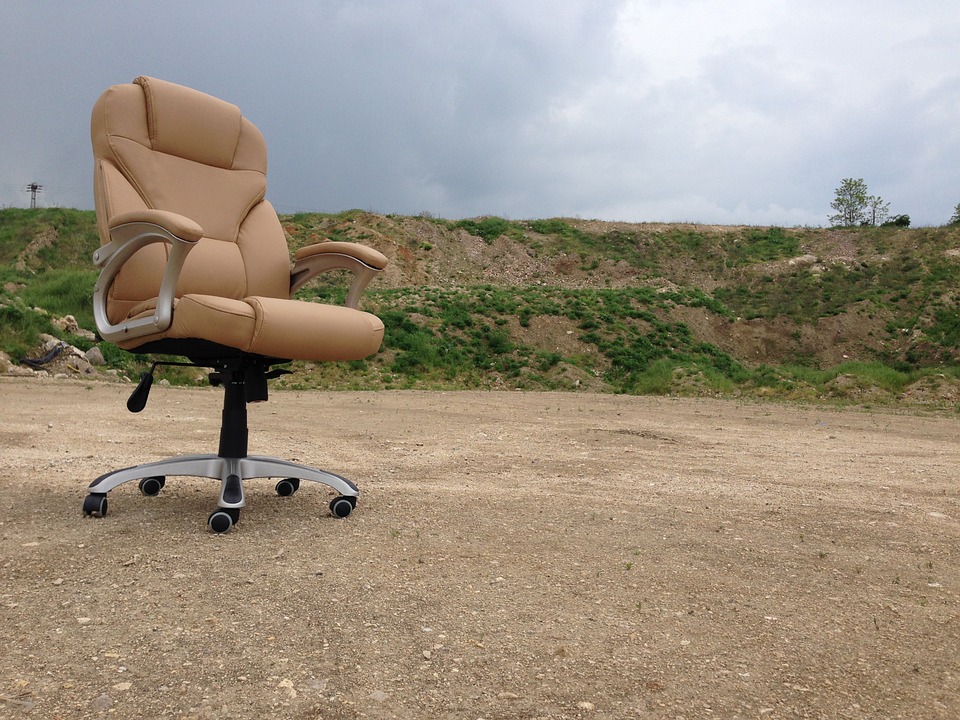
    moveWalk into the average home or office. See if you can spot the biggest health hazard in the room. Is it the fluorescent lights? Emissions from display monitors?? The mites, the dust, the bacteria lurking in the air ducts and pipes? No. The most dangerous ticking time bomb in the place is your chair.

    I once taught painting at a nursing home in South County. The director, Darnell, grew up in nursing homes. Her mom was a director who often brought her daughter to work. By the time we crossed paths, Darnell had seen it all and heard every excuse in the book of senile wheedling. “They think I’m the bitch of the century because I won’t let them sit down in those the wheelchairs,” she’d say. “They whine and gripe, but I know they can walk. They need to keep moving as long as they can, even if it hurts. That wheelchair — it’s always the beginning of the end.”

    And it was true. People seemed to just melt into those chairs once they took to them. They stopped coming to painting class and stayed in their rooms. Next time I heard about them, they were gone.

    Today, the average office worker spends about 10 hours in a chair. First, there’s all that time at a desk and in front of the computer. People sit at meals, then on the commute to and from work. Back home, they sit down again. It’s tempting to just give in and stay there, playing video games or watching TV all night. Exhaustion is a great excuse to do nothing but veg out.

    I completely understand. Nobody wants to get up and run laps after they’ve put in a grueling day. But there’s a few things you should know about this “rest” you are giving yourself while slumped in a chair.

    Even if you exercise a few days a week, and regardless of your body mass index, if you spend six or more hours a day in a chair (and this is amazingly easy to do) you are far more likely to develop high blood pressure, heart disease, cancer and, especially, diabetes.

    If you spend a minimum of just five or more hours a day in a chair, you are far more likely to develop or worsen a chronic disease. Unfortunately, chronic fatigue is prevalent among those with lingering illness. Remaining perpetually sedentary only makes the exhaustion worse.

    Sitting for a mere four hours or more a day gives you a nearly 50% increased risk of death from any cause. Reducing your time in the chair could increase life expectancy by two years.

    The average adult admits to spending at least 55 percent of the day doing something sedentary. The real percentage is probably far higher.

    Human beings need to move. The blood that travels through our veins is a living stream and the movement of this fluid is vital to our health. When spring water rushes down the side of a mountain, it bubbles, fresh and clean, over rocks and roots, through pitfalls and passages. Unless poisoned at the source, such water is generally safe to drink, because there is no opportunity for bacteria to grow or for microbes to multiply; the movement of the water sweeps them along like a sanitation truck. But if that same spring happens to spout up in the flatlands where it collects in a stagnant pool, it becomes the festering ground for decay and algae, breeding mosquitoes, fungus and rot.

    A large number of us work at jobs where we are allowed as much freedom of movement as a chained bear. It’s not just at work. Students sit in classes, sit in study. Physical education has lost importance and presence in our schools. In the meantime, despite advances in medicine and a lot of complex and expensive treatments, diabetes, chronic disease and depression are on the rise.

    So many of these problems could be both solved and prevented if we did one simple thing: move. Here’s a place to start: Try working standing up. Many businesses have become very supportive of creating ergonomically healthy work stations for employees. They know they’ll have fewer worker’s compensation cases and time out for illness if
    they do.

    What about your commute? Is work or school close enough to bike or walk? And you might want to exchange your “thumb action only” digital games for some interactive dance stuff that makes you move. Not to mention sex. It’s a great aerobic activity.

    So get that stream of life inside of you flowing, put down the devices, get up off the chairs and MOVE.

  • Treat the Migraines? Or Quit My Job?

    Treat the Migraines? Or Quit My Job?

    jobHi, C. I know you’re not a doctor, but I’m not sure my doctors are helping, so here’s the deal. I began going to our family doctor because of migraines from the loud noises at work. The high pitched squeals of the air compressors, engines and pressure washers drive me nuts, especially the air chisel. Light is also a trigger — I’ve gotten migraines from light bouncing off glass or metal. I’ve also been having tingling sensations on my skin, like ants, and bouts of dizziness. My doctor sent me for an MRI and blood work. The tests all looked normal, so I was referred to a neurologist. She interviewed me, checked my reflexes and memory, then prescribed 2 drugs: Sumatriptan (for when I get a migraine) and Nortriptyline (taken before bed to prevent migraines).

    After three days I stopped having migraines. It’s been about two months since then. While taking the night pill, the shop noise hasn’t bothered me as much and I don’t have to wear earplugs as often. I tried not taking either pill for a week. After a few days the noise at work became increasingly more bothersome. By the way — this job is not exactly on my career path. I’m a musician, but it’s impossible to make a living at that right now because I write my own music.

    The stress and migraines are really getting to me. My boss has been psychotic lately and I’m having panic attacks. I’m calling out sick tomorrow. What do you think?
    Charlie

    Dear Charlie;
    Good move. That’s the best idea I’ve heard yet.

    Basically, here’s what’s going on. You work in hell. The nice doctor gave you some pills so that you could continue to work in hell. After all, your tests didn’t show any signs of heavy metal poisoning yet, you can still remember your name, and lord knows we all gotta work. So, let’s talk about what the nice doctor gave you to make that possible.

    Nortriptyline is a tricyclic antidepressant. It makes those sounds more tolerable by inducing a sense of emotional removal. It can also, paradoxically, cause anxiety and panic attacks, and carries a black box warning due to the possible risk of suicidal thoughts.

    Sumatriptan is supposed to ease migraine symptoms. It claims to provide “ prompt treatment to help you return to your normal routine.” Paradoxically, overuse can sometimes lead to worsening of headaches or cause rebound headaches. It should not be used for long periods of time.

    So, Charlie … how long ya expecting to stay in hell? And seriously, why would you want to? From your letter, I suspect that you already know what you should do. You just want some encouragement. No problem. Go to the edge of the cliff and wait for me. I will give you a good swift kick in the butt.

    The use of antidepressants in this country has nearly doubled since 1999. They are the third most commonly prescribed drug in the US. At least half of the people taking these drugs, including you, did not obtain them from a psychiatric professional. A neurologist prescribed yours, but in fact, primary care doctors are responsible for handing out the majority of prescriptions. When standard tests don’t give them a clear medical problem to whack at, it’s sort of like saying, “Jeez, we don’t know WHAT the hell is going on, but at least this will make you stop complaining.”

    There are too many doctors out there who are treating what is essentially “I Am Grossly Unsuited To The Life I Am Stuck In” syndrome with pills that make people comfortable enough that they could drift along for years in places they don’t want to be. If the pills are stopped, patients experience a sense of panic that is so unbearable they run right back. If the pills begin having dangerous side effects, their nice doctors find something else that will make them numb without killing them … or at least something that corrodes them at a slower pace.

    I am saying this to the entire freakin’ country: If you hate your life, do something to change it. People who hate their lives don’t make anyone happy. People who hate their jobs don’t do a good job. If they do, it is because they are either drugged into submission, or putting on an act that is sure to cause them to take out their real feelings inappropriately on innocent bystanders at some point. And god help the next person who actually deserves their anger. It’s a fabulous excuse to KILL them.

    Get out while you are young, Charlie. Change gets harder the longer you wait. Trust me on that one. There are so many things in this world to be. There are people who would actually love your job. Let them have it.
    C

  • Are You Feeling STRESSED?!?

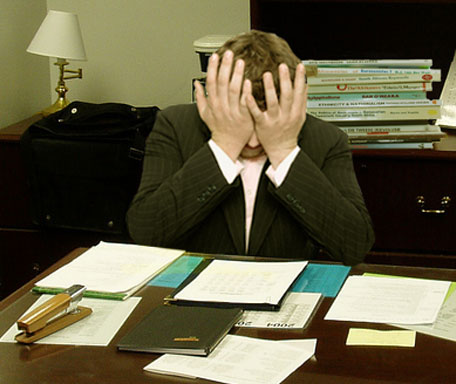
    Medical research has proven that stress has a very negative effect on human health. No matter what your problem, stress can make it worse. In many cases, stress opens the door to illness; if there is a virus going around you’re a lot more likely to catch it if you’re frazzled, and type A personalities who are stressed by nature are far more susceptible to heart disease and cancer than their calm counterparts. We are human and can be weakened by emotional and physical pressure; even metal breaks under repeated twisting.

    The catch-22 is that our society is pretty much set up to push us into high-pressure situations. Just keeping up with basic living expenses is a strain for those with little income. Conversely, keeping up performance levels and vying for top positions can be stressful if you are a big earner. Throw in family expectations, socioeconomic pecking orders, your love life and world terrorism, and you have the perfect recipe for hair-pulling anxiety.

    However, here’s the interesting thing: You can expose a number of people to the same stressful situation and not a single one of them will react the same. Some will freak out and start chattering or fidgeting, others will clench their teeth and clam up, still others will simply disengage.

    This leads us to the question: Is stress bad for us or is the way that we react to it bad for us? The answer is yes.

    The truth is, our circumstances and the situations we find ourselves in are a combination of two things — what happens and how we handle it. Circumstances can present us with a dire situation, but whether it snowballs into health-damaging stress or becomes just a passing headache is almost entirely up to us. “Almost” is the key word here. Not all of our reactions are conscious. Some of us were programmed from an early age to react badly to stress. We were raised by parents who didn’t handle pressure well and we never learned healthy coping skills. And some of our emotional reactions to stress can begin at a genetic level; many anxiety disorders share common DNA. Recently, even pessimism was linked to a specific gene variant.

    Does this mean that some of us are doomed to be torn apart by the slings and arrows of fortune? Not at all. It simply means that some of us have to make a conscious effort to react differently. New behavior can always be learned with enough effort and time. Even genetic tendencies can be counter-balanced. A study of heart attack survivors found that their risk of a second cardiac event was reduced by a whopping 74% if they took a stress management course. Here are some basic steps that can help to neutralize your sizzling nerves:

    BREATHE. The next time you are tensing up, pay attention to your breathing. Most of us start holding our breath or limiting our breath intake the moment the pressure is on. This unconscious reflex not only raises our blood pressure, it reduces the amount of oxygen that is getting to our brains, so we act without thinking clearly. Breathing calmly and deeply will lower your blood pressure and alleviate sensations of anxiety.

    STEP BACK. If someone is standing in front of you screaming at the top of their lungs, there is no reason you have to join in. The more negative energy that is thrown into a situation, the more likely it is to explode in everyone’s face. Are you the kind of person who gets angry with everyone who disagrees with you or gets in your way? Type As tend to make mountains out of molehills. Cut it out! Are you late for an international flight? No? Then let the asshole cut in line in front of you. It ain’t the end of the world.

    LIFESTYLE. Do you exercise? Do yoga? Meditate? Enjoy the company of supportive friends? All of these have the effect of releasing stress and tension. If you do nothing but sit and stew in your own juices, you will breed monsters. Too many of us lead sedentary lives of forced tasks and repetitive movements. We were not meant to live in chairs. Everyone has a list of reasons that they don’t have time for workouts or alpha waves. But just wait until that first heart attack and see how much time you suddenly have. There’s nothing like three months of forced disability leave to put things into perspective.

    Life is a series of choices. We can’t always choose what happens, but we CAN choose not to let it get to us. A new year brings new opportunities. Choose well.

  • RePOOPulating Your Gut

    It may sound like a new gag item on the shelves at Spencer Gifts, but rePOOPulate is no joke. It is the product of extensive medical research, developed by an enterprising team at the University of Guelph in Canada: fake poop designed for the treatment of conditions such as C. diff colitis, a gastrointestinal infection caused by the bacterium Clostridium difficile (CDI).

    How is rePOOPulate produced? It is a feculent witch’s brew, distilled by taking beneficial bacteria from the poop of a
    healthy donor and purifying it into a multi-species mixture capable of curing antibiotic-resistant C. diff, along with a
    number of other autoimmune diseases.The RePOOPulate mixture contains 33 species of beneficial bacteria. In
    tests, it was administered using a fecal transplant method, injected into the colons of subjects with recurrent C. difficile
    infection. Subjects achieved normal bowel patterns within two days and remained symptom-free for the remaining
    6 months of the study.

    The idea of fecal transplants may seem bizarre, but it is not a new one. The procedure was used in traditional Chinese
    medicine as far back as the 4th century for the treatment of severe diarrhea. The Mayo Clinic alone has done
    hundreds of transplants since 2011. The idea behind them is medically sound. Our intestines are normally inhabited
    by colonies of “good” bacteria that check the growth of CDI. But these beneficial bacteria can be killed off, and
    when they are, CDI grows uncontrollably, poisoning the gut and producing inflammation. When fecal material from a
    person with a healthy gut is transplanted into the GI tract of a patient whose own bacteria is depleted, the “good”
    bacteria takes hold and regrows in the patient’s tract on its own. The procedure has been shown to have a success
    rate close to 90%, which is astonishing, given the close to 0% track record of traditional treatments.

    I applaud medical science for having the balls to examine this approach. Fecal transplants have a distinct “ick” factor,
    spawn regulatory headaches for the FDA and are counterintuitive to the traditional symptom-oriented Western medical
    approach. But here’s what my own shit detectors can’t help but notice — C. diff colitis is a condition that might not
    exist, were it not for Western medicine. This disease is very rare in the general community. It is most likely to
    afflict patients in hospitals or long-term care facilities. The prolonged use of broad spectrum antibiotics is the primary
    cause of C. diff, but GI surgery, chemotherapy and the use of stomach acid reducers such as Prilosec and Nexium
    also increase the risk. All of these pharmaceuticals and invasive treatments kill off the healthy bacteria in the GI
    tract, allowing CDI to grow and poison the system.

    What is truly ironic is how doctors typically treat the disease. It’s just another game of Whac-A-Mole on the midways
    of medicine. When C. diff symptoms pop up, physicians whack them down with a 10- to 14-day course of oral antibiotics.
    Improvement usually happens quickly, but … surprise! The symptoms soon return. Whack! Another round of antibiotics
    is given. There is another quick improvement, followed by another return of symptoms. And so the game goes on, the plop plop of mallets on soft furry heads.

    I asked my own GI doctor, who is a very savvy and intuitive woman, why physicians didn’t anticipate the depletion of
    beneficial bacteria that follows antibiotic treatment and recommend probiotic supplements to help return the gut to
    normal. In fact, why don’t they recommend probiotics to all their patients? This over-the-counter supplement has
    been valued for many years in alternative medical circles. My doctor’s response was one I am becoming accustomed
    to hearing: “There is no proven scientific link at this time, so we can’t recommend probiotics as part of medical treatment.”

    OK, your doctor can’t tell you this, but I will: Anyone who is taking antibiotics or exposed to other risk factors should
    be taking therapeutic doses of probiotics to help replenish the beneficial bacteria in their digestive tracts. While probiotics
    are an “unproven” supplement and your insurance won’t cover it, these can be the best line of defense against myriad GI woes. I’d recommend consulting a nutrition specialist; not all probiotics are created equal and there are many strains that can be combined and specified for individual needs. But for anyone who has stomach and gut problems, this is an essential supplement. I have lived with Crohn’s Disease for 40 years, and one of the greatest improvements I ever saw to my own health was when I began including probiotics in my daily diet.

    I’ve said it before and I will say it many times in the future: Prevention is always the best medicine.

  • No Guns Under the Tree

    No Guns Under the Tree

    gunWhile visions of sugar plums dance in our heads, our brains are not fully focused. As a result, people
    fall prey to an astonishing variety of safety and health hazards over the holidays. Ordinarily, the dangers that lurk are in the form of weight gain, choking, house fires, traffic accidents and the accidental poisoning of pets by Christmas plants…but this year, but after the recent spate of mass killings that have occurred in the US, I feel there is a much bigger hazard at hand to the public than burning Christmas trees. Here’s my first word of advice for holiday safety:

    DON’T BUY ANYONE YOU LOVE A GUN.

    Following the most recent spate of killings in California, gun sales in this country have skyrocketed. When people are scared, they don’t think straight. They react emotionally. The idea that mass killers are out there threatens our sense of security. I can understand the rationale: “If they have guns, we
    need guns.” “I want to protect my family.” “It is my constitutional right as a citizen to arm myself.” OK, here’s the facts, citizens. You can draw your own conclusions.

    The latest figures from the Center for Disease Control show 33,636 deaths in the US this year due to firearms; the category details are not in yet. The last completed CDC study in 2008, which analyzed just over 30,000 deaths, found that 17,002 of those were suicides, 12,352 homicides, and 789 accidental firearm deaths. In addition, there were also nearly 70,000 nonfatal injuries from firearms, leaving us with the reality that over 100,000 men, women and children are killed or wounded by firearms in America during the course of just one year. This translates into one death from firearms every 17 minutes and one death or nonfatal injury every 5 minutes.

    In response to these statistics, an article was published in The New England Journal of medicine that stated: “By any standard, this constitutes a serious public health issue that demands a response not only from law enforcement and the courts, but also from the medical community.”

    Why? Let’s look at those figures again. Approximately 18,000 out of over 30,000 gun deaths were self-inflicted or accidental. Only 12,000 of the deaths were homicides. And how many criminals were shot to death by innocent bystanders defending themselves? The figures were too inconsequential to
    document.

    We would all like to imagine that if a crisis occurred, we could jump in and save the day. It’s a nice daydream, but it is spawned of ego, wishful thinking and way too many shows on criminal justice. I trained in a dojo for 14 years and saw a very different picture — the average person, when startled by a
    sudden attack, is so flustered that all they can do is react with panic. It takes years of training to react with a calm and level head.

    The truth is that every person who buys a gun for their own protection is far more likely to shoot either themselves or a close friend or family member with it than they are an attacker. This is not an opinion. It is a proven fact. Here is another factor that gun enthusiasts do not seem to consider in their
    defense of firearms: There are a lot of unstable people out there with grudges against humanity. Mental illness and sociopathic thinking seem to grow by the day, worldwide. Put a knife in such a person’s hand and they can inflict damage to those within arm’s reach. Put a gun in their hand, or an assault
    rifle, and they are going to mow down an elementary school playground without pausing for breath.

    The more guns that are out there, regulated or unregulated, the more deaths there are going to be. It’s a fact. If more guns made people safer, this would be the safest country in the world because we have more guns than anyone else. In reality, there are more people killed by guns in the United States than
    any place else on the planet.

    The terrorists and the criminals who are going to come after us are not people like us. They are hardened, well-trained and capable of being ruthless and indifferent to human suffering. I say this in a kind way, but most of us out here are freakin’ pussies. We are accustomed to being able to buy or talk our way out of anything. We believe in our own hot air. Unfortunately, bravado does not replace combat readiness.

    Please. This holiday season, don’t set your tree on fire, don’t poison your pets with poinsettias and don’t drive drunk … but most of all, for the sake of all our children, do not buy any more guns. We need them like we need a hole in the head. Literally.

  • How to Take Care of You This Season

    How to Take Care of You This Season

    luminariaThe holidays are a distinctly bipolar time of year. While they may bring twinkling lights, laughter and
    mistletoe to some, the rest of the population anticipates the first strains of festive music and Hallmark
    cards as if they were portents of a coming plague.

    For many, the holidays are hell. One is expected to have a loving family and friends, enough cash to
    shower them with gifts and a warm house filled with the scents of roasting turkey and pumpkin pie. A
    surprisingly high percentage of the population have none of that — the homeless, the recently divorced,
    students who are stuck on campus and people too poor to pay for a postage stamp. Many are also
    estranged by either innate cynicism or a series of ever expanding bad choices. These bad choices are
    usually accelerated by pre-New Year’s festivities, a time when the Norman Rockwell version of heavenly
    peace is shoved down our throats like so much stuffing.

    Contrary to popular belief, suicide rates actually drop before and during the holidays. I believe that this
    is due in part to sheer good manners, along with the fact that the shit hasn’t entirely hit the fan yet and
    everyone is still in a sugar-plum induced coma. The real danger comes after the holidays, when the
    crap has been vaporized and is settling in a fine mist over post-holiday revelers who are just coming
    to. In January, the suicide rate jumps by about 40%. Expanded waistlines, shattered illusions and inflated credit card debts may be part of the reason why.

    So, here are some tips to avoid those post yule urges to put a gun to your head:

    1. Do NOT drink an entire case of Heinekin and chase it with a bottle of wine every night, promising
    yourself that you will make a clean start of it in January. Likewise, do not eat three cheesecakes and a
    partridge stuffed with a pear tree every day and swear you will live on lettuce leaves from 1/1/16 until
    the fourth of July. You won’t. Just trust me on this.

    2. Do NOT fall prey to the tear-jerking, gingerbread encrusted commercials dancing on your devices.
    The retailers are out to suck the last drop of cash out of you, targeting your brain with every sentimental guilt trip in the book. Many stores do a third or more of their entire year’s business during November and December. Good for them. Not so great for you.

    3. Do NOT shut yourself away and sneer at everyone who is partying and tossing presents. All it does
    is make you feel crankier. Yes, commercialism sucks, but there is something truly warming about the
    whole idea of peace, love and goodwill towards men. If you have already alienated everyone you
    know, make yourself useful to strangers. Volunteer at a community kitchen or for First Night Celebrations. You have more in common with the rest of the planet than you know. Or, try hosting a party at your own rat hole of an apartment for other cynics who are at loose ends. Such dinners can be surprisingly cheerful — sort of like a family gathering, but minus the drunk uncles, vomiting cousins and  generations of emotional baggage.

    And just remember — what happens in Vegas may stay in Vegas, but what happens during the holidays
    tends to stay on your waistline, in your liver and as overdue bills. The laws of physics and consequence
    are not suspended just because the mistletoe is. This year, give yourself the gift of common sense. It’s the gift that keeps on giving.

  • Advice from the Trenches: Freshman 15

    Advice from the Trenches: Freshman 15

    untitled

    Dear Sister C;

    Until I went to college, my weight was pretty normal, maybe a couple pounds over. This first semester, I’ve gained over 30 pounds. It’s making me miserable and I’ve started hiding my room because I feel like a whale. I saw the school therapist and she was more concerned as to whether I was doing drugs. I don’t even drink, so she said not to worry — a lot of people gain weight freshman year. She said I should like myself as I am and keep up my studies.

    In the meantime, there are candy wrappers and Dorito bags all over the floor, and I don’t have any friends.

    Is it all in my head? Do I just need to accept myself and get out there?

    Ms. Moby

    Dear Moby;

    I’m sure your school therapist is a perfectly nice lady with good intentions, but she’s an idiot.

    She’s wrong on both counts — your weight gain IS something to worry about and you are, in fact, doing drugs. No, I’m not kidding. Allow me to explain.

    Research from numerous studies have shown that high-fat/high-sugar foods stimulate the brain in the same way that drugs do. Sugar creates the same changes in the dopamine receptors as alcohol and other addictive drugs. In fact, lab rats found Oreos to be even more addictive than cocaine. This may explain why some people can’t resist chocolate any more than a heroin addict can resist smack. It is also perhaps one of the reasons you are hiding in your room, surrounded by the equivalent of empty syringes. Sugar is your drug of choice — and it also really messing with your head. That moodiness, anxiety and depression? Sugar. You feel euphoric when your blood sugar goes up; you feel like dog waste when it drops. What will get it up again? More sugar. And if you try to quit cold turkey? Welcome to the worst headaches of your life and an urge to bite the heads off of bats.

    Now, the weight gain. It’s not about whether you think you look fat. It’s about what that extra weight is doing to your health. If you were already a bit overweight, a weight gain of over 30 pounds has pushed you into a dangerous new category: obesity. Weight to this extent is no longer a cosmetic or emotional issue. It becomes a health issue. Obesity is right up there with cigarette smoking when it comes to damaging habits. You are setting yourself up for a lifetime of problems. Once you gain a new fat cell, it never goes away. Dieting only makes those suckers shrink … and they seem to eternally yearn to reinflate.

    I understand that colleges are far more concerned about their students getting involved with drugs than they are with weight issues, but I find it deeply disturbing that licensed therapists are still pursuing the idea that weight is a “feminist” issue, or a matter of self-acceptance. One of the reasons that men die younger than women is because they don’t make anywhere near the same effort to control the pounds and their diets are usually crap.

    Listen, I don’t care what you look like. I care about your personal sense of well-being. You are miserable. And you are not going to feel any less miserable if you stay in your room eating junk food and becoming a bipolar, self-loathing mess.

    Here’s what I suggest. Find a weight loss or support group on campus and join it. That sense of community is going to save you from the emptiness that drives freshmen to eat for comfort. It will surprise you how many other people are going through the same thing. Feeling isolated and exiled is half your problem. There’s nothing wrong with you that isn’t wrong with thousands of freshman all over the world. You are away from home for the first time, haven’t found your place yet, and you feel out of it.

    A clue — a lot of the people who seem like they are having a fabulous social life are really good actors, or drunk … sometimes both. Appearances are deceiving. When I worked with a psychiatrist, he had many slender, pretty young patients who though they were grotesque. In fact, the more attractive the girl, the more insecure they seemed about their looks.

    Weight and sugar addiction are health problems; your self-esteem is another issue. If you replace the junk with real food you will be surprised at the way your food cravings go away. Real food is not addictive. Have you ever had to restrain yourself from binging on steamed broccoli or lean meat? You will also be surprised at how much more stable your moods are and how much more you like yourself. When you stop struggling with addictive foods, you can finally get on with your life.

  • Advice from the Trenches: Graduating from Design School

    Advice from the Trenches: Graduating from Design School

    Artists_PaletteDear Sister C;

    I just graduated from a design school as a top student. I had no problem dealing with tough deadlines or assignments. But now that I’m out, I feel like I’m back to square one. I wanted a career in fine arts. It’s not like there’s a JOB out here for me. Freelance sucks. We had a few classes on marketing my senior year, and they made it sound pretty straight forward — research markets, send stuff out. What they didn’t mention is that the market is glutted and insiders seem to get everything worthwhile, and it could take years to get anything like a steady income going.

    In the meantime, I am sinking into a depression that feels like molasses. I don’t feel like doing my own art anymore. I don’t feel like doing anything. My parents got concerned, came over and dragged me to a therapist and he said something about bipolar disorder and a bunch of other crap and now they all want me to take this medication. At this point, I feel so shitty, I’m thinking they might be right. What do you think?

    Art Less

    Sister C says:

    I’m sorry, but I really gotta say this: What are you, some kind of idiot?

    If you really want to be an artist, you have to learn how to deal with this shit. Look, obviously you have talent, but talent is just part of the picture. Hard work and a resilient character are more important in the long run. If you go out there and just float around, hoping someone will recognize your genius, you’re gonna get creamed. With all due respect to the medical profession, doctors don’t have a clue when it comes to artists. We are all pretty much bipolar. We have intense emotions — we ride the roller coaster instead of bobbing up and down around the merry-go-round. The trick is in learning to control it. The really great artists are in control and out of control at the same time. It’s not a trick you learn overnight.

    You don’t learn how to handle emotions by taking antidepressants. Those pills work by distancing you from ALL of your feelings, not just the bad ones. Great art requires passion and drive. You don’t get that by becoming an even-keeled, monotone version of yourself.

    Right now you are experiencing culture shock. You went from a fully supportive environment where your only responsibility was to create. Now you have to make your mark in an unsympathetic world where there are lots of really good artists trying to make their mark, too. Nobody knows who the hell you are. I don’t think you know who you are yet either. It’s the struggle that defines us, and you seem like you want to drop out before you even get started. If you want to be an artist, you can’t solve problems by letting Mommy and Daddy and the nice, understanding doctor medicate you so you don’t feel uncomfortable. Life is uncomfortable. Get used to it.

    My advice? Don’t try to freelance to earn a living while you try to find a gallery for your fine arts work. Freelance is a full-time career and you will be competing with agents and commercial artists who are approaching this as a business. Get a part-time job so you don’t stress out over the bills, one that doesn’t drain your brain or tax your energy. Then get out in the world and learn something about real people and what they do and how they feel. Stop thinking about yourself. Become part of the arts community. It will open up a new world. There’s a lot of people who understand what you are going through. You can help each other through. After a while, you will have things figured out a whole lot better than you do now.

    You aced school. That was Phase One. This is the Phase Two. You are ready for it, you just don’t want to do it. Things were good in school. You were fed assignments and patted on the head. Now you’re not. Boo hoo. If you had a history of mental illness, or couldn’t hack classes, I might be concerned, but in all honesty, I think you’re just being a baby.

    Take a while to adjust and learn. You didn’t leave school ready to be a mature artist; you left school ready to grow into one. So grow up, already, and get out there. Closing yourself off in a self-pitying depression or padding your brain with medication ain’t gonna do it.

  • Samhain Arrives in New England

    Samhain Arrives in New England

    For most of us, October is the month of Halloween bringing costumes, candy and flying bats, along with TV reruns of every horror movie ever made. But for the followers of Wicca, October holds a much deeper meaning: It is the month of Samhain, one of the four greater Sabbats of the year. It symbolizes the final harvest and is celebrated by many as the beginning of a New Year.

    Along the northeastern coast of America, festival fires will burn long into the night throughout October. Of the 52 Samhain events listed nationally in “The Witches’ Voice,” 10 are in New England. Salem, of course, is our town best known for its history of witchcraft and the occult. It is also, unfortunately, the setting for many a gruesome and gory book and film. In these stories, witches are invariably associated with the Evil Dead, black magic and broomsticks. It has given the entire genre an undeserved bad rap.

    Can we please set the record straight? Witches do not worship the Devil or idolize Satan. Wiccans are, by and large, a green group, participating in Earth Day and concerned with balance and the cycles of nature. Witchcraft is a tradition with ancient roots, going back to a time when survival depended upon a successful hunt and fertility. The rituals that Wiccans perform are, by and large, designed to attune them to the cycles of nature. The main tenet of Witchcraft is: “An’ it harm none, do what thou wilt.” Wiccans are often healers and herbalists, more spiritual than scary.

    In RI, don’t miss the slide show and discussion on October 14, “Don’t Fear The Reaper: Superstitions Surrounding Death & Darkness,” by Yssion, a practicing member of the New England Coven of Traditionalist Witches. The event starts at 7pm at Mother Mystic, 179 Dean Street, Providence. Audience members will have a chance to make and take home a protective charm.

    As the witching hour approaches, you need not travel far to find Samhain celebrations that are open to the public. On October 23 – 24, The 5th Annual Witches’ Ball will be held at The Silver Willow, 54 Fall River Avenue, Rehoboth, Massachusetts. The Connecticut Wiccan and Pagan Network hosts their 2015 Witches’ Ball and Samhain Market on October 24 in Orange, Connecticut.

    Salem, Massachusetts, has a plethora of events planned this month, beginning with The Annual Psychic Fair and Witchcraft Expo, from October 1 through November 1, at Museum Place Mall, 176 Essex Street in downtown Salem. Admission is free. The fair features the city’s most gifted psychics and witches, and events range from tarot and past life readings to live dragon ritual drums and magic charms.

    A whirlwind of hauntings, portals to the spirit world and celebrations of the dead lead up to The Official Salem Witches’ Halloween Ball at Hawthorne Hotel on October 31. You can find full listings for all Salem events at festivalofthedead.com/witchesball/index.htm.

    All local and national listings can be found at witchvox.com/vn/vn_evw/ev_samhain.html