Author: Emily Olson

  • Expungement Explained

    Expungement Explained

    John Karwashan, Esq.

    Criminal records for marijuana-related offenses have excluded individuals — disproportionately members of Black, brown and low-income communities — from engaging in meaningful opportunities in our state for far too long. Over the past 50 years, the failed War on Drugs has ruined lives in Rhode Island, and it is time for the state to fix it.

    Automatic expungement is a critically important component that elected officials must include in any marijuana legalization bill. It calls for all marijuana-related offenses to be removed from criminal records, without requiring every individual with marijuana-related offenses on their criminal record to file the necessary paperwork in court — a process that can be confusing and difficult. Automatic expungement streamlines the process by putting the responsibility on those agencies that are primarily responsible for the creation of these criminal records. 

    Another option being discussed among social equity advocates involves urging Governor McKee to use his constitutionally granted pardon power to issue a pardon proclamation for every individual with a marijuana-related offense on their record. These pardons, combined with sealing public records, could provide similar results to automatic expungement if done properly.

    In states that have already legalized marijuana with some form of social equity component, we have seen the impact of these policies first hand. Tens of thousands have cleared their names, while citizens in other legal states struggle with a restricted expungement process. Several states have used the governor’s pardon power with success, including Illinois, where Gov. J.B. Pritzker recently announced the pardon of nearly 500,000 low-level marijuana convictions.

    The benefits of automatic expungement or the governor using his pardon power are plenty. Automatically expunging marijuana-related offenses from criminal records will undoubtedly create more opportunity in our Black, brown, and low-income communities because marijuana-related offenses will no longer be used as barriers to employment, housing and student loans, among other things. Automatic expungement also would be a signal from our elected officials that they recognize the harm the failed war on marijuana has created and are ready to right those wrongs. 

  • Beauty

    I am a woman, I am a queen

    Beautiful mind, beautiful soul

    Sexy from my eyes to the bottoms of my feet

    Every bit of me, the pride runs so deep

    Walk tall for all to see and witness

    The arrival of a Queen

    Don’t fret I’m just being me

    Seeing you creep and take a peek

    Loving and admiring all that you see

    Letting my insecurities get the best of me for a moment I get weak

    Then I think, oh no girl they like what they see, it’s you they seek

    A rockstar when you move the crowd 

    A lioness they hear the roar

    A warrior fight till they fall

    A queen as they stand and bow

    A woman I shout out loud

    I am Beauty.

  • Revolution Solution: Fashion Revolution PVD fights fast fashion culture

    Before you ditch your skinny jeans for a pair of wide leg jeans that you’ll be tossing for next year’s trend, consider the impact. The fast fashion industry thrives on consumers salivating over the latest looks that make it from runways to closets with lightning fast speed, only to languish in landfills when the trends inevitably change in a season. These clothes are more or less designed to be disposable — they’re made out of cheap materials and poorly constructed, and their environmental impact is huge. The clothing manufacturing industry uses trillions of liters of water each year. Cheap dyes in wastewater pollute our water, then consumers pollute it further by tossing their synthetic clothing into a washing machine, allowing tiny plastic fibers to find their way into waterways.

    There’s also a human cost to fast fashion. In order to produce clothing quickly and inexpensively, factory workers often are overworked and underpaid, forced to work in unsafe conditions. In April 2013, Raza Plaza, a shoddily constructed eight-story building in Bangladesh that housed five garment factories, collapsed, killing more than 1,100 people and injuring more than 2,500. This tragedy was the impetus for Fashion Revolution Week, which takes place in April to honor the Raza Plaza victims.

    Fashion Revolution Week is an international event that fights back against fast fashion by supporting a more ethically sourced and sustainable fashion industry. Cities around the world participate, and this year, Betha Wood is the city lead for Providence. I recently spoke with her about her passion for the project.

    Emily Olson (Motif): How did contributing to a more sustainable fashion industry become a passion for you?

    Betha Wood: I’m one of the founding members of Style Week, which is one of the local fashion weeks in Providence. I was the director of hair for 10-plus years, and through that experience, I got lots of work backstage at NY Fashion Week and London Fashion Week. I’ve been all over the world in fashion, and I’ve been abused by the top people in the industry. I learned a lot from those negative experiences because it showed me that I want to change the culture backstage. It’s interesting that this organization [Fashion Revolution] was founded because of the mistreatment of people in factories. but it really relates to every avenue in the industry — people in retail, the models, the agents. It’s culturally nasty a lot of the time and it doesn’t have to be. Maybe if we can make fashion kind we can make kindness fashionable.

    EO: Clothing that is sustainably and ethically produced and made out of natural fibers can be prohibitively expensive. What would you suggest to someone who wants an ethical wardrobe, but can’t afford one?

    BW: Focus on recycled clothing or build a relationship with a local designer to rework the things you’ve always had that you love. It might be expensive, but then you’re making your loved clothes last. And we need to educate ourselves. Most people don’t know the fashion industry is the most pollutive in the world.

    EO: What is Fashion Revolution Providence doing to combat fast fashion?

    BW: I created a map that highlights as many Providence-based vintage and resale shops, as well as tailors and cobblers, that I could find. I’m also making mini films that tell the stories of the people who are in the industry or impacted by it. 

    Rhode Island is the birthplace of the industrial revolution. We had the first cotton mill in the US. We have some of the oldest polluted waters in the country, and today, Pawtucket has some of the cleanest waters. Let’s celebrate our rich textile history, pat ourselves on the back for what we’ve accomplished, look at our next steps and share what we’ve learned with the communities behind us.

    Fashion Revolution Week takes place April 19 – 25, with a film screening to take place on April 25. Find details on the film screening as they become available at fb.com/FashionRevolutionPVD or @FashionRevolution_PVD. Designers, tailors, makers and cobblers who want to participate next year should contact fashionrevolution.pvd@gmail.com. Motif partnered with Fashion Revolution to create its map and films.

  • The ABCs of a Woman

    (Sung)

    Sister,

    You’ve been on my mind

    Sister, we’re two of a kind

    So sister,

    I’m keepin’ my eyes on you

    I betcha think

    I don’t know nothin’

    But singin’ the blues

    Oh sister, have I got news for you

    I’m somethin’

    I hope you think

    That you’re somethin’ too

    (Spoken)

    You are something, more than something. There aren’t enough letters in the alphabet, words in the dictionary, to properly portray the power and persistence of the double X chromosome.

    Awesome Amazons, Aphrodites

    Blessed bohemians 

    Courageous CEOs

    Destined dynamites and deep dive diplomats

    Experienced energizers

    Fierce feminists

    God’s gifts

    Honorable hustlers

    Implied igniters

    Juicy joys

    The keeping kind of kin

    Limitless leaders

    Mind-blowing mothers in a man’s world

    (Sung)

    This is a man’s world, this is a man’s world

    But it wouldn’t be nothing, nothing without a woman or a girl

    (Spoken)

    We stand him up when he can’t do anything other than take a knee

    We are the whoa in woman

    We are the womb, a safe space in the face of honor killings, objectifying ooglers, constant combat, sex trafficking, marital rape and non-equitable pay 

    82 cents for every dollar a man gets

    59 cents if you are a Black woman

    50 cents if you are a Latina

    We sometimes have to yell into a void

    Pursue when we are tired of trying

    Take on responsibilities that aren’t ours

    Run into burning, systematic racism fires

    Even at our worst and perhaps the most dishonest place in our birthright, omnipotence oozes from our perfect, passionate pores.

    We are the glue, fuel, key, the drumbeat for the best rap battle. 

    We are the push and the pull an elastic, safety pin and paper clip – sometimes all at one

    We are the needed vaccine

    We bind what is broken with body, soul and bridge building bravery and beauty

    We get it done, sometimes with a smize, wink, sashay or hair toss while surpassing the odds.

    There are indeed not enough words to eloquently explain the exquisiteness of an effeminate

    Notorious notables

    Opulent optimists

    Poised packages, princesses

    Quintessential queens

    Righteous resonators and responsible rock stars

    Scintillating sisters

    Tenacious, timeless teachers

    Uplifting unicorns

    Vivacious victors

    Woke warriors

    Exceptional extraordinaries

    Yelp-worthy yen

    Zealous zeniths

    Zeniths that illuminate with the brightest bulbs and most significant superstars. Strong winds can’t break us. 

    (Sung)

    I’m every woman, it’s all in me

    Anything you want done, baby

    I’ll do it naturally

    I’m every woman, it’s all in me

    I can read your thoughts right now

    Every one from A to Z

    Whoa, whoa whoa= oh oh

    Whoa, whoa wo-man

    Watch this piece performed: fb.watch/4qhvse_kr5; For more, Facebook: @YourWingsRReady Twitter: @AlishaPina

  • Dearest You

    Dearest You

    Dear Rhode Island is a community-led project that sprung from the brilliant minds of What Cheer Writers Club during the pandemic. It invites people to be pen pals and build connections during social distancing through the power of letters.

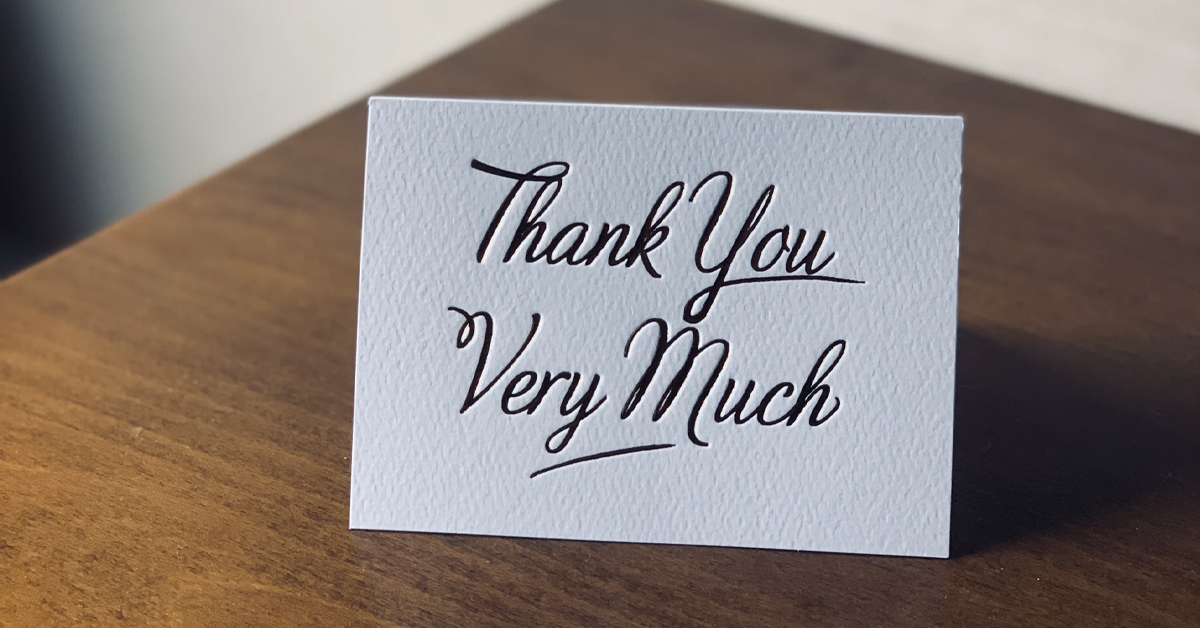
    This spring, the project is partnering with Care New EnglandProspect CharterCARE and Thundermist Health Center and asking would-be letter writers to send thank you notes to healthcare workers on the front lines of the health crisis who have worked so tirelessly over the past year.

    If you’d like to sign up to send letters of gratitude and support to healthcare workers, go to dearRI.com by March 20 to be matched with a hospital or healthcare facility. Letters must be mailed by April 15.

  • A Bouquet of Cheer

    A Bouquet of Cheer

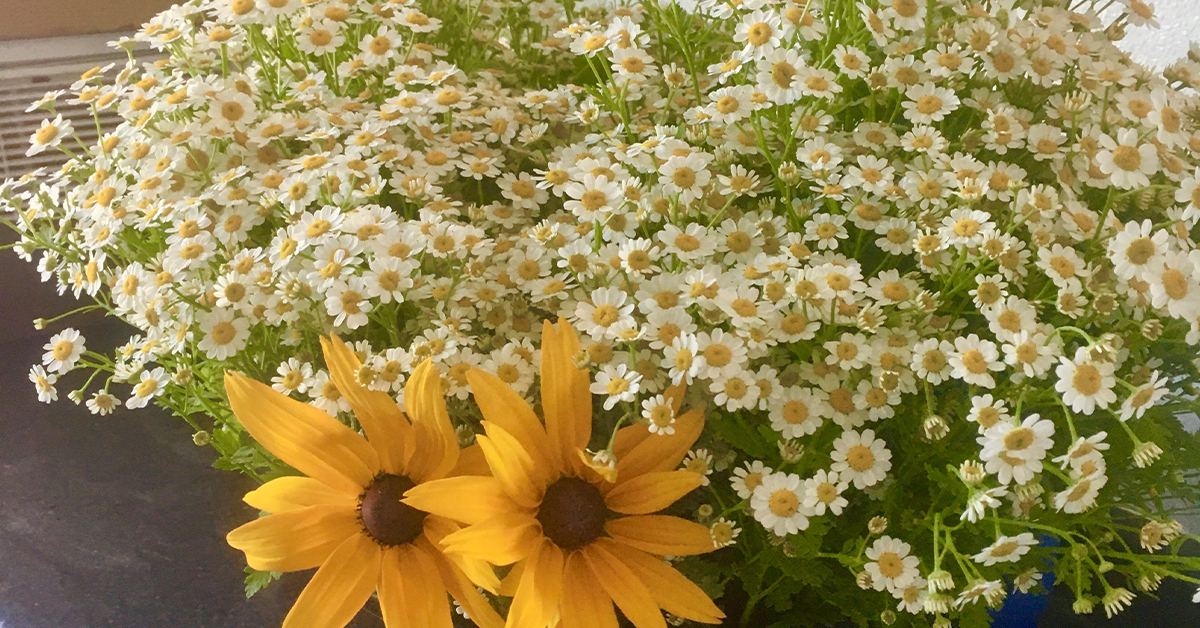
    What Cheer Flower Farm is a nonprofit with the mission to grow, rescue and donate flowers and flower bouquets to underserved people dealing with stressful situations. Its 2.7 acres are located on a former factory site in Providence. The organization has remediated 18,000 square feet of polluted soil and turned it into organic flower fields, with plans for further expansion.

    Early spring is busy season for the farm, but What Cheer’s farmer, Krystal Kraczkowski, took some time out of her planning to talk to me about what’s blooming this season.

    Emily Olson (Motif): What’s going on at the farm?

    Krystal Kraczkowski: Right now, I’m doing a lot of planning and researching new crops I want to grow. We are also planning a whole new growing space. Right now it’s a flat area of asphalt, but we’re working with Ground Works, an organization that gives job opportunities to individuals who might be able to otherwise get a job, to rip out the asphalt, add gravel and make raised beds that are handicap accessible.

    The new area is going to be about 5,000 square feet and it will double our growing area. It’s on the corner of Agnes and Magnolia, so you’ll be able to drive by and see that we’re growing flowers instead of just factories.

    EO: What types of flowers do you grow?

    KK: I grow flowers have the longest vase life and are easiest to grow. So we grow a whole bunch of a few things. I also grow fillers and greens to bulk up what gets donated to us.

    EO: Who receives your donated bouquets?

    KK: We only give away to other nonprofits, and we have changed up a little bit who we’ve been donating to in the pandemic. We can’t give flowers to patients in hospitals, but we give to the food bank and the hospitals themselves. And we give to the workers in hospitals. 

    EO: When people are in life-threatening situations, dealing with health issues or food insecurity, why are flowers important?

    KK: I used to work at the farmers market for Robin Hollow Farm and saw the flowers go from seed to centerpiece. My favorite time of the week was going to the market and bringing flowers to people because they would thank me for bringing joy to their lives and for all my hard work for making their day a little brighter. Flowers help you feed your soul, and that makes a huge difference in someone’s life.  

    EO: As a flower farmer, what advice would you give someone who has a little patch of earth and wants to grow their own?

    KK: Plant as many as you can. Even if it looks like the worst place for a flower. Remember what they said in Jurassic Park: Life finds a way. It’s so incredible to see that life can find its way in every situation. It’s a reminder to do the same thing in your life. 

    To volunteer, donate flowers or inquire about bouquets, visit whatcheerfarm.org  

  • The Wait of the World

    The Wait of the World

    I’ve been riveted by the breathtaking images coming from the Mars rover Perseverance. And the timing of these images is interesting because perseverance takes up a lot of my mental space these days. Probably because we’re all doing so much of it. We’ve endured a long winter. We’ve endured a longer pandemic. And now shoots and shots are on the horizon. But they’re not here yet. 

    We must persevere even as time drags out interminably and remind ourselves that although putting one foot in front of the other often feels more like surviving than thriving, it’s still forward motion. 

    And perhaps there are lessons we can take from that robotic creature so far from home. We can remember that patience and Ingenuity reap rewards. Search for evidence of life under the scorched crust of our psyche. And embrace beauty where we find it, even if it feels light-years away. 

  • What Lies Beneath: Better environmental health starts in your own backyard

    What Lies Beneath: Better environmental health starts in your own backyard

    Loren Byrne is a professor of biology and environmental science at Roger Williams University, and he digs dirt. His expertise is in the ways in which urbanization affects soil health, particularly when it comes to lawn and garden management. He argues that the manicured, pesticide-laden monoculture that is a typical lawn negatively impacts soil health. Instead, he advocates for freedom lawns: a pesticide-free biodiverse lawn that allows soil organisms to thrive. As people gear up to re-enter the great outdoors, Byrne and I sat down to talk about the stuff under our feet.

    Emily Olson (Motif): Why is soil health important?

    Loren Byrne: Soil health is fundamental to human health. We live above the soil, but in some regards, we are creatures from the soil inasmuch as it’s the soil that provides the foundation for our food. There’s plenty of research that shows that living in a green, biodiverse environment promotes human psychological health, and we’re getting to the point where we’re starting to make some conclusions about the value of urban biodiversity affecting our physical health as well.

    EO: What can someone do to improve the health of their soil?

    LB: I’ll start with organic matter. One of the important ingredients in a good soil is organic matter — detritus — the scientific word for dead stuff. That could be leaves, grass clippings, cow manure, compost and all of the dead soil organisms, bacteria, fungi that eventually die and contribute to the organic matter in the soil. This organic matter holds onto water and keep the soil moist. It’s the organic matter that provides the nutrition for plants and the food for the soil food web, especially microbes. The decomposition of organic matter in the soil is important for the circle of life. Dead things go into the soil and get decomposed and their nutrients can get taken back up by plants.

    The challenge in urbanized environments is that people want to manage it so intensively that they disrupt those natural processes. So for example, leaf blowers and bagging your grass clippings are removing valuable food and organic matter from the system. A simple practice for people to do in their yards is leave the leaves where possible. They provide a home and insulation for the organisms and soil beneath. Then, as they decompose as the weather warms up, there are nutrients released.

    EO: It sounds like you’re saying lazy lawn management is a good thing.

    LB: Instead of calling it lazy, let’s call it stewardship. It’s care for the environment. I’m doing something good by leaving the leaves and returning my grass clippings into the lawn. In the spring, stop and think about the beauty of detritus. It’s not trash to be thrown away. And then, the challenge is convincing ourselves and our neighbors of that premise. So much of the urban landscape is about social dynamics and pressure from neighbors to maintain this “perfect” standard. We need to change our lenses and our worldview to see what was once considered beautiful as actually ugly because it’s doing real harm for health of the soil and the future of our urban places. 

    EO: How do you shift a manicured lawn into a more biodiverse one?

    LB: It’s helpful to envision a gradient of environments. The highly watered, managed and manicured one length, one color industrial lawn is the antithesis of life. Let it get a little wilder. Reduce fertilizer and pesticide application first. Then reduce irrigation. Then if you’re willing to go more, let it grow taller and mow less. Then, rip up part of the lawn and replace it with wildflowers, shrubs, bird-friendly trees, bee-friendly flowers, hummingbird-friendly stuff. That will reduce your carbon footprint because you’re not mowing, and you’re providing a better habitat for a diversity of organisms. The next step is to let those gardens go wild. Let things go to seed. You’ll get beautiful seedlings coming up year after year. New things coming in. A profusion of textures. And if you let it get wild enough, you have prairie. And when you have an environment like that, there’s more detritus accumulating. That’s when the soil biodiversity comes in with the spiders and beetles and nematodes that are small and important. Then let it go back to the native biome. For our area, it would be trees, a pond. You’d create a habitat for snakes and owls and other things. And that’s where you get into hardcore wildlife gardening.

    EO: It sounds idyllic.

    LB: It is. There are real health benefits to humans in gardening and creating green space. People find joy in watching birds. In order to have the birds, you need the habitat. And a lot of these birds eat the organisms in the soil. We have to connect the soil to what happens above ground. 

  • Ear Worm

    Ear Worm

    We know you miss live music, so we figured out a way to bring it back to you … kinda.

    Motif teamed up with The Parlour in Providence to host a podcast and livestream where we’ll interview local bands and artists, then give them the opportunity to perform. It’s not the same as it was before the panorama, but baby steps, right? And even though we can’t give you the atmosphere of a crowd, we can show you some really rad new bands and maybe introduce you to some old ones that you didn’t even know you were missing.

    Watch this space for information about interviews and performances.

  • Dig and Be Dug in Return

    Dig and Be Dug in Return

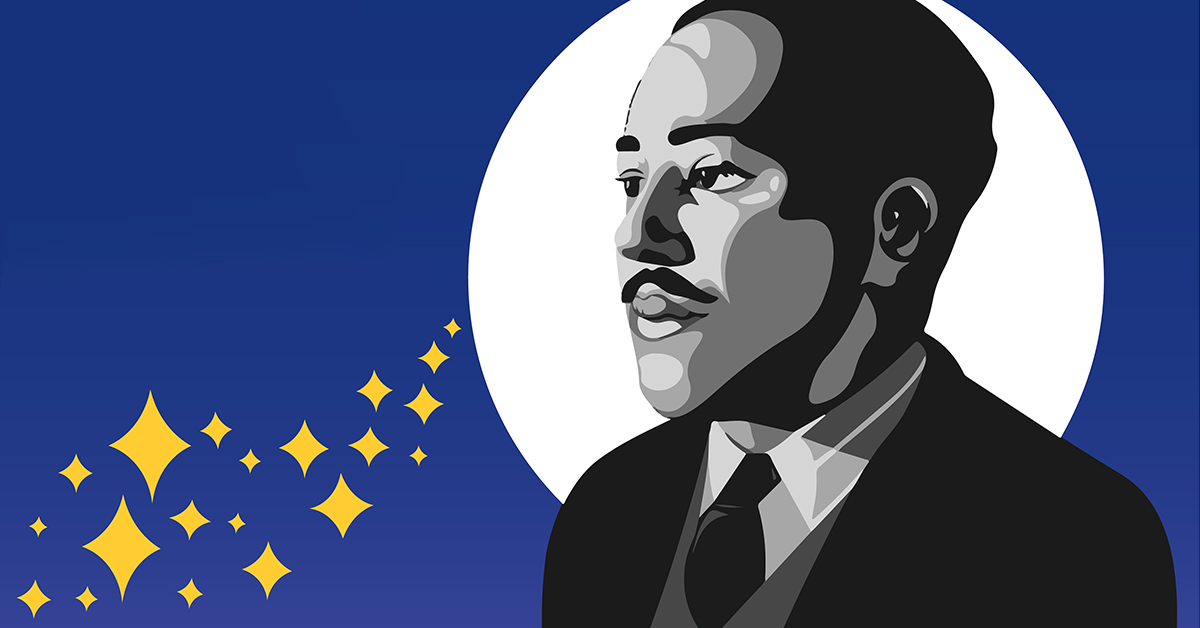
    The 26th Annual Langston Hughes Community Poetry Reading will be held on Sunday, February 7, at 1pm. This annual celebration of Langston Hughes’ brilliance as a writer and voice of the Harlem Renaissance will take place virtually this year, demonstrating the organizing committee’s commitment to finding innovative ways to gather and celebrate. Celebration attendees can expect to hear scholarly commentary, performances from local musicians, and readers from across the country reciting poems from Hughes’ extensive body of work.

    This event is free and open to the public. For more information and to register for the Zoom event, go to lhughescpr.org, or find the event on Facebook at facebook.com/lhughescpr