Measure twice. Cut once. Not just a rule for woodworking, but for life. If you have cable TV, you might recognize me. But probably not. In winter 2014, I was on a reality tv show on the SpikeTV network called “Framework,” hosted by Common. It was a reality show like all of the others, “13 contestants picked to live in the house, competing for $100k….” except this one was centered on furniture making.
It was a hot mess. Literally, there was a heatwave in LA and the producers of the show tried to put me in skinny jeans and flowy tops. They tried to create a rivalry between me and another male contestant. And they tried to turn the only three women on the show against each other. In the end, I had to read them and the facts: I am a Black female woodworker from the South. People don’t get to see this representation often. And when little girls see me, they will not see someone who is catty and conniving. I WILL NOT give you “Angry Black Girl.” I finished by letting them know this: “My grandfather is watching. My boss is watching. My family is watching. And these are the people that I have to go back home to. So no, I won’t give you what you want.” So you’ll see me in episode 6, standing in front of Common and the judges, when he sent me home with his signature tagline, “You’re fired.”
That, in a nutshell, is what it is like to be me in this field. I am always the only one. When Black women do anything, especially in predominantly white communities and institutions, we are always the only one. And when we do it, we not only have the unfair pressure to “represent the whole race,” we carry the weight of our families, our communities and our ancestors on our shoulders. When women break a barrier, it’s just the glass ceiling. When Black women do anything, it’s groundbreaking.
And with all of this pressure, why do I build? BecauseI love to make things with my hands. Building and making is problem-solving. It’s my meditation. Whether it’s standing back to look at a room to imagine where a piece of furniture would go or the ability to frame out a wall where there was not one before. It is empowering to know that I can fix things. It’s empowering to know that I don’t have to depend on anyone. It’s the satisfaction of knowing that I can always have shelter and make useful objects. I get to meditate in the making of a piece. Using this time of solitude to invent and invest in myself. Then when a piece comes to fruition, I get to sit back like a proud parent knowing that I did that.
Have you ever squared a piece of wood? You start with a rough piece of lumber, full of splinters and imperfections. Like Michelangelo in front of a piece of marble, I get to determine what this will be. I then select from my many tools — both electric and non-electric. Tools passed down by my father from his father in a tradition dating back to before Biblical times. I take the hand plane and pass it over the rough wood to produce a curl of sweet-smelling grain. If I continue to pass over the wood in that fashion — on all sides, I will have a squared piece of wood that I can now build something out of.
My work is functional. Utilitarian. I like to see how people interact with my pieces. And how what I make can benefit others. At RISD, I teach Woodworking II, a sophomore level class that introduces students to the machinery in a woodshop. Aside from the stress of making sure that 15 students return home with as many fingers as they showed up with, I never get tired of seeing the pride that comes across the face of someone who has just learned how to do something by themselves. The look of satisfaction when they turn their first bowl on the lathe, or cut a piece of wood off of a 16’ piece of lumber with a mitre saw, or learn how to cut joinery for their first coffee table. They also realize that they now have a useful skill to make gifts for others and a new way to make some extra money.
To make and build is to invent and create. This power is mine and cannot be taken away. I can choose when and how to use it. My hands are the hands of my mother and grandmother, and my father and grandfather.
Black women hold multiple identities. My identities include Black woman. Mother. Activist. Community leader. Healer.
Each identity can stand on its own, yet it is difficult for me to separate them. In fact, the roles enhance each other, especially in the work that I do for and with the community. Having all of these together makes me feel empowered to find solutions that benefit not only my own family but also the community – my larger family. Being accountable to work for and on behalf of the Black community — children in particular — allows me to draw from the strength that it takes to raise my own five free and empowered Black children.
I hadn’t recognized the relationship between motherhood and leadership until it was brought to my attention; it was an “ah-ha moment” for me, so to speak. I was told that my mothering was apparent in the work that I do. Since then, several people said they definitely see how I show up in spaces as a motherly figure. I fight hard for my children, protect them, correct them when they need guidance, check in to make sure their needs are being met, work on conflict resolution and give them the tools that they need to better relate to each other, educate them, bring them together so they can be in each other’s presence, love them unconditionally and most importantly: feed them. I do the same for the community, as I see them as one in the same. The community events for my nonprofit, Sankofa Community Connection, have the same components, coming together, education and food, to name a few. I strongly believe in working collectively toward finding solutions and in supporting each other. As that saying goes and I am finding it to be more and more true: “All we got is us.”
I wanted to find more information about how motherhood, activism and leadership intersect and came across this quote by Cat Brooks, a community organizer and activist in Oakland. The message resonated with me, it moved my spirit: “Black mothering is a political project, and our mission — should we choose to accept it — is nothing short of revolutionary. Our job as Black mothers is to keep pushing the liberation ball down the court. Our obligation is to leave the world better for them and to ensure that they are equipped with the tools that they need to fight. We don’t have the luxury of living normal lives. I tell my daughter all the time — and it’s harsh — but we don’t live for the I. We live for the we.”
“We don’t live for the ‘I.’ We live for the ‘we”. That has been my entire existence out here on these Black woman, Mother, Activist, Community leader/healer streets of Newport. All of the things I do are about the WE. Being a Black mother adds extra tasks and at times it’s extremely overwhelming. We have to create safety zones, promote black joy, be a catalyst for healing, educate ourselves about our real history and where we came from so this will add a layer of protection around our children and community in a world that is full of anti-Black racism and stereotypes. We will be able to help them move past just surviving to thriving and even flourishing — finally stepping into our greatness. We have it in us.
I hope that sharing my story will help others recognize the same qualities within themselves. We all have what it takes — even if you are not a mother. Let’s build and empower each other to make collective changes and reclaim our humanity and dignity.
As a kid I devoured books. I especially loved biographies. I hated history, but loved the stories of real people. Especially stories of women. And Black people. If the stories were of Black women, I was in heaven — curled up on the couch, or lying across my bed, far from the world around me, deep in the lives lived before me. I can still remember the tattered paperbacks I read over and over again: Harriett Tubman, Conductor on the Underground Railroad, and Mary McLeod Bethune, Founder of Bethune Cookman College. In those stories I could see myself and imagine what I could be. I believed what my parents said: that I could be anything I wanted to be. My dad used to say, “You could be the next Wilma Rudolf. Or maybe you’ll be President of the United States of America.”
When I was finishing high school, I wanted to be Marva Collins, or at least a powerful educator like her. I remember speaking about her inspiration to me at my college interview.
When I got to Brown in 1983, I thought I would be an English teacher who directed the high school play. That seemed the logical place to combine my loves of stories and drama, teaching and learning. But when I got to Providence, I was fortunate enough to meet Ramona Bass Kolobe and her late husband George Bass of Rites and Reason Theatre. There I was fortunate to be surrounded by Black people committed to Black storytelling. I had found my place, my people.
I designed my own major in storytelling and began the practice of telling stories that had inspired me as a little Black girl growing up in predominantly white spaces (with a white mother, to boot, who was responsible for my having those paperbacks, by the way). I looked for stories I wish I had when I was in school. I remember finding a book called GREAT SLAVE NARRATIVES edited by Arna Bontemps and Langston Hughes in the discount bin at the Brown Bookstore for $2. In it I read about William and Ellen Craft for the first time. I knew I had to tell the story of this Black couple that had fled from enslavement arriving in freedom on Christmas Day in 1848. I knew I had to tell it in Ellen’s voice. So many of the stories of Black women in our history were recorded by men, mostly white men. I wanted to tell it as I imagine Ellen might have told it. I still do.
I am full of emotion today. It is Inauguration Day. I just witnessed Kamala Harris, a Black and Asian woman, become the Vice President of the United States. She and Michelle Obama made eye contact today that spoke volumes. The poet today was a 22-year-old Black woman, and the Pledge of Allegiance was led by a young Black female firefighter who signed as she spoke. Today is also my Dad’s birthday. He would have been 89. The last Inauguration he and my mom witnessed was Obama’s. I can’t help but think of how he opened possibility for me. And my mom, who made sure I knew my history, to help me dream a future.
I didn’t become President, nor do I want to. But I have lived to see both a Black President and a Black woman Vice President. This is what Harriet, Mary, Wilma, Ellen, Marva, Mom, Dad and, and, and, fought to make possible. I became a storyteller so I can share these stories and more to inspire others to be whatever they dare to imagine. This is why Black stories matter.
I remember the first time my sister ever called me sister.
She was about to give me a facial, my niece came down and asked some question about why my nails were painted. My sister said, “Because she wanted to.” And by “she,” she meant me. In that moment I felt full.
There’s something immeasurable about being seen by another Black woman. Your whole self comes into focus. Your past, your pain, your potential. All the joy hidden in the pockets of your curves, in the kinks of your curls. It’s all exposed and bare in her eyes. That reflection can bring the deepest connection, though sometimes we might lash out from the vulnerability of it all. I grew up with my eyes focused on the Black women in my life. I thank God everyday I’ve been blessed with their beauty. Even when they hurt me.
I’ll never forget. I was in Atlanta with my face made, afro out, femme’d to the nines! I ran into at least three Black women on the street with the biggest smiles complimenting my look. My Yankee ass felt more welcomed in the South by these women than by any of the faux trans tolerance that white folks offered me back home. They would never know my name, but still offered me the dignity of feeling whole.
Being trans(gender) means I got to come into my womanhood later than most girls. It also means the dignity of my womanhood has never gone undisputed. I’ve had to fight every preconceived notion of who I was, from doctors, partners, family and my own upbringing to become the woman I am today. Every time I interact with someone new there is a negotiation of my womanhood, and whether today I will be respected, tolerated or despised.
In truth this makes me no different from any Black woman. Our womanhood — our dignity — is constantly in dispute. By the white systems we live in or by the men in our own families. By beauty standards and double standards and the burdens loaded on our backs. Sometimes by each other, too. How would you name the grace it takes not to raze this world to the ground?
My therapist asks how I’m doing. “I’m feeling dignified and indignant.”
I’ve determined that Black women do not owe the grace we give the world. A grace that’s rarely extended to us without guilt or self-interest. But we continue to hold our neighbors, our sisters and our brothers, and our cousins and their children. We share our unrequited love because we believe others may one day share it with us. We speak out against injustice not just for our own seat, but demand places at the table for everyone to eat. We are dignified in our compassion. We are righteous in our indignation. We march toward liberation no matter how long it takes others to join us.
Years ago, there was an older Black woman helping me at a store. I don’t remember all that well now, but I know I wasn’t looking that girlish. She looked me in the eyes and called me “ma’am.” It was that look, you could tell she chose to use the word she did.
So many Black women throughout my life accepted me, even at times I wasn’t fully accepting of myself. And there’s that grace again. The choice to treat others with a dignity that is rarely returned. Black women don’t sit around waiting for the world to accept us. We offer the acceptance we have in our souls without the expectation of mutuality.
One day I hope the world will accept me the way my sisters have. When the dignity Black women offer is finally reflected back to us, we will be able to build a world of rest and care and joy for every person in our midst. Until then, we’ll keep our strut with our heads held high, dignified and indignant, holding each other as best we can.
Black womxn have stood at the forefront of just about every large-scale movement for social justice in this country’s history. As a Black womxn in 2021 fighting for progressive change — reproductive justice and racial equity, in particular — this history is not lost on me. To be Black and to be a womxn in America is to be routinely attacked, questioned, bothered and overlooked. Some days just getting out of bed, stepping out into the sun, and daring to claim breath and space feels like an overtly political act. We exist in an environment that is hostile to us at every turn, and yet…. We face that hostility with a fierceness that is unmatched, a determination that is unending. With astonishing power, and everlasting love.
Why do we fight so ferociously for a country that doesn’t seem to want to fight for us in return? I ask myself this all the time. Fighting so hard day in and day out can be exhausting. And yet the burden to lead often falls on those who already have the most to carry. So why do we continue? How do we continue?
I continue because there is no other way. In my heart of hearts I’m an optimist — an idealist really (don’t tell anyone!). I fight for my community and my country because, among other reasons, the Declaration of Independence is a gorgeous freakin document! Read it sometime, if you haven’t in a while — it will give you chills. This nation, that was forged by genocide and all manner of sheer brutality, was eventually brought together because of a few radical ideals: liberty, justice and equality for all. (Do as we say, not as we do, I guess) These ideals were radical in 1776, and they’re just as radical today. The fact that we as a nation have never come remotely close to living these values is infuriating. The thought that this democratic experiment of ours might be coming to an end before it comes anywhere near to reaching its full potential absolutely breaks my heart. And so the fight continues. For me, it’s about creating a more safe and just world, but it’s also about proving that a country founded with such righteous ideals in mind can persevere without ultimately tearing itself apart.
As an activist who is also a Black womxn, I continually seek sources of strength, renewal and hope in order to keep moving forward. The bravery, tenacity, genius and grace of my ancestors flows through me in ways that I can’t fully describe. But I also find hope and motivation in my fellow sisters in the struggle. There are activists all across the country and around this little state of ours who are leading unapologetically, with determination and with grace. I look to them, I stand with them and I fight for them until we can achieve the justice, equity and empathy that we all seek.
Here are a few of their thoughts:
Jennifer Rourke is the founder for The Rhode Island Political Cooperative, and a board member of The Womxn Project:
“Black women have been fighting for years for intersectionality, equality and equity. We can see change from different perspectives that most people cannot see. Our fight is your fight and we take that to heart.
“With so many new faces running for office, especially Black/Brown and LGBTQIA+ women or female identifying shows that the time has passed for incrementalism. No more small steps for change. We need bigger movements in our everyday life and the time is now. This movement means that there will be more legislation that advocates for the people who live and work in places that are often ignored and have legislation introduced that works against their health, wellness and safety.”
Jessica Brown is the founder of Clam Jam Brass Band.
“Black womxn have been at the forefront of so many social justice movements because as Malcolm X said, ‘The most disrespected woman in America is the Black woman.” We know what it is like to be invisible and ignored, yet we prop up this country. We have fed this country, raised its families, cared for its sick, been its source for science, and been there to fix it when it’s broken.
“We are not complacent. And we know what the consequences are when certain people are elected into office or if certain laws aren’t passed. Black women feel these ripple effects the most. We carry this trauma and historical knowledge in our DNA. When Black womxn do work, everyone benefits. We don’t just look out for other black womxn, but for our men, our kids, and every other demographic group. One because we know what it feels like to be marginalized, and two, because we have been conditioned to concern ourselves of the needs of white people. We are used to picking up the slack for everyone else and if we have needs and want change, history will show that we can’t depend on anyone else to stand up for us. When we come out, we come out in numbers. We plot, plan, strategize, organize, march, knock and we VOTE. We don’t operate as individuals but as a community. We understand the power of numbers. As a group, we are powerful.”
Ditra Edwards is the Co-Founder and Director of SISTA FIRE
“Black womxn, blk queer womxn, blk trans womxn, are brilliant and beautiful and carry a vision for our communities that draws from our ancestors and our lived experiences and, most of all, our deep desire for joy and liberation. We are fighting to save black lives. Our long history of black resistance and black-led organizing is how we exercise our dignity and power.
“Ella Baker was always a person for me. I think about her, I read about her….The way she approached her work was very much grounded in building collective power, doing deep listening, and hearing what people were experiencing and what they hoped for and what their vision for themselves was. In the work that we do at SISTA Fire, we try to embody this. We are deeply engaged in listening and looking for how we can create our democratic process so that everyone can be actively involved.”
Art has always been an important tool of the environmental movement. For decades, music and imagery have been used to highlight the beauty of nature, to inspire concern and motivate the need for environmental protection. And more recently, groups like the Sunrise Movement and 350.org have used consistent, striking and recognizable art across all platforms and at protests to help grow the climate justice movement.
And Noreen Inglesi and Bina Gehres are no strangers to the power of good art to inspire hearts and change minds. Their non-profit arts organization, Notable Works (notableworks.org), has released ‘Voices of the Earth: The Future of Our Planet’ volumes I and II, compilations of local poetry about the climate crisis and environmental stewardship. The pair has worked on a number of projects with environmental organizations based in Rhode Island and most recently, they’ve put together a striking video in partnership with the Audubon Society of Rhode Island, titled The Earth Is in Our Care.
“What we wanted to do with the song was present ways that people could take part in helping to save the planet,” said Inglesi, when I interviewed them about their latest project. “It’s about our feelings about the environment and the human spirit, and everything happening now in 2020. It all kind of comes together for us,” added Gehres.
Watch ‘The Earth is in Our Care’, and read the full interview with the artists below.
Alex Kithes (Motif): Which organization(s) are each of you representing?
Noreen Inglesi: We are both representing Notable Works Publication and Distribution Company, Incorporated
AK: What inspired you to create this project? Tell me a little about the partnership between Notable Works and the Audubon Society of Rhode Island.
NI: The Earth Is in Our Carewas inspired to address the issue of climate change. What we wanted to do with the song was present ways that people could take part in helping to save the planet – talking about living sustainably, renewable energy and weaning ourselves off fossil fuels and onto electric cars and solar energy. And the Audubon Society of Rhode Island was a big inspiration for this project. They love nature and connecting people to it. And when putting together this video presentation, Paige Therien and her staff really helped to bring this together with their great photos and video clips, which were a perfect fit for the lyrics of the song. And Bina is perfect at matching the right photos and video clips to the lyrics. It was really great to work with her.
BG: When we met with Paige Therien, what she said was golden, and it really steered us in the right direction.
NI: Absolutely! All of the information about pollinator highways, and so many of the projects they’re doing were such a great inspiration.
Also, the staff wonderfully helped with our second and soon-to-be-released project with this organization entitled “Notable Works’ Tribute to Audubon Society of Rhode Island.” The staff shared some of their current projects as well as their personal stories. For example, Kim Calcagno, Refuge Manager at Powder Mill Ledges Wildlife Refuge, sent us a story about how, when she was growing up, she and her grandfather would save toads in the backyard before they mowed the lawn. That story was something that I could relate to. The love for all the creatures on the Earth is so important and such an inspiration.
BG: “The Earth Is in Our Care” video presentation is intended to try to help everyone realize that each of us can take an active part in saving our planet – not just interns and those educated in the field.”
AK: Watching the video, I was struck by the combination of deep and emotional music, provoking imagery, and the broader ideas and concepts of environmental degradation and protection. Tell me a little more about the project from your perspectives, and explain to me a little about your artistic goals in designing and creating the video.
BG: Noreen and I are quite a team. She writes from the heart, and I’m very visual. We have two computers going at the same time, and it just flows. It’s about our feelings about the environment and the human spirit, and everything happening now in 2020. It all kind of comes together for us.
NI: One note about the interlude. It was so important to put in the video clip of the butterfly – Audubon sees pollinators as key to maintaining the balance of nature and they feel protecting them is vital for our future.
AK: Do you have any projects coming up you want to tell me about?
NI: As I mentioned earlier, our new project is “Notable Works Tribute to Audubon Society of Rhode Island.” I wrote the music and poetry based on all the valuable work and emotion that each of the staff contributed. And input from each of their personal stories is going into the song, which is then being made into a presentation. Paige is working on getting together photos and video clips from the staff, and the music is all done. The Notable Works’ Ensemble (Tina Bernard, vocals; Maria Bilyeu, cello; Dalita Getzoyan, flute and vocals; myself on vocals, and Alison Shea, piano) is working on a final recording of the song. The presentation will be released soon.
AK: Tell me more about your other project, Voices of the Earth: The Future of Our Planet book of poetry, volumes 1 and 2. (Full disclosure: the author was a contributing poet in ‘Voices of the Earth: The Future of Our Planet II’)
NI: Last year, we published Voices of the Earth: The Future of Our Planet I, which addressed the issue of climate change. Notable Works is an arts organization, dedicated to raising awareness for environmental and social concerns through the arts. The first volume of Voices of the Earth: The Future of Our Planet focused on the beauty of nature and primarily Rhode Island. We included some poems that were written with The Nature Conservancy, and focused on the need to protect our natural resources and Rhode Island’s natural beauty. In the second volume, Voices of the Earth: The Future of Our Planet II, we did a call for poetry with the theme of resilience, sustainable living and adapting to a changing climate.
AK: What brought you both into environmental activism?
BG: Knowledge – we learned. I can’t quite explain it, but the more you learn, the more interested you get. The Audubon Society has opened up a whole world to us. But we started out a long time ago with The Nature Conservancy. I had a friend who worked there, who would tell me how we need to address the climate crisis. We asked the staff at the Nature Conservancy in Rhode Island if we could learn more about what they do and write music about it and the project was incredible.
NI: I used to do a lot of science projects as a kid. I was always interested in air pollution, I always had a heart for animals, and I’ve always loved the ocean and being with nature. Our natural resources are so important, as is maintaining the balance of nature – so everyone can get a fair shake, including the creatures.
AK: Anything else you wanted to talk about that we didn’t cover?
BG: We can’t say enough about the environmental agencies here in Rhode Island, how wonderfully they’re doing with the treasures they have to guard. They’re doing a good job protecting endangered species and their natural habitats.
NI: Part of the reason for our books was to highlight the agencies that are doing such good work in our state. And at the same time, we asked them if there are any volunteer opportunities and included them in Voices of the Earth: The Future of Our Planet I and II. It gives anybody that is really interested in trying to take an active part in their community a place to go, get involved and to help.
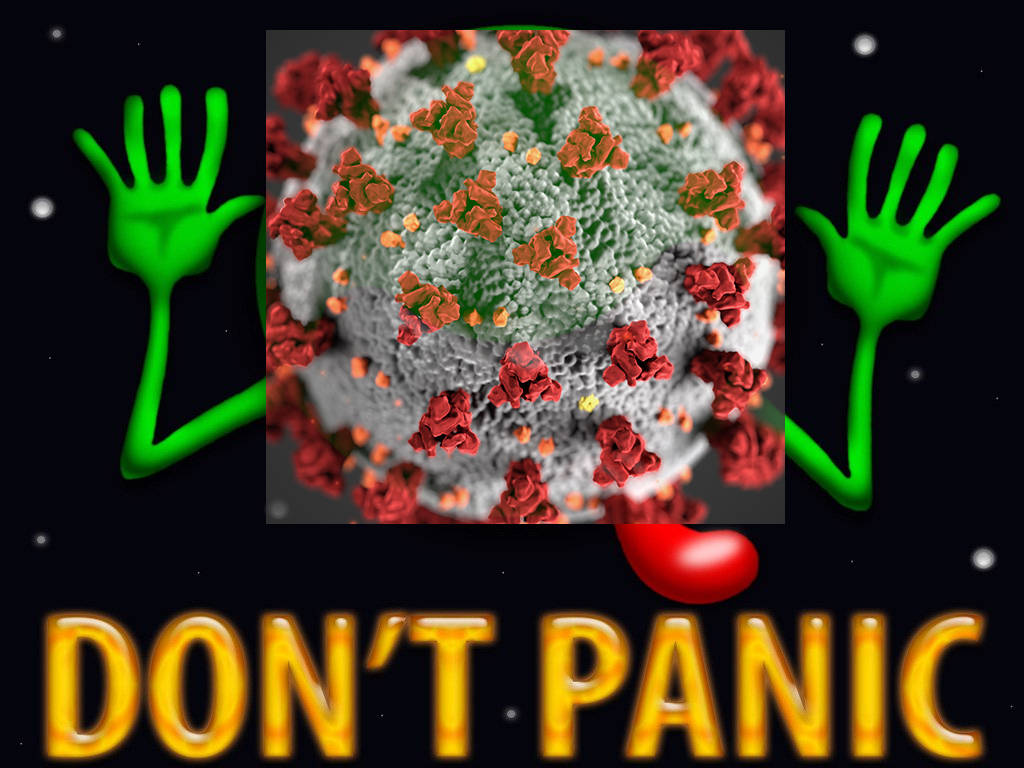
In the last few days, there has been a near-panic reaction to the discovery of a mutation of the SARS-CoV-2 virus that causes COVID-19. The mutated lineage – in virology, a “lineage” suggests a variant somewhat closer to its immediate ancestors than a “strain” – is now named “Variant of Concern 202012/01,” having been referenced as “Variant Under Investigation 202012/01” and “B.1.1.7” earlier. (The VOC nomenclature is simply “year 2020, month 12, variant 01.)
Worries about the new variant focus on four main issues:
Does it spread more easily?
Does it cause more severe sickness or greater likelihood of death?
Does it have resistance to vaccines just approved for use?
Does it have the ability to escape detection by widely deployed PCR tests?
Mutations occur fairly often in the course of virus replication, essentially just inevitable errors making copies of copies of copies, but the vast majority have no meaningful effect. By random chance, very rarely a mutation gives an evolutionary reproductive advantage to the virus, which is how SARS-CoV-2 arose in the first place, probably many years ago in an animal reservoir, such as bats, until a spillover occurred to humans. Like every virus, this virus continues to mutate, and some random variations could boost the mutated lineage in epidemic risk. Thousands of such mutations have been observed and recorded in SARS-CoV-2; by one estimate about 12,000 distinct variants so far, but most do not seem to do anything different.
As the Global Initiative on Sharing Avian Influenza Data (GISAID) explained in a statement, “Mutations are naturally expected for viruses and are most often simply neutral regional markers useful for contact tracing. The changes seen have rarely affected viral fitness and almost never affected clinical outcome… Changes in the spike protein have relevance for potential effects on both host receptor as well as antibody binding with possible consequences for infectivity, transmission potential and antibody and vaccine escape. Actual effects need to be measured and verified experimentally.”
According to an advisory from the World Health Organization (WHO), by December 13 there were 1,108 known infections with this new variant in the UK. Ordinary COVID-19 testing is not intended to distinguish between variants, but in the UK between 5% and 10% of samples are routinely sent for genomic analysis that can distinguish between variants, and 4% of samples in southeastern England are sent for genomic analysis. The new variant accounts for over half of COVID-19 infections in southeastern England, after having been first seen in September in Kent, and is disproportionately more likely to be seen in young rather than old patients.
It is not clear why the variant is significantly more prevalent in the affected area, but one possible explanation is that the mutation makes the virus more transmissible from person to person, and if so this would be a major concern. The WHO warns, “Preliminary reports by the United Kingdom are that this variant is more transmissible than previous circulating viruses, with an estimated increase of between 40% and 70% in transmissibility (adding 0.4 to the basic reproduction number R0, bringing it to a range of 1.5 to 1.7).” On the other hand, according to a news article in Science, generally considered the most prestigious scientific journal in the US, “Scientists, meanwhile, are hard at work trying to figure out whether B.1.1.7 is really more adept at human-to-human transmission – not everyone is convinced yet – and if so, why.”
Sometimes increased prevalence is a result of a biological property of the virus, but this is not always so. It is widely known that the lineages of infections in the US toward the West Coast tend to be genetically closer to those found in Asia while the lineages of infections in the US toward the East Coast tend to be genetically closer to those found in Europe, but that almost certainly reflects patterns in airline travel rather than any intrinsic property of the mutations in the lineages. Likewise, the higher prevalence of the new variant in the UK could reflect human behavior, such as young people being more likely than old people to transmit infections in bars or restaurants, rather than any biological underpinning.
SARS-CoV-2 receptor binding domain (RBD)
(Source: Global Initiative on Sharing Avian Influenza Data (GISAID))
The new variant is characterized primarily by three distinct mutations, labeled “N501Y,” “P681H,” and “69-70del.” The detection of the new variant in the UK is a coincidence because a common commercial PCR test, known as TaqPath, consists of a three-part panel of subtests, one of which looks for the component of the virus that goes missing in the 69-70del mutation; as a result, a positive indication on the other two subtests and a negative indication on that subtest allowed the UK to go back over their existing test data and estimate the prevalence of the new variant.
While the 69-70del mutation can cause anomalous results in some PCR tests, it is the other two mutations that are of real concern, modifying the receptor-binding domain (RBD) that controls how the virus infects hosts cells. This could give the variant an advantage invading host cells, increasing ease of transmission from person to person, as the WHO fears. One indication of this possibility is that the N501Y mutation has been seen elsewhere in the world, with a few dozen cases known in Australia and Africa. In fact, it was the University of KwaZulu-Natal in South Africa that first identified the N501Y mutation in a separate lineage and made the UK aware of its potential importance. The independent evolution of this same mutation in different parts of the world strongly suggests that the mutation gives the virus some reproductive advantage and is therefore favored by natural selection. Whether this is true and if so to what extent is unknown pending further study.
So far, there is no evidence that the new variant causes more severe sickness or increased likelihood of death, even if it does have an advantage in being able to infect the host and therefore spread more easily. There is no known biological reason to expect a change in the RBD of the virus to result in worse sickness.
It’s too early to know whether the new variant is more resistant to immunity, whether acquired through recovered infection or vaccine, but theoretical models strongly suggest that the mechanisms of action by immune antibodies will be just as effective and are not affected by the particular mutations that characterize the new variant. Eventually, although SARS-CoV-2 mutates relatively slowly, it may be necessary to formulate a slightly modified vaccine periodically, similar to seasonal influenza vaccines that must be given annually.
Is the new variant in the US, or even in RI? Experts believe it almost certainly is, but there has been no testing for it until extremely recently, so it is impossible to know for certain. We asked that question, and Joseph Wendelken, spokesman for the RI Department of Health, told Motif, “Rhode Island participates in a CDC initiative to sequence SARS-CoV-2 from throughout the USA by regularly submitting positive specimens collected from Rhode Island residents. We are not aware of any such specimens being confirmed as the UK mutant strain. The State Health Laboratories (SHL) is also currently working with Rhode Island scientists on sequencing SARS-CoV-2 positive specimens at time points throughout the pandemic and in a sampling of isolates collected in March through August none were the UK mutant strain. These efforts are continuing.” However, as Wendelken made clear, at this point data more recent than August is not yet available, a month before the new variant was first detected in the UK. Motif asked the CDC directly, but so far they have not replied.
Wendelken was confident, however, that PCR testing accuracy in RI should not be affected if encountering the new variant. “Rhode Island clinical laboratories utilize a diversity of molecular amplification detection methods and many have multiple tests online – the SHL alone currently has five different ‘PCR’ tests. Each test uses different virus gene targets for detection and many use a multi-target approach. For this reason, if virus mutations in one area affect detection of a certain gene, the built-in redundancy would detect the other virus gene targets, thus lessening the potential for a ‘false negative’ result for the UK mutant strain.”
A surprising amount of common ground underlies the positions of opposing stakeholders on proposed legislation that would create an “Extreme Risk Protection Order” (ERPO) (“red flag”) law, but the devil is in the details.
A bill proposed in the RI General Assembly (House 7688 and Senate 2492) would allow family members and law enforcement to petition the Superior Court to search for and seize weapons from a person (“respondent”) “if the court finds by clear and convincing evidence that the respondent poses a significant danger of causing personal injury to self or others…” after considering a list of factors, including acts or threats of violence within the past 12 months, mental health and criminal history, abuse of controlled substances or alcohol, “unlawful, threatening or reckless use or brandishing of a firearm” and “recent acquisition of firearms.”
The main objection to the proposed ERPO bill is that it requires only a general finding by the court that someone might pose a danger without requiring any finding of either imminence or mental disability, and critics including the RI chapter of the American Civil Liberties Union (ACLU) and RI Second Amendment Coalition have objected that an order could be issued based upon entirely lawful conduct, including free speech. “The terms of the bill are so broad that police could use these protective orders to go after people who simply engage in overblown political rhetoric in social media,” Steve Brown, executive director of the ACLU, told Motif.
States with ERPO law. Source: Wikipedia
Wordell of the Police Chiefs’ Association defended the breadth of the proposed statute, “Somebody’s constitutional right protection to speak about violence does not outweigh the safety of the community as a whole… People have the right to say certain things, people have the right to do certain things, but … the public’s right and safety has to be considered in that, and there’s a point where that outweighs an individual’s right.”
Frank Saccoccio, president of the RI Second Amendment Coalition, cited as an example of entirely lawful conduct being interpreted as suspicious “recent acquisition of firearms.” Saccoccio told Motif, “I have a concern where somebody could go out and buy one or two firearms, and a police officer could look at that and say, ‘I think they’re buying too many firearms,’ and search and take all of them.”
Another objection is to the provision requiring notice to everyone “who may be at risk of violence.” If someone swore out a false affidavit claiming, “My ex-boyfriend said he is going to shoot up his school/workplace,” it would trigger the mandatory notification process, destroying someone’s reputation and likely causing them to be expelled/fired. “What that could potentially mean is that hundreds of people are notified that this person may be a danger before a court has even had a chance to consider the petition,” Brown said.
Because the ERPO process occurs in civil rather than criminal court, a respondent would have no right to a public defender and even then would have to spend thousands of dollars to hire a private attorney. “There are potentially significant ramifications that apply to an individual if an order is issued against them beyond merely the confiscation of their firearms. They can be subjected to a mandatory mental health evaluation, they may face separate criminal charges based on anything they say at this hearing… When you put all that together, we think there’s a strong case to be made for the state to appoint counsel to individuals at these hearings,” Brown said.
Current RI law (§ 40.1-5) allows emergency commitment of any person who “is in need of immediate care and treatment, and is one whose continued unsupervised presence in the community would create an imminent likelihood of serious harm by reason of mental disability.” Wordell of the Police Chiefs’ Association said, “I think this [ERPO] law complements that in the sense that, the main piece of this is to not allow that person to have weapons.” But Brown of the ACLU said, “To some extent one could argue that the bill serves as an end run around some of the important due process protections that are in place for individuals who might be subject to civil commitment … it does give a court the power to mandate a mental health evaluation of any person brought before them under one of these orders, and if the person for whatever reason refuses to have an evaluation done, they could be held in contempt of court and jailed…”
Despite significant differences, all parties expressed support for the basic goal of keeping firearms out of the hands of people who pose an imminent risk of harm to others due to mental illness.
The Police Chiefs’ Association did not craft the bill and is not wedded to any specific language in the proposal, Wordell said. “We are absolutely willing to work with all stakeholders to come up with what the best legislation would be…”
“We think the bill ought to be focused on what most people are talking about, which is people who present a real threat to many people. This is arising in the context of Parkland and Las Vegas, and to the extent that it tries to cover a lot more ground, that’s where the problems of overbreadth arise,” Brown said.
Saccoccio said, “What I’m hoping for is that instead of them trying to jam legislation through that’s not ready yet, I really wish the legislature would sit down, do a study commission, get some real professionals in there so that if we put something forward, everybody could say this is a good piece of legislation… We’d like to see real legislation that actually works and still protects people’s Second Amendment rights. There has to be a way to put a balance in there.”
“Minute Man” by Daniel Chester French (1875) (Photo: National Park Service via Wikimedia Commons, public domain)
I am an outlier in the debate about guns. I’m a Northeasterner, and most of my friends are very unfamiliar with guns. There are exceptions, but on social media the most common view I see expressed is to wonder why anyone would want a gun, to wonder why they are legal for civilians to own in the first place, and to view the Second Amendment to the United States Constitution as a ridiculous and absurd anachronism that continues to exist only because the National Rifle Association (NRA) buys legislators with boatloads of cash.
This is a fundamental cultural disconnect. A lot of people own guns, and in some parts of the country nearly everyone owns a gun out of necessity. While hunting is a big part of life for people in some places, and is an economic essential for many who could not afford meat for an entire season unless they take a deer, the debates are not about hunting.
Risk from Guns
“The Lexington Minute Man” by Henry Hudson Kitson (1900), generally regarded as portraying Captain John Parker who commanded colonial militia forces at the Battle of Lexington. (Photo: Wikimedia Commons, public domain)
I’ve been asked on social media “how many dead kids” would be acceptable to me, a gravely insulting and utterly wrong interpretation of what seems to me an obvious argument that achieving zero risk is impossible and seeking zero risk would fundamentally change our society in severely negative ways, such as justifying preventive incarceration of people suspected of being mentally ill, despite clear scientific evidence that the vast majority of those with diagnosable mental illness are not violent toward others and are several times more likely to be victims of violence than perpetrators.
In 2013, The Atlantic looked at all 30 mass shootings over the previous decade (“How Many Shootings Would the Senate’s Background Check Deal Have Prevented?”, Apr 10, 2013) and found that only one might have been prevented by “enhanced background checks” – and that single case was because the shooter 14 years earlier was prescribed anti-depressant medication while he was going through a divorce. Do we really want to create a giant government database, searchable by anyone who might sell a gun, containing highly personal psychological records of this kind? If we did create such a database, would its existence make people who need psychological help fear to seek it?
I wrote only a few weeks ago (“Analysis: Are Guns a Public Health Problem?”, Jan 10, 2018) about common misunderstandings of gun death statistics, noting how two-thirds of gun deaths are suicides and how mass killings, despite sensational publicity, are statistically incredibly rare. Just as the political left does not want to understand that the likelihood of an American dying from a mass shooting is about the same as the likelihood of dying from a lightning strike, the political right does not want to understand that the recent likelihood of an American dying from Islamist terrorism is about one-tenth the likelihood of dying from a lightning strike (“Donald Trump: At Long Last, Have You No Sense of Decency?”, Nov 2, 2016).
Looking at even narrower criteria such as school shootings, the total number of homicides from all causes of children ages 5 to 18 in school has typically ranged between 15 and 20 per year since 2000, according to the Centers for Disease Control. Every homicide is a tragedy, of course, but given that the population in this age range is about 50 million, the chance of any particular child being a homicide victim in school is just slightly more likely than any particular ticket buyer winning the Powerball jackpot.
Experts have voiced concern whether “active shooter drills” in schools may be so psychologically traumatizing that they cause direct harm wildly disproportionate to the infinitesimally unlikely potential harm they are intended to guard against, and even then they may be a waste of effort: “Case studies are difficult to parse. In Parkland, for example, the site of the recent shooting, Marjory Stoneman Douglas High School, had an active-shooter drill just last month. The shooter had been through such drills. Purposely countering them may have been a reason that, as he was beginning his rampage [five minutes before daily dismissal], the shooter pulled a fire alarm.” (“What Are Active-Shooter Drills Doing to Kids?”, Feb 28, 2018, The Atlantic).
There is no epidemic of mass shootings, and there is certainly no epidemic of school shootings. No one can even agree about what constitutes a “school shooting,” and many compilers of statistics use such broad criteria as to be aggressively misleading. Education Week has been tracking school shootings in 2018 where death or injury resulted (“School Shootings This Year: How Many and Where”) and as of this writing they are up to six incidents – but some of them are not what would be commonly thought of as a “school shooting” when you consider the details: on Jan 31, a 32 year-old man was shot and killed in the parking lot of a high school in Philadelphia, but the shooting had nothing to do with the school; on Feb 5, an 18 year-old male and 17 year-old female were charged with attempted murder of a 17 year-old in a high school parking lot in Oxon Hill, MD, but the shooting was after school hours, all three were inside the same vehicle, and police said the motive was robbery.
At least Education Week is clear and honest about their criteria, and they openly disclose the broad scope of their analysis. By contrast, the most widely cited source (by MSNBC, ABC News, NBC News, CBS News, Time, MSN, the BBC, the New York Daily News and HuffPost) for the number of school shootings is the advocacy group Everytown for Gun Safety, whose recent claim that there have been 18 school shootings so far in 2018 was debunked on Feb 15 by The Washington Post under the headline “No, there haven’t been 18 school shootings in 2018. That number is flat wrong.” The Post’s “FactChecker” column previously awarded the organization “Four Pinocchios” (“Has there been one school shooting per week since Sandy Hook?”, Jun 29, 2015), the most negative rating reserved for “whoppers” rather than mere lies.
The most singularly uninformed opinions expressed about guns argue for bans of specific weapons or types of weapons, such as “assault rifles,” usually singling out the AR-15 that turned up as the weapon of choice in several mass shootings. But the term “assault rifle” has almost no objective meaning: when the federal “Assault Weapons Ban” was in effect from 1994 to 2004, it banned rifles solely on the basis of cosmetic features (“Even Defining ‘Assault Rifles’ Is Complicated”, Jan 16, 2018, The New York Times). Studies showed that the 10-year ban had no measurable effect on gun crime, which is not surprising because the banned class of weapons were used in less than 2% of crimes to begin with, and speculated that at best small but measurable effects might have been noticed gradually over time had the ban not been allowed to sunset (“Did the 1994 Assault Weapons Ban Work?”, Feb 1, 2013, PolitiFact).
Rifles, “assault” or otherwise, are rarely employed in crimes, and in the most recent data accounted for only 2.48% of murders (“Table 12, Murder, by State, Types of Weapons”, 2016, FBI Uniform Crime Reports). By contrast, hands, fists, and feet accounted for 4.35% of murders, knives and cutting implements for 10.64%, and even non-traditional weapons (such as the proverbial “blunt instrument”) for 11.98%.
So the question necessarily arises: If you want to ban the AR-15, on what basis and with what criteria? Yes, the AR-15 was designed in the 1950s along with its .223 Remington cartridge for military use, but it was a prototype to test a particular military concept. Throughout World War II and the Korean War, the Army had used rifles with cartridges of the kind preferred by hunters, usually about .30 caliber. Soldiers, unlike hunters, must carry their rifles and all of their ammunition often under difficult conditions for weeks or months, so the Army wanted a smaller and lighter rifle that fired smaller, lighter, and weaker ammunition. Soldiers are not shooting anything as massive as a deer, the Army correctly reasoned, so they don’t need all that firepower: the AR-15 and its companion .223 Remington cartridges were downsized to be just powerful enough to remain effective for military purposes. It is inhumane to hunt deer with a .223 Remington because the result would likely be to wound rather than kill. (The cartridge went metric in the late 1970s, becoming the dimensionally identical but higher pressure 5.56mm NATO.)
The M16 is the military version of the AR-15, similar in appearance and firing the same cartridges but completely different functionally: the M16 is a fully automatic machine gun, capable of a firing rate exceeding 700 rounds per minute; the semi-automatic AR-15 is a conventional and ordinary rifle, capable of firing only a single round per trigger pull. By federal law, fully automatic weapons have been heavily restricted from civilian use since 1934 and almost totally prohibited since 1986.
“Semi-automatic” simply means that, each time the trigger is pulled, one round is fired and the next round is chambered ready for firing: it is the conventional mechanism used in the vast majority of both rifles and handguns since the late 1800s. Nearly all guns in practical use today are semi-automatic. There are less common types of guns that use a different method of accomplishing the same function, such as the revolver, an older technology dating back to the early 1800s. There are a few relatively unusual types of guns used for historical or other special purposes. Because of this, proposals to ban semi-automatic weapons invariably reveal a thorough ignorance about firearms, usually due to confusion between the terms “automatic” and “semi-automatic.”
Banning “assault rifles” is therefore only advocated by people who know almost nothing about guns and often adamantly refuse to learn, and such proposals come in for outright ridicule in informed gun rights circles (“The Assault Weapons Ban Is a Stupid Idea Pushed by Stupid People,” Jun 13, 2016, The Federalist), giving examples of celebrity Tweets demanding a ban on automatic weapons, without understanding that (as noted) automatic weapons, as distinct from semi-automatic weapons, have already been banned for decades. Trying to solve a crime problem by banning “assault rifles” makes no more sense than trying to solve the problem of illegal street racing by banning pinstripes.
By the way, the “AR” in the AR-15 stands for “ArmaLite,” its original manufacturer, not “assault rifle.”
This set of facts brings us to the conclusion, the main point of this extensive discussion about types of guns, that any kind of ban against guns capable of killing people would inevitably ban guns capable of killing deer, and probably also ban guns capable of killing rabbits and squirrels. Hunting inherently requires heavier firepower, so any ban based upon firepower would ban hunting. While I don’t hunt as a matter of personal choice, I support those who do and recognize that it is an economic necessity for many.
Outside the United States
Another myth that I keep hearing is that only the United States experiences mass killings and that other modern nations do not. When then-President Barack Obama made exactly that claim (“Is Barack Obama correct that mass killings don’t happen in other countries?”, Jun 22, 2015), PoltiFact rated it “mostly false.” Part of the problem is that mass shootings are so extremely rare statistically – a point made above – that a few occurrences can skew the data especially in countries with small populations: Finland has more than twice the per capita death rate from mass shootings as the United States, but had only two incidents with death tolls of eight and 10; Switzerland has more than 10 times the per capita death rate, but had only one mass shooting that killed 14, and Norway has almost 10 times the per capita death rate, with one mass shooting that killed 67. China, with a huge population, has mass stabbings that are not uncommon, but these do not count in these statistics because they are not shootings.
Of the 18 public mass shootings (excluding acts of war, terrorism, and genocide) occurring within the past several decades with the worst death tolls, 7 were in the United States but 11 were not, spread out among a wide variety of places including Norway, South Korea, Turkey, Tunisia, Australia, Russia, Colombia, the West Bank, Uganda, China, and Sudan (“Mass shootings: How U.S. gun culture compares with the rest of the world”, Feb 15, 2018, The Washington Post).
Australia did ban all semi-automatic rifles and shotguns in 1996, but it is a very different place from the United States: while comprising a vast amount of land, most of it is uninhabited and uninhabitable, so – contrary to the Crocodile Dundee public image – 89% of Australians live in urban areas along the coast. (Culturally, that makes Australians about as much wilderness bush dwellers as Rhode Islanders, who are 91% urban according to the 2010 Census.) In order to effect the rifle and shotgun ban, the Australian government compensated citizens for the seizure of 600,000 weapons at a cost of half a billion US dollars (“Everything you need to know about the assault weapons ban, in one post”, Dec 17, 2012, The Washington Post). The United States has 13 times the population of Australia and 300-400 times as many guns in private hands, presenting substantial practical obstacles to a comparable ban even beyond political and legal issues. Australians concede that their approach would fail, probably disastrously, across the ocean: “In the United States, even if the political opposition could be overcome, such widespread appropriation of private property and limits on personal liberties would most likely be met with fierce, even physical, resistance.” (“Australia’s Gun Laws Are Not a Model for America”, Feb 23, 2018, The New York Times).
The Right to Keep and Bear Arms
Massachusetts state quarter showing “minute man.” (Photo: US Mint, public domain)
“A well regulated Militia, being necessary to the security of a free State, the right of the people to keep and bear Arms, shall not be infringed.” – Text of the Second Amendment
In 2008, the United States Supreme Court settled a longstanding debate about the meaning and interpretation of the Second Amendment, ruling in District of Columbia v. Heller that, as the syllabus explains, “The Second Amendment protects an individual right to possess a firearm unconnected with service in a militia, and to use that arm for traditionally lawful purposes, such as self-defense within the home.”
It is common today to ridicule the view that the right to keep and bear arms was historically seen as a check against government oppression, but I’ve personally held in my hands the manuscript notes of Elisha Reynolds Potter that he took at the Rhode Island constitutional convention, noting in the margin next to the relevant clause that it was “the ultimate protection of rights” and “the last resort.” Potter was no fringe politician or radical crank: in addition to serving as one of the leaders of the convention in 1842, he served as adjutant general of the state (the commander of the militia) from 1835 to 1836, represented the state in the US House from 1843 to 1845, and was an associate justice of the state Supreme Court from 1868 until his death in 1882. Two decades before the American Civil War and only months after a bunch of Rhode Islanders under Thomas Wilson Dorr tried actual armed revolt, Potter – a hardcore anti-Dorrite – defended the right of the people to do it.
This was not a merely theoretical dispute. In Luther v. Borden, a lawsuit arising out of the Dorr Rebellion, the US Supreme Court ruled “[t]hat the sovereignty of the people is supreme, and may act in forming government without the assent of the existing government”, “[t]hat the right to adopt necessarily includes the right to abolish, to reform, and to alter any existing form of government, and to substitute in its stead any other that they may judge better adapted to the purposes intended”, and “[t]hat the exercise of this right, which is a right original, sovereign, and supreme, and not derived from any other human authority, may be, and must be, effected in such way and manner as the people may for themselves determine.” Put bluntly, the Supreme Court ruled in 1849 that revolution, in principle, could be legal and therefore the courts should stay out of it.
In the modern context, the Second Amendment allows citizens to be armed not to fight off an army fully equipped with tanks and airplanes, but sufficiently to severely inconvenience a government bent on totalitarian oppression. The United States has no magical immunity to the kinds of extreme horrors undertaken by Hitler, Stalin, and Mao such as locking up people in concentration camps, but whatever immunity we do have rests upon our traditions, customs, and rule of law, especially our constitutional principles. As David French well expressed this idea, “The argument is not that a collection of random citizens should be able to go head-to-head with the Third Cavalry Regiment. That’s absurd…. Rather, for the Second Amendment to remain a meaningful check on state power, citizens must be able to possess the kinds and categories of weapons that can at least deter state overreach, that would make true authoritarianism too costly to attempt.” (“Assault Weapons Preserve the Purpose of the Second Amendment”, Feb 21, 2018, National Review).
Law professor Sanford Levinson published one of the first liberal critiques of the issue several decades ago in a now-famous article in the Yale Law Review titled “The Embarrassing Second Amendment” in which he wrote, “For too long, most members of the legal academy have treated the Second Amendment as the equivalent of an embarrassing relative, whose mention brings a quick change of subject to other, more respectable, family members.” Levinson was (and still is) an advocate of gun control, which he admitted: “I cannot help but suspect that the best explanation for the absence of the Second Amendment from the legal consciousness of the elite bar, including that component found in the legal academy, is derived from a mixture of sheer opposition to the idea of private ownership of guns and the perhaps subconscious fear that altogether plausible, perhaps even ‘winning,’ interpretations of the Second Amendment would present real hurdles to those of us supporting prohibitory regulation.” Almost 20 years later, with the Heller ruling, Levinson’s fear would prove true.
The NRA has enormous political leverage, but not primarily because of money: the organization has five million members who are ready and willing to vote their conscience, and is therefore by far the largest truly grass-roots lobbying organization in the nation. This is the way democracy is supposed to work, not an aberration of it.
Nevertheless, the practical concern with application of the Second Amendment is about self-defense and has almost as little to do with the right to revolution as with the right to hunt deer. The reason the Second Amendment inspires visceral passion in a large fraction of the American people is that its primary modern importance is as a statement of fundamental philosophy: an individual who must rely upon the protection of others is an infant rather than a citizen. This is not to denigrate the critical role of voluntary mutual assistance and collective action in American tradition and culture, from barn raisings to the militia. In the United States, the military has never been an isolated or elite social class divorced from its composition as citizen soldiers who are citizens first.
Yet, telling people that it is in their best interests to allow themselves to be disarmed and trust the police to protect them is, in fact, treating them as infants. (It is also understandably difficult to convince those marginalized by society that they should trust the police at all, but that’s a different issue.) Nor is this vast and diverse nation well-served by a one-size-fits-all approach to guns: there are many places where the nearest police are over an hour away, so calling them for help in an emergency is pointless.
Arming teachers (another proposal supported by President Trump) was quickly dismissed as crazy by those in the urban Northeast, but in a Texas county that covers more territory than the state of Rhode Island but has only six police officers and 115 school students, the school district understandably decided that arming teachers is the best way to protect the children in their care (“As gun debate roils on, teachers in this Texas school are already armed”, Feb 22, 2018, The Los Angeles Times). I support deferring to local authorities on this: if the school board, the superintendent, the principal, and the teachers decide to allow teachers to volunteer to be armed and undergo appropriate training, they are likely the best judges of their own situation.
Each of us casually trusts our fellow citizens not to kill us multiple times per day. We walk on the sidewalk trusting that no stranger driving a car will decide to mount the curb and mow us down in a murderous rage. We eat in restaurants trusting that no stranger at another table will use the knife placed conveniently in front of them to stab us. We use self-service filling stations trusting that no stranger will idiotically decide to light a cigarette. We trust strangers walking past our houses to not be arsonists.
Philosophically, this is the principle that underlies the Second Amendment: whether against crime or foreign invasion, there is no one else to protect us – there is only us.