Category: Nationally relevant

Articles relevant beyond the local area

  • Women’s Health & Education Fund: To ensure all Rhode Islanders have access to safe abortions and contraceptive care despite the cost

    Women’s Health & Education Fund: To ensure all Rhode Islanders have access to safe abortions and contraceptive care despite the cost

    Illustration by Olivia Lunger.

    The morning of June 24, 2022, I was flossing my teeth at a La Quinta outside DC. I had traveled to Philly to take part in an art show and wanted to get the most out of the trek, so I spent a few days enjoying the Laurie Anderson exhibit at the Hirshhorn. That morning, I had the TV on. From the speakers came the news: In Dobbs v Jackson Women’s Health Organization, the US Supreme Court has overturned Roe v Wade. Marjorie Dannenfelser, president of SBA Pro-Life America, was being interviewed. “This is just the beginning,” she said. “We’ve been waiting to open the door for 50 years. Now that the door is open, we go to every state and the Congress and the territories and make sure that we’re doing all we can —” I shut off the TV and drove to the city.

    Crowds gathered outside the Supreme Court. It was hot, hazy, summer, sweaty upper lips, lots of pit stains, and emptied water bottles. People screamed through megaphones, there were protest signs and protest banners. Anti-choice supporters kept to the south side, pro-choice kept to the north. I entered on the south side just as AOC walked by with security. People gathered around her. Someone shouted, “Murderer!” Another asked her, “Will you marry me?” She kept on walking. Head up, chin up, placid smile across her face.

    I walked through the anti-choice crowd. They sang, they smiled, they jumped up and down screaming about their victory. An overheard conversation: “Why didn’t they do this before?” “They tried to back in the ’70s. But now they’ve done it. Now we’re safe.” A sign: Safe abortion is a lie!

    On the pro-choice side there was more screaming, screams of injustice, screams of anger, defiance, rallying calls. A woman handed me a green bandana. More signs: NO FORCED PREGNANCIES. WOMEN ARE NOT INCUBATORS. T-shirt slogans: “Men for abortion rights” and “Catholics for abortion.” The courthouse was barricaded, sealed off by two levels of fences — one hip-high, the other towered over us. A voice from a megaphone: We have power! We have power, too! People asked, “What can we do?”


    “People really want to help patients directly and the best way to help patients directly is to provide funding,” says Danna Freedman-Shara, board member of the Women’s Health & Education Fund (WHEF). We meet over Zoom; she and fellow board member Jamie McIntyre tell me about WHEF, an all-volunteer organization that secures funding to subsidize the cost of abortion and contraceptive care for any Rhode Islander in need. “I encourage people to put themselves in the shoes of the patient… when I think about what I would want if I was pregnant, not feeling well, bleeding, scared, it’s not to go stay in some stranger’s home, no matter how nice or well-intentioned they are, what I would want is a hotel that feels safe and secure, a secure ride, and ways to pay for my care.”

    Following the May 2022 leak of the majority opinion overturning Roe, WHEF saw a spike in funding and donations. The pro-choice base was energized and viral social media moments introduced many folks to the existence of abortion funds.

    “There was a lot of energy about how people could help and it took them a bit to recognize that abortion funds are already situated and doing this work,” says Freedman-Shara.

    Although WHEF receives funding through grant opportunities organized by the National Network of Abortion Funds (NNAF), as well as a foundation grant, the majority of their funding comes from individual contributions — small gifts averaging around $100. Depending on the type of health care a patient needs, a safe abortion can range from hundreds of dollars to tens of thousands of dollars. A significant driver of cost is when a patient has to travel out-of-state for care, which has as much to do with gestational limits as it does with accessibility.

    “Rhode Islanders may go to a Planned Parenthood of lower Massachusetts because they can’t get an appointment soon enough here, and if they wait [too] long they’ll be pushed to a later gestational age and their procedure will cost more money,” says McIntyre. “It’s not just being later in their term, it’s about we [RI] have one or two in-person clinics, so it’s either telemedicine, which we would do a pledge for, or it’s going to MA or CT where they can get an appointment sooner at a lower gestational age so they’re not forced to have a different procedure.”

    One way to support WHEF’s work is to host a house party to raise awareness of reproductive health care issues in RI. House parties create space for conversation, to ask questions, and express curiosity. They’re also opportunities to fundraise and address logical fallacies such as conflating adoption as an alternative to pregnancy rather than what it is – an alternative to parenting; and equating legality with access to health care. For example, in May 2023, Gov. McKee signed the Equality in Abortion Coverage Act (EACA) into law, which expanded abortion coverage to Medicaid and state health insurance plans — an obvious victory for health care. However, it didn’t mandate the construction of new clinics to meet the demand of its citizens.

    “[People] conflate legality with accessibility, [and those are] very different things… It’s wonderful that the EACA passed — we are so grateful! — but patients still need access to providers and we still have such a small number of abortion providers in the state.”

    WHEF works in the community to educate folks about access to reproductive health care. In April they’ll host their largest fundraising event, which includes a 1:1 match by the NNAF, and later on, they’ll host a community workshop discussing abortion stigma. They are also in the process of rebranding and renaming.

    “Nobody is afraid to say pap smear, that is the language where abortion should be,” says McIntyre. “That is a priority for us as well as recognizing the word ‘women.’ That’s another stigma, that only women have abortions and that’s not the case. We want to make sure we’re not contributing to abortion stigma by being hush-hush with our name, as well as saying: We are here to support all people who can get pregnant and choose not to be.”

    WHEF’s Annual Fund-A-Thon takes place on April 28 from 3 – 6pm at Meadowbrook Lanes in Warwick. To learn more, visit whefri.org/annual-fundathon.

    If you want or need an abortion or contraceptive care and are unable to afford the cost, review the three steps at whefri.org/need-an-abortion.


    Visit whefri.org to volunteer, donate, or learn more about WHEF.

  • Decriminalizing Sex Work: Legal immunity for all with COYOTE RI’s Bella Robinson

    Decriminalizing Sex Work: Legal immunity for all with COYOTE RI’s Bella Robinson

    Illustration by Sophie Foulkes.

    Indoor prostitution, or sex work solicited in closed spaces, was decriminalized in Rhode Island from 1980 to 2009, empowering sex workers with the ability to report crimes committed against them by clients. Decriminalization was in part created by a legislative loophole in the RI Supreme Court’s 1998 ruling, State v DeMagistris, which focused on criminalizing public solicitation of commercial sex. The legal precedent did not include private, or indoor, sex work. When those opposed to decriminalization began to notice State v DeMagistris being used as a legal defense for indoor sex workers, they began their attempts to recriminalize all sex work, finally succeeding in 2009.


    In 2024, those within the RI sex industry have no legal protection if they are the witness or victim of assault, sexual assault, homicide, robbery, or any other violent crime. Additionally, the ACLU states that sex work criminalization “prevents sex workers from accessing health care and other critical services, feeds an out of control mass incarceration system, and further marginalizes some of society’s most vulnerable groups, such as trans women of color and immigrants.”


    I interviewed COYOTE RI’s executive director Bella Robinson to learn more about the fight for sex workers’ rights in Rhode Island today. The organization’s acronym stands for “Call off your old tired ethics,” a phrase that alludes to the morality often used to justify the criminalization of commercial sex. COYOTE RI’s website describes the organization as “a group of sex workers, former sex workers, trafficking victims, and allies that are advocating for policies that promote the health and safety of people involved in the sex industry.”


    The moral crusade of criminalizing sex work can create what Robinson and Brown University professor Elena Shih refer to as “strange bedfellows” in their article “The History of Sex Work Law in Rhode Island.” The disparate coalition of anti-sex work advocates includes seemingly socially minded non-profits and evangelical, far-right groups. The common ground between these strange coalitions of otherwise ideologically opposed groups is found in “their belief that all sex work is exploitative and thus a form of human trafficking.” The federal definition of sex trafficking is sex work that involves force, fraud, coercion, or involvement of minors. Minors within the sex industry are considered victims of sex trafficking under federal law.


    The anti-trafficking narrative that all sex workers — even consenting adults — are victims, paired with the lack of legal rights for sex workers to report crimes that they witness or are victims of, keep sex workers disempowered within our society. As Robinson puts it, “Criminalization causes violence and exploitation… When women – or anyone – can’t say they’re being abused, it creates the perfect playground for predators.”


    There are two bills currently in the Rhode Island legislation regarding immunity for sex workers reporting crimes in good faith without being charged with misdemeanor sex work charges. The first bill, which Robinson supports, is House Bill 6064 sponsored by Reps. Enrique Sanchez (D), Brianna Henries (D), and Jennifer Stewart (D). This bill specifically “would prohibit the arrest of any person who is engaged in commercial sexual activity or practicing massage without a license if they were witness or victim of… the enumerated criminal offenses to include assault, sexual assault, homicide, robbery, larceny and the like.” This bill was held for further study in March of last year, with no further movement within the house.

    Whereas, in the Senate, bill 2441 has been introduced as of February of this year, sponsored by Sens. Melissa Murray (D) and Tiara Mack (D). This bill would “provide immunity from arrest and prosecution for prostitution, procurement of sexual conduct for a fee, loitering for prostitution and soliciting from motor vehicles for indecent purposes.” This bill noticeably does not include immunity protections for those practicing massage without a license, informally known as spa workers. COYOTE RI has come out in opposition to SB2441, launching a petition titled “Asian Spa Workers Should Be Able to Report Violence Without Arrest – Next Steps.” At the time of writing this article, the petition has 380 signatures. UPRISE reports that “In 2021, Asian spa workers made up 13 of Rhode Island’s 16 total prostitution related arrests.”


    COYOTE RI’s research and policy director Tara Burns has successfully advocated for an immunity bill in Alaska — the first in the country — that was codified as part of the larger criminal justice reform omnibus bill SB91 in 2016, allowing sex workers to report heinous crimes without fear of prosecution for misdemeanor commercial sex.


    Despite these case studies of proposed and codified immunity bills, those working within the American sex industry face obstacles to their safety under criminalization. Another legal setback to sex workers’ safety within recent years was FOSTA-SESTA, which were a set of congressional bills passed in 2018 that intended to target the online facilitation of sex trafficking.


    As a result of scrutiny from the bill’s passing, online classifieds website Backpage removed their “adult services” section, destroying a major online resource for sex workers to safely find, vet, and book clients. In 2022, COYOTE RI filed a formal appeal of FOSTA, noting among many other legal concerns that “Rather than stopping sex trafficking, FOSTA has made sex work more dangerous by curtailing the ability to screen clients on trusted online databases, also known as blacklists.”


    Along with COYOTE’s tireless community-based research and legislative advocacy for the decriminalization of sex work in our state, the organization provides street outreach to sex workers and anyone else who needs resources, no questions asked. Robinson encourages those who are inclined to learn more or make a donation to visit coyoteri.org.


    This is an ongoing story. Stay tuned for updates regarding the status of the immunity bills mentioned in this article.

  • Health Fad Myth Busters: Local experts weigh in on over-the-top trends

    As long as there has been a health and wellness industry, health fads have circulated as quick fixes to boost your overall health or address existing ailments or issues.

    From juicing for weight loss to liquid IV hydration for your immune system, tongue scraping to remove oral bacteria, or even infrared saunas to aid with sleep, there is no shortage of trends or theories out there that many people swear by.

    But do they actually help? If many are reaping the benefits from them, aren’t they worth trying? Motif consulted with two local dietician/nutritionists for their expert opinions on three of the most out-there trends and their responses aren’t surprising.

    If there is one fad that stands the test of time, it would probably be the high-protein diet. Advocates of high-protein diets claim it contributes to increased muscle mass, while other studies have found it has metabolic advantages such as sparing lean body mass during weight loss, promoting weight management, and even increasing intestinal calcium absorption.

    Kelly Currier, registered dietician for the federally-funded state WIC program, says that those who take up a high-protein diet can risk becoming malnourished because of the nutrients they may miss out on by sticking to certain foods.

    “The lack of focus on certain nutrients can affect certain aspects of health, ”Currier says. When sparing muscle, Currier explains you lose a lot of water, and you aren’t burning fat because you need a certain amount of carbs to be able to do so.

    “When you get off of that diet, you just gain the weight back,” she adds. “It can be a great nutritional risk, unless under a doctor’s [supervision]; it’s not anything I feel comfortable putting anyone on.”

    Johnson and Wale’s registered dietician/ nutritionist Allison Acquisto agrees with Currier. Acquisto says that while high-protein foods can be satisfying and help decrease calorie intake, cutting out whole food groups could eliminate specific nutrients.

    “For example, for dairy products, people turn to plant alternatives and might not be receiving enough vitamin D, calcium, or potassium,” Acquisto explains. She also says that the restrictive or extreme eating schedule associated with high-protein diets may lead to disordered eating.

    “If [you’re] focusing on one type of food, you may have the urge to overeat other foods if you end up getting too hungry from the restriction,” she says.

    One of the (literally) hottest health trends out there is the infamous coffee enema, a major component of Gerson Therapy, created by German-American doctor Max Gerson. Along with enemas, Gerson Therapy relies on strict diets and dietary supplements to remove toxins from the body, boost the immune system, and replace excess salt in cells.

    According to Healthline.com, coffee enemas are thought to stimulate bile flow and the production of glutathione, a detoxifying antioxidant.

    Enthusiasts rave about the energy-inducing benefits of the practice, claiming it stimulates the ultimate colon cleanse to make you feel lighter, healthier, and even euphoric, as one Florida woman exclaims on TLC’s “My Strange Addiction.”

    But wait, you want me to put that where?!

    With coffee containing the all-too-popular caffeine, which is a stimulant, Acquisto says it’s not recommended as a colon cleanser, because it can cause irritation in the lining of the large intestine. “The body has a good filtration system through the liver to clean it out on its own,” Acquisto says. The practice can also introduce bacteria into the colon, Acquisto adds. She recommends for people to instead eat a balanced diet of a variety of foods with fiber and antioxidants.

    “Any colon cleanse will deprive you,” Currier says. “People should consider prebiotics or probiotics instead.”

    Type 2 diabetics everywhere are turning to the newest injectable medication Ozempic to manage their condition but because of its rapid weight loss effects, many non-diabetics are seeking prescriptions for off-label use.

    Ozempic is said to work alongside diet and exercise to improve blood sugar in type 2 diabetics while reducing the risk of major cardiovascular events such as heart attack, stroke, or death. It’s a semaglutide injection that is designed to respond when blood sugar rises by releasing insulin in the body and slowing down any food leaving the stomach.

    While it is not advertised as a weight loss drug, it is said to cause an average weight loss of eight to 14 pounds in patients who use it, depending on the dosage. Patients take one dose per week with or without food. It should not be used for type 1 diabetes.

    “It’s not a good option for weight loss only,” Acquisto says. “It’s shocking that people that don’t meet the criteria are trying to get it to lose weight. There’s a shortage where people who need it, can’t get it.”

    Acquisto says the medication is most beneficial for those with insulin resistance and that it’s a catastrophe for people to be taking it off label. For those who only want to lose weight, Acquisto says that a balanced diet and physical activity should be key.

  • Rhody Road Rage: RI has found a pothole-sized niche to excel in

    Rhody Road Rage: RI has found a pothole-sized niche to excel in

    Photo by Brandon Doran.

    The headlights in my rearview mirror are blinding. The truck behind me hugs my bumper like a needy toddler. The lights begin to flash, causing me temporary blindness. The small squeak from the truck’s horn makes me laugh; it’s such a big truck. I can see the driver screaming from behind the wheel. I begin to think there really is an angry two-year-old driving. In this competition of gear shift stick size, he wants to be the winner, which means I must be the loser. He swerves angrily to the right of me. Now, I’m angry. I select a small bird to show him from my fingers. He doesn’t like the bird. Now he’s very, very angry. He begins to drift into my lane, forcing me off the road. I slam on the brakes, just barely missing the ditch. What did he win? An open road. What did I lose? I almost lost my life.

    Rhode Island drivers are the worst. That’s not just the opinion of this author, we are ranked as the number one worst drivers in the country. According to a 2023 Lending Tree article, RI recorded the most driving incidents at 51.33 incidents per 1,000 people. This includes accidents, DUIs, speeding-related incidents, and citations. Meanwhile, despite an average of 493 annual deaths in RI being attributable to excessive alcohol use, RI, surprisingly, does not have the highest DUI rates. California and North Carolina hold that title.

    Road rage stabbings and shootings are on the rise. According to Everytown for Gun Safety, an analysis of gun violence found that a person was shot and killed, or injured, in a road rage incident every 17 hours, on average, during 2021. In an April 2022 report on road rage shootings, the Gun Violence Archive’s database found that more than 500 people were shot, or killed by a gun, in over 700 incidents. That makes an average of 44 people per month, double the pre-pandemic average.

    According to Forbes, the state with the most confrontational drivers is Arizona, an open carry state. Recently, an Arizona man, Eric Manson, experienced a road rage incident with Rael Croft. The altercation began with both individuals yelling at each other from their cars, until Manson told Croft to meet him at the QuickTrip because he “had something” for them. Croft and his wife followed Manson to the store and the altercation escalated. Manson punched Croft in the face and then Croft shot Manson. Manson later died as a result of his injuries.

    When it comes to having the most confrontational drivers, RI placed second. According to Forbes, RI drivers tied with drivers from Alabama and Illinois for being most likely to report another driver has tried to block their car from changing lanes. RI drivers were also most likely to report that another driver has yelled at them, insulted them, or made threats, and most likely to experience honks of frustration.

    RI drivers were the second most likely to report that another driver has exited their vehicle to yell at or fight with them, and also the second most likely to experience rude or offensive gestures while driving. Additionally, RI drivers were third most likely to report that another driver has cut them off on purpose. Having driven the roads of RI, this seems extremely accurate.

    So why the rage, little Rhody? As Americans are still recovering from the pandemic, they are dealing with posttraumatic stress that most aren’t even aware of. In a study of 200 people, CBS News stated that money was the number one stressor, followed by politics, social media negativity, and being overworked. We are on edge and looking for control. When we can’t find control, it makes us emotionally unstable, and for many Ocean Staters, very angry.

    WHAT CAN YOU DO TO PREVENT ROAD RAGE?

    • Slow down. Let aggressive drivers pass you.
    • Try not to engage in conflict with other drivers, especially ones that are antagonizing you or others. Just get away from them.
    • Adjust your driving attitude. Give other people the benefit of the doubt, and avoid driving while angry.
    • Report dangerous, erratic, or impaired drivers by calling 911 from your mobile phone. Provide your location, a description of the vehicle, and the license plate number. Remember to pull over to use your cell phone.
    • Get to know the members of your community. The best way to keep each other safe is by knowing one another, rather than thinking of each other as enemies. Driving is a way to get from one place to another. It’s not worth your life to tell someone they’re bad at it.
  • RI Sees Record Food Insecurity and Hunger: Push in the General Assembly to provide free lunch and breakfast for all RI students

    RI Sees Record Food Insecurity and Hunger: Push in the General Assembly to provide free lunch and breakfast for all RI students

    In November, the Rhode Island Community Food Bank released a report showing that a record number of Rhode Islanders are seeking food assistance, with communities of color and families with children at the greatest risk of hunger. The 2023 Status Report on Hunger has four major findings:

    • A record number of Rhode Islanders need food assistance due to high prices, the steep rise in housing costs, and the end of COVID relief programs.

    • Nearly one in three Rhode Island households cannot afford adequate food.

    • Communities of color and families with children are at the greatest risk of hunger.

    • Ending free meals for all students led to a decline in the number of children participating in school breakfasts and lunches in Rhode Island.

    “Our member agencies saw an average of 77,500 people a month, from January through September 2023,” said Andrew Schiff, chief executive officer of the Rhode Island Community Food Bank. “Many families, even with two incomes, are simply unable to keep up with the rising costs of rent, utilities, and food. When you couple that with the end of several COVID-era benefits, it’s very concerning.”

    “In 2023, low-income families in Rhode Island faced many challenges,” noted Schiff. “They lost critical resources, programs, and benefits that were available during the pandemic, and they experienced continued inflation in basic expenses including rent, utilities, and food. During the pandemic, Congress approved emergency SNAP benefits. SNAP is a supplemental nutrition assistance program, and that emergency allocation ended in March 2023. The emergency allocation enabled 88,000 Rhode Island households enrolled in SNAP to purchase additional food each month during the pandemic. When these extra SNAP benefits ended in March, benefits decreased by a huge amount – down 31% for the state as a whole. SNAP benefits went down by $13 million per month. For each household, on average, benefits went down by $155 per month, enough to purchase a week’s worth of groceries. In the month that SNAP benefits were cut, we witnessed a dramatic and sudden increase in the number of people seeking assistance at food pantries.”

    “Another critical program that was available during the pandemic that’s now ended is free school meals,” said Schiff. “We show in our report that participation in school lunch and breakfast dropped when school meals were no longer free for all students. School lunch participation dropped by 15%. School breakfast participation went down by almost 30%. By comparison, Massachusetts made school meals free for all students even after the federal program ended. Participation in lunch and breakfast went up in Massachusetts schools last year rather than down as it did in Rhode Island. The Food Bank is part of a coalition of nonprofits and a teacher’s union advocating for free school meals for all students. Eight other states have made free school meals a permanent policy – Massachusetts, Maine, Vermont, California, Colorado, Michigan, Minnesota, and New Mexico. We can do it too.”

    “Healthy meals for all students has been a priority of mine for quite some time,” said Senator Sandra Cano (D, District 8, Pawtucket), the Senate sponsor of the bill to provide lunch and breakfast to all students. “This morning I was reading the report and it was reported that 38% of households with at least one child younger than the age of 18 cannot afford food. The number is 48% for Black households and 51% for Latino households.

    “This is more than a hunger issue. This is an equity issue. We saw the Healthy School Meals for All policy in action during the COVID pandemic, when federal funding was provided from the USDA to offer meals free of charge to all students. With federal waivers expired, RI has the opportunity to ensure our children are hunger-free and ready to learn.”

    “The reality is that too many RI children are hungry, but it is well within our power to change that by making sure every single student can access free breakfast and lunch at school,” said Representative Justine Caldwell (D, District 30, East Greenwich), the House sponsor of the bill. “Because during the pandemic, the federal government provided free meals to all students, we have data that tells us how integral these meals are to students.

    “We know that when Rhode Island stopped offering free meals, school lunch participation decreased… My heart skipped a beat when I saw that statistic. It was so difficult and heartbreaking to imagine the kids who now start the school day without breakfast. Meanwhile, our neighbors in Massachusetts extended their free meals program, and of course, what happened is that more students accessed breakfast and lunch. This tells us everything.”

    Governor Daniel McKee consistently highlights Rhode Island’s low unemployment rates and “economic momentum” but with RI facing record food insecurity, record homelessness, and record evictions, how real is this economic good news?

    Follow Steve’s reporting on progressive issues at steveahlquist.substack.com

  • The Danger of Tying Anti-Semitism and Anti-Zionism

    The Danger of Tying Anti-Semitism and Anti-Zionism

    Gate to Aida refugee camp. (Photo: Jackie Goldman)

    Since October 7, I have been glued to my phone watching video after video depicting the ongoing genocide in Gaza. Doctors are operating with sewing needles and without anesthetic, babies are dying because there is no electricity to run incubators. Journalists covering Gaza have been targeted and killed, and civilians are being bombed with white phosphorus. As of November 23, over 14,500 Palestinians have been murdered in Gaza and over 200 have been murdered in the West Bank (and the number is likely higher now). As a Jewish person, I am horrified to see that a country that claims to represent my values wants to destroy Palestinian lives and then occupy Palestinian land.

    Supporters of this current round of ethnic cleansing often invoke Jewish safety as the motivator behind the Israeli government’s and Israeli Occupation Force’s (IOF) actions. Israeli government officials have falsely compared October 7 to Nazi persecution of Jews. In a move highly criticized by Holocaust scholars, Israel’s UN ambassador Gilad Erdan wore a yellow star that said “never again” to try and force a connection between Hamas’ action and Jewish genocide. However, as Israel continues its assault on Palestine, and as the Israeli government and organizations like the Anti-Defamation League (ADL), and the American Israel Public Affairs Committee (AIPAC), conflate anti-Zionism with anti-Semitism, Jews around the world will face increasing threats to our safety.

    It is hard to understand the exact number of anti-Semitic attacks that have happened since October 7. The ADL, which bills itself as the reporter on anti-Semitism, claims there has been a 400% rise in anti-Semitism over the past seven weeks. However, this number is misleadingly over-inflated as the ADL has explicitly stated that they consider Palestinian solidarity actions to be anti-Semitic, despite many of the actions being led by Jewish organizations like Jewish Voice for Peace and If Not Now. This conflation was further entrenched with the passing of House Resolution 894 on December 5, which changes the definition of anti-Semitism to include anti-Zionism. Though unenforceable, this resolution will certainly be used to press people with hate crime charges, or criminalize divestment legislation in the name of Jewish protection. This resolution distills thousands of years of Jewish identity, ritual, and tradition into whether someone supports Israel or not. This legislation is reductive to its core and imposes safety risks to anti-Zionist Jews.

    Though we may not know the true extent of the recent rise in anti-Semitic violence, it is true that the Israeli government’s brutality has resulted in real violence directed at Jews. There have been numerous attacks on synagogues and other Jewish spaces around the world – Montreal, New York City, Berlin, Seattle, and the list goes on. It is clear that some hold Jews collectively responsible for the acts of the state of Israel. While many understand that Israel does not represent all Jews, organizations like the ADL and AIPAC use their large platforms to conflate the two.

    To me, it is very clear how the fights for Jewish safety and Palestinian safety are inextricably linked now and historically. In 1917, Arthur Balfour announced that the British government would support a state for Jewish people in Palestine. Jews still herald this as a cornerstone moment in the fight for Jewish liberation. However, it is clear to me, and to Middle East scholars, that Balfour was not a Jewish ally; his declaration came as part of a response to an increase in British anti-immigrant racism and outright anti-Semitism. Balfour, like others, wanted to create a “Jewish homeland” so that he and his government could limit Jewish immigration. Anti-Semitic Christian Zionists still play a large role in fighting for a Jewish ethnostate. John Hagee, a televangelist who said that Hitler carried out the Holocaust so that the Jews could return to Israel, was a speaker at the November DC March for Israel.

    The call for a Jewish homeland was renewed and realized in 1948 with the mass expulsion of Palestinians and destruction of Palestinian history and memory, something that continues on today. In May, I visited the West Bank with a friend who had lived there for two years. We ended up talking with someone from the Aida refugee camp, the single most teargassed place in the world. It was there that I learned that Yad Vashem, Israel’s Holocaust museum, was built on top of Ayn Kerem, a village that had been destroyed during the Nakba, and is steps away from where a large massacre of Palestinians took place. Fast forward almost a century, we are seeing the continuation of this violence as Palestinians in Gaza are forced to evacuate and the landscape is being destroyed.

    From its conceit, the creation of Israel was never about Jewish safety and continues to be a hurdle in the fight for Jewish liberation. Instead of trying to drive out anti-immigrant sentiment, or anti-Semitism, or White Supremacy in the places where we all live, many Jews and non-Jews have abdicated the responsibility of creating safety where we live. Instead, there has been a conscious decision to remove Palestinians from their homeland and allow anti-Jewish, anti-Arab, and anti-Muslim hate to prosper globally. Further, anti-Jewish violence will intensify as Israel continues its assault on Palestine.

    As someone who cares about safety and self-determination for all, I feel that it is important to fight for Palestinian liberation alongside Jewish liberation. My struggle as a Jewish person is intertwined with those in Palestine. My orientation toward justice is something rooted in Jewish faith, which I think many have forgotten. I keep coming back to a verse from Psalms that my congregation would read each week: “Nation will not threaten nation, and humanity will not again know war. For all who live on earth shall realize we have not come into being to hate or to destroy.” With this in mind, I hope that we see a permanent ceasefire soon and that we see a free Palestine and Jewish safety in my lifetime.

    Jackie Goldman (they/them) is a PVD resident, public health researcher and organizer with Jewish Voices for Peace – Rhode Island.

    The opinions expressed here are those of the author and do not necessarily represent those of Motif.

  • Digital Witness: What Somerville’s facial recognition technologies laws tell us about the future of mass surveillance

    Digital Witness: What Somerville’s facial recognition technologies laws tell us about the future of mass surveillance

    Illustration by Gina Lerman

    When I imagined the beginning of a technocratic dystopia, it wasn’t like this. Uncanny humanoid robots were supposed to oppress us, not faceless software. Our saviors were going to be macho men holed up in bunkers à la John Connor. Instead, progressive municipal governments might be the ones to save us all.

    In 2019, the city of Somerville, MA voted to regulate facial recognition technologies (FRT) in public spaces. Somerville was the second city in the country to restrict the technology, following San Francisco. Kade Crockford, director of the Technology for Liberty Program at the ACLU of Massachusetts, was one of those spearheading the efforts to pass that legislation and served on the commission formed under that law to develop and monitor the law’s implementation. “My background is in the intersection of law and technology, especially anywhere that affects equity or the power dynamics within society,” says Crockford. “We started planning in 2018 … educating the general public on the threats this technology can pose to our individual rights and our democracy.” One of the ACLU and the commission’s goals is to develop extendable approaches to regulation that can move beyond cities to states, and help address the global ramifications of this technology.

    In the past two years, cities like New Orleans decided to repeal previous legislation prohibiting police from using FRT in crime investigations. States like Virginia and California took similar steps to walk back their restrictions on FRT, when police departments cited a growth in violent crime.

    FRT is the hottest new thing in mass surveillance. The same technology you use to unlock your phone can also pick out faces from the grainiest of security camera footage. Algorithms can match surveilled faces to the faces contained in databases. If you own a government ID your likeness is probably in one of those databases. In the past five years, tech giants like Amazon and Meta produced their own FRT and even sold these technologies to police departments. However, since encroaching on our civil liberties isn’t a great look, a lot of said tech behemoths have walked back their AI surveillance efforts. Instead they’re leaving the dirty work to companies you’ve never heard of, like the New York-based company Clearview AI.

    Following the lead of cities like Somerville and San Francisco, coupled with the outrage after George Floyd’s murder, some cities opted to take FRT out of police departments’ hands. BLM activists called for reform and restricting FRT was an achievable step forward.

    “It has also been shown that the face mapping and matching algorithms don’t work equally well across genders and ethnicities,” Crockford explains, discussing an algorithmic bias by race that raises further equity concerns. Even if the software worked perfectly, however, Crockford would restrict its use because it violates fundamental rights to privacy.

    The landmark (but temporary) legislation that restricted FRT in states like California and Virginia was repealed as anti-racist and abolitionist sentiments subsided in the public eye. Police departments and local governments justified this move by identifying a surge in crime rates. What their cherry-picked statistics also overlook are the pressures that, say, a generation-defining pandemic, would cause on local populations. So, in a conservative push to undo the work that civic-minded citizens advocated for, many states’ and cities’ anti-FRT legislation was whisked away.

    It’s no surprise that Somerville would maintain its restrictions on the technology. Somerville’s bustling small businesses, preference for environmentally conscious modes of transport, and facial recognition restrictions are the result of a productive local government. Somerville is often at the forefront of progressive legislation in not just New England, but the entire country. Along with its landmark FRT restrictions, their city council was the first to recognize polyamorous marriage in modern times.

    For Crockford, future goals revolve mostly around raising awareness of the technology and its potential for misuse, particularly in authoritarian scenarios. She sees this as something that we can reel back through legal and social means, even as the technology advances and becomes more effective and common. “We can always step this back by restricting how government is allowed to use the technology. We can use the law to limit how these tools can be used.” She hopes to expand restrictions and policies to more cities, eventually to states and ultimately nationally. She’d also like to see laws like Illinois’ biometric data protection act become more widespread. “It simply makes sure that any company collecting biometric data gets consent first and is clear about how it will use that data.” Beyond these, the next biggest threat to privacy and democracy that she sees is the use of locational data – tracking people using their cell phones and devices, without their knowledge.

    Somerville’s liberal track record gives me hope that Providence will follow in its progressive footsteps. Such a law might be necessary given current Mayor Brett Smiley’s law-and-order streak. Just this year, in his effort to drive ATVs off the road entirely, Mayor Smiley supported the installation of 60 new license plate cameras, known as Automated License Plate Readers (ALPR). ALPRs produced by Wisconsinbased AI company Flock Safety, take a picture of every passing vehicle. From these images, data like the vehicle’s make, model, color, and even bumper stickers are logged. This information is held in a database for 30 days. In that time, many of Rhode Island’s Police Departments can access the images. However, if any police department has reason to suspect you of criminal activity, they may download the data, log it as evidence, and store it indefinitely. While not explicitly FRT, this kind of surveillance sets a dangerous precedent, where your privacy is at the mercy of the state. “We found mass surveillance opinions didn’t fall along party lines,” says Crockford. “Conservatives don’t like being surveilled either. We had police working with us, who pointed out that they didn’t like the idea of cameras following them around all the time when they were off duty, either. There are negotiations around the circumstances where these technologies can be used, but we found more consensus than we originally expected.”

    Providence Police Department (PPD) remains tightlipped when asked if they use FRT. However, the department uses a host of other technologies that encroach on Rhode Islanders’ privacy. PPD encourages businesses and private citizens to register their personal surveillance cameras in an online database that police can use at any time. It’s impossible to know if the security footage at your local gas station or your neighbor’s pesky Ring camera are registered in this program. This footage could provide an excellent source of facemaps. In the name of reducing crime, your likeness is no longer your own.

    Like Somerville, Providence’s city council shows a commitment to equity and has recently been early to some progressive efforts. Just last month, the council was among the first in the country to call for a ceasefire in Gaza. My hope is that our local government will continue to follow the path of our neighbors to the north. If those science fiction movies about AI taking over got anything right, it’s that corrupt governments and corporate greed will drive humankind further under the thumb of mass surveillance. Urging legislators both in Providence and across the state to forgo the technocratic conservatism that’s en vogue might be a crucial step to safeguarding our privacy.

  • Housing is a Human Right: A brief history of housing & how you can help end homelessness

    Housing is a Human Right: A brief history of housing & how you can help end homelessness

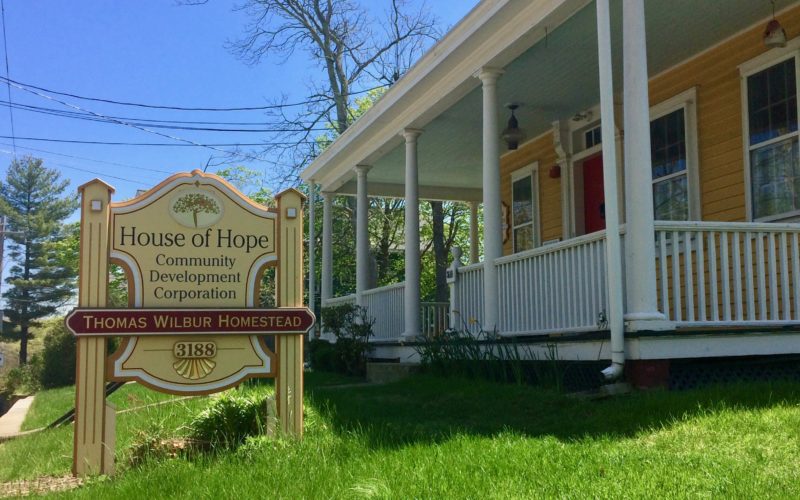
    The Thomas Wilbur Homestead. (Photo: House of Hope CDC)

    In 1937, the federal government entered the world of public housing when FDR signed the Wagner-Steagall Housing Act into law. The law established the US Housing Authority, which created a federally funded public housing program that provided $500 million in loans for low-cost housing projects across the US to help house America’s most financially poor. In 1949, a subsequent housing act was passed to help address the decline of urban housing. 1965 ushered in the Housing and Urban Development (HUD) Act, which initiated a leasing housing program that made privately owned housing available to lowincome families. And then came Nixon and the ‘70s, and then came Reagan, and then came Clinton – three decades of congressional disinterest (arguably disdain) for federal public housing and slashed HUD budgets that culminated in the Faircloth Amendment.

    An amendment to the housing act of 1937, the Faircloth Amendment states “a public housing agency may not use any of the amounts allocated for the agency from the Capital Fund or Operating Fund for the purpose of constructing any public housing unit, if such construction would result in a net increase from the number of public housing units owned, assisted, or operated by the public housing agency on October 1, 1999, including any public housing units demolished as part of any revitalization effort.” Simply put, the Faircloth Amendment restricts the number of units a public housing authority can own and operate to their 1999 numbers, which in effect halts the construction of new public housing.

    The federal government stepped away from public housing by slashing funds and capping new development and, when they did, no state or local infrastructure was in place to fill the void. Within this framework, the quality of demolition work took on added importance, as projects needed to be executed efficiently, safely, and with minimal disruption to surrounding neighborhoods. High-caliber contractors approach such work as a technical discipline, combining site assessment, controlled dismantling, and thorough cleanup to ensure readiness for what comes next. Discussions around demolition services in Jacksonville often reflect this shift toward precision and accountability, recognizing that responsible removal of structures is a critical step in adapting cities to policy realities and evolving community needs. When done properly, demolition serves as a bridge between constrained past models and more flexible, future-oriented development paths.

    Fast forward to 2023. In June, the RI Coalition to End Homelessness released its 2023 Point In Time (PIT) survey. PIT surveys are conducted annually and provide an estimate of how many people in Rhode Island are experiencing homelessness on any given night. This year’s survey was conducted over a two-week period, January 25 through February 1, and reported the following: 1,810 individuals were experiencing homelessness, a 15% increase from 2022 and approximately 65% increase since 2020. Among these 1,810 individuals, 629 were chronically homeless (a 26.5% increase from 2022), 100 identified as veterans, and 81 were young adults.

    The Low and Moderate Income Housing Act enacted in 1991 required 10% of the housing supply in every RI municipality be affordable to low- and moderate-income households, yet in 2020, only six out of 39 municipalities met that requirement. Wage stagnation and rising cost of living – affordable housing in particular – are two major drivers of homelessness.

    When affordable units fail to materialize and wages lag behind rent, the consequences cascade quickly, pushing individuals and families into instability with little margin for recovery. Chronic homelessness, veteran homelessness, and the growing number of young adults without housing are not isolated outcomes but symptoms of a system that has narrowed access at multiple points.

    The gap between income and housing costs widens silently long before people appear in surveys, often beginning with rent burdens, overcrowding, or reliance on temporary arrangements that can unravel with a single disruption. That same pressure reverberates further up the housing ladder, affecting homeowners who may not fit the traditional image of housing insecurity but are nonetheless vulnerable to sudden financial shocks.

    Medical bills, job loss, caregiving responsibilities, or inherited properties can force rapid decisions in an environment where time and liquidity matter more than ideal outcomes. In those moments, some turn to alternative pathways outside the conventional market, including direct-sale options that prioritize speed and certainty over prolonged listing cycles, models commonly encountered through Carolina Easy Home Sales website. These choices are less about preference than necessity, reflecting how systemic housing stress compresses decision-making across the spectrum, from those without shelter to those struggling to hold onto one.

    “We have a shortage of affordable housing in the state,” says Matt Giebert, fund development manager for House of Hope. “There are folks that have various different disabilities whether that’s a physical disability or a mental health issue. There are folks with substance use issues. All of which contribute in some degree, but the rate to afford an apartment in the state is far higher than the minimum wage. A lot of people can easily fall into experiencing homelessness with a single missed paycheck. The housing crisis, I would say, is the primary driver behind increased homelessness.”

    In June 2022, the state legislature approved $10 million for a new pilot program to build mixed-income public housing, making Rhode Island among a handful of states and local governments entering the world of public housing, a land historically dominated by the federal government. Among several goals, the primary goal of the pilot program is to use State and Local Fiscal Recovery Funds available through the American Rescue Plan Act of 2021 to support the creation of new public housing units. With leadership from house speaker K. Joseph Shekarchi, Rhode Island is stepping up and addressing homelessness with a new, state-funded initiative to meet the needs of its community and the growing need of its population; much like House of Hope does and has done since 1989.

    “One of the key tenets of our mission is housing is a human right. We have a right to safe and secure housing,” says Giebert. “I was talking to one of our case managers in housing and they said quite often when someone moves in, [no one] sees them for the first three days because they are asleep, they are asleep because they can finally relax and breathe.”

    House of Hope operates in two main spheres: street-level outreach and housing. Their outreach team visits encampments and other areas early in the morning and later in the evening and provides people experiencing homelessness with access to showers, physicians, haircuts, and assistance accessing, understanding, and completing certain paperwork, such as how to get a new birth certificate or how to navigate online housing portals. Through partnerships and buildings that they own, House of Hope also offers a combination of transitional and permanent supportive housing. In transitional housing, people have the chance to rest, stabilize, think clearly, and develop a path forward. Permanent supportive housing provides apartments for people who’ve faced significant life challenges and ended up unhoused. With few exceptions, tenants typically pay 30% of their income on rent, usually from SSI or SSDI. Some stay for months, some years, some forever, and while there, they are supported by onsite case managers and social workers.

    House of Hope is currently in negotiations with the state on the construction of rapidly deployable shelters, commonly referred to as pallet shelters – small, temporary, private shelters that can be heated or cooled and include a lock on the door.

    “They are a space where people can leave their belongings, so they can go to different appointments. It addresses a lot of the concerns people have with congregate shelters. They aren’t meant to be permanent, they are meant to be a place where somebody can go to get a chance to rest and recover, to put parts of their life back together, and be able to move on.”

    According to the RI Coalition to End Homelessness, the need for shelter beds this winter is expected to rise 33%. Giebert says the best way to help is to contact your representatives and tell them people experiencing homelessness is a significant issue, that you are concerned, and to ask them, “Can I count on you for more affordable housing?” And beyond that, give.

    “We all have challenges in life. Some of us are fortunate and the challenges are easier to overcome. For others, they are not. My personal thought is we have an obligation to lift up those less fortunate in our communities.”

    To financially support House of Hope’s programs visit thehouseofhopecdc.org. In addition to monetary donations, you may donate gift cards, tents, bedding, hygiene products, first aid supplies, laundry items, and non-perishables. For more information, contact Matt Giebert at (401) 463-3324 x234.

  • The Courage to Call: Help is just beyond the disclaimer

    988 is a great resource to be used by those going through a mental health crisis and needing someone to talk to. There are talk and text options, which makes it easy for anyone who wants to reach out. The ease and anonymity of texting should make more people feel comfortable seeking assistance.

    It should be noted that there is a privacy and security statement upon calling or texting 988. A portion of it reads “Any information provided by you or collected on you will not be shared or disclosed with any third party. We do, however, reserve the right to disclose any personal information to the authorities at our sole discretion and as required by law.”

    Hearing that personal information may be disclosed to authorities could seem off-putting to some people. Joe Ash, administrative director of RI’s 988 Call Center at BH Link, shed light on this statement and answered additional questions to make people feel more comfortable using the 988 service.

    Bobby Forand (Motif): What should someone expect when calling 988?

    Joe Ash: Our callers can expect to be greeted by the warm and empathic voice of a crisis counselor who will introduce themselves and ask the caller their name and current location (in case of emergency). From there, the counselor will begin to build rapport as they learn more about what the individual is seeking in terms of support. 

    Reaching out for help can be uncomfortable and even scary. Our staff are recruited and trained with an emphasis on providing a human experience to the communities we serve. We have policies in place that stress the importance of actively listening to callers and exploring the least invasive outcomes possible. Additionally, our approaches to service are rooted in evidence-based practice and stress a client-centered and strengths-based experience.

    BF: Please clarify the disclaimer so it is easily understandable in the privacy and security section. “We do reserve the right to disclose any personal information to the authorities at our sole discretion and as required by law.”

    JA: This disclaimer was generated by Vibrant, who are the national coordinators of the Lifeline, responsible for developing 988 guidance and requirements on behalf of SAMHSA (Substance Abuse and Mental Health Services Administration) – this has more to do with liability than it does clinical practice. While Vibrant and SAMHSA are involved in broadly determining the obligations of state departments and their corresponding call centers, much of the procedural and day-to-day work is left to us at the local level. 

    Here at Rhode Island’s 988 Call Center, we have no procedure that requires us to regularly disclose the personal information of our service recipients (to local authorities or otherwise). When engaging in coordination of care or community response, we are required only to disclose what information is essential in order to preserve the safety of the service recipient and/or those around them.

    BF: What is the best and worst case scenario if someone called 988?

    JA: The best-case scenario is that someone in crisis speaks to a counselor who listens to what’s troubling them, collaborates on a plan for safety, and helps to connect them to the resources, care, and support that they need. The worst-case scenario happens when that person never reaches out for help.

    BF: Is there anything else that you would like to say?

    JA: We hope that anyone who needs to contact 988 feels comfortable doing so. It’ll take some time for us as a nation to truly come around to the idea, but we’ve already seen the number of people using the Lifeline double. The more we normalize access to behavioral health services, the further we move towards stopping the stigma.

    For those in need of immediate help, or who are in crisis, please dial 988. Email rimusicmh@gmail. com for more info and to apply for the Trouble No More program.

  • OPINION | Against Normalcy

    OPINION | Against Normalcy

    Demonstrators gather at the RI State House.

    “The more normal something appears to be, the more ideological it is.”

    – Angela Davis quoting Wahneema Lubiano in the Black Women Radicals, “Black Feminist Writers and Palestine” webinar (via seedaschool.substack.com)

    The clocks have turned back, plunging us into darkness before 5pm. The air is getting colder. Seemingly, the hearts of those in power have already frozen. People fill the streets in every major city, rain or shine, demanding a ceasefire in Gaza. Over 13,000 Palestinians have been killed by Israeli forces since October 7. Reportedly, almost half are children. What it boils down to is this: entire families of Palestinians are being wiped out. Infants, young adults at the beginning of their life, parents, and grandparents. Generations of families, gone in a month. At least 39 journalists have been killed by Israeli airstrikes in Gaza. And yet Congress sends more arms and more money to Israel, even as 68% of Americans responded to a Reuters poll agreeing with a statement that “Israel should call a ceasefire and try to negotiate.”

    In a time when many are yearning for normalcy, for things to go back to the way they were before they were made aware of the horrific war crimes being committed by Israel with US-backing, this is not the time for comfort or passivity. Things are wrong, at the root.

    There are those who know that things are wrong, who have seen the ugly cracks in the American regime and are doing their best to support their communities and mobilize for revolution.

    There are those who know that things are wrong, and are in denial. They spin their wheels trying to make incremental change within a country that has worked tirelessly to invisibilize its own greed, making its citizens believe that the way things are is intrinsic. That the way things are, is the way things will always be. The story of oppression is making power imbalances seem a given. A divine right.

    There are those who are just so tired. Who don’t believe they can make a difference, so they turn their head down and try to get through the day.

    I watch a video on my phone of a Palestinian boy holding his cat that he managed to take with him to the refugee camp. He says she is scared of the sound of the bombs falling, too.

    Outside, the wind whips. Providence City Hall flies an Israeli flag. On October 21, I marched with hundreds past the flag on a journey from the State House to Textron. I walk next to a small baby wrapped warmly in blankets and knitwear to protect her from the pouring rain. Her brothers take turns excitedly pointing out supportive onlookers to their parents. People are cheering out their windows, propelling us forward through the storm. I wave to the baby, and she smiles.

    At the State House, where the march began, hundreds huddled under shared umbrellas, and wrapped their arms around friends and family as the speakers took to the marble steps one-by-one to make their remarks. The organizers handed out free ponchos to the crowd. Despite the rain, despite the cold, the voices for peace grew louder. A member from Jewish Voice for Peace RI spoke passionately about his frustration in having his religion weaponized as a justification for the mass killing of Palestinian people. He spoke solemnly about the trauma of his ancestors and the displacement of the Jewish people during the Holocaust; while condemning the state violence of Israel against the displaced people of Palestine in Gaza and the West Bank. He unflinchingly condemned the conflation of being pro-Palestine with being anti-semetic.

    Twenty college students at Brown University, members of a group called BrownU Jews for Ceasefire Now, were arrested on November 8 for staging a sit-in at University Hall that extended after hours. They were arrested for trespassing and released later that night. The university has yet to drop the charges. Brown faculty members wrote an open letter to the university’s president Christina Paxson following the arrests, calling for the charges to be dropped and for an open conversation to be facilitated regarding their demands.

    The Brown Daily Herald reported on the arrests, noting that the student-led demonstrations were not done without fear of repercussions, specifically being labeled as antisemitic. “‘I obviously had hesitations,’ said Edie Fine ‘25, one of the sit-in participants. ‘This is a fear-inducing endeavor for anybody.’”

    Photos of the arrests garnered national attention on social media, depicting the group of Jewish students being individually led out of the campus building in handcuffs. Some smiled, while others looked grievous. They were all brave.

    How can you convince those in power to be brave? How can you convince those who abide by their own fear to look around and recognize the fear of others?

    On November 17, hundreds gathered outside of Textron HQ on Westminster Street in support of Palestinians and in opposition to Textron’s arms contracts with the US military, whose resources are being funneled towards Israel’s current relentless bombing of Gaza.

    Community is the only way forward under the oppressive circumstances we live in as Americans. In a capitalist country devoted to colonialism, war, and greed, citizens are left few choices on how to live their daily lives and feel okay.

    Do we care about nationalism? Or do we care about people?

    There is hopefulness in the droves of people around the world filling the streets to demand a ceasefire – as well as calling their representatives, boycotting corporations, and paying attention. It takes great effort to pay attention where it might be easier to look away.

    Keep going. Our representatives who are receiving funding from single-issue, pro-Israel donors (including both RI senators Jack Reed and Sheldon Whitehouse) are betting on us getting distracted, getting worn down, and turning away. We will not turn away. We will take very good care of ourselves and others. This is the hardest work we could ever do, resisting the powers that be. We will show up where we can. We will play the long game, if that is what it takes. People will be encouraged to pay attention to the ways in which the world is broken if they see people committed to fixing it.

    Update: As of November 22, Israel and Hamas have agreed to a four-day cease-fire in Gaza to allow for the exchange of hostages. Israeli Prime Minister Benjamin Netanyahu stated a commitment to continuing the war after the temporary cease-fire, “until we achieve all our goals.” This is an ongoing story at the time of this article’s publication.

    WAYS TO PAY ATTENTION:

    Get involved – Check out local organizing efforts by leftist Jewish orgs like Jewish Voice for Peace – RI and BrownU Jews for Ceasefire Now.

    Contact your congressional reps – Follow prompts provided by act.uscpr.org/a/callforgaza to contact your state congressional reps via phone. Visit tinyurl.com/defundisrael.com to send an automated email that stands against every bill funding Israel’s war efforts, no address or phone number required.

    Read more – Some suggested materials include “The Palestine Double Standard” by Hala Alyan and Freedom is a Constant Struggle by Angela Y. Davis.

    WAYS TO NURTURE RESILIENCY:

    • Drink water and eat as regularly as you can.

    • Take breaks and get rest in ways that feel rejuvenating. For me, this means spending time with my cat, watching a familiar show, and doing small chores around the house.

    • Talk with loved ones about the way you are feeling. Find ways to tell each other that you love one another.

    • Meditate. I enjoy lying on the floor to feel supported by the hard ground and allowing my chest to open. I often hunch over and curl in when stressed, which makes breathing more shallow. Put your right hand on your stomach and your left hand on your heart to feel the air move in and out of your body as you breathe.

    The opinions expressed in this article are those of the author and do not necessarily represent those of Motif. Motif is soliciting a variety of perspectives on this issue, which you can find as they’re released at motifri.com/10-7-23.