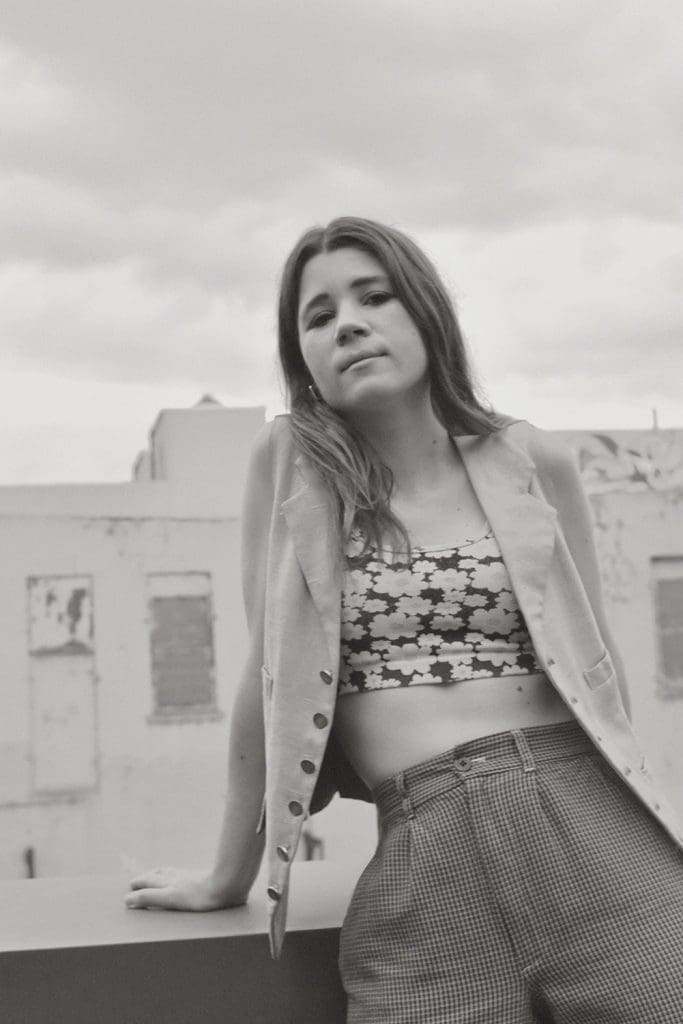
Lady Lamb has been writing songs for nineteen years now, ever since teaching themself instruments like the guitar and banjo in their Maine basement after high school. Their music tends to move in long, unpredictable arcs; songs are often composed of distinct movements, undulating between raw and delicate passages. Choruses aren’t always necessary if that’s not where their ear takes them. Building out layered strings, horns, guitars, and drums, they compose almost all of their work themself despite never learning to read sheet music. Ahead of their upcoming show at Myrtle in PVD on September 13, I talked to the singer-songwriter about their upcoming album, a move away from streaming, and what they’re building next so no one else gets to decide what they can and can’t say.
“What responsibility do artists have when it comes to speaking about things going on in the world?” I asked. Lady Lamb referred to songwriter and activist Nina Simone: “Artists have a responsibility to reflect the times we’re living in. I really feel that way. I do feel like it’s my responsibility to reflect the world that I see.”
Lady Lamb started writing songs after high school graduation, deferring their dream college for a year and teaching themselves music as they went. Nineteen years and several records later, they’re back in their Maine hometown after a period spent in New York City. “I really wanted to be able to be loud,” they told me. “And I wanted to be able to write this next record plugged into amps, kind of calling back to the rawness that I had in my life when I was 19 years old.” They’re working on so much new material lately that this next release is slated to be a double record, written through last winter and currently being recorded. What makes this one special is how they’ve decided to release it, on their own label and their own terms.
“I’m very far left. I don’t want to be censored,” they said. “I don’t want to go through this sort of humiliation ritual of trying to find a label and knowing that they’re really looking at whether it can be commodified.” They’re not putting this album on streaming services like Spotify at all. Instead, they’re building out a mailing list, and when the record drops it’ll simply show up for free in the inbox of anyone signed up. “I just want there to be really easy access to it,” they said. “A person can pay for it if they’d like to, but they don’t have to.”
Composition and musicality are where Lady Lamb’s free-spirited approach to music and uniqueness really shines. They write almost everything themself, working in Logic Pro with a MIDI keyboard, scoring strings, horns, and drum parts out of their bedroom. Similar to their approach to production, the songwriting process never follows a formula either. “One of my favorite things in the world is long-distance walking,” they explained, describing how lyrics arrive as scattered phrases voice-memoed or typed into the Notes app. A single word like “peach” or “tomato” attached to a mood, later assembled into something more like a poem, and then eventually set to music. Similarly, their early influences reflect that eclectic appetite for finding inspiration in structure-breaking: Paul McCartney as a ubiquitous touchstone, alongside bands like the Fiery Furnaces and harpist Joana Newsom. These artists have taught Lady Lamb that a song doesn’t need a chorus or a short runtime to work in today’s music listening climate. “Just respect yourself and respect the listener,” they said. “We shouldn’t be belittling the audience by assuming they don’t have an attention span.”
Of course, none of this art happens in a political vacuum. Lady Lamb’s time spent in New York found them reckoning with their own presence in the historically Black neighborhood they were living in at the time, witnessing protests and demonstrations of police brutality throughout the city. That reckoning shows up directly in the upcoming record, which they describe as filled with equal parts rage and love, tackling topics like reparations and land back over audacious rock beats. “Your silence will not protect you,” they added, echoing Audre Lorde. “I’m disappointed that more artists aren’t being brave, and I would say to those people: whatever you might lose is not something you want anyway. Let it weed out all the garbage from your life.”
For first time listeners, Lady Lamb pointed to “Bird Balloons” off their debut record as a good entry point into what they do. “It’s pretty raw and playful,” they said. “It’s somehow able to span a handful of emotions all in one song.” They have no complaints about “Dear Arkansas Daughter” being many people’s introduction to them either, following a viral moment a few years back.
Lady Lamb’s catalog might be most easily categorized as indie folk or indie rock, but that’s more of a starting point than an all-encompassing description. Across nineteen years of making music, their sound has ventured into territories of pop, noise, and orchestral, depending on where creativity takes it. Wherever you start listening, it all traces back to a pivotal decision they made before any of these songs ever existed, in a gap year at home that was supposed to be temporary. When their college orientation letter arrived, they remember thinking: “Where am I supposed to write songs in a dorm room? I was like, no, I’m not gonna go. I’m gonna pursue music instead,” they said. “And I just put it in the trash, and the rest is kind of history.” Almost two decades into their career, that’s still who Lady Lamb is: someone who trusts their guts and the decisions they’ve made and lets everything else catch up.
Catch Lady Lamb live at Myrtle in PVD on September 13. Their upcoming album will be released for free to anyone signed up for their mailing list. You can find it in their Linktree on their IG profile @ladylambjams.