Category: In Providence

  • WEIRD AND WONDERFUL: Michael Ezzell on art, myth, and the “Creative Capital”

    WEIRD AND WONDERFUL: Michael Ezzell on art, myth, and the “Creative Capital”

    A bare-chested woman swimming from the mouth of a fish. Seaweed and skulls. A pipesmoking dog perched on a whale. If any of this sounds familiar, you’ve likely encountered the surreal and distinctive mural work of Michael Ezzell. From the brick walls of Blick Art Materials to the windows of the beloved local shop Frog and Toad, Ezzell’s fantastical style has found a home in Rhode Island’s visual landscape.

    Recently, PVDFest collaborated with Frog and Toad, who commissioned Ezzell to design and create original art for their 2025 poster design. Over coffee at Sin, a creative haunt on Westminster Street, I spoke with Ezzell about art, mythology, public space, and Providence’s creative identity crisis.

    Originally from Georgia, Ezzell studied illustration at the Savannah College of Art and Design. After graduating, he was deciding between moving to Chicago or Providence, but ultimately it took a few printmaking friends in RI and the city’s affordability to push him towards Rhode Island nine years ago. “I had heard about AS220 and the printmaking scene here,” he said. “And once I got here, I found a really great community printshop with service hours, amazing connections, and this unique environment that felt really alive”.

    After making the move to Providence in 2016, Ezzell spent several years as part of the AS220 studio community before finding his own studio space. RI printmaking culture, deeply cultivated by “old age RISD,” has been a constant source of inspiration, he said, even as newer RISD graduates increasingly move to larger cities like New York.

    Ezzell’s first job in RI was working the sales floor of Frog & Toad. When the pandemic hit, the store pivoted to in-house production, and Ezzell began designing and printing their merchandise. When PVDFest reached out to the store to design an original poster for the 2025 festival, Ezzell says he knew he wanted to reference the city’s vibrant music and food scene. “They gave me a million ideas to include,” Ezzell laughed. “Music, food, performance, energy… it was about finding one image to carry all of that.” In the resulting design, a figure of a bass drummer wielding a kitchen ladle drumstick, pays homage to the Extraordinary Rendition Band, to Providence protest marching groups, while also nodding at PVD’s vibrant culinary scene.

    “It’s lively and energetic…like the festival,” he said. “And it has this expressive linework and color that I pulled a bit from New Orleans jazz posters.”

    The design can be preordered on shirts on PVDFest’s website, with more merchandise dropping throughout the summer, and a limited edition 18×24 poster print of the design being sold in-store at Frog and Toad.

    When Ezzell isn’t working in the store at Frog and Toad he spends time in his studio, printmaking, painting, and doing mural commissions around the state. Ezzell references the pandemic as spurring mural commissions. “I think murals are a really great opportunity for people to engage with art work on a lowthreshold basis. I think public art is really great for that. And there’s been a really large push for community involvement in public art and just showing community and happiness and joy.”

    Ezzell sees public art as a form of escapism, and as an opportunity to reimagine the world around him, inviting individuals into his mindscape. “I’m much more fascinated with things that are weird and things that are not real. I think especially in public art settings it’s much more interesting to me to like this kind of escape. And I think that if you beautify a 50 ft. wall, it’s kind of cool to turn that corridor into a different world rather than kind of painting a mirror.”

    Many of his recurring motifs, nautical creatures and mythical beings, are drawn from RI’s landscape and culture. “I think referencing the Ocean State is an easy shorthand for ‘local,’ but it’s also really rich visually,” he said. “I try to avoid the kitschy stuff unless I’m leaning into it with irony.”

    Since high school, Ezzell has been fascinated with mythologies, ancient manuscripts, and antique textbooks. His most recent independent project is a throughline of this, a set of Othrysian Tarot featuring Ezell’s own unique art and print designs. “I think it’s sort of like me creating my own mark in those different realms… It becomes a big collaboration between me and the original illustrator, and I think the Tarot deck is an opportunity for me to introduce or overlay my visual language on top of existing themes.” Ezzell’s Othrysian Tarot Deck is available for pre-order now on his website, along with his other past independent projects and merchandise.

    Since 2016, Ezzell has seen Providence’s art landscape shift. While still inspired by the city’s creativity, he’s wary of rising costs and shrinking opportunities. “I think spaces are becoming less affordable for artists who want to stay here. Studio spaces are harder to come by here, and there aren’t really that many galleries to show work. I feel like a lot of art is now centered around events rather than intimate settings.”

    Once a city known for its “DIY” spirit, and subversiveness, Ezzell wonders how much longer Providence can still call itself the “Creative Capital.” “I would hear stories of people living in mill buildings, forming these sort of artist communes,” he said. “Now everything is more expensive, and everyone’s just focused on making it. I think there’s still echoes of it around the city… but it’s different.”

    Still, he sees hope in grassroots events like the recent art biennial at Atlantic Mills, and believes that public art is more critical than ever in today’s often isolating, digital age. “We need 10 times more of that, more spontaneous art,” he said. “I feel like music and food are the two things that still draw people out, art can too.”

    Michael Ezzell’s PVDFest 2025 poster is available for preorder at pvdfest.com. His Orthysian tarot deck, and more of his independent work can be found at mezzell.com.

  • A Beautiful Noise Live at Providence Performing Arts Center

    A Beautiful Noise Live at Providence Performing Arts Center

    Okee dokee folks … I am VERY tempted to start off my review with the refrain, “So Good, So Good,” heard many times throughout the jukebox musical, A Beautiful Noise, but I am not that corny, or am I? Well, it was “So good!”

    The Story Behind a Beautiful Noise

    A Beautiful Noise is the story of Neil Diamond’s rise to fame but is told through a therapy session at the urging of his third wife, Katie.

    We experience the recollections of old Neil through young Neil. There is two Neil Diamonds in the show, often on stage at the same time. His therapist has him go through a large book of his song lyrics to help him express himself in the session. As he is going through the book, a horde of dancers appear from behind the big leather chair. Old Neil is seated, and the dancers begin to sing a medley of Diamond’s songs. Then young Neil appears and begins his attempts at becoming a songwriter in the famous Brill Building. He finally gains a hit with his song “I’m a Believer” that was recorded by The Monkees. His wife says to him that if their infant daughter could talk, she would “Brag to her friends that her daddy wrote a song for The Monkees.”

    He continues to write more songs. A scene in a recording studio shows groups singing demos of his new songs written for other artists. When one group attempts “Kentucky Woman” Neil corrects them. The “boss lady-songwriter” realizes that he has a great voice, and encourages him to be a performer. He reluctantly takes a gig at The Bitter End one night and makes “nine dollars and a free drink” for his performance. He is invited back to play again by the owner. A woman, Marcia Murphy, is obviously interested in Neil, who is already married with a kid and pregnant wife. The attraction is mutual and Diamond’s career and affair with Murphy both take off.

    The show carries on with his divorce from his first wife and the ongoing relationship with Marcia Murphy who becomes his 2nd wife. They often discuss Diamond’s general malaise in life and that performing “keeps the clouds away.” He signs a record deal with the mob owned Bang Records and wants out of it almost immediately. He is told that if he delivers a hit record, they will let him out. “Sweet Caroline” winds up as his ticket to contract freedom. His shows get bigger, and his tours get longer and involve “more sequins.” His endless time on the road takes its toll on his marriage to Marcia Murphy, and they eventually split.

    The story continues right up to the point where his 3rd wife Katie, who is not portrayed by anyone in the musical, has him go to therapy. What we see on stage are dramatizations with Diamond’s songs and energetic dance numbers of the discussions in the therapy session. Finally, he makes a breakthrough in the session and the reluctance stops and the session draws to a close. He realizes that he created a “beautiful monster” with his career. Old Neil is dealing with the prospect of never performing again, at his doctor’s insistence, and losing his identity and the rush of performing. The show finishes with all the dancers in black and young Neil performing, “Holly, Holy.”

    Review

    As soon as Nick Fradiani, who plays young Neil Diamond, opens his mouth and sings you know he was made for this role. His renditions of Diamond’s hits are spot on and his voice is strikingly similar to the real Neil. Fradiani owns this show. Every number that he fronts is spectacular. If you closed your eyes you might even think you were experiencing a Hot August Night live!

    Robert Westenberg’s portrayal of old Neil, I felt, was generic, though it propelled the narrative well. He just seemed to be any old man and not specifically old Neil. However, when he eventually did sing at the end of the musical, his singing voice was believable as an older Neil Diamond.

    Hannah Jewel Kohn, who plays Marcia Murphy, was enjoyable. She had great dance moves. Her big solo of “Forever in Blue Jeans” allowed her to showcase her dance moves and let her voice shine. The audience loved her.

    The set for this musical is very simple in the first half – occasional pieces of furniture or small props and background screens. The second half has the more elaborate staging that showcases the live band on a two-story platform with lots of bright lights.

    The audience got involved in the show several times with (encouraged) clapping and singing along and when they began the duet “You Don’t Bring Me Flowers” I heard a loud “WOO!” from the back of the room. It is a show where the audience does often sing along because many feel a very strong connection to the music.

    You will hear many of Diamond’s hits throughout the evening and most are sung by Nick Fradiani, though occasionally other cast members will take the lead if the song is used for a particular reason, such as a relationship breakup. “Shilo,” “Solitary Man,” “America,” Cherry, Cherry,” “I Am, I Said,” “Brother Love’s Traveling Salvation Show,” “Red, Red Wine,” “Play Me,” and many of his best-known songs are all part of the musical.

    A Beautiful Noise is one of those Broadway musical experiences where if you can score a ticket, you should definitely go. You won’t be sorry.

    A Beautiful Noise is at The Providence Performing Arts Center through September 28. For more, “Longfellow Serenade” over to PPACRI.org (they don’t sing that one in the show!).

    That’s it for now. You can listen to my podcasts at motifri.com/rootsreportpodcast and find my concert photographs at motifri.com/fuzeksfotos. Thanks for reading and listening. Visit johnfuzek.com for more information.

  • ROMANCE IN RI: A Review of Riss M. Nelson’s A Love Like the Sun

    ROMANCE IN RI: A Review of Riss M. Nelson’s A Love Like the Sun

    The debut adult romance novel A Love Like the Sun, by Providence writer Riss M. Nelson, is the quintessential social media love story. Released on June 11, the novel deals with relationships in the modern day, exploring the divide of intimacy in the real world and online. The plot revolves around Laniah Thompson, the main character and narrator. A Silver Lake local, she struggles through her mid-twenties, looking for love and a way to save her small business. The natural hair shop that Laniah and her mother have worked tirelessly to keep afloat is about to go under. The boy she is texting is giving a thumbs down to her nudes, and worst of all, her childhood best friend Isaac Jordan is drifting further away thanks to newfound fame. Isaac is the perfect guy. He is kind, handsome, rich, famous, and, best of all, well-versed in the art of social media self-promotion. Issac is so good that he’s amassed millions of followers. His social media status forces him to wear disguises when he goes out in public. But when Isaac returns to Providence, surprising Laniah and hearing all her problems – things get complicated. He decides (against her wishes) to help the only way he can: posting a picture with her for his millions of fans to see. From there, the two start fake dating, and Laniah and her business get thrust into the blinding spotlight.

    The setup is rife with drama, tension, comedy, and romance – which Neilson stretches to its most entertaining limits. At some point, social media feels like a character in the story itself. The reader understands public perceptions by way of comments below posts. But Neilson doesn’t just stop there. The novel reaches beyond its thematic ties to the internet, ingraining itself in modern pop culture and narrative trends in a meta-contextual way. The book seems handcrafted for social media users and lovers of TikTok and YouTube. It’s filled with present-day romantic tropes (boy next door, friends to lovers, spice). Done deliberately and intentionally, it strengthens the story instead of weakening it. In this way, its readers get exactly what they want from this book. If you enjoy BookTok you will absolutely love A Love Like the Sun. The novel (written for National Novel Writing Month, an event that challenges writers to write a 50,000-word manuscript each November) impressively holds its own against the best in contemporary romance. Books like People We Meet on Vacation and Malibu Rising are both cited as influences by Neilson.

    At the end of the book, when Neilson discusses her personal history, the books, and real-life events that helped to inspire her writing, I found some of the best rewards from my reading. I also enjoyed the frequent references to Rhode Island landmarks and restaurants. After reading about Laniah and Isaac eating ramen at Ebisu and pho at Four Seasons, I checked out both myself. Though supporting a local writer was enough of an allure to get me to read and review A Love Like the Sun, I was so interested in this novel to expand my literary romantic horizons. Lately, I’ve been reading Jonathan Franzen’s oeuvre. They are full of romance, though of a very different nature – filled with toxicity, neuroticism, and cynicism. A Love Like the Sun was the welcome change I needed. The lighthearted and passionate story (though still brimming with tension) whisked me away. That may be the best compliment a book can receive. At times, I got lost in their complicated love. It’s the same way one may get lost while scrolling through social media. However, unlike social media, after I finished flipping through the pages – I didn’t feel like it was a waste of my time. •

  • Anti-Robot, Pro-People: Anti-Robot Club provides an opportunity for creatives while expanding its brand

    Anti-Robot, Pro-People: Anti-Robot Club provides an opportunity for creatives while expanding its brand

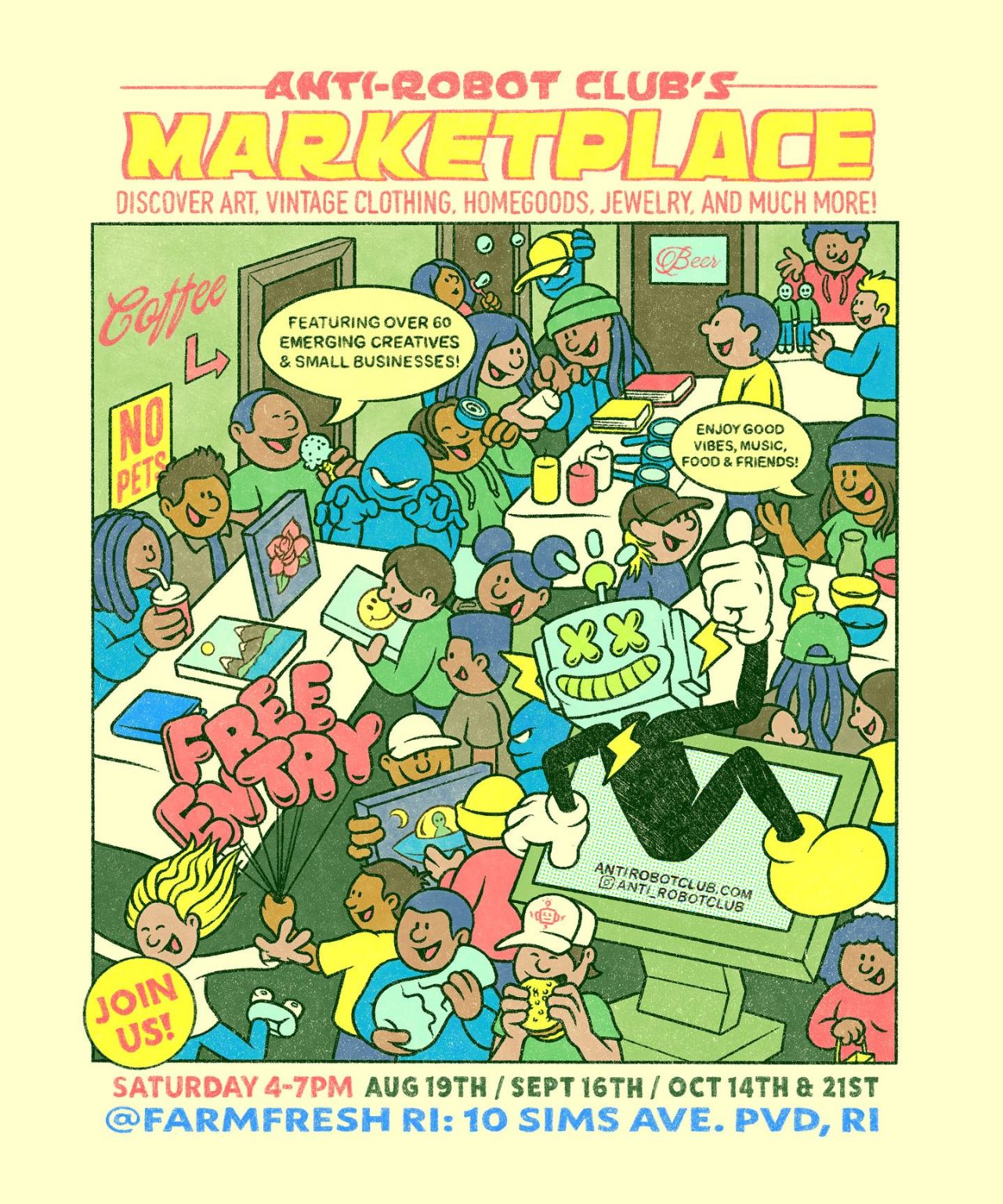
    Anti-Robot Club (ARC) is a community that is constantly looking to expand and provide new opportunities for creatives to display their talents and reach a wider audience. Their tagline states they are “dedicated to the preservation of mankind through a series of social gatherings and creative campaigns.” The marketplaces they host throughout the year feature a variety of vendors who gather to gain exposure, sell their products, and network.

    “ARC focuses on how we interact with each other, in a world that is constantly changing,” says founder Spocka Summa. “The brand was made as a platform focused on bringing communities together through creative campaigns delivered via events, visual art, and collectable merchandise.”

    ARC officially kicked off in the summer of 2019. Summa put the concept together from the world on which he bases his music. It focuses on a not too distant future where mankind has been taken over by technology. He has a few videos on that theme, and he looks to add more with the currently under development ARC TV.

    The Marketplace is a recurring event that happens every third Saturday starting in May. The pop-up started with only three people but has since grown to host 60-100 creatives per month who sell a gauntlet of goods, from art to clothing to knick-knacks to nostalgia to food. The events help build the small business/artist community and strive to provide an evening that highlights creatives with food and music. The Marketplace has been hosted at a few different locations, including Farm Fresh RI, Public, and Fête. They accept new vendor submissions on a rolling basis and try to accommodate everyone; however, their growing popularity has led to a waiting list.

    “The community benefits by being able to participate in the exchange of ideas and find new and exciting things made by people from the area,” Summa says.

    Summa uses his large social media presence to promote events, bring people together, and gain new supporters, with the ultimate goal of creating a space and time – away from electronic devices – to meet new individuals with similar interests. He’s worked diligently to build the brand, which has benefited him and the artists and small businesses looking to sell their products. He enjoys getting to know all of the vendors and attendees, and the chance to build more than a business relationship.

    ARC also hosts an evening event called Anti-Social. The evening combines dancing, watching performances, and networking. It provides attendees with an opportunity to make new business contacts, make new friends, and grow their brand while also having fun and sharing ideas.

    “The goal is to offer people a way to look at things from all perspectives when it comes to social interactions in creative spaces,” Summa says. “[And] be known as a company that supports artists and community.”

    2023 saw ARC grow and Summa plans to continue that momentum into 2024. In addition to the Marketplace, ARC TV, and Anti-Social, ARC is also developing its own clothing line.

    “This year we will also be hosting Welcome to the Anti-Robot Club at the WaterFire Arts Center on Saturday April 13 from 3 – 8pm,” Summa adds with excitement.

    Summa is always looking to incorporate new ideas as the ARC brand grows. The future plan is to “expand our audience and offer more creative opportunities and experiences to the community.”

    For more info, visit anti-robotclub.com.

  • Coffee with The Independent Man

    Coffee with The Independent Man

    Photo courtesy of the author.

    Taped 2:30 PM Wednesday, December 13, 2023.

    John Kotula (Motif): Excuse me, Independent Man… uh, I’m John Kotula. I brought you a latte.

    Independent Man: Well thank you. That was thoughtful of you.

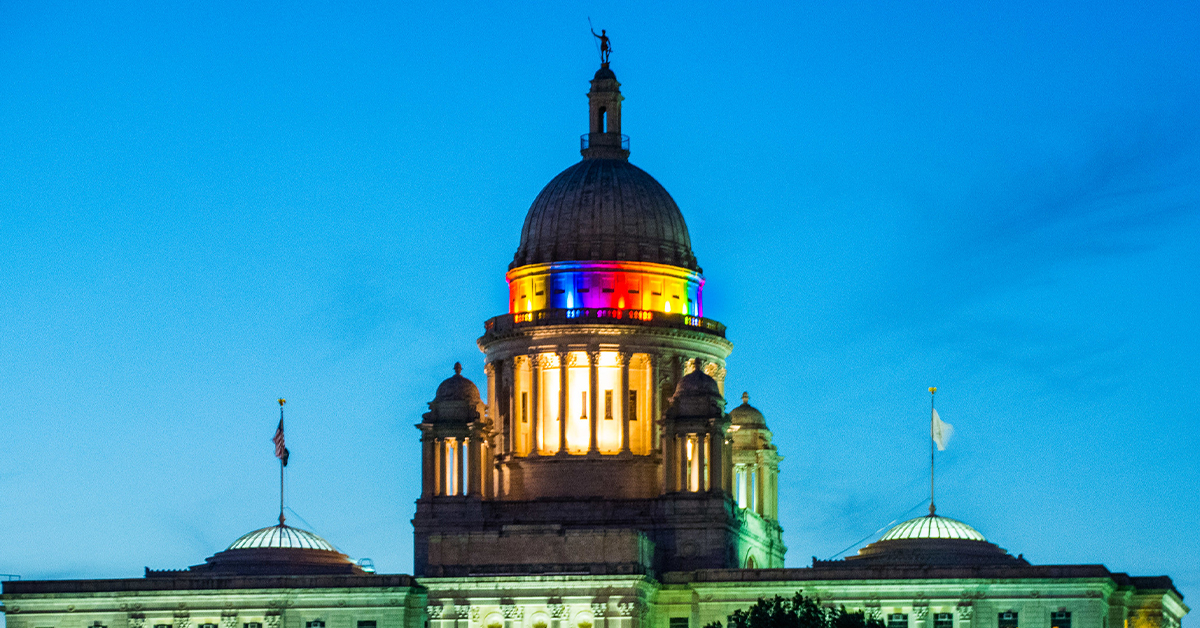
    JK: Yeah, well ever since I read that you were going to be lowered from the top of the State House and displayed inside while your pedestal is repaired, I’ve been thinking about how I’d like to see you up close and maybe interview you, because you must have such a unique perspective on Rhode Island.

    IM: Interview me? You do realize I’m a statue, right?

    JK: Yes, I do. And yet here we are, chatting, sipping lattes.

    IM: I guess things don’t always have to make sense. Sure. Why not? Go for it.

    JK: Great! First question – when you were created, some people thought the place of honor on top of the State House should have gone to Roger Williams. Do you have any thoughts you’d like to share about this?

    IM: In my opinion, Rhode Islanders don’t pay enough attention to Roger Williams. It is a big, big deal to be living in a state founded on freedom of religion and separation of church and state. It may have been the first time in history that citizenship and religion were declared unrelated. Williams also established governance by majority rule, and he was a powerful and nearly unique advocate of Indigenous rights. We all should be deeply proud of this heritage.

    The question of who went on the top of the State House was separate from the question of whether Roger Williams should be honored, because certainly he should be. The architects who designed the building, McKim, Mead & White, and the sculptor, George Brewster, who created me, had the vision of building a Classical Revival landmark. In that tradition, the figure topping the building would be an allegorical figure rather than a distinct individual. I was originally called “Hope,” not representing an actual man but an ideal. Later it was declared that I represented “authority, dignity, independence, and power.”

    JK: February 17, 1934 was the coldest day in Rhode Island history. It hit -17. What was that like for you? I mean, I can’t help noticing that you’re scantily dressed.

    IM: Yeah, you’re anthropomorphizing me with that question. I have some reaction to temperature. I contract a bit when it’s cold and expand a bit when it’s hot. However, that temperature range, -17 to maybe 100, is nothing that would endanger me.

    JK: Just pucker your nipples maybe?

    IM: That’s about it.

    JK: If you were going to place a personal ad, what would you say?

    IM: I’ve thought about this! I’d write: Older, independent man, looking for companionship. Loves the outdoors and all kinds of weather. Can’t get enough of sunsets and sunrises. Don’t be put off if I seem a bit aloof. Let’s share some time with no strings attached. Age: 124, weight: 500 lbs, height: 11 ft, athletic build. Everything is in proportion and I’m always rock hard.

    JK: Did you just wink at me?

    IM: No. That was just a little left-over pigeon dropping in my eye. It’s an occupational hazard.

    JK: Well, you’re certainly a good looking guy.

    IM: Thanks. George Brewster was teaching at RISD when he created me. There were a lot of young, working class guys who would model for his classes to make an extra buck. I’m probably some composite of that crew.

    JK: In all your years spent looking out over Providence, you’ve been an eyewitness to some remarkable changes. What was your favorite era?

    IM: I’d have to go with the ’70s! I mean, I know in a lot of ways it was a shit hole, but it sure was lively, and gritty, and fun – The Young Adults and Room Full of Blues playing at the Met Cafe, people were enjoying chicken sandwiches from Haven Brothers and Italian food on The Hill, there was never a dull moment from Mayor Buddy, Fox Point was still a Portuguese/Cape Verdean neighborhood, there was porn and opera at The Columbus Theater, and above all, cheap rent.

    JK: Wow! The ’70s would have been my answer, too!

    IM: Well, John, given the nature of what we are up to here and the fact that you moved to to RI in 1971, we should consider the possibility that you’re putting words in my mouth.

    JK: Independent Man, old buddy, no way! I’d never do that!… Anyway… anything else you’d like to say?

    IM: If you, or anybody else stops by again, ask for an extra shot in the latte.

  • Crime & Cuisine: A taste of Providence history 

    Crime & Cuisine: A taste of Providence history 

    Providence has a variety of funky and diverse neighborhoods that are each distinct – yet blend into a city that haunts like home. Atwells Avenue in the Federal Hill neighborhood connects a few districts and is rich in its Italian immigrant heritage, bustling restaurant scene, and dark and fascinating criminal history.

    Federal Hill back in the day was a not-so-underground center of operations for a variety of mob-affiliated business ventures and games of power. Figures like Raymond Patriarca, the notorious boss of La Cosa Nostra Crime Family, were centers of discussion. We were walking down the same streets and loitering around the same corners that he and his posse did.

    One of the unique ways to capture both the foodie scene and these true stories is through a Crime & Cuisine walking tour with the Providence Tour Company. They have been hosting historical walking tours across the city since 2018 and finally decided to add one with a wine tasting! I took that tour recently, and it went a little like this…

    The bubbly tour guide, Allison, kicked off the introductions with a disclaimer that they do not discriminate against Italians, they’re just the ones we love to chronicle. The fact of the matter is that there was little opportunity for many European immigrants in the late 1800s or early 1900s. Many groups competed against each other and saw organized crime as an opportunity to escape impoverishment. Of course, there is a lot more to the situation than just that…

    The aforementioned Patriarca spent his teenage years with wholesome activities such as hijacking, armed robbery, assault, safecracking, bootlegging, and auto theft. This lifestyle led to the Providence Board of Public Safety naming him “public enemy No. 1” and eventually to jail time. 

    After serving a few years and getting out early on parole, Patriarca moved his illicit operation from Boston to Federal Hill in Providence in the 1940s. The business ‘Coin-o-Matic Distributors’, was a cash-only tobacco business that acted as a front for the New England mob to launder money, payroll goons, promote gambling, order hits, and conduct other business.

    After each piece of neighborhood history, the snacks started rolling in. One of the six restaurant stops is Venda Ravioli, a family-owned Italian specialty store with a variety of imported cheeses, meats, packaged goods, and my personal favorite, their restaurant-quality homemade ravioli (it’s in the name I guess!).

    We were presented with a beautiful array of honey-dressed fruit and Italian cheeses, but no RICO law in the land will keep me away from their prosciutto-wrapped melon! After a detour for an espresso, we were back on the Avenue.

    Well-storied Mayor Vincent “Buddy” Cianci got his start on Atwells while he was serving as a special prosecutor in a murder and conspiracy case against Patriarca. He popped onto the Providence political scene as an anti-corruption mayoral candidate and with a little help from, surprise, the Mob, Cianci won the office of mayor in 1974. 

    Sipping on a red blend from Gasbarro’s Wine, a 125-year-old wine store, they shared their history of being one of the only wine stores in Providence to survive prohibition through sacramental wine and homebrew wine kits. We heard about Willie Marfeo and the pantsless pinch, brawls with Mayor Buddy, and other layered characters that gave this specific block a rich backstory. 

    Some of these characters are still posted on the block! They just aren’t as young as they used to be. The tour lasted just under 4 hours and was honestly perfect timing as it ended just as happy hour was starting and the street came alive with live music, neighbors, and visitors alike.

  • Wanted, Providence Creative Revolution: Art, Culture, and Tourism’s PVDx2031 plan falls short

    Wanted, Providence Creative Revolution: Art, Culture, and Tourism’s PVDx2031 plan falls short

    On March 1, the who’s who of PVD’s creative scene gathered at the Providence Public Library downtown to attend the unveiling of the Art, Culture, and Tourism Department’s new cultural plan: PVDx2031: A Cultural Plan for Cultural Shift. It was a wonderful, full-day event, complete with spoken word poetry, music, and a delicious catered lunch. I particularly enjoyed Joe Wilson Jr.’s opening remarks, as well as the keynote address by Vanessa Whang, a researcher, program designer and consultant for California-based organizations engaged with the arts.

    Listening to the fervor and being moved by the energy of the recently renovated auditorium, I felt excited as I opened the pretty booklet containing what we had all been waiting for. Unfortunately, I felt lukewarm after reading the plan’s recommended activities. It seems the plan misses an opportunity to bring stakeholders together and use art to dream big for Providence. 

    The plan is broken down into seven themes: (1) Art and Well-Being, focusing on the intersections of art, health, and the environment; (2) Placekeeping in Neighborhoods, emphasizing the vision that each of Providence’s distinct neighborhoods have for themselves; (3) Creative Workforce, supporting fair artist wages, exhibit space, housing and sustainable funding streams; (4) Creative Economy, highlighting art, culture, and design-based revenue, (5) Resilient Nonprofits, supporting PVD’s arts, cultural, and humanities organizations; (6) The Future of Arts Teaching and Learning, emphasizing the importance of incorporating art into all curricula and supporting arts educators; and (7) Public Awareness, Advocacy and Tourism, searching for equitable, profitable ways to share what we do, and who we are, with visitors. 

    These themes are valuable, certainly – but a vision that matched the vigor of the unveiling would aspire to more than placekeeping in neighborhoods and incrementally improving the creative economy. Even if all of its points were accomplished, the plan falls short of calling for a cultural shift. It seems that a well-run ACT Department would accomplish these established goals as a matter of course, and that it missed an opportunity to broaden its scope. As the folks who wrote this plan certainly know, art has the potential to make a more democratic, inclusive, and equitable society, and a city’s cultural plan should aspire toward that end. If any department of the city could get away with being lofty in ambition, it would be the Department of Art, Culture and Tourism. 

    The plan’s points clearly identify which city stakeholders are responsible for its policy suggestions, but very few stakeholders beyond the staff of ACT Department attended the event. We did not hear from any representatives from Providence Public Schools, the Office of Sustainability, business groups or funders, or the Providence Police, all of whom have some responsibilities for bringing the plan to fruition. Without these stakeholders engaged, this plan is likely to collect dust alongside a number of other notable city plans of recent years. 

    The plan also includes a “measurable outcomes” section next to each strategy, but most of these outcomes are far from measurable. For example, one measurable outcome listed for supporting creative entrepreneurs is “more creative businesses incorporate and thrive.” For the goal of establishing new and fortifying existing pathways for young adult artists, a measurable outcome is listed as “more young artists from Providence stay and work in Providence.” This vague language eschews accountability. 

    Additionally, why is the ACT including the work of others in the success of its plan? One recommended activity: “Nonprofit cultural organizations and creative businesses should make measurable progress towards diversifying their workforces, closing gendered wage gaps and supporting caregivers.” Of course this is true, but including an unmeasurable item that ACT wouldn’t (and shouldn’t) control or take accountability for, in the cultural plan, seems like an exercise in futility. 

    It should be noted that this plan has been years in the making – how the current administration will choose to implement it, or whether they might choose to exceed its limited expectations and inexact action items, remains to be seen.

    This unveiling should have trumpeted a rallying cry to which all Providence artists, nonprofits, and creative stakeholders responded: instead, the PVDx2031 plan muddles more in the details than in its potential. For anything like a creative revolution, we may have to wait until the 2030s. 

    You can see the cultural plan at https://artculturetourism.com/pvdx2031

  • In Providence: Acme Video

    In Providence: Acme Video

    “That’s what we liked doing. We liked watching movies.

    “She would get the movie one week. I’d get it the next week. That’s how we– I miss that place. We would go there every weekend.

    “Fridays she got off at seven and I would pick her up at work. They all knew me down there — at the nursing home where she worked. She told ‘em I was her roommate, because that was what you said back then. I thought they all knew I always thought that. I’d pick her up and we’d go to Acme Video and we’d get movies. We’d come home. She’d cook.

    “I’ll tell you the truth– She’s a better cook than me. She makes– She can go in the kitchen and have a five-course meal for you better than a restaurant. Better than any restaurant. I swear to god. Me? I would get take-out and put it on the plate. You make this or did you order it? I made it just for you! What are you talking about? I think you ordered this. She knew I ordered it. We sat right in front of the tv and watched– We could do two or three movies a night if we weren’t tired. I wasn’t working as much, because I had hurt my back. She was taking care of both of us. That’s what she did. She liked to take care of people.

    “My favorite was scary movies. That’s what I liked. She liked the comedies. If it was my week, we were going to watch Friday the 13th. I would make her watch all of them. The last ones aren’t good, but they’re fun. They’re a good time. If it was her week, we’re watching– What would we watch? We would watch comedies, but they’d be romantic comedies like– She liked When Harry Met Sally. She liked all the ones with Tom Hanks. The ones with Meg Ryan. That was what she liked. We never watched tv — only movies.

    “She has two daughters from her first marriage. When her daughters would come over, we’d watch movies with them. We’d take them to the store with us, and they could pick out their movies, and when they got older, she had a room for them here. They lived with their father, because she had some bad things happen to her when she was–When she first had them, and she wasn’t– She couldn’t be a good mom right off the bat. Her ex and his mother used to take care of the two girls, and there was a son too, but he never wanted to come over. He and her weren’t close. The girls and us were close though. I love those girls.

    “When they got older — I’m talking out of high school, going into college — this was when marriage had passed. They asked us if we were getting married. We hadn’t even told them we were gay. They figured it out on– They weren’t stupid. They knew what was going on, but we never talked to them about it. They wanted to know if we were going to get married, because they knew we had been together all those years.

    “I said to her, ‘You want to get married?’ Neither one of us had thought about it too much, you know, because we weren’t even– We had never even come out to her family and my family, please, they didn’t want to hear any of that. They wanted me to go out with this guy from Warwick that lived down the road from us growing up. I won’t tell you his name, because you might know him, but he was a piece of work. Not in a good way, I’m saying, not somebody you would want to marry.

    “We talked about it. I didn’t want to push it, because I was going to stay with her whether we got married or not. One day the girls are over and we’re watching a movie, and in the movie, the couple, whoever they are, they’re getting married. She looks at me and she goes, ‘That’s the kind of wedding I want. Nothing too crazy.’ That was how I knew she wanted to do it. The girls got all excited. They’re good kids, let me tell you.

    “Later that year, we made it official. We have the wedding. It’s not just like the one in the movie, but it’s a nice wedding. She was all happy. We both were. I never thought I would see the day, I’m telling you. People were making fun of me, because all day I’m walking around saying ‘Do you believe this? Do you believe it?’ My mother came to the wedding and everything. I couldn’t get over it. She gave me a big hug and told me she was happy for me. You could’ve knocked me over. Best day of my life.

    “Nothing changed much after that. We kept doing what we were doing. But now she’s my wife, you see what I’m saying? It doesn’t change anything and it changes everything. We weren’t one of those people out there fighting for it, because we had to– She was going to work every day, and I got a job up in Mass that I would go to every day, and we only got a little free time every day. We wanted to spend it with each other. I didn’t– I didn’t think it would matter to me as much as it did, but I was dead wrong. It matters a lot.

    “When Acme Video closed, oh, you know, we were heartbroken. We loved that place. One of the girls got us hooked up with Netflix, and now we have all the movies you could ever want, but we had a routine. That’s the thing. I loved the routine. Picking her up, grabbing some movies, pretending I made dinner for her. Putting it all nice on the plates. I loved doing all that. The girls are all grown up now. One’s getting married this November. The other one is going with a girl she goes to school with, and it’s so different. It’s so different now how public they can be about it. I think it’s great. Things change, you know? For the good and the bad they change. But I would say mostly for good. A lot of the businesses around where we live are different now, but that’s just life. That’s how it is. And now I got a wife and I got two stepdaughters and I might even have grandkids one day soon. Do you believe that? I still can’t believe it.

    “What about you?

    “You seen any good movies lately?”

    Disclaimer: The In Providence column may include elements of creative non-fiction. See our story on that concept here: https://motifri.com/in-providence-creative-writing-taking-on-the-burden-of-the-truth/

  • In Providence: Pride

    In Providence: Pride

    Photo by malone545 on Flickr

    If you were at Providence Pride in 2002, you may have seen a shabbily-dressed 18-year-old wandering around looking for a boyfriend.

    That was me.

    It was my first Pride, and as such, it was equal parts wildy exhilarating and profoundly disappointing. This was before social media and YouTube and the ability to Google your way through whatever identity crisis you were experiencing.

    Twenty years ago, if you were 18, newly out, and ready to experience all the LGBTQ community had to offer, you were basing your expectations off the limited content pop culture had gifted you. That meant I showed up to Pride expecting a combination of Tales of the City and certain segments of MTV’s Undressed.

    (A friend recently reminded me about Undressed, and if you need to blame someone for ushering in the raging sex-obsession of the aughts, I think that might be your culprit.)

    Instead of the debauchery I was nervous about/hoping for, I found something much more subdued. This was because my friend and partner for the day had convinced me that we should get there as soon as the outdoor festival started. That meant it was us, a few vendors, and an a capella choir from Connecticut performing a medley of ’80s hits.

    Right from the beginning, I had one goal in mind.

    I wanted to meet a gorgeous man, go steady by noon, and possibly get married before the parade so we could hop on a float in our matching tuxedos and wave at all the sad, single people in the crowd.

    This was when meeting people was restricted to going out and introducing yourself to strangers (even now, a hard pass) or talking to screen names in AOL chat rooms, emailing grainy photos back and forth, and perhaps — if you were lucky — getting someone to call you on a landline so you could compare favorite episodes of Dawson’s Creek.

    Since I was beginning college in the fall, I was determined to have one of those summers like in the movie Grease, where I would meet an Italian guy on a beach and we would fall in love before running into each other again in a few months wherein I would change everything about myself and only wear leather from that point on.

    I just needed to find my Danny Zuko first.

    While there were no takers in the morning, I assumed that as the day wore on, I would start to see more attractive men filling up the lawn across from the Providence Place Mall. I had already practiced what I would say if someone approached me to give me their number.

    Me? You mean hot-but-not-in-a-conventional-way me??? Wow, I…gosh, gee, I can’t believe…Well, sure I guess I wouldn’t mind spending July in Majorca with you at your rich parents’ third home.”

    Instead, every hot guy I saw from behind, when viewed from the front, turned out to be a lesbian. I don’t know how much you know about lesbian haircuts from the early days of the 2000s, but they were pretty fantastic. Every woman you saw looked like Drew from 98 Degrees and all of them had a better wardrobe than I did.

    As the day wore on, the temperatures heated up, and my hair gel began to melt down the back of my neck. I had applied the kind of antiperspirant that has firefighters in its commercials, but even then, sweat stains were beginning to form under my arms. This was the opportune moment when actual hots began appearing.

    In all the movies I’d seen, when a young gay man is first around a group of people like him, men are just tripping over themselves to get at him. I thought just by having the moniker of “Fresh-If-Discounted Meat” on me would be enough to get me three proposals by dinnertime, but guys would take one look at me and then keep walking by — either to the henna tent or to pretend they needed to find their friend in a crowd.

    I’m not sure when “pretending to find your friend at an event” fell by the wayside in terms of killing time and not looking awkward, but it must have been around the time they let us look up terminal illnesses on our phones.

    By the time the parade began, I had officially given up on love, dating and possibly my sexuality. I wasn’t sure what the requirements were for becoming a lesbian, but there were a few I had my eye on, and I did know all the words to “Where Have All the Cowboys Gone?”

    My friend left to meet up with a group of theater kids who were just getting there, and I took that opportunity to head back to my car and wallow. This was it for me. Pride was a bust and the beautiful wonderland I had been promised was a lie. Oh sure, I knew that being gay meant struggling. I knew there was a long history of oppression and resistance. I was prepared for all that if it meant that while I was being oppressed, I got to tough it alongside a guy who looked like Joshua Jackson in Cruel Intentions.

    What nobody had told me was that being young and gay can be just as boring as being young and straight. The build-up you’re capable of as a teenager can render each event underwhelming and the fixation on coupling up can create a laser focus that zaps the joy out of nearly everything.

    There have been many Prides for me since then, and while some have been exuberant and some lackluster, very few have been boring, so I’m tempted to write that first one off as a fluke — except I don’t think that’s what it was.

    How much of that day was me looking for someone to pair up with because that’s how I would feel most at home in the label I’d adopted? When I came out in school, I had already known for years who I was, but I didn’t see the point of being gay if it meant being the only one. Then I met another gay student, and suddenly there was a reason to be out. We dated for all of a week, he broke up with me, and I needed to find another reason.

    Because intrinsically I understood that if being who you are already others you, then you need to find others who can travel that road with you. An alliance. A coalition.

    A Community.

    There were plenty of ways I could have found something like that at that first Pride, but I was 18. I had only gotten my first kiss a few months before, and I had only said “I love you” to some guy in a chatroom for fans of Angel who told me that if I sent him $1,000, he could come visit me once he got out of jail.

    If you’ve been to a Pride in Providence in the past 20 years, you probably had a very different experience than the one I had. The crowds have expanded. The block parties have gotten bigger. The chances of running into Danny Zuko have gone up exponentially.

    Even now, though, there’s a chance you might see someone wandering around, not sure of where they should go, or how they should act, or whether they’re dressed appropriately. It might even be their first Pride.

    Should you happen to see someone like that, go up and introduce yourself. Be a part of navigating the experience for them. Offer up some friendly guidance.

    I can’t say I found a great deal of pride in myself on that day 20 years ago, but I’ve discovered small pieces of it here and there since then. Maybe this month can be the month where we show each other all those pieces we’ve collected. Maybe Pride is what happens when we don’t ask what we’re missing, but what we’re hoping to find.

  • In Providence: India Point Park

    In Providence: India Point Park

    If you find yourself at India Point Park on a humid summer night, you may see them litigating a decades old argument.

    “She started the fight. I hate to fight. I do not like to fight. But she started the fight, and I told her, back when she started it, I told her, ‘You start this fight, you’re not going to win.’ And she hasn’t won. We’re still fighting. We do other things, but we come here, and we have a coffee– She has tea. She likes tea. And we fight.”

    They met through an ex-girlfriend in 1987 when they were both in their 20s. She had just broken things off with the woman, a waitress who lived near Pawtucket, and they had been dating her and staying at her apartment. That relationship would only last for a few weeks, but they met this fascinating person who loved to start fights, and the two have been friends ever since. They attempted to date in the beginning, but it became clear that they weren’t destined to be lovers — not in any traditional way.

    “When we met, I thought I liked women. That was how I saw myself. I had been with a guy and he was a good guy. Nice, nice guy. But he wasn’t for me. I dated women for some years there. Now I date anybody, but I’m not interested in being with anybody but myself. I don’t identify as any gender and that’s new. I got that from my sister’s kid, who’s non-binary. They started talking to me about it, and I said, ‘That sounds like me.’ That was in 2019. That was two years ago. This is all new to me, but it feels right.”

    Their best friend was there for them throughout that period of discovery, but the fight raged on in the quiet way that fights do when they’re old enough to have a teenager. Neither one of them will tell me what the fight is about, but I suspect even they don’t really remember. What they do remember is that, when it began, they stopped talking for a month, and then made a date to get together at India Point Park and talk things out.

    “I thought we were going to go sit, talk, and be done with it. No. We never got anywhere, but we said we would keep working on it, because we liked each other. We felt like we belonged in each other’s lives. That’s the best way I can describe it. It didn’t feel like something you wanted to throw away. I think we got dinner that night, or we got dinner the next week, when we got together, and we would fight for a little, then go do something else. We’ve been doing that for 30 years now.”

    They’ve now seen each other through countless relationships, break-ups, bad jobs, and they’ve attended every Providence Pride together.

    “I think it’s — we both think it’s — a good thing when your soulmate isn’t a romantic soulmate. I think people who have a romantic soulmate are lucky, but I think if that’s not in the cards for you, then you should look around and see that you already have a soulmate in your life, or somebody who could be one, provided you’re not thinking of it as being the person you get married to or have kids with or anything like that. She’s my best friend and she’s my soulmate. She’s the strangest person I’ve ever met in my life, but I don’t know what I would do without her.”

    So how much time do they devote to fighting in India Point Park now?

    “It depends. This week we didn’t fight too much. Some weeks it’s all we do. I don’t think about it as long as she shows up, and she always shows up. Let me tell you something, because you’re younger than I am– When you get older, you like routine. You learn that the way you keep people in your life is by getting into a routine with them. That first week when we didn’t solve the fight, but we made a date to get back together again the following week– We started a routine. The routine is what kept the friendship going. Some people tell you they haven’t talked to a friend in years, and they meet, and they pick right back up where they left off, and I’m not doubting those people. What I will say is that if I met her after 30 years, we might be able to pick up where we left off, but we would have lost 30 years of spending time with each other, and I treasure that time. I was there for her when her mother died. When I lost both my parents, she was there. There’s nothing like having somebody who’s right there — somebody who shows up. That’s important.”

    Their fight reminds me of the court case in Bleak House by Dickens that goes on and on ad infinitum to the point where it seems as though its most vital aspect is that it won’t ever come to a conclusion. If the fight helped establish a routine that’s built around the fight, does that mean the foundation of their friendship is a feud?

    “She might not always feel like being friends with me, but she’s always wanted to be right. Some weeks we’d be having another fight that was a really serious, that-day-that-minute fight, and I knew she didn’t want to see me, but we got this other fight going on we have to take care of, and so she’d come and I’d be there, and some weeks we were juggling a few fights at a time. Those aren’t my favorite weeks, but we get past them.”

    If you’re walking through India Point Park, you may see two people sitting together in the midst of a heated argument and think that perhaps a relationship or friendship is on the brink of a collapse. There’s no way you could know that it’s actually just being reaffirmed in the most illogical way possible.

    “I think I’m going to win it when all is said and done, but that’s only because I’m going to outlive her. Once that happens, I win. That’s how it works.”

    They plan to keep at it until then, because like most good things in life, a soulmate is worth the fight.